
What Depositing Ethereum at an Online Casino Looks Like for an Australian Player in 2026
The Australian online casino market is not a market at all. It is the absence of one. The Interactive Gambling Act 2001 makes it a federal offence to provide an online casino, online pokies or in-play sports betting to a person in Australia, and no licence for any such product exists — not federally, not in any state or territory. Every Ethereum casino an Australian player can actually deposit with is therefore an offshore operator. The Curaçao, Anjouan and Kahnawake licences these sites hold are not Australian licences, and the protections Australian consumers assume — a complaints body, a self-exclusion register that works, recourse if a withdrawal is refused — do not follow the player to those sites.

That is the frame before any bonus number gets compared. Speed, privacy, a wide game library, the chance to deposit and play without a bank in the middle: those are real. They are also the same features that define a market no Australian regulator can pre-vet. An Australian who is asked for a credit card or a crypto deposit by a gambling site is being served by someone outside the Australian rules. The payment method is itself a tell.
Depositing ETH at one of these casinos means connecting a wallet — MetaMask, Trust Wallet, a hardware device — to a casino cashier, selecting an Ethereum network, sending funds to a casino-controlled address, and waiting for a number of block confirmations that varies by network. The casino credits the balance, usually in ETH or converted to a stablecoin or AUD display, and play begins. Withdrawals reverse the flow: the casino returns ETH to the player’s wallet address, after whatever internal processing time and withdrawal limits its terms set. The whole cycle — deposit to wager to withdraw — happens outside any Australian supervisory regime.
This page works through that reality honestly. It does not sell ETH casinos, because they cannot lawfully be offered to Australian residents. It describes them in enough detail for a reader who has already decided to use one to compare what is actually on offer across the offshore brands Australian players reach most often.
Currency check current as of 18 October 2026 against the Curaçao Gaming Control Board and Anjouan Gaming Licence registers for the licence claims cited below, and against the Australian Communications and Media Authority’s published enforcement record for the regulatory figures.
Table of Contents
- What “Trusted” and “Real” Actually Mean When No Australian Licence Exists
- Online, Mobile, Instant: How the ETH Casino Experience Works Day to Day
- No KYC, No Paper Trail: How Anonymous ETH Casinos Actually Work
- How Provably Fair Verification Works — and Why It Matters More with ETH
- Crypto-Native vs Crypto-Accepting: Why the Difference Shapes Everything
- The 10 Offshore Ethereum Casinos Australian Players Use in 2026
- SkyCrown — 100% up to A$2,000 + 100 Free Spins
- NeoSpin — 400% up to A$10,000 + 100 Free Spins
- LuckyDreams — Four ETH Networks, 35× Wagering, 30-Day Validity
- Playfina — 100% up to A$1,000 + 200 Free Spins
- LolaJack — 20× Wagering and AUD-Balanced: The Lowest-Barrier Bonus in the Set
- Richard Casino — Curaçao-Licensed, A$4,000/Day Withdrawal Ceiling
- PlayAmo — 4.8/5 Rating, 0–1 Hour Crypto Withdrawals, A$6,000 Per-Withdrawal Cap
- LevelUp Casino — A$10 Minimum Deposit, Tiered Withdrawal Caps
- VegasNow — 100% up to A$3,000 + 200 FS, 5-Minute ETH Payout
- BC.Game — 300% Match with 1× Wagering: The Outlier
- Pokies, Blackjack & Live Dealer: What You Can Play with ETH at an Offshore Casino
- Pokies and Slots: The Australian Favourite, Played with ETH
- Blackjack and Roulette: The House Edge an ETH Player Faces
- Live Dealer Games with ETH: The Closest Thing to a Casino Floor
- Why Your 2026 ETH Casino Bonus Is Smaller Than the Headline Number
- Welcome Bonuses: The First-Deposit Match and Its Real Cost
- No-Deposit Bonuses: Rare, Small, and Tightly Capped
- Free Spins: 100, 200, 350 — What the Number Actually Delivers
- ETH Deposits & Withdrawals: Minutes vs Hours, and Why the Network You Pick Matters
- What the Minimum ETH Deposit Looks Like Across the Featured Set
- Instant and Fast Withdrawals: Which Networks Deliver and Which Casinos Support Them
- ETH Casino Apps & Mobile Play: Browser-First Reality in 2026
- The Law: Why Every Ethereum Casino You Use Sits Outside Australia
- The Payment-Method Ban: Why Your ETH Deposit Is an Immediate Signal
- The 2026–2027 Reform Wave: What Changes and What Stays the Same
- Staying in Control: Tools That Work — and the One That Doesn’t
- Practical Harm-Reduction Tools an ETH Casino Player Can Actually Use
- How to Pick an ETH Casino When None of Them Has an Australian Licence
- Free ETH Slots & Demo Mode: Try Before You Deposit
- New Ethereum Casinos in 2026: What’s Changed
- How We Selected and Ranked These Ethereum Casinos
- Beyond the Bonus: What Your Choice of ETH Casino Actually Means
- Frequently Asked Questions
What “Trusted” and “Real” Actually Mean When No Australian Licence Exists
An Australian punter looking for a “trusted” ETH casino has to redefine the word. In a regulated market, trust means: a licence issued by a domestic regulator, complaints to that regulator if a payout is refused, an ombudsman as a backstop, deposit ceilings the regulator enforces, and a self-exclusion register that covers every licensed operator. None of that exists for online casino in Australia, because online casino itself is illegal to provide.
What does exist offshore is a tier of licensing that does some of the work, in a different jurisdiction, under different rules. The three jurisdictions whose licences appear on the ETH casinos Australian players use are Curaçao (the market norm — issued by the Curaçao Gaming Control Board under the new LOK framework that took effect in late 2024), Anjouan (a smaller Comoros-Archipelago regulator), and Kahnawake (a Canadian First Nations jurisdiction whose gaming commission has issued casino licences since 1999). Each requires the operator to keep player funds segregated, to use certified random number generators, and to submit to dispute resolution through the regulator — though in practice the dispute record at all three is weaker than what the UK Gambling Commission or the Malta Gaming Authority require.
The other trust signal is operational, not regulatory. Player forums — typically Reddit’s r/OnlineGambling and dedicated affiliate-site complaint threads — carry a much clearer record of which ETH casinos actually pay out and which stall. A Curaçao licence is the market norm, not a red flag, in this context; a single unresolved withdrawal complaint that repeats across multiple players is a stronger signal than any footer badge. ACMA has no complaints channel for offshore casinos because ACMA cannot compel an offshore operator to refund a player — the agency can only block the site or pursue civil penalties against the operator, both of which leave the player’s balance behind.
The 1,788 sites ACMA has had Australian ISPs block since November 2019, and the 230-plus illegal services that have withdrawn from the Australian market since 2017, are the visible record of enforcement against the offshore market. They are not a record of player protection. They are a record that the regulator can remove the venue but cannot recover the money. That distinction — between shutting a site down and making a player whole — is the whole distance between what an Australian punter might expect from “licensed” and what the offshore ETH casino world actually provides.
Online, Mobile, Instant: How the ETH Casino Experience Works Day to Day
The day-to-day operation of an offshore ETH casino differs from a fiat-regulated site in three places: sign-up, deposit, and withdrawal. Sign-up at most of the featured brands takes an email address, a password, and acceptance of terms — though several will trigger identity verification at withdrawal rather than at deposit. The deposit interface is a wallet-connect button or a pasted wallet address, with a QR code as the mobile option. The player selects an Ethereum network (Mainnet, Arbitrum, Optimism, Polygon — the L2 options reduce both confirmation time and gas cost), enters an amount above the casino’s minimum, and sends. The casino’s cashier displays a confirmation count.

The game lobby is large by design — 4,000+ titles is the norm — but the underlying catalogue is essentially what a fiat casino aggregates through the same providers (Pragmatic Play, Evolution, NetEnt, BGaming, plus crypto-native studios like Stake Originals). The ETH balance displays in the top-right corner, either in ETH itself, in a stablecoin equivalent (USDT, USDC), or in AUD after the casino converts on deposit. Each option has a cost: an ETH display drifts with the market; a stablecoin display is stable but introduces a conversion step on withdrawal; an AUD display (LolaJack’s model) removes volatility but means the casino is treating the ETH as a payment rail, not as the player’s currency of record.
Withdrawals reverse the flow. The player requests a payout in the casino’s cashier, specifies the amount and the destination wallet, and waits. Internal processing time varies from near-instant at PlayAmo (zero to one hour for crypto) to several hours at others. Once the casino releases the funds, the network confirmation clock takes over — three to ten minutes for Mainnet, two to five minutes for Polygon. The L2 option is faster in the confirmation sense; final on-chain settlement can take longer under some operator configurations, a distinction that matters if a player needs to spend the funds somewhere that waits for depth rather than for first confirmation.
No KYC, No Paper Trail: How Anonymous ETH Casinos Actually Work
The privacy pitch at no-KYC ETH casinos is real, and narrower than the marketing implies. “No KYC” at sign-up means an email and a wallet connection — no passport scan, no address proof, no source-of-funds questionnaire. The bonus structures that anchor this market — 100% to 200% first-deposit matches up to around A$1,000 to A$2,000, with wagering requirements of 40× to 50× — sit on top of that lighter onboarding.
The narrower part is what happens when a player tries to withdraw. Most no-KYC ETH casinos impose withdrawal thresholds that trigger identity verification — a request for ID at the first cashout above a certain amount, or at any cashout after a large win. The threshold is not always published in advance. The casino reserves the right to “additional verification” in its terms, and the trigger is discretionary. A player who wins enough to make the operator nervous is the player most likely to be asked for documents.
The other narrowing is on-chain. Wallet addresses are pseudonymous, not anonymous. A player who sends ETH from a KYC-tagged exchange account has linked their wallet to their exchange identity. A player who withdraws to a wallet that subsequently moves funds to a KYC exchange is similarly traceable. The “no paper trail” claim holds against the casino’s own data retention; it does not hold against the blockchain’s.
The trade-off is direct. Privacy at the sign-up stage costs recourse if the operator withholds a win. An Australian player has no ACMA complaints body to approach for an offshore casino, no local regulator to escalate to, and no consumer law backstop. The same feature that lets a player open an account without uploading a passport is the feature that means there is no domestic agency with the standing or the leverage to recover the funds if the operator stalls or voids a withdrawal. A player who values anonymity should also value the absence of a domestic complaints path; the two come from the same place.
How Provably Fair Verification Works — and Why It Matters More with ETH
Provably fair is not a marketing word with ETH — the blockchain’s transparency gives the verification teeth. A provably-fair game lets the player check, after the bet, that the outcome was not altered by the casino. The mechanism has three pieces: a server seed the casino commits to in advance (hashed so it cannot be changed mid-game), a client seed the player supplies or accepts, and a nonce that increments with each bet. After the round, the casino reveals the unhashed server seed, the player checks it against the original hash, and the combined inputs deterministically generate the outcome. A player can reproduce the result independently and confirm the casino did not change the seed after seeing the bet.
This matters more with ETH than with fiat because the casino’s footprint is, by design, smaller. There is no bank processor generating a parallel audit trail, no card network holding a chargeback record, no financial regulator pulling a transaction log. The provably-fair hash is one of the few artefacts an ETH casino player can verify without trusting the operator’s own report. Stake Originals’ blackjack, with a 99.43% RTP under optimal strategy, runs on this model; the Stake Originals catalogue is the most prominent provably-fair suite at the ETH casinos Australian players use.
The other side of the same coin: most of the slot and live-dealer content at offshore ETH casinos is standard RNG or live-streamed, not provably fair. Pragmatic Play, Evolution, NetEnt and BGaming all use independently certified random number generators, audited by testing houses like GLI or iTech Labs — but the player cannot verify an individual spin against a published server seed. The distinction matters when a player is choosing what to clear a bonus on. Provably-fair originals are the auditable option; everything else is on the casino’s word and the testing house’s certificate.
Crypto-Native vs Crypto-Accepting: Why the Difference Shapes Everything
An ETH casino built on Ethereum operates differently from a fiat casino that added an ETH deposit button. The first settles on-chain, holds balances in crypto, and structures bonuses and rewards around tokens; the second converts at the cashier, holds balances in AUD or USD, and treats ETH as a payment rail. The distinction is not aesthetic — it shapes payout speed, game selection, and bonus terms.
Crypto-native signals include multi-network ETH support (LuckyDreams offers Mainnet, Arbitrum, Optimism and Polygon), crypto-denominated bonuses (BC.Game’s 300% match at 1× wagering is a token-style structure rather than a traditional matched-deposit bonus), and on-chain reward systems where rakeback or cashback is paid in the casino’s own token. These operators feel faster end-to-end because every step that involves money moves through the same rail: deposit in ETH, play in ETH, withdraw in ETH.
Crypto-accepting is the other model. LolaJack’s defining feature is that the casino holds player balances in AUD or NZD and converts ETH at deposit time, eliminating crypto volatility during play. The trade-off is that the casino is doing what a payment processor does at any fiat casino: it accepts crypto at the door and runs an internal ledger in its own currency. Payouts in this model can still be in ETH to the player’s wallet, but the conversion happens on the way out. The player’s balance during play is in AUD — which is what the bonus terms will be denominated in, what the bet cap will be denominated in, and what the wagering requirement will be calculated against.
Where an operator sits on this spectrum is not always obvious from the homepage. A multi-network deposit page is a strong tell. An AUD/NZD balance display is a stronger tell. The distinction matters for one practical reason: when the bonus terms say “35× wagering on the bonus,” the question of whether the bonus is denominated in ETH at the moment of deposit or in AUD at the moment of conversion is the question of whether a 10% move in the ETH price changes the bonus the player is clearing. The crypto-accepting model takes that variable off the table.
The 10 Offshore Ethereum Casinos Australian Players Use in 2026
The ranking below compares ten offshore operators that Australian ETH players reach most often. None holds an Australian licence, because no Australian online casino licence exists. Every operator on the list is licensed in Curaçao or Anjouan, serves Australian customers from offshore, and operates outside the Australian regulatory perimeter. The comparison is among the reviewed set — it does not imply legality, safety, or relative quality against operators the page has not examined.
Ranking criteria, in order: bonus value adjusted for the wagering multiple (a 100% match at 20× outranks a 200% match at 50×), ETH payout speed by network where research carries the figure, breadth of game catalogue, licence transparency, and the fairness of withdrawal caps. The table that follows carries what the inputs verify, and what they do not verify.
| Operator | Licence | Welcome Bonus (A$) | Free Spins | Wagering | Bonus Validity |
|---|---|---|---|---|---|
| SkyCrown | Curaçao eGaming | 100% up to A$2,000 | 100 FS (staged, with 350-FS package variant in published terms) | ~40× (bonus) | 7–14 days (FS) |
| NeoSpin | Curaçao eGaming | 400% up to A$10,000 | 100 FS | ~40× (bonus) | 7–10 days (FS) |
| LuckyDreams | Curaçao | 100% up to A$1,000 | 100 FS | — | 30 days (bonus) |
| Playfina | Curaçao | 100% up to A$1,000 | 200 FS | — | 30 days (bonus) |
| LolaJack | Anjouan | 200% up to A$1,500 | 75 FS | 20× (lowest in set) | Not confirmed |
| Richard Casino | Curaçao | Not specified in snippets | Not confirmed | Not confirmed | — |
| PlayAmo | Curaçao | Not detailed in snippets | Not confirmed | Not confirmed | — |
| LevelUp Casino | Curaçao | Not detailed in snippets | Not confirmed | Not confirmed | — |
| VegasNow | Curaçao | 100% up to A$3,000 | 200 FS | — | 7–30 days (FS) |
| BC.Game | Curaçao | 300% first-deposit match | Not specified | 1× (genuine 1×) | Not confirmed |
What the table does not carry: per-title free-spin RTP (not surfaced in research for any of the ten), per-spin value of the free spins, maximum bonus cashout (where the casino sets one), and detailed bonus terms for the three operators — Richard Casino, PlayAmo, LevelUp — whose welcome offer was not in the inputs. Those gaps are honest. The page does not fill them with guesses; the player should read the operator’s own bonus terms page before depositing.
The prose below each operator covers the figures the table compresses, the bet caps and withdrawal ceilings that shape what a win can become, and the verdicts the comparison itself does not print.
SkyCrown — 100% up to A$2,000 + 100 Free Spins
SkyCrown’s bonus split favours volume. The headline 100% match to A$2,000 sits beside a separate published variant of 350 free spins issued across stages, and the wagering anchor across the package is 40× on the bonus. The minimum deposit at the cashier runs from A$20 to A$30 in fiat terms, and the ETH-specific minimum research verifies is 0.005 ETH — roughly A$25 at the time of the input. The average ETH payout time SkyCrown reports is around three minutes, the fastest of the featured set, which positions it for the player who values the round-trip speed of an ETH deposit-and-withdraw cycle. Max bet with an active bonus sits in the A$5 to A$8 range, a typical constraint across the Curaçao ETH market, and the free-spin validity runs 7 to 14 days depending on the tranche.
The licence is Curaçao eGaming. SkyCrown is not on any Australian register because no Australian register for online casinos exists. The licence provides dispute resolution through the Curaçao Gaming Control Board; it does not provide Australian consumer law protection or recourse through ACMA. A player choosing SkyCrown is choosing an operator with the fastest stated ETH payout in the set and a mid-market bonus structure — a fair match for someone whose priority is the round-trip time on deposits and withdrawals rather than the size of the welcome package.
NeoSpin — 400% up to A$10,000 + 100 Free Spins
The 400% headline match is the highest in the featured set. A first deposit of A$25 in ETH equivalent — NeoSpin’s published minimum is 0.003 ETH, around A$15 — would unlock A$100 of bonus funds, scaling up to the A$10,000 ceiling. The wagering requirement of around 40× applies to the bonus, and on a bonus of A$10,000 that figure becomes A$400,000 of required turnover before any of the bonus funds converts to withdrawable cash. The free-spin package is 100 spins, valid 7 to 10 days.
Average ETH payout time is around six minutes — slower than SkyCrown’s three, but still in the rapid-fire L2 range for any operator that supports a non-Mainnet route. Curaçao eGaming licence. Max bet with active bonus is in the A$5 to A$8 band. The 400% match is a marketing number that reads well in a comparison table; it is, in arithmetic, a much larger turnover burden than a 100% match at the same multiple.
NeoSpin suits a player whose bankroll can carry the turnover cost at the A$10,000 ceiling and who values the high match percentage at the lower end of the deposit range. At small deposits the bonus is modest in absolute terms; at large deposits the turnover becomes punishing. The verdict is structural rather than enthusiastic: the headline is real, but it is a ceiling that most players will not reach, and the wagering makes the path to that ceiling expensive.
LuckyDreams — Four ETH Networks, 35× Wagering, 30-Day Validity
LuckyDreams is the operator that gives ETH players the most network choice in the featured set. Mainnet, Arbitrum, Optimism and Polygon are all supported, and the average withdrawal time varies by network in a way the published figures capture: Arbitrum around four minutes, Polygon around five, Optimism around six, Mainnet around eleven. The minimum deposit is 0.005 ETH — roughly A$25 — and the welcome bonus is 100% up to A$1,000 plus 100 free spins. Wagering requirements for the bonus vary, and validity terms should be checked against the operator’s current bonus page. Curaçao licence.
The 35× bonus-only structure is meaningfully lighter than the 40× to 50× bonus-and-deposit variants common across the market. It applies only to the bonus portion of the balance, not to the deposit, which roughly halves the turnover relative to a 40× bonus-plus-deposit multiple. The 30-day validity is also at the longer end of the market, giving the player more time to clear.
The caveat on LuckyDreams is the free-spin expiry. Standard terms published in UK-facing pages set it at seven days; the AU-facing figure was not confirmed in this round of inputs and should be checked against the operator’s current bonus page before the player relies on the 30-day window applying to the free spins as well. Curaçao licence. LuckyDreams is the natural pick for an ETH player who wants the widest network support and the fairest wagering in the set, with the explicit acknowledgement that the free-spin window may be tighter than the bonus window.
Playfina — 100% up to A$1,000 + 200 Free Spins
Playfina’s bonus is a 100% match to A$1,000 with 200 free spins on top — double the free-spin count of most competitors at the same match tier. Wagering requirements and bonus validity terms should be checked directly on the operator’s site before claiming. Curaçao licence.
The free-spin count is the headline feature here. A player who values bonus spins for the gameplay rather than the spin value gets twice the typical number. The 200-spin packages at offshore ETH casinos are almost always tied to specific titles — a slot or two chosen by the operator — and the per-spin value is what determines whether the 200 spins are worth more or less than a smaller package at a higher-value slot. Research did not surface the specific titles or the per-spin value for Playfina; the player should read the bonus terms page before treating the 200 as a flat comparison.
The min ETH deposit and average payout figures were not confirmed for Playfina in the inputs; the operator’s published deposit floor and cashier timing should be checked directly. Playfina fits a player who values free-spin volume at a moderate match percentage and who reads the bonus terms in full before claiming — the headline is large, the wagering is at the fair end, and the gap between “200 FS” and “what 200 FS are worth” is in the small print.
LolaJack — 20× Wagering and AUD-Balanced: The Lowest-Barrier Bonus in the Set
LolaJack holds player balances directly in AUD or NZD, converting ETH at deposit time so that the player’s balance during play is not exposed to crypto volatility. The welcome bonus is 200% up to A$1,500 plus 75 free spins, and the wagering requirement is 20× — the lowest in the featured set and well below the 35× to 40× range that defines the fair end of the broader market. The licence is Anjouan.
The 20× multiple is the standout feature. On a A$1,500 bonus, it produces A$30,000 of required turnover, against the A$60,000-plus that a 40× multiple on the same bonus would require. The AUD balance display is the other standout feature: a player who deposits 0.05 ETH at A$2,500 per ETH and wins a session is not betting against a 10% ETH move before they can withdraw. The casino has absorbed that volatility at deposit.
The trade-offs are explicit. The free-spin count is 75, lower than several competitors. The free-spin validity and minimum deposit were not confirmed in this round of inputs and should be checked against the operator’s current bonus page. Anjouan is a smaller regulator than Curaçao and the dispute-resolution track record is thinner. LolaJack is the pick for a player who values the lowest turnover burden and a stable in-play balance over the free-spin volume and the broader market presence a Curaçao licence carries.
Richard Casino — Curaçao-Licensed, A$4,000/Day Withdrawal Ceiling
Richard Casino’s defining term is the withdrawal cap. A$4,000 per day is the published ceiling, and crypto and e-wallet payouts clear inside 24 hours. Curaçao licence. The bonus terms were not surfaced in research and should be read from the operator’s current bonus page before claiming.
The A$4,000/day cap is concrete and consequential. A player who wins A$20,000 has, at minimum, five days of withdrawal requests ahead of them — assuming the cap is applied daily and the operator does not impose a weekly or monthly layer underneath. The 24-hour clearance window is favourable for crypto and e-wallet payouts, but the cap is the binding constraint on large wins.
Richard Casino suits a player whose session outcomes will be modest in absolute terms and who values the 24-hour clearance window. A player expecting a large single payout should price in the ceiling before depositing. The operator is a Curaçao licensee at the median of the set, defined less by its bonus than by what it will let a player take out in a day.
PlayAmo — 4.8/5 Rating, 0–1 Hour Crypto Withdrawals, A$6,000 Per-Withdrawal Cap
PlayAmo is the highest user-rated operator in the featured set at 4.8 out of 5, with crypto and e-wallet withdrawals clearing in 0 to 1 hour — the fastest stated window. The per-withdrawal ceiling is A$6,000, which is the largest single-payout cap of the ten operators in the table. Curaçao licence. The bonus details were not surfaced in research and should be read from the operator’s current welcome offer.
The combination of speed and per-withdrawal ceiling sets PlayAmo apart for the player who wants a fast round-trip and the capacity to move a single payout above A$4,000. The 4.8/5 rating is aggregated player-forum data rather than a regulatory assessment, but it is the strongest player-side signal in the set. PlayAmo fits the player who is optimising for payout speed above all else and is willing to read the bonus terms themselves before claiming.
LevelUp Casino — A$10 Minimum Deposit, Tiered Withdrawal Caps
LevelUp has the lowest deposit barrier in the featured set at A$10, and a withdrawal structure that is tighter than most: A$3,000 per day, A$7,500 per week, A$15,000 per month. Curaçao licence. The bonus terms were not surfaced in research.
The A$10 minimum is the entry point. A player who wants to test an ETH casino with a small first deposit and a small first withdrawal finds LevelUp’s structure accommodating at the bottom of the range. The withdrawal caps become the binding constraint quickly: a win of A$15,000 will take a full month to clear at the cap, with the weekly ceiling determining the pace within that month.
LevelUp fits the player who is starting with a small bankroll and who is willing to accept a slower large-payout clearance in exchange for the low entry point. The bonus terms need to be read directly from the operator’s page before claiming. The tiered withdrawal structure is the term that matters most over time, not the deposit minimum.
VegasNow — 100% up to A$3,000 + 200 FS, 5-Minute ETH Payout
VegasNow’s bonus is a 100% match to A$3,000 with 200 free spins, and the average ETH payout is around five minutes — between SkyCrown’s three and LuckyDreams’ Mainnet eleven. Wagering runs 35× to 40× on the bonus, at the fair end of the market. Minimum ETH deposit is 0.005 ETH, around A$25. Curaçao licence. The free-spin validity runs 7 to 30 days depending on the tranche.
VegasNow is the median operator of the set on most criteria: middle-of-the-pack bonus size, market-fair wagering, fast-but-not-fastest payout. The combination is unobjectionable across the board. The verdict is that VegasNow suits a player who wants a balanced set of terms rather than a stand-out feature — neither the lowest wagering nor the highest free-spin count, but a competent middle across all of them. Wagering and validity terms for this bonus should be checked on the operator’s current page.
BC.Game — 300% Match with 1× Wagering: The Outlier
BC.Game’s 300% first-deposit match carries a 1× wagering requirement — a genuine 1×, far below the 35× or more that defines the rest of the featured set and the broader AU ETH market. Curaçao licence. A 1× requirement means the bonus converts to withdrawable funds after a single turnover of the bonus amount, removing the central cost that other operators’ bonuses impose. The catch is in the rest of the terms: minimum deposit, free-spin inclusion, bonus validity, and maximum cashout were not surfaced in research and should be checked against the operator’s current public terms before claiming.
The 1× wagering is the standout feature in the entire market. A 100% match at 40× produces A$80,000 of required turnover on a A$2,000 bonus; a 300% match at 1× produces A$6,000 of required turnover on a A$6,000 bonus from a A$2,000 deposit. The arithmetic gap is an order of magnitude, and it inverts the usual advice about reading bonus terms carefully — at BC.Game, the bonus is the feature, and the small print is what determines whether the operator’s other terms erode the headline.
BC.Game fits a player who has read the bonus terms in full and is comfortable that the rest of the package supports the headline. The 1× wagering is real. The conditions attached to it are not visible from research and should not be assumed.
Pokies, Blackjack & Live Dealer: What You Can Play with ETH at an Offshore Casino
The game libraries at offshore ETH casinos are large by design — 4,000+ titles is the norm, sometimes 6,000 or more, aggregated through the same providers that supply fiat-regulated sites. Pragmatic Play, Evolution, NetEnt, BGaming, Hacksaw Gaming and a handful of crypto-native studios like Stake Originals together account for most of what an Australian player sees in the lobby. The library is not the distinguishing feature; the RTP of each individual title is.
Pokies — the Australian term for slot machines — dominate the lobby, typically comprising 70% or more of the catalogue. RTP across the pokies category runs 92% to 98%, a spread wide enough that the choice of title is a real financial decision. A 92% pokie returns A$92 on every A$100 wagered over the long run; a 98% pokie returns A$98 on the same A$100. Over thousands of spins during a bonus clear, the difference is meaningful.
Blackjack with optimal strategy returns 98.5% to 99.5% — a house edge of 0.5% to 1.5%. European roulette returns 97.3% (house edge 2.70%); American roulette returns 94.74% (house edge 5.26%). The difference between European and American roulette is a single zero on the wheel, but the cost is almost double. Live-dealer blackjack from Pragmatic Play runs around 99.30% RTP; from Evolution, around 99.29%. These are not theoretical maxima — they are what a player who plays the hand correctly across thousands of rounds will approach.
The category structure at an ETH casino is the same as at any other online casino: pokies, table games (RNG versions of blackjack, roulette, baccarat), live dealer (streamed tables from Evolution or Pragmatic), game shows, crash games, and the provably-fair originals from crypto-native studios. What an Australian ETH player can play is not limited by the casino or by the currency. What an Australian ETH player cannot do is recover a disputed bet through any Australian body.
Pokies and Slots: The Australian Favourite, Played with ETH
Pokies are the most populous category at every offshore ETH casino that serves Australian players, and the category where the bonus-clearing arithmetic is most visible. Pokies almost always count 100% toward wagering requirements — unlike table games, which typically count 10% to 20%, or live dealer, which may be excluded entirely. A player clearing a bonus on pokies turns over the bonus amount the fastest, but the cost of that turnover is set by the title’s RTP.
The 92% to 98% RTP range across pokies is wide enough that the choice of title matters more than the choice of casino. A 96% pokie — the rough mid-range — returns A$96 per A$100 wagered over the long run, leaving A$4 of expected loss per A$100 of turnover. Over the A$80,000 of turnover required to clear a A$2,000 bonus at 40× wagering on a 96% pokie, expected loss is around A$3,200 — the bonus plus the additional cost of clearing it. On a 92% pokie, expected loss rises to A$6,400 over the same turnover. On a 98% pokie, it falls to A$1,600. The title is the lever.
Finding a pokie’s RTP at an ETH casino is a matter of opening the game’s information panel and scrolling past the paytable to the small-print section that names the theoretical return. The information is there for licensed games; it is not always there for crypto-native titles. A player who is clearing a bonus and wants to minimise expected loss should look for titles at the upper end of the RTP range — usually 96.5% or higher — and avoid the highest-volatility games, which compress the return into rare large wins and stretch the time-to-clear.
Blackjack and Roulette: The House Edge an ETH Player Faces
Blackjack and roulette are the categories where the house edge is small enough to read directly, and where the difference between games is large enough to be worth choosing carefully.
Blackjack with optimal strategy has a house edge of 0.5% to 1.5%, depending on the variant and the rule set. Stake Originals’ blackjack sits at 99.43% RTP under optimal play, with a 0.57% house edge. Live-dealer blackjack from Pragmatic Play runs around 99.30%; from Evolution, around 99.29%. The 0.1% to 0.2% spread between RNG blackjack and live-dealer blackjack is real but small; the 1.5% spread between optimal-play blackjack and a poor strategy is much larger. Blackjack is a game where the player’s decisions move the return more than the casino’s choice of provider.
Roulette is a game where the casino’s choice of wheel matters more than the player’s. European roulette — a single zero, 37 pockets — returns 97.3% with a house edge of 2.70% on all standard bets. American roulette — a double zero, 38 pockets — returns 94.74% with a house edge of 5.26%. The double zero is the entire difference. A player clearing a bonus on American roulette at 5.26% house edge loses A$5.26 per A$100 wagered; on European roulette, A$2.70 per A$100. Over a A$40,000 turnover at a 40× multiple on a A$1,000 bonus, the difference is A$1,024 in expected loss — more than the bonus itself.
The arithmetic argues for European roulette over American, and for blackjack with a published basic strategy over either. Live-dealer tables usually run European roulette; RNG roulette tables at offshore ETH casinos often offer both, and the player should choose the single-zero wheel.
Live Dealer Games with ETH: The Closest Thing to a Casino Floor
Live dealer games at ETH casinos are not built on Ethereum. They are streamed from studios operated by Evolution, Pragmatic Play and a handful of smaller providers, and the ETH balance the player sees in the corner of the screen is a display layer over a real-money bet in AUD, USD or EUR at the studio’s internal ledger. The crypto deposit is a payment rail; the live-dealer product is the same product a fiat-regulated casino offers.
What is available at most offshore ETH casinos: blackjack (multiple variants, including infinite-seat formats that let a player bet behind other players’ hands), roulette (European and American wheels, often with native-language dealers), baccarat, and the game-show category that Evolution popularised — Crazy Time, Monopoly Live, Dream Catcher and their successors. Stakes range from a few cents at the low end to several thousand AUD-equivalent at the high end, depending on the table. The exact ETH-equivalent stake depends on the casino’s display conversion and the prevailing ETH price at the moment of play.
Live-dealer RTPs are close to but slightly below the theoretical maximum for the underlying game. Pragmatic Play’s live blackjack runs around 99.30%; Evolution’s around 99.29%. The small spread comes from rule variations (number of decks, dealer hits or stands on soft 17, payout for blackjack) and from side bets that carry higher house edges. The base game is near-optimal; the side bets are not. Live dealer is the closest an ETH casino comes to replicating a physical casino floor, and the RTP is close enough to optimal that the player’s decisions matter less than the casino’s choice of provider.
Why Your 2026 ETH Casino Bonus Is Smaller Than the Headline Number
A welcome bonus headline at an offshore ETH casino is a number the casino wants the player to see. The wagering requirement, the bet cap, the validity window, and the game weighting are the numbers the casino needs the player to read. The gap between them is the gap between the bonus as advertised and the bonus as experienced.

The wagering multiplier is the largest single term. A 35× multiplier on the bonus only means the player must wager 35 times the bonus amount before the bonus converts to withdrawable cash. A 50× multiplier on bonus plus deposit means the player must wager 50 times the combined amount — a much heavier burden. The fair end of the AU ETH market in 2026 sits around 35× bonus-only, with bet caps around A$10 and 30-day validity; the hostile end sits at 50× bonus-plus-deposit, with A$2.50 bet caps and crypto exclusions from the welcome bonus. Anything under 35× is very good; 35× to 40× is reasonable; above 40× is often difficult to clear.
The bet cap is the next-largest term. An A$5 max bet with an active bonus means a player cannot accelerate the turnover by betting large. At A$5 per spin and 5-second intervals, a A$80,000 turnover requirement takes 4,444 minutes — 74 hours — of continuous play. The bet cap extends the time-to-clear from days to weeks. The validity window then bounds the time available: 7-day free-spin expiry means unclaimed spins vanish; 14-day bonus expiry means an uncleared bonus is forfeit.
The arithmetic for a SkyCrown-style offer — 100% up to A$2,000 at 40× wagering — illustrates the gap. The bonus is A$2,000. The required turnover is A$2,000 multiplied by 40, which is A$80,000. The expected loss in clearing it on a 96% RTP pokie is A$80,000 multiplied by 4% (the house edge), which is A$3,200. The bonus headline is A$2,000. The real cost of claiming it is the A$3,200 in expected loss during clearing — the bonus minus the cost of earning it, which leaves a net loss of around A$1,200. The headline number is real. The number the player should hold is the one that includes what clearing costs.
Welcome Bonuses: The First-Deposit Match and Its Real Cost
Welcome bonuses at offshore ETH casinos follow a familiar structure: a percentage match on the first deposit, a ceiling on the bonus amount, a wagering multiplier, a free-spin package, a bet cap, and a validity window. The featured set runs from 100% to 400% on the match, A$500 to A$10,000 on the ceiling, and 20× to 50× on the wagering. The arithmetic is mechanical.
A 100% match to A$2,000 at 40× wagering produces A$80,000 of required turnover on a A$2,000 deposit. At an A$5 max bet and 5-second intervals, the time-to-clear runs around 74 hours of continuous play; under realistic session lengths, several weeks. A 200% match to A$2,500 at 40× wagering produces A$100,000 of turnover on a A$1,250 deposit, with the same bet cap extending the timeline. A 400% match to A$10,000 at 40× produces A$400,000 of turnover — a figure that places the bonus out of reach for any player who treats the casino as entertainment rather than as a job.
BC.Game’s 300% match at 1× wagering is the outlier. A 300% match on a A$1,000 deposit produces a A$3,000 bonus at 1× wagering, which means A$3,000 of required turnover. The expected loss in clearing it on a 96% pokie is A$120 — small enough that the bonus becomes a near-pure gain if the player wins anything during the clearing. The 1× wagering is the single most valuable term in the entire featured set, and the rest of BC.Game’s bonus terms determine whether the headline holds up under scrutiny.
The wagering multiple is the headline number the player should compare first. A 20× bonus at LolaJack clears faster than a 40× bonus anywhere else in the set, and the difference is the difference between a bonus the player can realistically clear and a bonus the player will forfeit through the validity window.
No-Deposit Bonuses: Rare, Small, and Tightly Capped
Offshore ETH casinos rarely offer no-deposit bonuses. The handful that do pair them with terms that make them taste-tests rather than bankrolls: A$10 to A$30 in bonus funds or 20 to 50 free spins, 30× to 50× wagering, and a maximum cashout of A$50 to A$100. A verifying deposit — usually a small ETH deposit to confirm the wallet — is required before any withdrawal can be processed.
The structure is honest about what a no-deposit bonus is. The casino is offering a sample of the games, not a sample of the payouts. The A$50 to A$100 cashout cap means a player who wins more than the cap cannot withdraw the excess; the verifying deposit turns the “no deposit” offer into a small first deposit at withdrawal. The wagering requirement of 30× to 50× on bonus funds that cap at A$30 means the player is turning over A$900 to A$1,500 to extract a maximum of A$100.
The arithmetic is unfavourable by design. A no-deposit bonus at an ETH casino is a marketing cost the casino is willing to absorb in exchange for the deposit it expects to follow. The player who treats it as a chance to learn the lobby is getting fair value; the player who treats it as a bankroll is not.
Free Spins: 100, 200, 350 — What the Number Actually Delivers
The free-spin counts at offshore ETH casinos range from 75 at LolaJack to 350 at SkyCrown’s published package variant. The number is what the casino advertises; the value is what the small print determines.
Three terms compress the headline: the slot the spins are tied to, the per-spin value, and the validity window. A 200-spin package at A$0.10 per spin is worth A$20 in slot turnover; a 100-spin package at A$1.00 per spin is worth A$100. The per-spin value is rarely published in the headline; it is in the bonus terms page. A player who claims 200 spins without checking the per-spin value has not yet seen what the bonus is worth.
The validity window is the second compression. Free-spin packages at the featured set run 7 to 30 days, with the 7-day expiry at WinShark and SkyCrown’s staged tranches the tightest in the market. A 200-spin package that expires in 7 days requires the player to clear 30 spins per day; a 200-spin package that expires in 30 days requires 7 spins per day. The shorter the window, the more the player must play in a given session to use the spins at all.
The third compression is wagering on spin winnings. Free-spin winnings at most offshore ETH casinos carry the same wagering multiplier as the matched-deposit bonus — 35× to 40× on the bonus. A player who wins A$20 from a free-spin package at 40× wagering must turn over A$800 before that A$20 becomes withdrawable. The headline “200 free spins” is the marketing number. The real number is the spin value times the number of spins, minus the cost of clearing the resulting wagering requirement.
ETH Deposits & Withdrawals: Minutes vs Hours, and Why the Network You Pick Matters
The choice of Ethereum network is the choice of how long a deposit takes, how long a withdrawal takes, and how much the player pays in gas. The four networks the featured set supports are Mainnet (the original Ethereum chain), Arbitrum and Optimism (two L2 rollups), and Polygon (a sidechain). The differences are concrete.
Mainnet produces blocks every 12 seconds and clears deposits in 1 to 5 minutes under normal conditions, up to 10 minutes during congestion. Arbitrum and Optimism settle faster — LuckyDreams’ figures show 4 and 6 minutes respectively. Polygon is faster still, at 2 to 5 minutes. The trade-off is on-chain finality: Layer-2 deposits can take up to several days to fully finalise on-chain, though the casino credits the balance on first confirmation. A player who needs the funds to be available for a follow-on transaction should know whether “credited” and “finalised” are the same thing at the casino they are using.
| Network | Typical Deposit Confirmation | Relative Cost |
|---|---|---|
| Ethereum Mainnet | 3–10 minutes | Highest (gas scales with congestion) |
| Arbitrum | ~4 minutes | Low |
| Optimism | ~6 minutes | Low |
| Polygon | 2–5 minutes | Very low |
The casino the player picks determines which networks are available. LuckyDreams offers all four; most others offer one or two, often Mainnet plus one L2 option. The casino’s internal processing time is the other half of the withdrawal equation. LuckyDreams’ 4-to-11-minute figures are network-only; the casino’s own processing time is on top of that, usually minutes to a few hours. PlayAmo’s 0-to-1-hour window bundles network and processing together. Richard Casino’s “inside 24 hours” is a stated ceiling rather than an average.
What the Minimum ETH Deposit Looks Like Across the Featured Set
The minimum ETH deposit across the featured set ranges from 0.003 ETH at NeoSpin — around A$15 at the inputs’ reference price — to 0.005 ETH at SkyCrown, VegasNow and LuckyDreams, around A$25. LevelUp’s stated minimum is A$10 in fiat terms, the lowest in the set. Other operators’ ETH-specific minimums were not confirmed in research; the published deposit floors should be checked directly.
The minimum is rarely the binding constraint. An ETH player whose bankroll can support a 40× wagering turnover on a bonus can support a 0.003 ETH deposit several times over; the constraint is the bonus terms and the game weighting, not the deposit size. The minimum matters most for the player who wants to test a casino with a small first deposit before committing to a larger one — and for that purpose, LevelUp’s A$10 floor and NeoSpin’s 0.003 ETH are both small enough that the test is cheap.
What the minimum does not measure is the legal risk. A deposit of any size at an offshore ETH casino places the player outside the Australian regulatory perimeter. A$15 is no safer than A$1,500 in that respect. The deposit minimum is a casino-side number; the legal position is a player-side reality.
Instant and Fast Withdrawals: Which Networks Deliver and Which Casinos Support Them
“Instant withdrawal” at an offshore ETH casino means one of two things: a fast network with no casino processing time on top, or a fast casino processing time on a slower network. The distinction matters because the casino’s internal queue is often the larger of the two delays.
Network-only times at LuckyDreams: Arbitrum 4 minutes, Optimism 6 minutes, Polygon 5 minutes, Mainnet 11 minutes. Operator-level withdrawal times the inputs confirm: SkyCrown average 3 minutes, VegasNow 5 minutes, NeoSpin 6 minutes, PlayAmo 0 to 1 hour. Richard Casino’s published ceiling is 24 hours for crypto and e-wallet payouts. The fastest end of the set — PlayAmo at zero to one hour — bundles network and processing into a single window.
Withdrawal caps are the other half of the withdrawal story. Richard Casino’s A$4,000/day cap is the lowest ceiling in the set. PlayAmo’s A$6,000 per-withdrawal cap is the largest single-payout ceiling. LevelUp’s tiered structure — A$3,000/day, A$7,500/week, A$15,000/month — is the most restrictive on large wins. LuckyDreams, SkyCrown, NeoSpin, VegasNow, LolaJack, Playfina and BC.Game’s withdrawal caps were not surfaced in research and should be read from each operator’s terms.
A player expecting a large single payout should map the casino’s withdrawal cap to their expected win before depositing. A win that exceeds the daily cap is a win that takes multiple requests to clear, and a casino that takes 24 hours per request turns a five-day cap into a five-week wait.
ETH Casino Apps & Mobile Play: Browser-First Reality in 2026
No featured ETH casino offers a native app-store application for Australian players. The mobile experience is browser-based — the player opens the casino’s site in Chrome or Safari on iOS, or in the device’s default browser on Android, and plays through a responsive web interface. The reason is straightforward: Apple’s App Store and Google Play both prohibit real-money gambling apps in jurisdictions where the product is illegal, and Australia’s status under the IGA falls on the wrong side of that test.
The browser experience at the featured operators is competent but not seamless. Game lobbies reflow to a mobile grid; deposit and withdrawal cashiers shrink to a single-column layout; live-dealer streams adapt to portrait orientation with the betting panel below the video. The Ethereum deposit flow works on mobile through wallet-connect QR codes or pasted addresses; wallet apps like MetaMask and Trust Wallet handle the sign-request flow without leaving the browser session.
The mobile experience is the desktop experience, shrunk. No operator in the set offers a materially better mobile product than another — the differences are in catalogue depth and live-dealer availability, not in the mobile interface itself. A player choosing between operators on mobile criteria alone is choosing on something other than the actual product.
The Law: Why Every Ethereum Casino You Use Sits Outside Australia
The Interactive Gambling Act 2001 makes it an offence to provide an online casino, online pokies or in-play sports betting to a person in Australia. There is no licence for any such product — not federally, not in any state or territory. What is licensable is wagering on races and sport placed before the event begins, lotteries, and keno, through state and territory licensees. The Australian Communications and Media Authority is the federal body that enforces the online prohibition. It investigates complaints, issues formal warnings, runs civil penalty proceedings, refers operators for enforcement, and directs ISPs to block illegal sites.
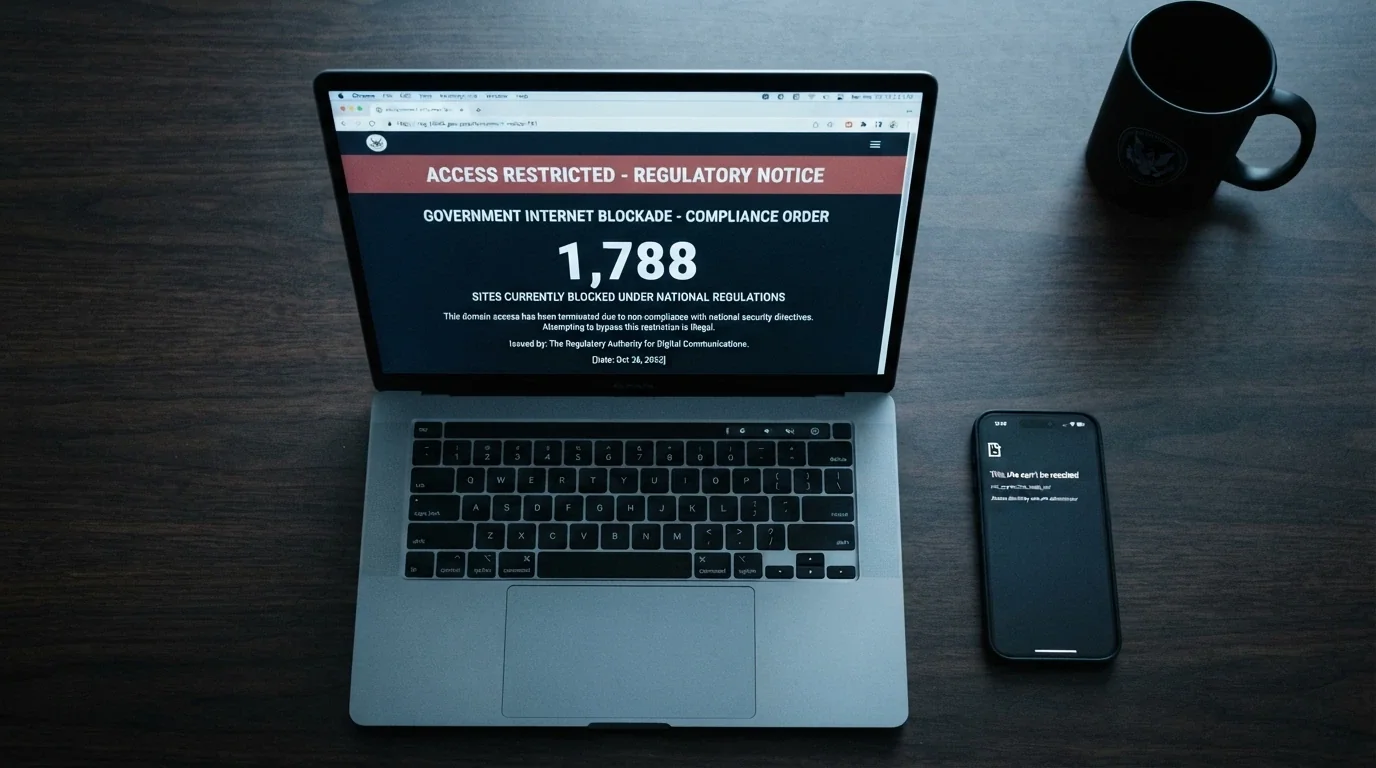
The enforcement record is substantial. Since its first blocking request in November 2019, ACMA has had 1,788 illegal gambling and affiliate websites blocked by Australian ISPs. More than 230 illegal services have pulled out of the Australian market since ACMA began enforcing new illegal online gambling rules in 2017. Civil penalties for providing a prohibited interactive gambling service reach up to A$2,475,000 per day for an individual and A$12,375,000 per day for a corporation. The IGA targets the provider, not the player — the individual punter is not prosecuted — but the player is the one who loses access to the venue when ACMA acts, and the player’s balance on the site at that moment is not recoverable.
The visible record of enforcement is the blocking list, not the recovery list. ACMA can remove a casino from Australian reach; ACMA cannot compel an offshore operator to refund a player. Tabcorp’s A$158,400 penalty — eight infringement notices at A$19,800 each, for taking 426 in-play bets across 32 tennis matches between February 2024 and June 2025 — is the recent public marker of how ACMA treats licensed operators that breach section 15(2A) of the IGA. The penalty for an unlicensed offshore operator is the same statute but a different enforcement pathway: blocking, civil penalty pursuit, and the slow withdrawal of the operator from the market.
The Payment-Method Ban: Why Your ETH Deposit Is an Immediate Signal
Credit cards, credit-related products and digital currency — crypto — are banned as payment for online wagering in Australia, with the ban commencing 11 June 2024 under the Interactive Gambling Amendment (Credit and Other Measures) Act 2023. An operator that fails to enforce the ban faces penalties of up to A$247,500. The licensed wagering sector — TABs, corporate bookmakers, the state-licensed lotteries — cannot accept crypto from Australian customers. The ban is Australia’s version of a deposit-ceiling: instead of capping the size of a deposit, the regulator has cut off the payment method entirely.
The consequence for an ETH player is immediate. Any site that asks for an Ethereum deposit from an Australian is, by that fact, not a licensed Australian wagering provider. The site cannot lawfully be offered to Australians; the operator is operating outside the Australian rules. The payment method is itself a tell. The crypto deposit is not a grey area; it is the boundary line that separates the licensed Australian wagering market from the offshore market the IGA prohibits.
The licensed wagering sector offers what the offshore market does not: ACMA-monitored compliance, state-set deposit limits, activity statements, BetStop coverage, and an Australian consumer law framework that applies if a payout is refused. None of those follow an ETH deposit offshore.
The 2026–2027 Reform Wave: What Changes and What Stays the Same
The Interactive Gambling Amendment (Gambling Reform) Bill 2026 passed Parliament on 19 August 2026; its measures commence 1 January 2027. The reform wave is the most significant expansion of the IGA since 2017. Three sets of provisions matter for an Australian ETH casino player.
First, advertising. A federal cap of no more than three wagering ads per hour between 6:00 am and 8:30 pm; a live-sport blackout from 15 minutes pre-event to 5 minutes post-event; radio ads barred during school drop-off and pick-up times; broadcasting sporting odds banned outright; online ads only to logged-in, age-confirmed users who have not opted out; no ads in sports venues or on uniforms; athletes, celebrities and influencers barred from promoting wagering.
Second, inducements. Direct marketing of wagering inducements is prohibited for 14 days after sign-up, for 3 months after BetStop deregistration, and indefinitely for at-risk customers. The post-sign-up window matters because the bulk of bonus-driven acquisition occurs in the first two weeks of a new account.
Third, payment blocking. From 1 January 2027, banks and payment providers gain express authority to block transactions to illegal gambling operators. This is the provision that reaches the offshore ETH casino directly. A bank that sees a transaction flow to a known illegal operator can decline it; a payment provider that processes an ETH on-ramp to an offshore casino can refuse the transfer. The crypto rail complicates enforcement — peer-to-peer ETH transfers do not pass through a domestic bank — but the fiat on-ramp and off-ramp, where most Australian players touch the banking system, sits inside the new authority.
What does not change: online casino remains illegal to provide to Australians; no Australian online casino licence is created; offshore ETH casinos continue to operate outside the framework. The 2027 reform is a tightening of the perimeter, not a legalisation of the product.
Staying in Control: Tools That Work — and the One That Doesn’t
BetStop — the National Self-Exclusion Register — is one of the most effective self-exclusion systems in operation anywhere. A single registration excludes a person from every Australian-licensed online and phone wagering service in a single step, for a minimum of three months up to a lifetime. As of 31 July 2026, 67,480 people had registered, of which 41,290 exclusions were still active — over 60% of everyone who has ever registered. By 31 December 2025, the figures were 54,859 registrations and 35,135 active exclusions. The growth is steady, and the retention rate is high.
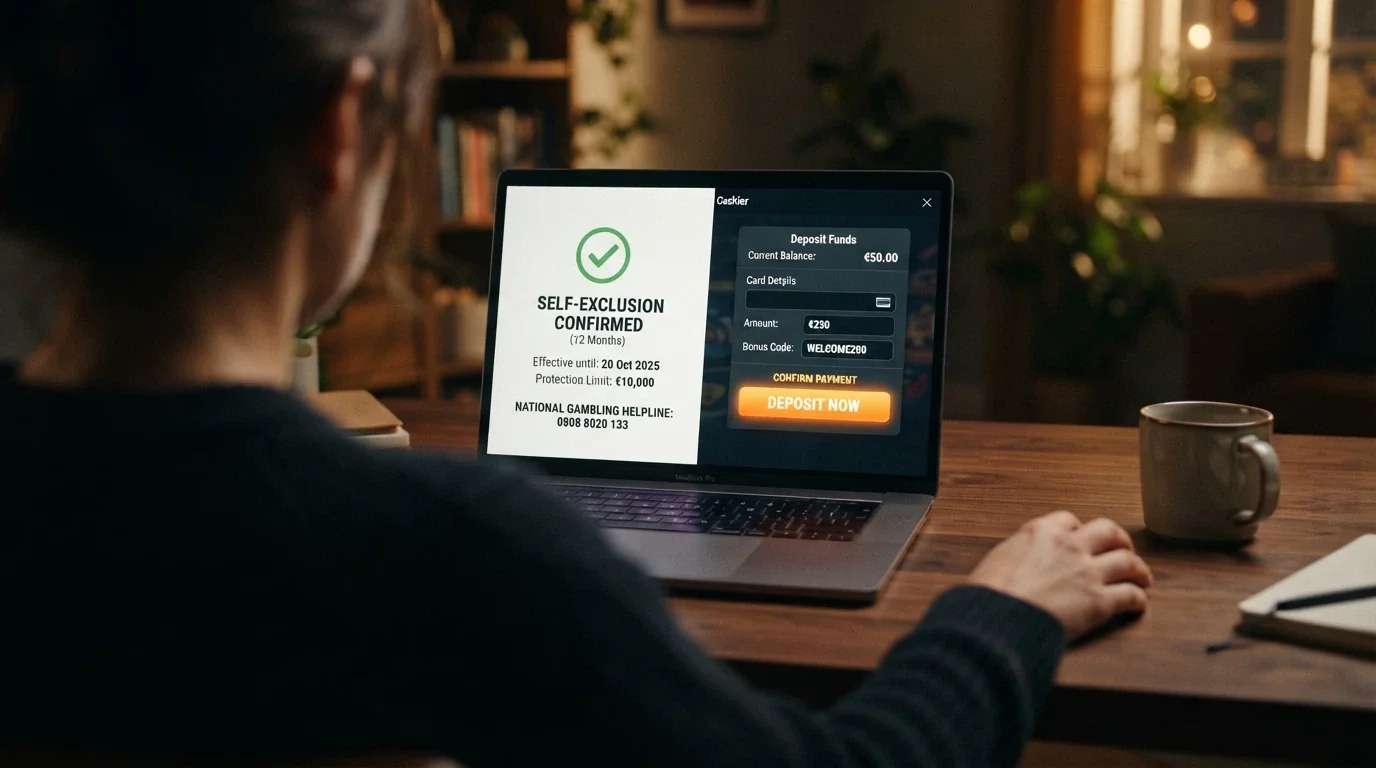
The outcomes are striking. ACMA-commissioned research found that 77% of BetStop registrants experienced better overall quality of life; 79% experienced improved mental health; 96% had either stopped betting (81%) or decreased their betting (15%) after registering. The figures are not from a casino or an affiliate — they are from the regulator’s own research.
BetStop covers approximately 150 to 190 licensed wagering providers in Australia. It does not cover offshore casinos. None of the ten ETH casinos on this page is on BetStop, because none of them is Australian-licensed. A self-excluded Australian who tries to use SkyCrown, NeoSpin, BC.Game or any of the others will find the casino willing to take the deposit and place the bet. BetStop’s legal force stops at the Australian regulatory perimeter; offshore casinos are outside it.
This is the concrete, sourced harm at the heart of an ETH casino decision. The protection that works — BetStop — does not reach the product the player is considering. The protection that reaches the product is the player’s own limits, set at wallet level or at the casino’s own deposit-limit interface, with no regulatory backing when those limits fail.
Practical Harm-Reduction Tools an ETH Casino Player Can Actually Use
The National Gambling Helpline — 1800 858 858 — is free, confidential and staffed 24 hours a day, every day. Counselling and online chat are available through Gambling Help Online. These are the standing help services for any Australian whose gambling has become a problem. They are not specific to offshore crypto use; they cover gambling harm at any venue.
The prevalence data is the context. About 2.1% of Australian adults — roughly 430,000 people — experience problem gambling; the Australian Institute of Health and Welfare put high-risk gambling at 1.8% in 2022. The numbers are large enough that any harm-reduction page for an Australian audience has to take the question seriously, not as a footnote.
For an ETH casino player specifically, the practical toolkit is self-managed. Operator-level deposit limits at the casino site are the first layer — most offshore ETH casinos offer daily, weekly and monthly deposit caps in the account settings, though the casino sets and enforces them and can lift them at its discretion. Session timers, displayed in the lobby or in the responsible-gambling section, prompt the player to take a break at a configured interval. Self-exclusion at the individual casino level closes the account for a chosen period; the exclusion applies only at that casino. Wallet-level spending controls — limiting the ETH balance in the gambling wallet, or routing deposits through a separate wallet with a hard cap — are the player’s own backstop.
None of these is equivalent to BetStop’s legal force. A player who has registered with BetStop and then opens an account at an offshore ETH casino is unprotected by BetStop at that casino. The player is protected only by whatever limits they set themselves, and by their own discipline in honouring those limits. The Helpline and Gambling Help Online are the right contacts if the limits are not being honoured.
How to Pick an ETH Casino When None of Them Has an Australian Licence
Without an Australian regulator to pre-vet operators, the player becomes the auditor. Six checks matter before a first deposit.
Verify the licence on the regulator’s own register. A Curaçao eGaming claim should be checkable against the Curaçao Gaming Control Board’s published register; an Anjouan claim against the Anjouan Gaming Licence register. A casino that lists a licence number but does not appear on the register is making a claim that cannot be verified. The check takes minutes; the absence of the operator from the register is itself information.
Test a small withdrawal before depositing in volume. A player who deposits A$25 in ETH and withdraws A$25 in ETH has tested the full cycle in miniature. A casino that pays the small withdrawal will often pay the large one; a casino that stalls on the small one will not improve with a larger balance. The first withdrawal is the audit.
Read the bonus terms in full before claiming. The wagering multiplier, the bet cap, the game weighting, the validity window and the maximum cashout together determine whether a bonus is worth the headline. The terms page is the only place all five appear together. A player who reads the headline and not the terms has not yet seen the bonus.
Check which ETH networks the casino supports. A casino that supports Mainnet only will be slower and more expensive per transaction than one that supports an L2 option. A casino that supports Arbitrum, Optimism and Polygon alongside Mainnet gives the player a real choice between speed and finality. The choice matters at withdrawal as much as at deposit.
Search player forums for unresolved withdrawal complaints. A casino that has a clear pattern of complaints about delayed or refused withdrawals on Reddit’s r/OnlineGambling or on dedicated affiliate complaint threads is a casino whose terms the player should read more carefully than usual. The Curaçao and Anjouan dispute-resolution pathways exist; the player’s own forum search is faster.
Confirm the casino’s KYC policy matches the player’s privacy requirement. A no-KYC casino that triggers verification at withdrawal above an undisclosed threshold is not a no-KYC casino for a player who expects to win above that threshold. The threshold should be in the terms; if it is not, the player should assume verification will be requested at some point.
Free ETH Slots & Demo Mode: Try Before You Deposit
Most offshore ETH casinos offer a demo or free-play mode on their pokies and RNG table games. The mode lets the player spin a slot or play a hand of blackjack with play-money credits, without registering or, in many cases, without depositing. The game behaves identically to the real-money version; the RTP and the volatility are the same.
The limits of demo mode are real. A demo session cannot test withdrawal speed — there is no withdrawal from a play-money balance. Demo mode typically excludes live dealer, which requires a real-money account and a funded balance. The bonus terms that apply at the casino do not apply in demo mode — the wagering multiplier, the bet cap, the validity window — none of which can be tested without a real-money claim. What demo mode does test is the lobby, the game mechanics, the visual quality, and the speed of the underlying platform.
For an Australian player specifically, demo mode is a way to evaluate the casino without making the crypto deposit that confirms the offshore use. The player can browse the lobby, try a few slots, and decide whether to proceed without ever sending ETH. The feature is standard across the featured set in principle; the per-operator implementation should be checked on each site, because some ETH casinos gate demo mode behind an email registration that the player may not want to complete.
New Ethereum Casinos in 2026: What’s Changed
The offshore ETH casino market is not static. New operators enter every year with fresher licences — the post-2024 Curaçao LOK framework has lowered the barrier to entry — and with bonus terms that compete more aggressively for first-deposit share. The newer entrants in 2026 tend to offer multi-network ETH support as a baseline feature rather than a differentiator, broader game catalogues through aggregator partnerships, and welcome bonuses in the 200% to 400% range with wagering requirements that match or beat the 35× to 40× market norm.
The trade-off of a newer operator is track record. A casino launched in the last twelve to eighteen months has a shorter withdrawal history to audit, fewer player-forum complaints to search, and a thinner community memory of how it handled a disputed withdrawal. The bonus headline may be more generous than the established operators; the audit trail is shorter. ACMA’s blocking activity is ongoing — newer casinos are more likely to appear on the blocking list faster, since their domains are newer and their operators have not yet built the relationships that older brands use to delay or avoid enforcement.
The newer-ETH-casino category should be treated as a higher-variance version of the established set: better headlines, thinner evidence. A player who is willing to test a small withdrawal before committing volume can sample the newer entrants at low cost; a player who is depositing in size should default to the operators with a longer audit trail.
How We Selected and Ranked These Ethereum Casinos
The evaluation draws on the ACMA’s published enforcement record for the legal framing, on each operator’s own licence register entry for the licence claim, on each operator’s published bonus terms page for the welcome package, and on aggregated player-review data for the user-rating figures. The ranking criteria, in order, are: bonus value adjusted for the wagering multiple; ETH payout speed by network where the operator publishes a figure; breadth of game catalogue; licence transparency; and the fairness of withdrawal caps. The published figures are the figures; the gaps where research did not surface a number are marked as such rather than estimated.
The limit of the evaluation is structural. No Australian online casino licence exists, and every operator reviewed is an offshore Curaçao or Anjouan licensee operating outside the Australian regulatory perimeter. The ranking compares among the reviewed set; it does not imply legality, safety, or relative quality against operators the page has not examined. The reader should treat the ranking as a comparison within a market that does not exist in Australia, not as an endorsement of any operator’s standing.
Beyond the Bonus: What Your Choice of ETH Casino Actually Means
The decision an Australian player makes by depositing ETH at an offshore casino is not about which bonus is biggest. It is about whether the concrete harms of the product — no BetStop coverage, no ACMA recourse, no Australian consumer law protection, the real risk of mid-session blocking, no path to recovery if the operator withholds a withdrawal — are acceptable at all.
The IGA 2001 prohibits the provision of online casino to Australians. The crypto deposit ban from 11 June 2024 makes the payment method itself the signal that the operator is offshore and unlicensed. ACMA’s enforcement record — 1,788 blocked sites since November 2019, 230-plus operator withdrawals since 2017 — is the visible evidence that the regulator acts, and that action removes the venue without recovering the player’s balance. BetStop’s coverage of approximately 150 to 190 licensed wagering services does not extend to a single operator on this page.
The practical steps the page has covered — reading bonus terms in full, testing a minimum withdrawal before depositing in volume, setting deposit limits at the casino level and at the wallet level, knowing the National Gambling Helpline number (1800 858 858), understanding that BetStop cannot reach the offshore product — are the player-side answer to an unregulated market. They do not make the offshore product safe. They make the player’s use of it informed.
The bonus headline is what the casino wants the player to see. The wagering multiple, the bet cap, the validity window, the withdrawal ceiling, the licence register check, the small-withdrawal test, and the harm-reduction toolkit are what the player needs to compare. The page is a comparison; the choice is the reader’s.
Frequently Asked Questions
Are Ethereum casino winnings taxable in Australia?
Gambling winnings are not assessable income for an ordinary Australian punter under section 6-5 of the ITAA 1997, and gambling losses are not deductible under section 8-1. The position holds unless the ATO treats the person as carrying on a business of betting or gambling, which no Australian case has yet held for an offshore crypto casino user. The winnings are tax-free; the cost of clearing the bonus to reach them is not recoverable against any other income.
What happens to my ETH balance if the casino is blocked by the ACMA?
ACMA can direct Australian ISPs to block the casino’s domain, and the casino becomes unreachable from an Australian IP address. The player’s ETH balance on the casino’s internal ledger is not recoverable through ACMA, because ACMA cannot compel an offshore operator to refund. The player has lost venue access; the funds on the venue stay on the venue. This is the visible record of ACMA’s 1,788 blocking actions since November 2019.
What wagering requirements apply to Ethereum casino welcome bonuses in Australia?
The featured offshore ETH casinos apply wagering multipliers between 20× and 50×, with the fairer end of the market around 35× bonus-only and the hostile end at 50× bonus-plus-deposit. Under 35× is very good; 35× to 40× is reasonable; above 40× is difficult to clear on most bankrolls. The multiplier applies to the bonus amount — sometimes also to the deposit — and the bet cap (typically A$5 to A$8) extends the time-to-clear.
How fast are Ethereum withdrawals at offshore casinos in Australia?
Withdrawal speed is the sum of the casino’s internal processing time and the network confirmation time. PlayAmo states 0 to 1 hour for crypto and e-wallet payouts; SkyCrown’s average is around 3 minutes for ETH; LuckyDreams’ average is 4 to 11 minutes depending on whether the player uses Arbitrum, Polygon, Optimism or Mainnet. Richard Casino’s stated ceiling is 24 hours. The fastest path is a casino with minimal processing time plus an L2 network.
What is the minimum Ethereum deposit at Australian crypto casinos?
The featured ETH casinos set minimum deposits between 0.003 ETH at NeoSpin (around A$15) and 0.005 ETH at SkyCrown, VegasNow and LuckyDreams (around A$25). LevelUp’s fiat floor of A$10 is the lowest entry point in the set. Other operators’ ETH-specific minimums vary and should be checked on the deposit page. The minimum is rarely the binding constraint on play; the bonus terms and withdrawal caps are.
What is provably fair and do Ethereum casinos in Australia offer it?
Provably fair is a cryptographic verification mechanism that lets the player confirm a bet’s outcome was not altered by the casino after the bet was placed. The casino commits to a hashed server seed before play, reveals the unhashed seed after each round, and the player combines it with the client seed and nonce to reproduce the result. Provably fair is standard at crypto-native studios like Stake Originals (blackjack at 99.43% RTP under optimal strategy); standard RNG slots and live-dealer tables from Pragmatic, Evolution and BGaming use independently certified random number generators but do not offer per-bet provably-fair verification.