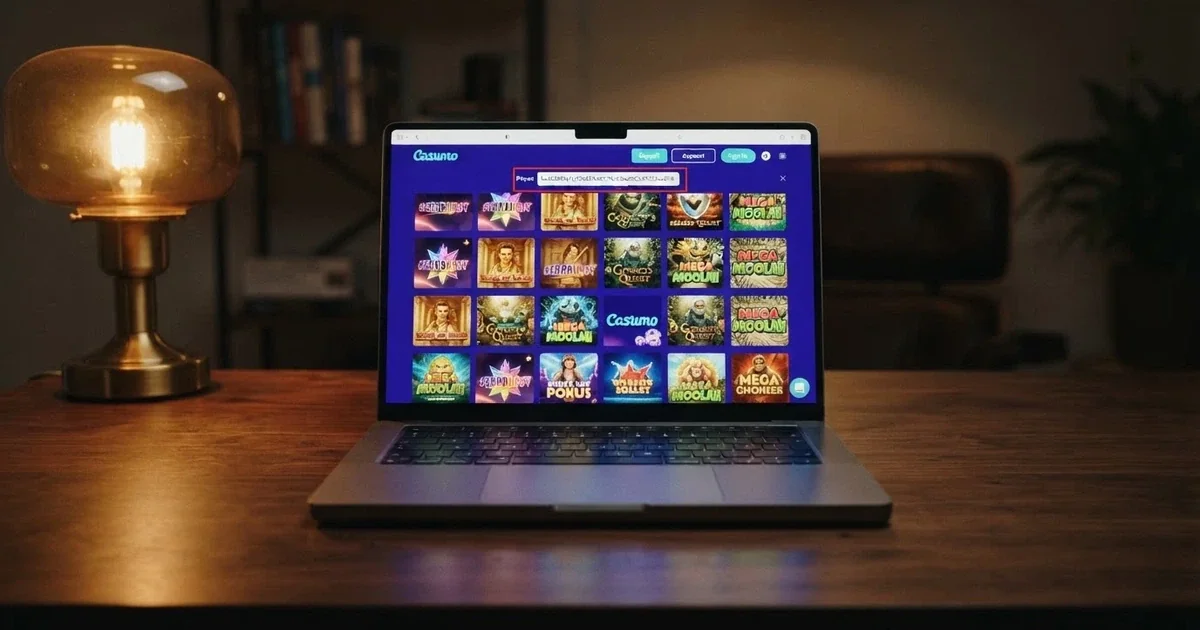
Bitcoin Pokies in Australia: A Frank Look at the Offshore Market in 2026
 Available in US
Walk into any pub in Sydney, Melbourne or Brisbane and the machines on the back wall return, on average, about 87.5 cents for every dollar a player feeds in. That figure is not a guess — it is the floor written into Australian state pokies regulations. Now pull up a phone, send some bitcoin to an offshore casino, and load the same Pragmatic Play or Hacksaw Gaming title that ships with the pub machine. The reels look the same, the bonus rounds look the same, but the maths underneath has changed. The offshore build returns 96.0% to 96.5%, sometimes more. That gap of eight to nine percentage points is, in plain cash terms, the difference between losing A$125 and losing A$40 on a A$1,000 session. It is also the reason a quiet, persistent migration of Australian pokies spend has been running for several years into a market that does not legally exist here.
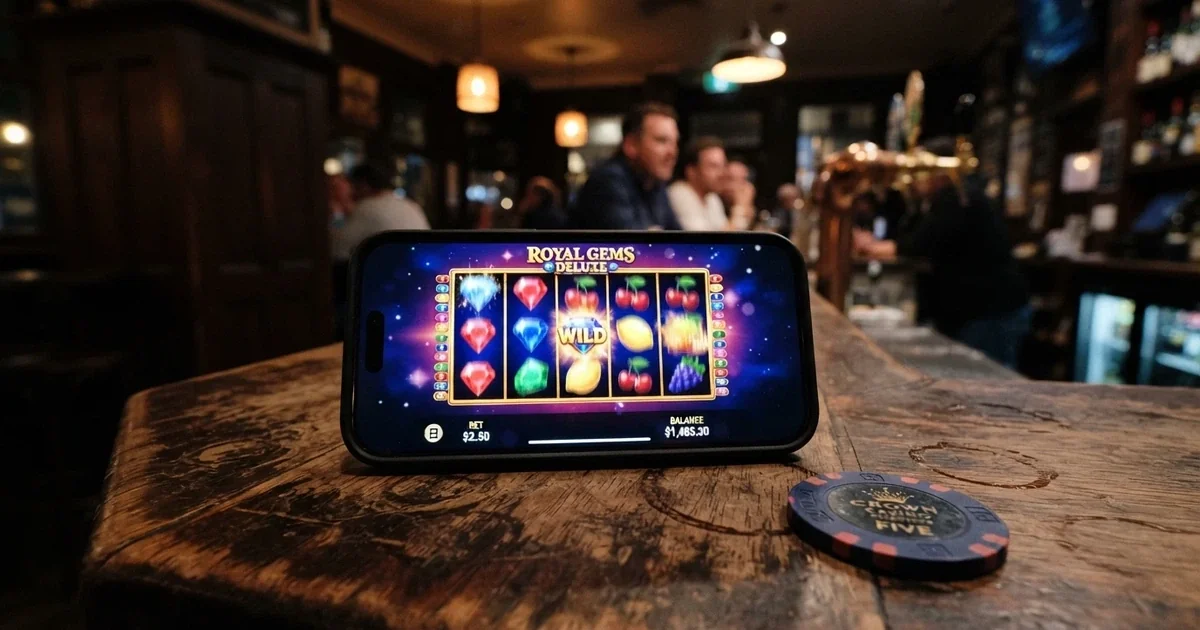
This page is the working out of that choice. Ten offshore operators are ranked below against verifiable bonus terms, wagering multiples, free-spin counts, withdrawal limits and KYC thresholds. The legality of every one of them is laid out in the same section that names them. The wagering arithmetic is done in the open, because the bonus figure on the marketing page is rarely the bonus figure in the player’s pocket. And the responsible-gambling section is taken seriously, because a market with no Australian licence is also a market with no Australian self-exclusion backstop, and that is a fact a reader needs before the first deposit.
Currency and regulator data current as of 3 September 2026, cross-checked against the Australian Communications and Media Authority (ACMA) public register and operator terms pages.
Table of Contents
- Why Bitcoin Pokies Are Reshaping How Australians Play in 2026
- Ranked: 10 Bitcoin Pokies Sites That Deliver for Australian Players in 2026
- What Bitcoin Deposits Actually Mean for Your Privacy at the Pokies
- The Pokies Catalogue That Awaits Your Bitcoin Deposit
- What Australian Law Actually Says About Bitcoin Pokies
- Getting Your Crypto In and Out Without the Runaround
- Why Your 2026 Bitcoin Pokies Bonus Is Smaller Than the Advertised Number
- Playing Smart When Crypto Meets the Pokies
- How We Evaluated and Ranked These Bitcoin Pokies Sites
- What This Means for Your Next Pokies Session
- Frequently Asked Questions
Why Bitcoin Pokies Are Reshaping How Australians Play in 2026
What Bitcoin Pokies Actually Are
“Bitcoin pokies” is the term the search results have settled on, and it does not mean a new kind of slot machine. It means a pokies site that accepts bitcoin — or, more often, USDT, Ethereum or Litecoin — as the deposit and withdrawal rail, then runs the same studio catalogue a fiat casino runs. Pragmatic Play, Hacksaw Gaming, BGaming, Nolimit City, Push Gaming and NetEnt are the names that recur on the loading screens of every operator on the market, and they recur because they hold the licences to the high-traffic titles Australian players already know: Sweet Bonanza, Elvis Frog, the Hacksaw scratch-and-slot hybrids, the Nolimit City high-volatility games. What changes is the rail underneath.
The other quirk worth knowing is the denomination display. Some bitcoin pokies sites show balances in BTC, with a single spin costing 0.00001 BTC or similar. Others convert on the way in and show an AUD or USD balance, with the crypto only appearing at the cashier. The first model forces the player to think in a fluctuating unit; the second hides the volatility behind a familiar-looking number. Neither is “more bitcoin” than the other. They are two different display choices for the same activity.
How a Bitcoin Pokies Session Works End to End
A session starts with a wallet. The most direct route in 2026 is an Australian bank transfer into a domestic exchange — CoinSpot or Independent Reserve are the two names that come up in payment guides — converting AUD to USDT on the TRC-20 network, then sending the USDT to the casino’s deposit address. The TRC-20 rail is the speed pick: fees under 50 cents and confirmation in under a minute. Bitcoin itself works, but the on-chain fees are higher and the confirmations slower. Ethereum is a middle option, more expensive than TRC-20 but more widely accepted.
Once the deposit is in, the casino credits the balance and the player is in. Most featured operators denominate the account in AUD or USD; a handful — Cryptorino and Cloudbet are the clearest examples — keep the balance in BTC, which means the dollar value of a 0.001 BTC balance moves with the market between spins. Withdrawal is the same path in reverse: the casino sends USDT or BTC back to the player’s wallet, the player sends it to the exchange, the exchange sends AUD to a bank account. Time from “request withdrawal” to “AUD in bank” is hours rather than the two-to-five working days that has been the norm at fiat-rail Australian-facing sites.
The banks complicate this. Commonwealth Bank and Westpac have tightened their blocks on gambling-related transactions in recent years, with some AU-licensed operators reporting declining-card rates and outright transaction rejections. The crypto route sidesteps the bank rails entirely, which is part of why AU players have moved to it.
Why Australian Players Are Choosing Bitcoin for Pokies
Three forces, in order of weight. First, RTP. An offshore Pragmatic Play or Hacksaw build running at 96.0% to 96.5% is not the same game as the pub machine, even when the artwork and the bonus mechanics are identical. The 8.5 to 9.0 percentage point gap is, in dollar terms, the largest single reason a player who has run the numbers ends up on a bitcoin pokies site. Second, cashout speed. A withdrawal that arrives in the wallet in hours, not the multi-day wait that is the norm at fiat-rail operators, is a real quality-of-life improvement and it shows up in the player-review aggregators. Third, the credit-card and crypto ban at Australian-licensed operators from 11 June 2024 has the perverse effect of pushing anyone who wants to fund a session with crypto onto the offshore market by definition. A site asking for bitcoin is, by construction, not Australian-licensed.
Ranked: 10 Bitcoin Pokies Sites That Deliver for Australian Players in 2026
| Operator | Welcome Bonus | Free Spins | Wagering (Bonus) | Signature Trait |
|---|---|---|---|---|
| Rocket Play | 100% to A$1,000 | 100 (20/day) | 40x | Tight 5-day validity window |
| SkyCrown | Up to A$8,000 | 400 | 40x (30x on FS) | Extensive welcome value |
| Royal Reels | A$2,500 over 3 deposits | 50 | 35x | Lowest wagering in the ranking |
| Stake | No welcome (rakeback) | — | — | Rakeback in lieu of bonus |
| LuckyRollers | 200% to $30,000 | 50 Super Spins | 60x | Highest percentage match in the set |
| BC.Game | Up to $1,600 over 4 deposits | 400 | 40x | Bonus across four deposit stages |
| Cryptorino | 100% to 1 BTC | — | 60x | Bitcoin-denominated balance with cashback |
| BetPanda | 200% to $10,000 | 50 | 60x | High percentage, moderate cap |
| CoinCasino | 200% to $30,000 | 50 Super Spins | 60x | High-cap match at the 60x ceiling |
| Cloudbet | 100% to 5 BTC | — | — | No KYC under 2 BTC cumulative withdrawals |
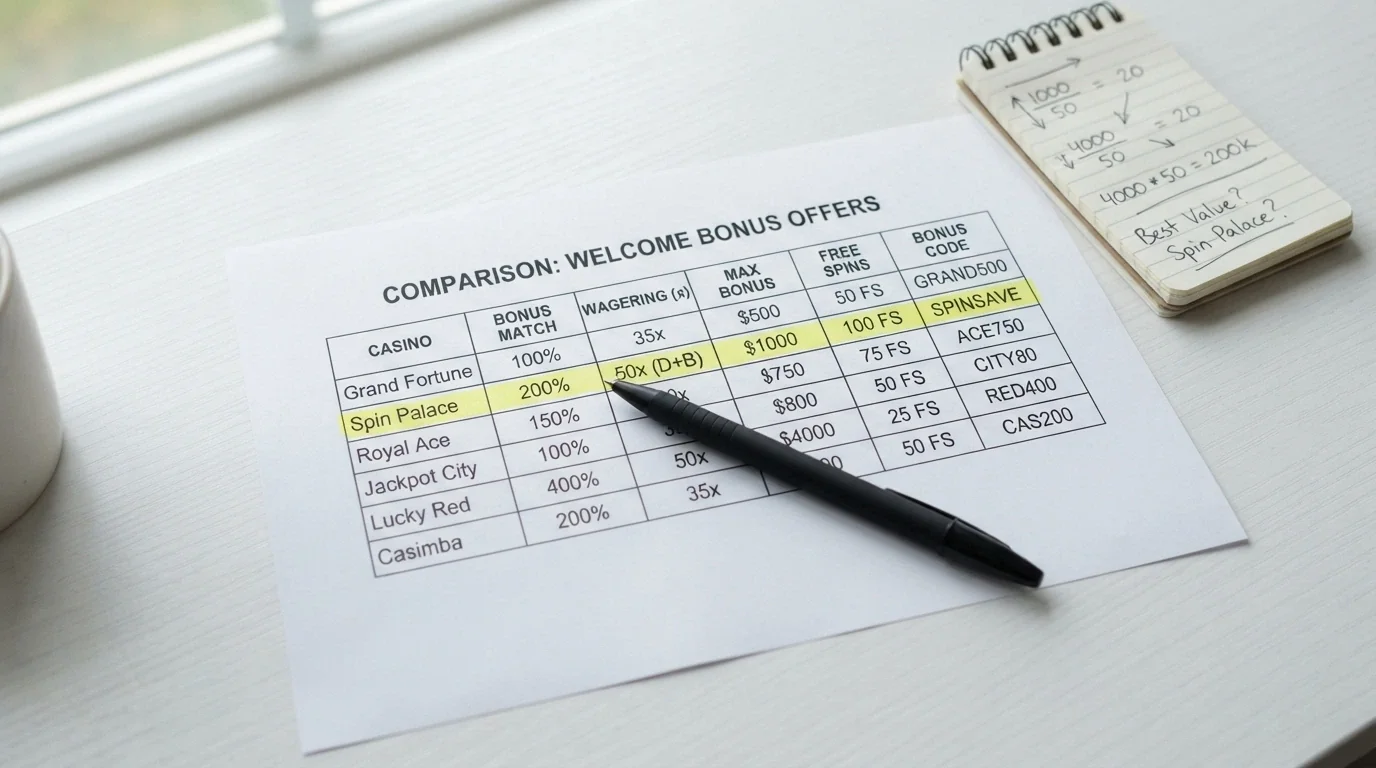
What the table does not show is the cost of clearing each of those bonuses, which the section on bonus maths handles directly. The wagering multiple is the number that matters, not the headline dollar figure — SkyCrown’s A$8,000 headline clears on 40x, while CoinCasino’s A$30,000 clears on 60x. A higher multiple on a higher headline can still mean more total turnover demanded, and that is what hits the player’s bankroll during the clear-down.
Rocket Play — 100% to A$1,000 With a Tight Time Limit
Rocket Play is the operator for a player who wants a clean, small bonus they can finish in a weekend. The headline is a 100% match up to A$1,000, the wagering is 40x on the bonus amount only (not bonus plus deposit), and the 100 free spins drip in 20 a day over five days. The terms are where the bonus earns its place: a 5-day validity window from the moment the bonus is received, a A$7.50 default maximum bet during wagering, and the same Pragmatic Play, BGaming, Hacksaw, Nolimit City and Push Gaming library the rest of the set carries.
The 5-day window is the tightest in the ranking. A A$1,000 bonus at 40x means A$40,000 in required turnover; at a A$7.50 cap that is around 5,333 spins, which is plausible to clear in five long sessions but leaves no margin for a slow day. Players with a small bankroll who plan to play concentrated sessions will get through it. Players who only want to drop in for a half-hour here and there will see the bonus expire before the wagering clears.
SkyCrown — A$8,000 Across the Welcome Pack With 400 Free Spins
SkyCrown features a comprehensive welcome package, with up to A$8,000 split across the welcome pack plus 400 free spins and a minimum qualifying deposit of A$20. Wagering is 40x on the bonus amount, and free-spin winnings carry a separate 30x requirement. The validity window gives a longer runway than Rocket Play, which suits players who want to play the bonus out across a couple of weeks rather than a long weekend. A Highroller Reload — 50% up to A$2,500 at 35x — runs alongside the welcome, which makes SkyCrown a reasonable choice for a player who intends to keep depositing past the first pack.
The catalogue is the strongest in the ranking by a small margin: Pragmatic Play, Hacksaw, BGaming, NetEnt and Push Gaming across the same five-studio set the rest of the market carries. Where SkyCrown earns its place is the combination of total value, longer validity and a manageable wagering multiple. A$8,000 at 40x is A$320,000 in required turnover, which is a serious time commitment, but a player who plans the clear-down over two weeks of regular sessions can see it through.
Royal Reels — Three Deposits, A$2,500 and a Low Per-Spin Cap
Royal Reels’ welcome is structured across three deposits, with the total package reaching A$2,500 plus 50 free spins at a fixed A$0.20 stake on a featured pokie. The 35x wagering on bonus only is the lowest in the ranking, and the A$5 per-spin cap during the clear-down is the lowest in the ranking too. The combination matters: a lower wagering multiple means less total turnover to clear, and a lower per-spin cap means each spin costs less during the clear-down — which, paradoxically, is the friendlier end of the bonus terms.
The three-deposit structure rewards a player who intends to come back for a second and third deposit anyway, because each stage releases part of the welcome. A player depositing once and walking away will only see the first stage of the pack. Pragmatic Play, Hacksaw, Nolimit City, NetEnt and BGaming cover the catalogue. For a player with a smaller bankroll who values a low-clearance bonus over a high-headline one, Royal Reels is the cleanest offer in the set.
Stake — No Welcome Bonus, Just Rakeback
Stake is the odd one out in the ranking, and the oddity is the point. There is no welcome bonus, no free spins, no deposit match. The model is rakeback — a percentage of the house edge returned to the player on each bet, paid out on a rolling basis. KYC is required in the form of email verification plus an Australian phone number, which means Stake sits at the more identified end of the offshore set. The catalogue is the same shared five-studio selection: Pragmatic Play, Hacksaw, Nolimit City, BGaming and Push Gaming.
The case for Stake is the player who would rather keep their money in play and earn a slow return than lock it into a bonus with a 40x or 60x clear-down. Rakeback is a different arithmetic: a steady small percentage back, no expiry, no max bet, no per-spin cap. The case against Stake is the same as the case for it — there is no bonus to clear, which means no bonus to convert into withdrawable cash, and a player who values the bonus-as-experience side of a welcome pack will find Stake underwhelming.
LuckyRollers — 200% to $30,000 With a Heavy Wagering Load
LuckyRollers runs the highest percentage match in the set: 200% up to $30,000 plus 50 Super Spins, with 60x wagering on the bonus only. The 200% match is the headline grabber — a A$1,000 deposit turns into A$2,000 of bonus — and the 60x wagering multiple is the cost. A$2,000 of bonus at 60x is A$120,000 in required turnover. The Super Spins, with their separate terms, are layered on top of that.
The operator is built for a player with a large bankroll and a long time horizon. The 200% structure is the kind of bonus that rewards a high-roller deposit, and the $30,000 ceiling is well beyond what most recreational players would clear in any reasonable time. Pragmatic Play, Hacksaw, BGaming, NetEnt and Push Gaming cover the catalogue. The honest read: the headline number is large, the wagering load is large, and the two cancel each other out for most players.
BC.Game — Four Deposit Stages and 400 Free Spins
BC.Game structures the welcome across four deposit match bonuses, totalling up to $1,600 plus 400 free spins at 40x wagering on bonus only. The four-stage structure is the closest the ranking has to a long-arc welcome, with each deposit unlocking another tranche. Pragmatic Play, Hacksaw, Nolimit City, BGaming and Push Gaming are the studio set. The 400 free-spin count ties with SkyCrown for the highest in the ranking, but the per-spin value and the wagering on spin winnings need to be checked against the operator’s own terms page before a player commits.
The case for BC.Game is the player who plans to play across four deposits anyway, because the four-stage structure rewards that pattern. The case against is the same as SkyCrown’s, with a twist: $1,600 is a smaller total welcome, which means less total turnover, which means a smaller commitment to clear.
Cryptorino — 1 BTC Match With Weekly Cashback Instead of Spins
Cryptorino is the only operator in the ranking that denominates the welcome in bitcoin: 100% up to 1 BTC, with 10% weekly cashback in place of free spins, at 60x wagering on bonus only. The 1 BTC ceiling is, at the time of writing, a substantial dollar figure — but the dollar value of 1 BTC moves with the market between the bonus being claimed and the wagering being cleared, which is the risk a BTC-denominated bonus carries that an AUD-denominated one does not.
The 10% weekly cashback is the structural differentiator. Cashback is paid on net losses over a week, which softens the variance of a 60x clear-down — a bad week returns 10% of the loss as playable balance, which is more useful than another batch of free spins with separate wagering. Pragmatic Play, Hacksaw, BGaming, NetEnt and Push Gaming round out the studio set.
BetPanda — 200% to $10,000 at the Same 60x Wagering
BetPanda runs a 200% match up to $10,000 plus 50 free spins at 60x wagering on bonus only. The 200% structure is the same as LuckyRollers’ and CoinCasino’s, but the dollar ceiling is lower at $10,000 — which is, for most players, a more realistic figure to chase. Pragmatic Play, Hacksaw, Nolimit City, BGaming and Push Gaming cover the catalogue. The 50 free spins are a smaller spin allocation than SkyCrown’s or BC.Game’s 400, but the wagering on those spin winnings needs to be confirmed against the operator’s own terms before committing.
For a player who likes the 200% structure but does not have the bankroll to chase a $30,000 ceiling, BetPanda is the more proportionate version. The 60x wagering is the same as its peers at the 200% tier, and the arithmetic comes out the same way: high headline, heavy clear-down.
CoinCasino — 200% to $30,000 Plus 50 Super Spins
CoinCasino runs the same headline as LuckyRollers — 200% up to $30,000 plus 50 Super Spins, at 60x wagering on bonus only. Pragmatic Play, Hacksaw, BGaming, NetEnt and Push Gaming cover the catalogue. The two operators are near-interchangeable on bonus structure, with the differentiator coming down to game selection, payment methods and the smaller details of the cashout experience.
For a player choosing between the two, the honest answer is to compare them at the cashier — the bonus terms are close enough that the deposit and withdrawal mechanics will matter more than the headline.
Cloudbet — 5 BTC Welcome With a High No-KYC Threshold
Cloudbet is the operator built for a player who values withdrawal headroom above a bonus code. The welcome is 100% up to 5 BTC, with no KYC required under 2 BTC of cumulative withdrawals and no free spins attached. The 5 BTC ceiling is, in dollar terms, the largest welcome in the ranking, but the wagering multiple is not specified in the research pulled for this page, which means the clear-down cost needs to be checked against the operator’s own terms before any deposit commitment. The operator features the same core studio selection found elsewhere in this ranking.
The no-KYC-under-2-BTC clause is the structural selling point. Players who want to play smaller sessions and withdraw without triggering identity checks will find Cloudbet’s threshold materially higher than the A$2,000–A$5,000 soft threshold that applies across the rest of the set. Once cumulative withdrawals cross 2 BTC, KYC kicks in and the documentation request follows.
What Bitcoin Deposits Actually Mean for Your Privacy at the Pokies
Depositing and Withdrawing Bitcoin at a Pokies Site
The mechanics are simpler than the marketing implies. The casino generates a deposit address — sometimes per-transaction, sometimes a persistent wallet tied to the account — and the player sends the chosen cryptocurrency to that address from their own wallet. For TRC-20 USDT, the deposit typically confirms in under a minute and credits to the casino balance within minutes of confirmation. Bitcoin itself takes longer on-chain, with confirmation times in the tens of minutes for the standard six-block settlement. Ethereum sits in between.
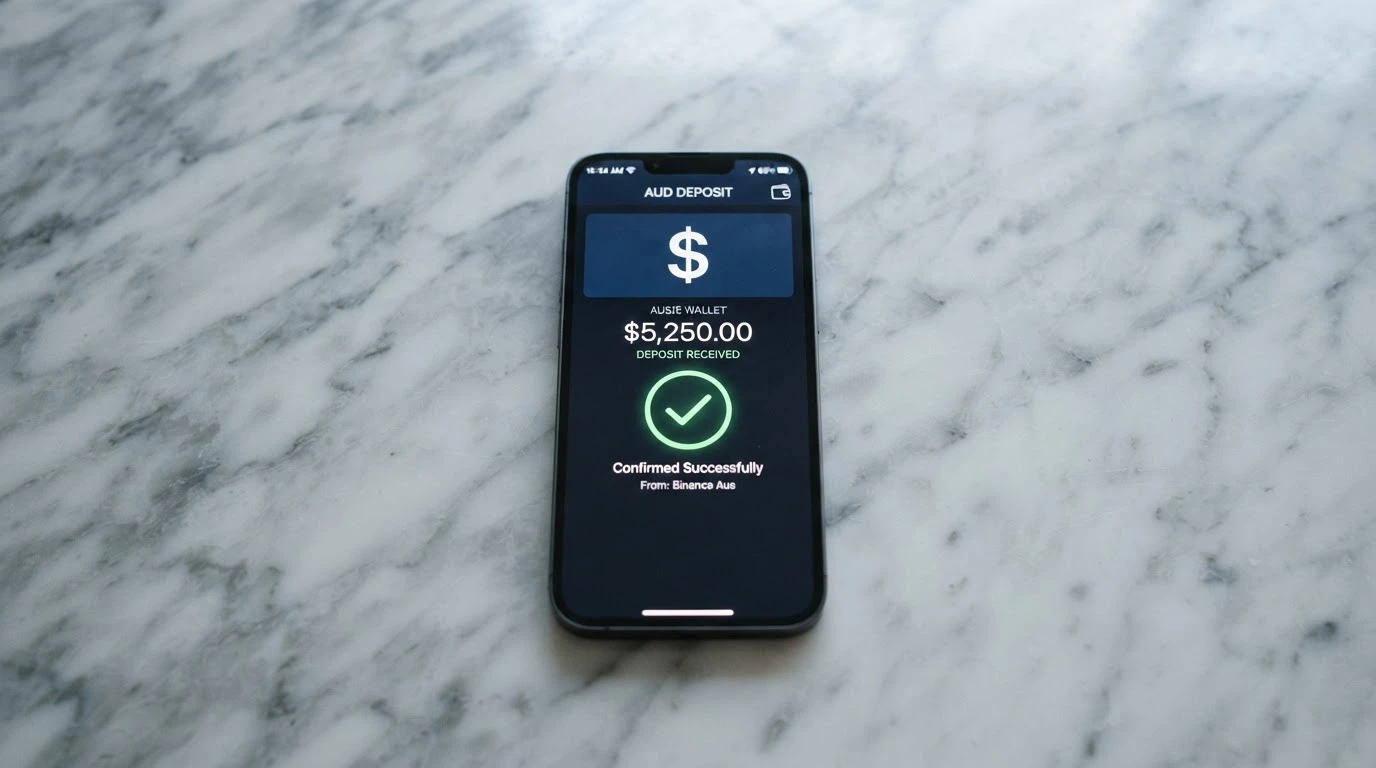
The network choice is the single biggest lever the player controls. TRC-20 USDT is the speed-and-fee pick: under 50 cents per transfer and confirmation in under 60 seconds, which is why payment guides consistently recommend it. Bitcoin is the most widely accepted, but the on-chain fees are higher and the wait is longer. Ethereum is the middle ground, more expensive than TRC-20 but more flexible. The casino’s cashier page will list which networks it accepts; not all operators support all three, and sending the wrong asset to a wallet that does not accept it is the most common lost-deposit story on review aggregators.
Withdrawal is the deposit in reverse. The player requests a withdrawal in their wallet, the casino runs an internal review, and the funds arrive in the player’s wallet once the review passes. The internal review is where the time goes — a USDT TRC-20 transfer itself confirms in under a minute once the casino releases it, but the release can take anywhere from minutes to 24 hours depending on the operator and the size of the withdrawal.
The Privacy Promise vs the KYC Reality
The marketing language around “anonymous bitcoin casinos” runs ahead of the operational reality. The structural truth is that every reputable licensed bitcoin casino requires KYC before processing withdrawals above a threshold — typically A$2,500 to A$5,000 — which means anonymity is a feature of small-withdrawal play and not of any meaningful bankroll. Below the threshold, a player can deposit, play and withdraw without ever uploading a document. Above the threshold, the operator will request government-issued ID, proof of address and sometimes a source-of-funds check before processing the withdrawal.
The threshold itself varies across the set. Cloudbet sits at the top of the range with no KYC under 2 BTC cumulative withdrawals — a substantial figure in dollar terms. KatsuBet, included here as a benchmark rather than a ranked operator, runs a no-KYC threshold of 0.5 BTC. The rest of the set cluster in the A$2,000–A$5,000 cumulative withdrawal range, which is well below a single large bonus clear-down at a high-match operator. A player planning to clear a A$10,000 bonus at CoinCasino should expect to be asked for documents before the withdrawal clears.
The documents requested are usually the standard set: government photo ID, a recent utility bill or bank statement for address, and sometimes a selfie holding the ID. The reviews are not instant — the soft KYC threshold is also the soft waiting-threshold, and a first-time KYC clearance can take 24 to 72 hours.
Bitcoin vs Fiat at the Pokies: What Changes
Three practical differences, in order of how much a player feels them. First, deposit speed: a TRC-20 USDT deposit lands in minutes, an Osko or PayID deposit at a fiat operator can take similar time but is more often subject to the bank-side blocks that Commonwealth Bank and Westpac have implemented in recent years. Second, withdrawal speed: a crypto withdrawal clears in hours once the casino releases it, a fiat withdrawal at a licensed AU bookmaker takes 1–5 working days. Third, fees: a TRC-20 USDT transfer is under 50 cents; a bank transfer at the receiving end of a fiat withdrawal will sometimes carry a fee on the player’s side, depending on the bank.
The bank-rail problem is the silent driver behind a lot of the crypto adoption. When a player’s debit card declines at a deposit screen, or a bank transfer to a licensed operator is held or returned, the crypto rail becomes not a preference but a workaround. The 11 June 2024 ban on credit cards and crypto at Australian-licensed operators formalised this workaround: any AU player wanting to fund a session with crypto is, by construction, on an offshore site.
The Pokies Catalogue That Awaits Your Bitcoin Deposit
Pokies Variety at Bitcoin Casino Sites
The catalogue at a bitcoin pokies site is the same catalogue a fiat casino runs, because the studios licence the same titles to the same aggregators regardless of the payment rail. The range runs from classic three-reel fruit machines through modern video slots to Megaways titles and the high-volatility games that Nolimit City and Hacksaw have built their names on. Jackpot slots — fixed and progressive — are also present at the larger operators, with prize pools denominated in BTC, USDT or AUD depending on the operator.

Live-dealer table games sit alongside the pokies at most operators in the ranking: blackjack, roulette, baccarat and the game-show formats from Pragmatic Play Live and Evolution. For a player who wants a mixed session — a few hundred spins of a Hacksaw title, then a live blackjack table — the offshore operators carry enough variety to support it. Demo play is available on most pokies at most operators, with the demo balance loaded automatically when the player is not in a real-money session.
The Providers Behind the Reels
- Pragmatic Play — Sweet Bonanza, Gates of Olympus, the Drops & Wins promotional network. Studio default RTP is at the 96.0% end of the offshore range.
- Hacksaw Gaming — high-volatility slot and scratch-card titles, with RTP builds consistently in the 96.0%–96.5% range offshore.
- Nolimit City — high-volatility titles, including the mechanically distinctive games that have driven the studio’s reputation. RTP builds at the upper end of the offshore range.
- Push Gaming — medium-to-high volatility titles with the studio’s signature feature mechanics.
- NetEnt — the legacy catalogue, still carrying some of the highest-traffic titles in the market.
- BGaming — Elvis Frog series and other high-RTP titles; BGaming is one of the more aggressive studios on the provably-fair mechanics.
The same title running on a domestic Australian machine and on an offshore bitcoin casino can carry different RTPs because the studio ships the game with configurable RTP ranges, and the operator picks where on the range to set the build. The 87.5% AU domestic floor is the bottom of the studio’s allowed range; the 96.0%–96.5% offshore build is at the top. That is the gap that drives the player migration, and it is the gap the wagering maths underneath the bonus numbers assumes.
What Australian Law Actually Says About Bitcoin Pokies
| Regulation | What It Covers | Effective Date |
|---|---|---|
| Interactive Gambling Act 2001 | Prohibits providing online casino games and online pokies to a person in Australia | 2001 |
| Interactive Gambling Amendment Act 2017 | Strengthened the IGA, clarified prohibited interactive gambling services | 2017 |
| Interactive Gambling Amendment (Credit and Other Measures) Act 2023 | Banned credit cards, credit-related products and digital currency (crypto) as payment at AU-licensed operators | 11 June 2024 |
| Interactive Gambling Amendment (Gambling Reform) Bill 2026 | Passed 19 August 2026; introduces advertising and inducement restrictions, hourly wagering ad cap, AdStop register | 1 January 2027 |
What the Interactive Gambling Act Prohibits — and What It Does Not
The Interactive Gambling Act 2001 prohibits the provision of online casino games and online pokies to a person physically in Australia. The 2017 amendment tightened the definition of prohibited interactive gambling services and clarified the regulatory reach. The 2026 reform bill, passed on 19 August 2026 and commencing on 1 January 2027, adds a federal layer on top of the existing state-level advertising rules: a three wagering ads per hour cap between 6:00 am and 8:30 pm, a live-sport blackout inside those hours, and a national wagering advertising opt-out register known as AdStop, administered by the ACMA.

The new inducement rules starting 1 January 2027 are the change that affects how an offshore operator can market to an Australian player. Direct marketing of inducements is prohibited for 14 days after a customer signs up, for three months after a person deregisters from BetStop, and indefinitely for customers identified as at risk of gambling-related harm. The 14-day and three-month windows are aimed squarely at the moment when a player is most likely to chase a loss with a fresh deposit, and they apply to licensed Australian operators in the first instance — but the federal reach of the IGA means offshore operators targeting Australian customers are not outside the regulatory frame either.
What the IGA does not prohibit is the individual act of playing. The statute targets the provider. A person in Australia who opens an account at an offshore bitcoin pokies site is not committing an offence under the Act, and the ACMA’s enforcement record reflects that: every blocking action and every penalty under the IGA has been directed at operators and at the affiliate sites that market them, not at individual players.
The Offshore Reality for Australian Players
There is no Australian-licensed online casino. Every operator on this page is registered elsewhere — typically Curaçao, sometimes Anjouan, occasionally Malta — and the IGA makes it unlawful for an Australian-licensed operator to offer online pokies at all. So the choice is not between licensed and unlicensed bitcoin pokies. It is between not playing online pokies at all and playing them at an offshore site, with the ACMA’s enforcement and the operator’s home-jurisdiction regulatory framework as the only oversight in play.
The ACMA’s blocking record is the most visible expression of that oversight. Since the first blocking request in November 2019, the ACMA has had 1,564 illegal gambling and affiliate websites blocked by Australian internet service providers. The blocks are not always immediate or permanent — operators rotate domains, mirror across TLDs, and reappear. But the regulatory posture is consistent: the ACMA identifies, the ISPs block, the operator moves or closes. None of the enforcement has been directed at players.
The player protection gap is real, though. An offshore casino is not bound by the Australian Consumer Law in the same way a domestically licensed operator is, and the dispute resolution pathways that exist for AU-licensed wagering — state-based complaints bodies, the ACMA itself — do not apply. A player who has a withdrawal dispute with an offshore operator is working through that operator’s own customer service, with the operator’s home regulator as the only external body.
What You Give Up Playing Outside the Licensed Market
Three protections, in order of how often they matter. First, BetStop — the National Self-Exclusion Register — binds Australian-licensed wagering services only. An offshore casino is not connected to the register, and will keep taking deposits from a person who has self-excluded through BetStop. This is the most serious protection gap, and it is the one most directly relevant to players who have already decided they need a backstop.
Second, there is no ACMA complaints pathway for offshore disputes. The ACMA handles complaints about licensed operators; an offshore operator sits outside the ACMA’s complaint jurisdiction, and the player works the dispute with the operator’s own support team. Where the operator’s home regulator (Curaçao, Anjouan) is responsive, the player has a recourse. Where it is not, the player has whatever leverage the operator’s reputation gives them.
Third, the crypto deposit ban at AU-licensed operators is itself a signal. An Australian-licensed wagering operator cannot legally accept a bitcoin or USDT deposit; any site asking for one is, by construction, offshore. The ban that was meant to channel players into safer payment rails is the same ban that defines the offshore market an Australian bitcoin pokies player is in.
Getting Your Crypto In and Out Without the Runaround
Deposit Speed: Minutes, Not Days
The cleanest route in 2026 is an Australian bank transfer into CoinSpot or Independent Reserve, conversion to USDT on the TRC-20 network, and transfer to the casino’s deposit address. The exchange step is where most of the time goes — bank transfers clear in minutes to hours depending on the bank, the AUD-to-USDT conversion is instant once the deposit lands, and the TRC-20 transfer to the casino confirms in under 60 seconds once sent. Total time from “open exchange app” to “casino balance shows funds” is usually under 30 minutes, sometimes under 10.
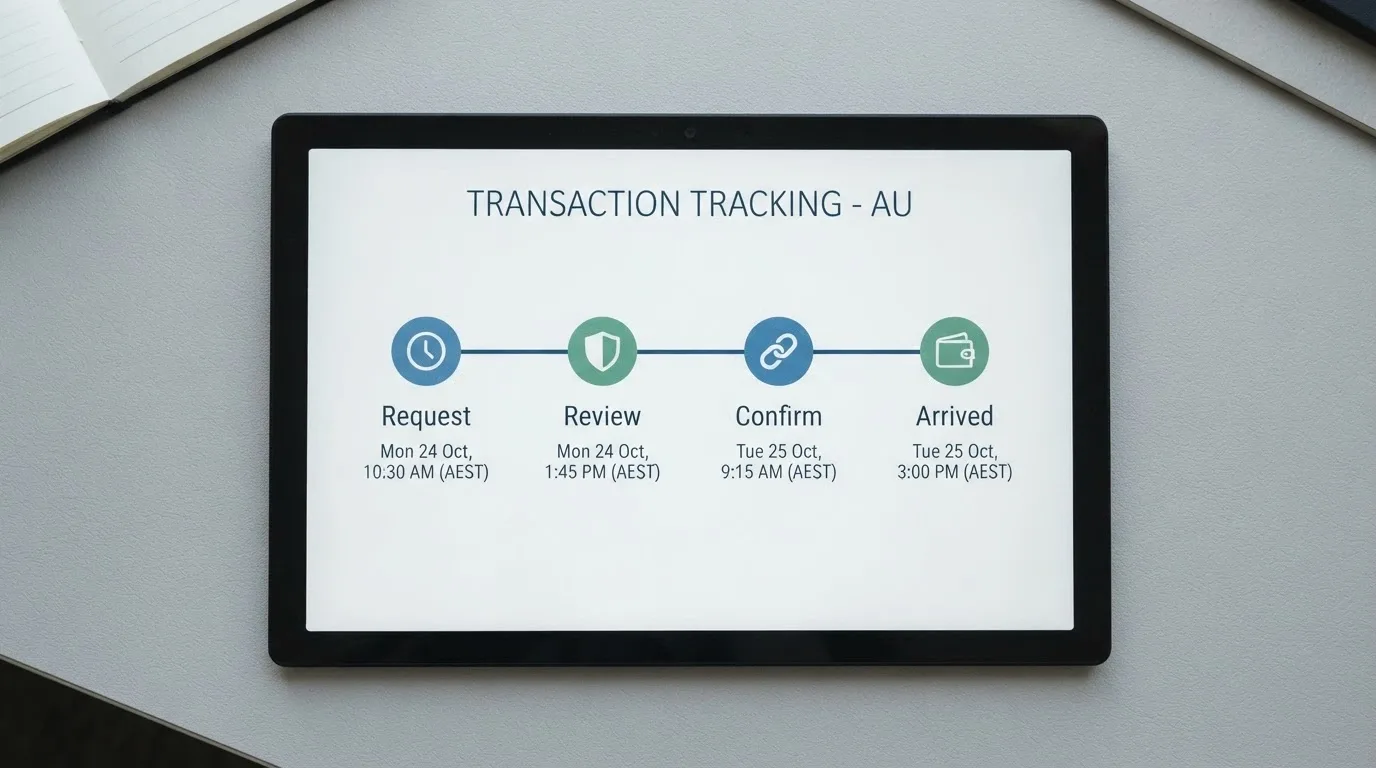
The exchange step matters more than the on-chain step. Players who already hold USDT or BTC in a self-custody wallet skip the exchange and go straight to the casino, which collapses the timeline further. Players who fund from scratch via an Australian bank need to factor in the exchange’s verification process — CoinSpot and Independent Reserve both run KYC on the AUD side, which is unavoidable for a regulated Australian exchange.
Withdrawal Speed and What Slows It Down
The casino’s internal review is the real bottleneck, not the blockchain. Once the casino approves a withdrawal, the on-chain transfer itself is fast — a TRC-20 USDT transfer confirms in under 60 seconds, a BTC transfer in tens of minutes. The wait is in the approval, which can be minutes for a small withdrawal from a verified account, 24 hours for a first withdrawal that triggers KYC, and 24–72 hours for the first KYC clearance itself.
The KYC threshold is the speed bump most players underestimate. The A$2,000–A$5,000 cumulative withdrawal range is where most operators trigger document requests, and a player who has been winning through a bonus clear-down will often cross the threshold on a single withdrawal. The first KYC clearance is the longest — subsequent withdrawals at the same operator are usually faster, because the documents are on file and the operator’s compliance team has already done the review.
The network choice matters on the withdrawal side too. A player withdrawing in BTC will wait longer for on-chain confirmation than a player withdrawing in USDT TRC-20, and the BTC fee will be higher. Most operators let the player pick the asset at the cashier, and the choice that minimised deposit time is the choice that minimises withdrawal time.
Why Your 2026 Bitcoin Pokies Bonus Is Smaller Than the Advertised Number
The worked example below uses the SkyCrown welcome — up to A$8,000 at 40x wagering on the bonus amount only — to make the mechanics visible. The numbers are real for that operator; the structure is the same across the set.
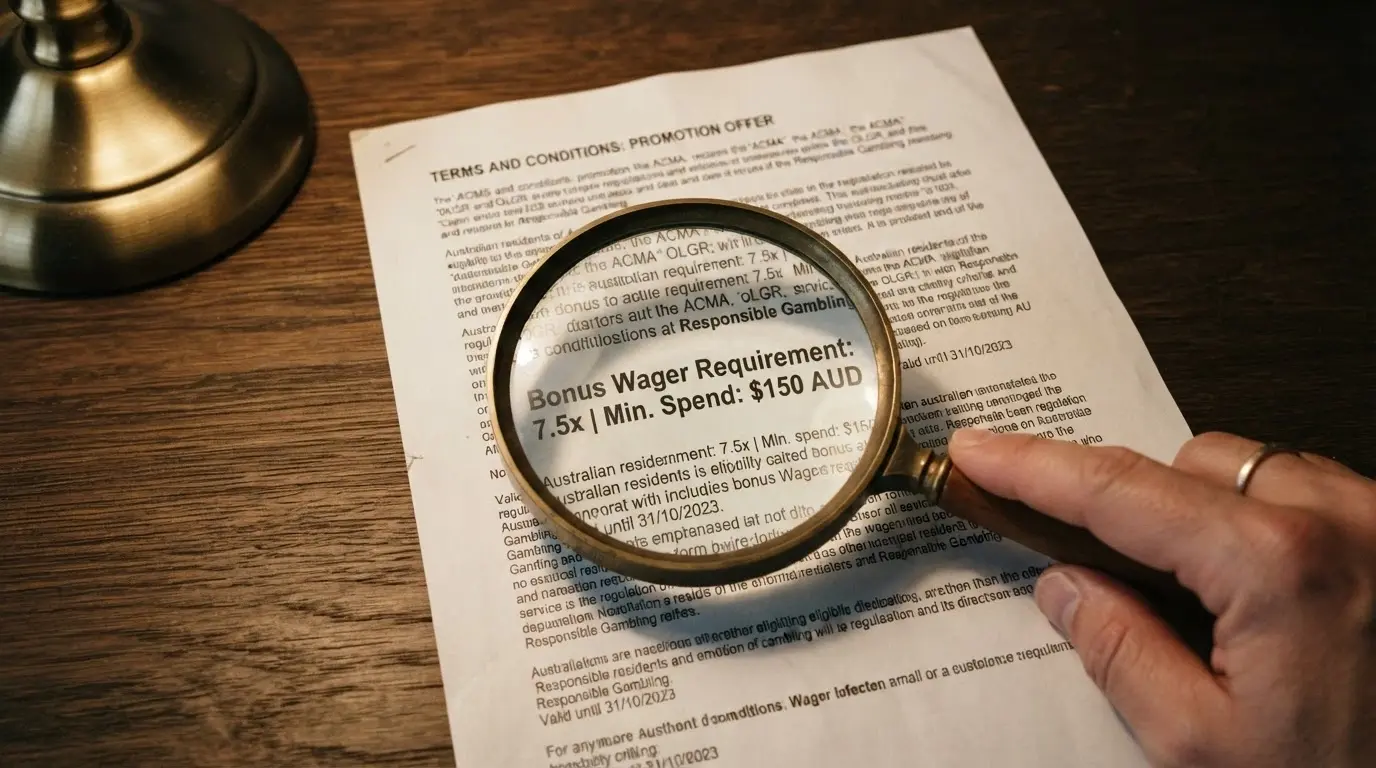
The bonus that lands in the account is the headline figure, capped at A$8,000. A player depositing A$1,000 receives A$1,000 in bonus funds on top of the deposit, and the bonus is the figure the 40x wagering requirement is calculated against. Required turnover is A$1,000 times 40, which is A$40,000 of bets that must be placed before the bonus converts to withdrawable cash. At a typical spin stake during the clear-down of A$1, that is 40,000 spins. At five seconds per spin, that is around 56 hours of play.
The cost of the clear-down is where the bonus is actually priced. Assuming only the bonus amount is wagered, and using the conservative 96.0% RTP at the bottom of the offshore studio range, the expected loss during the clear-down is A$40,000 multiplied by 4.0%, which is A$1,600. That is the cost of converting a A$1,000 bonus into withdrawable cash, before the bonus amount itself is even counted. A player at the higher end of the RTP range — 96.5% — sees the expected loss drop to A$1,400. A player running a 60x wagering multiple on a A$2,000 bonus (a 200% match on a A$1,000 deposit at LuckyRollers, CoinCasino or BetPanda) sees the turnover jump to A$120,000 and the expected loss to around A$4,800 at 96.0% RTP, which is the most direct illustration of why the wagering multiple matters more than the headline.
Free spins are the second layer of bonus cost, and the structure varies. SkyCrown’s 400 free spins carry a separate 30x wagering requirement on the spin winnings; Royal Reels’ 50 spins at A$0.20 stake are a fixed-value bundle with no separate wagering research carries; BC.Game’s 400 spins and BetPanda’s 50 spins need their own wagering terms checked against the operator’s terms page. The general rule: where the research carries a separate wagering on spin winnings, that wagering stacks on top of the bonus wagering; where it does not, the spin winnings convert on the bonus terms.
The Cloudbet 5 BTC welcome is the one welcome in the set where the wagering multiple is not specified in the research pulled for this page. The clear-down cost cannot be calculated without that figure, and any player considering Cloudbet should check the operator’s own terms page for the wagering requirement before committing a deposit — the 5 BTC headline is large, but the cost of the clear-down is unknown.
Playing Smart When Crypto Meets the Pokies
Bankroll Control When Your Deposit Changes Value
Bitcoin and USDT are not stable value units. A A$1,000 deposit converted to BTC at one price is not A$1,000 in BTC terms the next day if the market has moved 5%. The bankroll management implication is that the player who converts on the way in and converts on the way out — using USDT TRC-20 at fixed AUD values — has a stable bankroll in dollar terms, while the player who holds BTC between deposit and withdrawal has a bankroll that moves with the market. Neither is wrong, but they are different exposures.
The harder version of the bankroll question is what the volatility does during a losing streak. A fiat player with a A$500 budget who loses A$400 sees a clear stopping point at the A$100 mark. A crypto player with the same budget, who deposits at a BTC price that drops 10% overnight, sees the same A$500 budget become A$450 in dollar terms before a spin is played. The discipline of pre-setting a limit in AUD terms, then converting, is the practical workaround. The limit is set in the currency the player earns in, not the currency the casino shows.
About 2.1% of Australian adults — roughly 430,000 people — experience problem gambling at the level measured by the Australian Institute of Health and Welfare. The figure is a population statistic, not a prediction, and a reader of this page is not in that group by virtue of reading. But it is the number that frames the responsible-gambling section honestly, because a 2.1% prevalence rate across the adult population is a real signal that the boundary between recreational and harmful play is not as far away as a reader might assume.
Self-Exclusion Tools and Their Limits Offshore
BetStop is the Australian National Self-Exclusion Register, live since August 2023. As at 31 July 2026, the register had 67,480 registrations, with 41,290 exclusions still active — more than 60% of everyone who has ever signed up. That ratio is the register’s strongest argument: the people who put themselves on it are not coming off it. It is the most consequential player-protection tool the licensed Australian wagering market has built, and it is not available to a player who is playing offshore.
The hard fact is that BetStop binds Australian-licensed wagering services only. An offshore casino is not licensed here, is not connected to the register, and will keep taking a self-excluded person’s money. A player who has registered with BetStop and then opens an account at an offshore bitcoin pokies site has not stopped themselves gambling. They have stopped themselves gambling at the licensed Australian operators, which is a real and important step, but the offshore market is a different door. The single most important rule of this page, if a reader has reached this section because play is no longer fun, is that offshore does not mean safe, and that registering with BetStop is the right move regardless of what offshore accounts are open.
The Extra Care Anonymous Crypto Deposits Demand
When the casino does not ask for ID, the casino does not have an intervention trigger. A licensed Australian wagering operator is required to monitor play patterns, intervene when a player shows signs of harm, and refer at-risk players to support services. An offshore operator, particularly one with a high no-KYC threshold, has no equivalent obligation. The player is the only person watching the bankroll, and the only person who can decide when a session is over.
The two support services every Australian player should have in their phone are the National Gambling Helpline on 1800 858 858 — free, confidential, staffed 24 hours a day, seven days a week — and Gambling Help Online, which offers live chat, email support and self-help resources. The helpline is the right first call when a session stops being entertainment. It is staffed by counsellors who have heard the version of the story a reader is sitting with, and the call is confidential in the same way a doctor’s appointment is.
The discipline a crypto deposit demands, in plain terms, is the same discipline a fiat deposit demands, applied with more rigour because the safety nets are fewer. Set a budget in AUD before converting. Decide in advance when the session ends. Do not chase a loss with a fresh deposit. Do not let the speed of the rail — minutes, not days — become an excuse to deposit again the same hour. And if any of those rules stops holding, the helpline is the call before the next deposit is.
How We Evaluated and Ranked These Bitcoin Pokies Sites
The ranking is built on five criteria, in this order of weight: bonus value after the wagering requirement is applied, game library depth and provider quality, KYC threshold and the privacy it implies, withdrawal speed under the operator’s standard terms, and the structural features that distinguish one operator from another (rakeback, no-KYC thresholds, BTC denomination). The bonus-value calculation is the central filter — a A$30,000 headline at 60x wagering is not a better bonus than a A$2,500 headline at 35x, and the ranking reflects that.
The licence status was checked against the ACMA’s public register and the operator’s own terms pages. None of the ten operators in the ranking is Australian-licensed, which is not a surprise — no Australian-licensed online casino exists — and none is presented as a recommendation to play. The ranking is a description of the offshore market as it stands, not an endorsement of the legal position an Australian player is in when they sign up.
The game library assessment drew on the studio lists each operator publishes on its own site, cross-referenced against the shared set that recurs across the ranking. The five-studio core — Pragmatic Play, Hacksaw, BGaming, Nolimit City, Push Gaming — is present at every operator, with NetEnt added at some. The ranking does not penalise an operator for having a smaller library if the studio quality is the same; it penalises an operator for the bonus terms, not the catalogue.
The withdrawal-speed assessment relied on the standard TRC-20 USDT rail that every operator in the ranking supports, and the soft KYC threshold that research identifies as the A$2,000–A$5,000 cumulative withdrawal range across the set. The Cloudbet 2 BTC no-KYC threshold and the KatsuBet 0.5 BTC threshold (KatsuBet is a benchmark, not a ranked operator) were flagged as material differentiators.
The 2026 reform bill and the 1 January 2027 commencement date were cross-referenced against the ACMA’s public communications. The offshore status of every operator and the 1,564 blocked-sites figure were cross-referenced against the ACMA blocking register. Where research carries a figure tagged as “unverified” or “needs checking”, the article has not relied on it; the section on the bonus maths uses the 96.0% figure as the conservative end of the offshore RTP range, which is the figure research carries for that range.
What This Means for Your Next Pokies Session
The arithmetic on offer is straightforward. An offshore bitcoin pokies site returns 8.5 to 9.0 percentage points more on every dollar wagered than an Australian domestic pokie does. A USDT TRC-20 deposit lands in minutes, a withdrawal clears in hours rather than the 1–5 working day norm at a fiat-rail licensed operator. The bonus structures on offer are larger than the licensed Australian market can offer, because the licensed Australian market does not offer online pokies at all. These are real, measurable advantages, and the page has worked them out in the open rather than asserting them.
The protections on offer are not commensurate. The same operator is not bound by BetStop, the ACMA complaints process, or Australian Consumer Law. The same bonus that returns more per spin also carries a 40x to 60x wagering multiple that converts the headline into a multi-day clear-down with an expected loss the player pays in the meantime. The same USDT transfer that confirms in under a minute is the deposit that an intervention system never sees.
A player who decides to proceed should check three things before the first deposit: the wagering multiple on the bonus they are claiming, the KYC threshold that will trigger a document request on their first large withdrawal, and the withdrawal history of the operator they are signing up with — review aggregators publish player-reported payout times that are a more honest read than the operator’s “instant withdrawal” marketing copy. A player who has read this page and reached this paragraph with a clear plan for those three checks is making a choice with eyes open. A player who has reached this paragraph thinking about the next deposit instead of the budget for this one should call 1800 858 858 before the next session, because the helpline is free, confidential, and staffed around the clock.
Frequently Asked Questions
Are bitcoin pokies and crypto casinos legal for Australian players?
The Interactive Gambling Act 2001 prohibits providing online pokies to a person in Australia, and every bitcoin pokies site an Australian visits is registered offshore — there is no Australian-licensed online casino. The IGA targets the provider, not the player; individual Australians are not prosecuted for playing. The 2026 reform bill, commencing 1 January 2027, adds inducement and advertising restrictions but does not change the player’s position under the Act.
Which bitcoin casino has the fastest withdrawal times for Australian players?
USDT on the TRC-20 network confirms in under 60 seconds once the casino releases a withdrawal, which is why it is the speed pick. The casino’s internal review is the real bottleneck: small withdrawals from a verified account clear fastest, while first-time withdrawals that trigger KYC at the A$2,000 to A$5,000 cumulative threshold can take 24 to 72 hours. Cloudbet’s no-KYC-under-2-BTC clause gives it a higher withdrawal headroom than the rest of the set.
Do I need to provide ID (KYC) to play pokies with Bitcoin in Australia?
Every reputable licensed bitcoin casino requires KYC before processing withdrawals above a threshold, typically in the A$2,000 to A$5,000 cumulative range. Below the threshold, deposits and small withdrawals can complete without documents. Cloudbet raises the threshold to 2 BTC of cumulative withdrawals; KatsuBet runs at 0.5 BTC. A player planning a bonus clear-down that will generate a large first withdrawal should expect to be asked for government ID, proof of address and sometimes a source-of-funds check.
What is the best crypto network — USDT, Bitcoin or Ethereum — for depositing at a pokies site?
USDT on the TRC-20 network is the speed-and-fee pick for most Australian players, with fees under 50 cents and confirmation in under 60 seconds. Bitcoin is more widely accepted but slower and more expensive on-chain. Ethereum is a middle ground, with higher fees than TRC-20 but more flexible. The casino’s cashier page lists which networks it accepts; sending the wrong asset to an unsupported wallet is the most common lost-deposit story on review aggregators.
How do crypto pokies RTP rates compare to land-based pokies in Australia?
Australian domestic pokies sit at an 87.5% RTP floor under state regulation. Offshore bitcoin casinos running the same Pragmatic Play, Hacksaw Gaming, Nolimit City, NetEnt and Push Gaming titles carry studio-default RTPs of 96.0% to 96.5%, an advantage of 8.5 to 9.0 percentage points on every dollar wagered. The same title can run at different RTPs because studios ship games with configurable RTP ranges and operators choose where on the range to set the build.
Created by the ”Bitcoin Casinos Australia” editorial team.