
Mobile Casinos for Australian Players: Every One Is Offshore
 Available in US
A mobile casino, in plain terms, is any casino you can play on a phone. It runs in a browser, sits on your home screen as a Progressive Web App, or in rarer cases installs as a downloadable application. The games are the same slots, table games and live-dealer rooms you’d find on a desktop, with the controls rearranged for a thumb and a six-inch screen. Nothing about the term is exotic. What makes it unusual in Australia is where the casino actually sits.

No online casino licence exists anywhere in Australia — not federally, not in any state, not in any territory. The Interactive Gambling Act 2001, strengthened by a 2017 amendment, makes it an offence to provide online casino games, online pokies or in-play sports betting to a person in Australia. The regulator that enforces this, the Australian Communications and Media Authority (ACMA), has had 1,564 illegal gambling and affiliate websites blocked by Australian ISPs since November 2019, and more than 225 illegal services have withdrawn from the market since 2017.
That means every “mobile casino” an Australian sees when they search is an offshore product. The brand might carry an Australian-sounding name, support staff who reply in Australian English, a cashier that quotes dollars. None of that touches the legal question. The service is provided from somewhere else, licensed by someone else, and held to rules that are not Australia’s. A page that claims to list “the best licensed online casinos in Australia” is describing something that does not exist.
The player is not prosecuted. The IGA targets the provider, not the person holding the phone. That’s not a permission slip — it’s the shape of the gap you’ll spend this article understanding. The decision about whether to play, and where, is yours; the decision about what protection you’ll have once you do is the regulator’s, and the regulator has already made it.
Data current as of 3 September 2026 and checked against the ACMA’s public register of blocked services.
Table of Contents
- What a mobile casino actually is — and why every one an Australian sees is offshore
- Your phone is the casino floor — apps, browsers and the real experience gap
- The 10 mobile casinos Australian players are searching in 2026
- Why your 2026 mobile casino bonus costs more than it pays
- Getting money in and out — the payment methods that work from Australia
- The pokies and tables you will actually play on a phone screen
- Free mobile pokies — practising before your money is on the line
- Crypto casinos and what a Bitcoin deposit signals to an Australian player
- New mobile casinos in 2026 — does fresh mean better?
- The law every Australian mobile casino player needs to read
- Staying in control when the casino lives in your pocket
- How these mobile casinos were compared — the criteria behind the list
- What you should actually do next — picking a mobile casino from Australia with your eyes open
- Frequently asked questions
What a mobile casino actually is — and why every one an Australian sees is offshore
The term covers three delivery formats, and the differences are mostly surface. A browser casino is the default — you type a URL, the site detects you’re on a phone, and HTML5 reshapes the lobby for portrait mode. Nothing installs. The address bar stays visible, which is the trade: you can bookmark the page but it doesn’t look like an app.
A Progressive Web App, or PWA, is a casino dressed as an app. You visit the site in your phone’s browser, tap “Add to Home Screen,” and the casino places an icon on your phone alongside your other apps. The icon opens directly into the lobby, no URL bar visible. From the casino’s point of view it’s still the same HTML5 site; from yours it’s a one-tap path that loads the moment you tap.
A native app is the rarest path. Apple’s App Store and Google Play both prohibit real-money casino apps under their current policies, so operators don’t list their apps in either official store. Where a downloadable APK exists — for Android, outside Google Play — installing it means turning off a security setting or two and accepting software from outside the official ecosystem. That’s a different risk profile than opening a URL, and it’s why most operators have moved to PWAs instead.
The games underneath all three are the same. An HTML5 slot engine doesn’t know or care whether it’s being displayed in a browser tab, a PWA frame, or an APK wrapper. The display changes; the math does not.
Browser, app or PWA — the three ways a casino lands on your phone
The PWA path is what most operators have settled on, and the reason is engineering, not branding. A PWA gives the same one-tap experience as a native app — home-screen icon, full-screen launch, push notifications if the player opts in — without asking the player to bypass an Android security setting or attempt an iPhone workaround that doesn’t exist. Apple’s Safari adds a PWA to the home screen in three taps. Android Chrome does the same in two.
The investment tells you something about the operator. A casino that has built a proper PWA — fast load, full-screen launch, push notifications working, biometric login integrated — has spent the engineering time to make the phone path feel native. A casino that still serves a shrunken desktop site on a phone has spent less of that time, and you’ll feel it in the lobby.
Your phone is the casino floor — apps, browsers and the real experience gap
The mobile experience has closed most of the gap with desktop. Most modern pokies are built in HTML5 from the ground up, and the same provider assets — the same reels, the same random number generator, the same payout table — render on a phone screen exactly as they render on a laptop. Return to Player, volatility, hit frequency, max win: none of these change between devices. What’s different is how you reach them.

Touch controls sit where mouse controls used to. Spin buttons move under a right-handed thumb by default; bet adjusters are within reach of the same hand; turbo and autoplay live a swipe away. Most providers now design portrait-first, meaning the spin button, balance display and feature triggers all sit inside the natural arc of a one-handed grip. Landscape is still available, usually as a toggle buried in the interface — it’s the orientation most pokies shipped in for the first decade of HTML5, and many players still prefer it.
Biometric login — Face ID on iPhone, fingerprint on Android — has become a near-default on the AU-facing set. Two-factor authentication is less universal but increasingly common on withdrawals. What mobile adds over desktop, then, is friction at the front door (your face instead of a password) and speed at the cashier (PayID, Apple Pay, one-handed entry of the deposit amount).
What mobile does not add is any change to the underlying game. The same RNG produces the same outcomes. A pokie at 96.71% RTP pays back 96.71 cents per dollar on average on a phone exactly as it does on a desktop. The screen size might tempt you to play longer because the casino fits in a pocket — that’s a real behavioural difference, not a technical one — but the payout logic doesn’t move.
Why dedicated casino apps are so hard to find on iPhone and Android in Australia
The cleanest way to put it: both Apple and Google block real-money casino apps from their official stores in Australia. App Store guidelines prohibit apps that facilitate real-money gambling in jurisdictions where such activity is unlawful, and Australian law makes the activity unlawful for the provider. Google Play has run a similar policy since 2021. The casino’s brand can’t show up as a downloadable app the way Netflix or a banking app does.
The workarounds that exist sit outside the official stores. An Android user can install an APK downloaded directly from a casino’s site, after toggling the “install from unknown sources” permission in settings. An iPhone user has no equivalent path without jailbreaking, which most won’t.
The 10 mobile casinos Australian players are searching in 2026
The ranking below is built from market-reach data — the rough share of Australian mobile-casino search demand that lands on each brand’s site. It is not an editorial ranking, and no licence whitelist was applied, because no whitelist exists for online casino in Australia. Every brand here is offshore. The numbers show where Australian search interest is concentrated; they do not show which casino is safest, fairest, or best run. That judgement, and the verification of each operator’s current licence jurisdiction and welcome terms, is something only the reader can do on the operator’s own site before depositing.
| Mobile Casino | Est. Market Share (AU) | Offshore Status |
|---|---|---|
| Rocket Play | 9.4% | Offshore — no AU casino licence |
| Skycrown | 8.55% | Offshore — no AU casino licence |
| Royal Reels | 2.51% | Offshore — no AU casino licence |
| WinSpirit | 1.55% | Offshore — no AU casino licence |
| Stake | 1.28% | Offshore — Curaçao licence, crypto-only |
| Rainbet | 1.28% | Offshore — no AU casino licence |
| Scream Casino | 0.99% | Offshore — no AU casino licence |
| FairGO | 0.8% | Offshore — no AU casino licence |
| Bizzo Casino | 0.57% | Offshore — no AU casino licence |
| Rocket Casino | 0.57% | Offshore — no AU casino licence |
The spread tells a story. The two leaders — Rocket Play and Skycrown — together account for roughly 18% of measured Australian mobile-casino search demand. Below them the curve flattens quickly: Royal Reels, WinSpirit, Stake and Rainbet all sit within a band where one brand’s reach is barely distinguishable from the next. The bottom of the table is genuinely small — Bizzo and Rocket Casino each draw an estimated 0.57% of the search volume — but “small” in this context still means a meaningful slice of Australian player interest, because the entire pool exists outside any licensed framework.
How the list is ordered — market footprint, not editorial preference
A ranking has to stand on something. In Australia’s case, the only data that puts these ten brands in order is market-share — the rough traffic and revenue estimates that surface through search-demand signals. That’s a reach ranking, not a quality ranking.
The order is what it is because more Australian players are typing these names into search bars and clicking through to them. It does not mean Rocket Play is a better casino than FairGO. It means Rocket Play shows up more often when an Australian player searches for a mobile casino. Popularity and quality tend to correlate, because unpopular casinos rarely stay in business long enough to build a track record. But a brand can dominate search and still pay out slowly, refuse withdrawals, or change its terms after you deposit.
What the ranking cannot do, because no such filter exists for Australian players, is sort by licence. There is no locally licensed online casino to anchor the top of the list. Every entry above is offshore. The reader’s job — and this article’s argument — is to read past the ranking and ask the next questions: where is this operator licensed, who audits its games, what happens if the site refuses my withdrawal, and how do I recognise the warning signs before I send a dollar.
What the offshore label means for every casino on this list
Every brand on this list runs outside Australia. The label carries a stack of consequences, each one of which an Australian player takes on by signing up.
No Australian consumer protection applies. If an offshore casino refuses a withdrawal, voids a bonus, or changes terms mid-play, the Australian Competition and Consumer Commission cannot help. The operator is not within its jurisdiction. Recourse runs through the licence-issuing regulator of whichever country granted the brand a licence — Curaçao, Anjouan, the Tobique Gaming Commission, depending on who approved the application. Those regulators exist, but their complaint mechanisms are slower, more expensive and more limited than anything the ACCC or AFCA would offer an Australian consumer.
BetStop doesn’t reach these sites. The National Self-Exclusion Register, live since August 2023, binds Australian-licensed wagering services — pre-event sports and racing bookmakers, lotteries, keno. An offshore casino is not a participant. A self-excluded Australian can register on BetStop and still be accepted, deposited in, and marketed to by every brand on the list above. Self-exclusion is a personal protection that requires the player to honour it themselves once they step outside the licensed perimeter.
The site can disappear mid-play. The ACMA’s first blocking request went out in November 2019; the agency has now had 1,564 illegal gambling and affiliate websites blocked by Australian ISPs, with more than 225 services withdrawing from the market since 2017. A site that disappears in this way takes its cashier with it. Any balance a player held at the moment of blocking is locked inside a service the Australian internet can no longer reach. The regulator can block a casino long before any individual player’s withdrawal does.
The deposit screen tells you where you sit. Credit cards, credit-related products and digital currency have been banned as payment methods for online wagering since 11 June 2024, with penalties for non-compliance up to A$247,500. An Australian who is asked for a credit card or a crypto deposit by a gambling site is being served by someone outside the Australian rules. The payment method is itself a tell. If the cashier accepts only debit cards, PayID, BPAY and bank transfers, the operator is at least engaging with the local framework; if it accepts credit cards or crypto, it isn’t.
Rocket Play — the mobile casino with the largest Australian audience footprint
Rocket Play sits at the top of the Australian mobile-casino search data with an estimated 9.4% share — roughly the size of the next two brands combined. That reach tells you something about the brand’s marketing, the cost of its player-acquisition spend, or the SEO work that puts its name at the top of an Australian player’s results page. It does not tell you anything about the operator’s licence, terms or payout history. Those details live on the operator’s own site and should be verified directly before any deposit.
The position alone has weight. Search-ranking data of this kind is path-dependent: a brand that ranks first attracts more clicks, which produces more search signals, which keeps the brand first. Rocket Play’s lead is partly an artefact of being the brand most Australian players have heard of in the category. Whether that lead translates into a better product — better bonus terms, faster withdrawals, a deeper pokies catalogue — is a separate question.
Reach alone is not a quality signal. A reasonable starting point, but the search share is the only fact you should treat as settled.
Skycrown — the second-most-searched mobile casino among Australian players
Skycrown sits at 8.55% — close enough to Rocket Play that the two are essentially running for the same audience. The brands are different entities but they sit in the same offshore-mobile tier, competing for the same search traffic with overlapping game libraries, overlapping bonus structures and overlapping payment screens. A player weighing one against the other is choosing between two near-peers rather than two distant options.
The Australian-facing position means the same reality applies as for the leader: offshore, no local licence, no BetStop coverage, no ACMA recourse, and the same payment-method tells. Skycrown’s current licence jurisdiction, current welcome terms and current game provider list should be verified on the operator’s site before depositing.
Same offshore reality, same verification work. The choice between the two leaders will rest on whichever one a player reads more carefully on its own terms page first.
Royal Reels — the AU-themed brand with a mid-pack reach
Royal Reels, at 2.51% of measured Australian search demand, sits well below the two leaders but well above the rest of the table. The name is the first thing to notice: it carries an Australian-flavoured ring that other brands in the list don’t, and that branding choice signals an operator that’s positioning explicitly for the Australian market — even though it can’t hold an Australian licence because no such licence exists. The name is marketing, not licensing.
A brand that names itself for a market it’s prohibited from serving in is making a bet on player recognition. Royal Reels is one of a small set of offshore operators using Australian-flavoured naming as its primary differentiator. The bet pays off in search traffic, which is the only metric the ranking measures.
A mid-pack offshore brand whose Australian-facing name is positioning, not licensing.
WinSpirit — the mid-tier mobile casino with growing search interest
WinSpirit sits at 1.55% — a modest but visible share of Australian mobile-casino search, well below the two leaders and slightly above the band where several brands cluster. Its position in the ranking is closer to “established niche operator” than “household name.” A player landing on WinSpirit through an Australian search result will find a standard offshore mobile casino experience: a pokies-heavy lobby, a welcome offer in the same range as its peers, a payment screen that needs scrutiny.
The smaller reach doesn’t mean a smaller operator. Many of the brands in this band are run by the same parent companies that operate the leaders, with separate licences, separate bonus structures and separate game aggregations. WinSpirit’s current licence jurisdiction and terms should be verified on the operator’s site before deposit.
A small but real slice of the AU market, not a different product tier.
Stake — the crypto-only platform with a confirmed Curaçao licence
Stake is the one brand in this ranking whose licence jurisdiction has been independently confirmed — Curaçao, referenced in multiple search results. That confirmation matters less than it might in another market, because Curaçao’s regulatory framework is lighter than the UK Gambling Commission’s or the Malta Gaming Authority’s, and it doesn’t bind the operator to Australian consumer-protection law. But it does confirm the brand is licensed somewhere, which the rest of the list cannot claim.
The bigger flag with Stake is the payment screen. Stake is crypto-only. It takes Bitcoin, Ethereum and a handful of other tokens. Australian law has banned credit cards and digital currency as payment methods for online wagering since 11 June 2024 — a ban that applies to licensed Australian wagering, but which Stake’s crypto-only cashier signals from a mile away. The payment method is itself a tell: this is a brand operating entirely outside the Australian regulatory perimeter, and the player who deposits has no recourse through any Australian channel if the site refuses a withdrawal or voids a win.
The clearest brand on this list to evaluate, because every signal it sends is unambiguous. Licensed, regulated, crypto-only, and entirely outside the Australian framework — the only reader it suits is one who’s already decided they’re playing in crypto and accepts the consequences.
Rainbet — a niche operator with an even foothold in the AU search landscape
Rainbet draws an estimated 1.28% of Australian mobile-casino search demand — the same share as Stake, though with a very different profile. Less is publicly visible about Rainbet than about the brands higher in the ranking; its smaller market footprint means fewer third-party reviews, fewer comparison-page mentions, fewer player reports. That doesn’t mean the operator is worse; it means the public data is thinner, which is its own consideration for a player weighing whether to trust it.
Rainbet sits in the offshore tier with the rest of the table. No Australian casino licence exists, so the brand cannot hold one. Its current licence jurisdiction, current welcome terms and current payment-method list should be verified on the operator’s site before deposit.
A niche option with a thinner public trail than the leaders — the reader who picks Rainbet is choosing it in spite of that thinner trail, not because of it.
Scream Casino — a distinctive brand with a small but measurable Australian footprint
Scream Casino, at 0.99% of measured Australian search demand, sits near the bottom of this ranking but still well ahead of brands that didn’t make the list at all. The name does the work: it’s distinctive, it’s memorable, and it suggests a brand leaning into visual identity rather than market-positioning language. For a player browsing a comparison page, Scream Casino stands out from a row of lookalike offshore brands by being willing to look different.
The brand distinction doesn’t change the underlying reality. Scream Casino is offshore, no Australian casino licence exists for it to hold, and the same BetStop gap and same payment-method tells apply.
A memorable name does not change the underlying reality. The offshore caveats are unchanged, and the same verification work applies.
FairGO — the brand name that says Australia, the licence that doesn’t
FairGO’s name is the second on this list built explicitly for an Australian ear, after Royal Reels. The “Go” suffix, the Australian-English abbreviation, the implied familiarity — FairGO is positioning for an Australian punter from its first syllable. Like Royal Reels, that’s a marketing choice, not a licensing one. The brand is offshore, and the IGA does not permit any brand, however Australian its name sounds, to hold an Australian casino licence.
The 0.8% share of Australian search demand is modest. FairGO’s current licence jurisdiction and current terms should be checked on the operator’s site. The brand’s Australian-facing name is a useful tell in reverse: if a brand is leaning this hard into Australian identity, and it isn’t licensed in Australia, it’s because it can’t be.
A brand whose naming tells you exactly where it sits — and where it sits is offshore, no matter what the name implies.
Bizzo Casino — an established offshore name with a small AU search share
Bizzo Casino carries the smallest share of any brand in the upper half of this ranking at 0.57%, but it has a broader international recognition than the rest of the table — a name Australian players are more likely to have encountered in cross-market comparisons than in AU-specific lists. That makes Bizzo an interesting case: it’s a smaller slice of the Australian pie, but a familiar slice to anyone who has looked at offshore casinos in other markets.
The international recognition doesn’t translate into Australian protection. Bizzo is offshore, the IGA applies to its service to Australians, and the same offshore caveats — no BetStop, no ACMA recourse, site-blocking risk, payment-method tells — apply to Bizzo as to every other entry here.
Familiar from elsewhere doesn’t translate into local protection.
Rocket Casino — the smallest brand by reach, carrying a name that competes with the leader
Rocket Casino, at 0.57% of measured Australian search demand, draws the same share as Bizzo but with a much smaller international profile. The interesting thing about this brand is its name: Rocket Casino, sitting alongside Rocket Play at the top of the ranking, is a separate operator whose name echoes the leader. That’s not a ranking signal — market-share figures measure reach, not name collisions — but it is a search-landscape fact that an Australian player will notice when typing “Rocket” into a search bar.
The two Rockets share a first syllable and almost nothing else. Rocket Play carries a 9.4% share; Rocket Casino carries 0.57%. They have separate terms, separate bonus structures, separate game libraries. Rocket Casino’s current licence jurisdiction, current terms and current payment-method list should be checked directly on the operator’s site before any deposit.
Two Rockets, similar names, very different reaches. The name similarity is a navigational curiosity, not a quality signal.
Why your 2026 mobile casino bonus costs more than it pays
Welcome bonuses are the headline a player sees first, and the wagering requirement is the headline the player should read first. The two are connected by arithmetic, and the arithmetic is what decides whether a “100% match up to A$1,000” is a deal or a trap.

The shape of the offer is consistent across the AU-facing offshore set. A 100% to 250% match on the first deposit — deposit A$1,000, the casino credits another A$1,000 in bonus funds, the balance reads A$2,000. A free-spin bundle on top, somewhere between 100 and 300 spins. A minimum deposit, typically A$15 to A$50. And a wagering requirement — the multiplier the bonus balance must be played through before any of it can be withdrawn — most commonly 25x to 50x on the bonus, with 50x on deposit plus bonus (a heavier variant that doubles the playthrough base) flagged as heavy by the operators that publish it.
Run the arithmetic on a representative offer. A A$1,000 bonus at 35x wagering means A$35,000 of required turnover, and the expected loss on that turnover at a representative pokies RTP of 96.71% (Big Bass Bonanza, a high-volatility Pragmatic Play title) is about A$1,151.50 — the bonus’s real cost, in expectation, assuming only the bonus amount is wagered. This is a statistical estimate, an average over many spins under the stated assumptions, not a guaranteed outcome for any single player.
That figure, applied honestly, is what the welcome bonus actually costs. A A$1,000 “free” bonus is, in expectation, an A$1,151.50 charge.
Welcome bonuses — the match percentage that looks bigger than it is
The match percentage is the front number on every welcome offer. It looks like generosity: 200% sounds twice as generous as 100%, 250% sounds twice-and-a-half as generous. It is neither. What the match percentage does is set the size of the bonus balance that the wagering requirement then applies to.
A 100% match up to A$1,000, with 35x wagering, requires A$35,000 of playthrough. A 200% match up to the same A$1,000 cap requires A$70,000 of playthrough. The bonus is bigger, but so is the bill. Whether the player wins more, in expectation, depends on the games played and the RTP achieved — which the operator controls through game-weighting rules that count some games (usually slots) at 100% toward wagering and others (usually table games) at 10% or zero.
The minimum deposit matters too. A A$15 minimum means a player can claim the offer cheaply, but a A$50 minimum forces a larger first deposit before the bonus activates. The minimum deposit is a gate, and the gate’s height changes the effective cost of the offer for any player who would otherwise have deposited less.
The honest read: the match percentage is the headline; the wagering multiplier is the bottom line. A 100% match at 25x wagering is, in expectation, a cheaper offer than a 250% match at 50x wagering, even though the second looks more than twice as generous at a glance.
Free spins — what 200 spins at A$0.20 actually gets you
Free-spin bundles run from 100 to 300 spins at the AU-facing offshore set. Each spin carries a fixed bet value, typically A$0.10 to A$0.50. A bundle of 200 spins at A$0.20 per spin — the middle of the range — has a gross bet value of A$40. That A$40 is the most a player will see from the spin bundle in pure bet terms.
Winnings from those spins convert to bonus funds, which then carry their own wagering requirement — most commonly 25x to 40x on the winnings. The published spin count is the headline; the bet value per spin and the wagering on the winnings are the figures that determine what the bundle is worth in real money. A bundle of 300 spins at A$0.10 with 40x wagering is a smaller real-money offer than a bundle of 100 spins at A$0.50 with 25x wagering, even though the spin count is three times larger.
The free-spin bundle is a marketing number dressed up as a value number. The player who reads the wagering requirement before claiming will know exactly what the bundle is worth in expectation; the player who reads only the spin count will not.
No-deposit bonuses and bonus codes — what the key asks for, and what the market actually has
The no-deposit bonus is what a searcher types when they want to try before they commit. The shape of the offer is small: a handful of free spins or a token cash credit, credited without a deposit, with the same wagering rules as the deposit bonus once it lands.
The Australian-facing mobile-casino market does not consistently carry a no-deposit bonus on the brands featured in this ranking. Free spins are bundled into deposit-gated welcome offers; standalone no-deposit offers are rarer, and where they exist they tend to come with the highest wagering multipliers of any bonus type. A no-deposit bonus is the casino’s marketing budget dressed as a gift — the casino pays for it, and the player pays for it through the wagering requirement on whatever they win.
A player looking for a no-deposit offer should check each operator’s site directly. The data this article carries does not show a no-deposit bonus consistently available across the ranked brands, and the searcher who doesn’t find one is not missing a market-wide standard; they are seeing the actual state of the market.
Getting money in and out — the payment methods that work from Australia
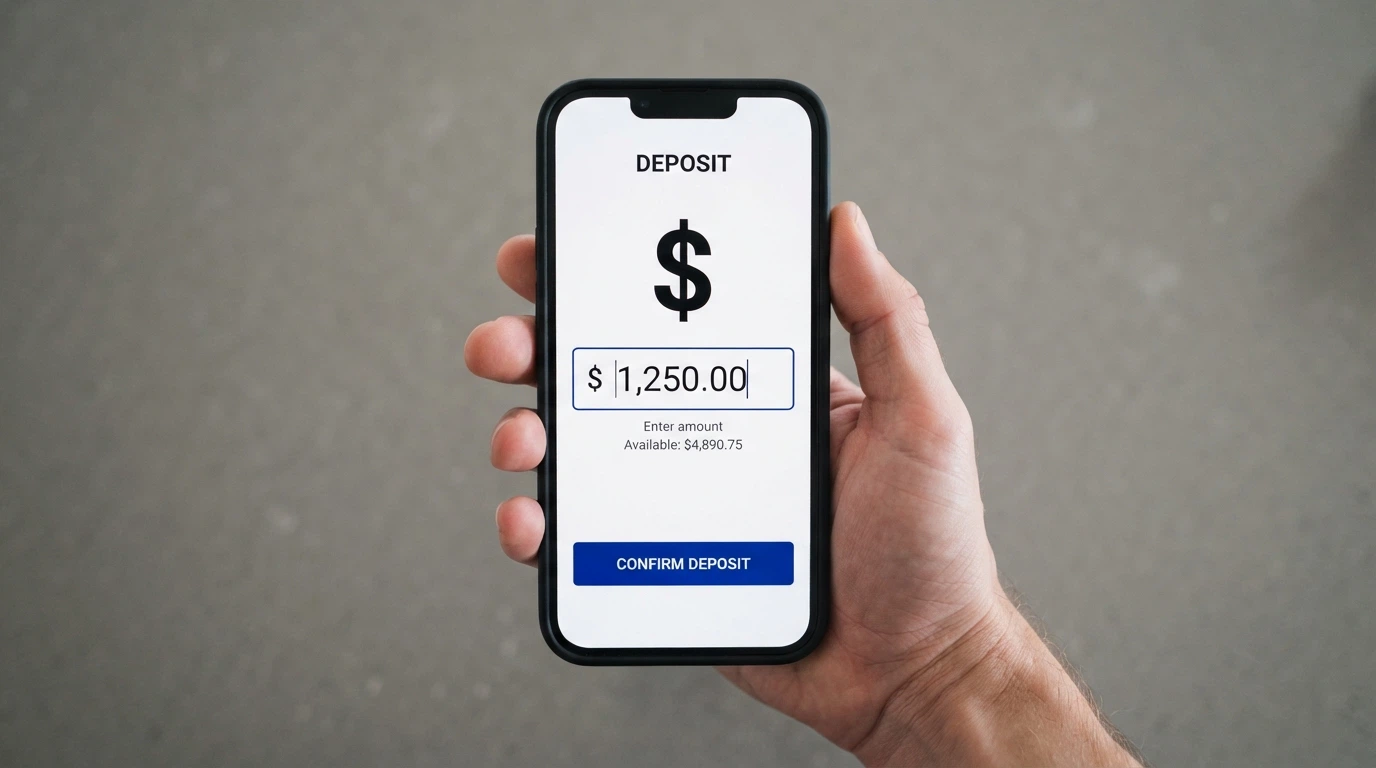
PayID dominates Australian mobile casino deposits. Instant deposits, withdrawals often under 24 hours, and a flow most Australians already use to send money to friends and family through Osko. A player who has ever sent money via PayID already knows how to deposit via PayID — the deposit screen asks for the casino’s PayID (an email, phone number or ABN), the player confirms the amount in their banking app, and the funds clear instantly.
PayID’s dominance tells you something about the operator’s customer base. A casino that has invested in PayID has invested in the Australian market specifically — the integration is not trivial, and only operators who see Australia as a meaningful audience bother to set it up. A casino that has not invested in PayID is either serving Australia as a side market, or relying on methods that work in other regions and happen to be accepted here.
The other deposit methods that work on the AU-facing set are debit cards (Visa and Mastercard debit, not credit — credit has been banned for online wagering since 11 June 2024), bank transfers, and BPAY. Apple Pay and Google Pay are increasingly accepted on mobile, working as front-ends for the underlying debit card. Neosurf and other prepaid voucher systems appear on some operators but are less common than PayID.
PayID — the fastest deposit route for Australian mobile players
The flow is the same as a bank transfer but the speed is different. PayID deposits clear in seconds; traditional bank transfers can take hours. The deposit screen on most AU-facing offshore casinos shows PayID at the top of the cashier list, with a PayID field and (often) an Osko logo. The player enters the casino’s PayID, the amount, and confirms in their banking app.
Withdrawals via PayID are usually under 24 hours, with some operators advertising 2 to 6 hours and a few promising sub-10-minute payouts. The PayID withdrawal flow reverses the deposit flow: the player requests a withdrawal at the cashier, the casino initiates an Osko transfer, and the funds land in the player’s bank account on the same rail.
The combination of instant deposits, fast withdrawals, and a flow that already lives inside Australian banking apps is why PayID has become the default. For a player who already uses PayID, the deposit experience is identical to paying a friend. That familiarity is part of why offshore casinos lean on PayID: the player feels they are paying into a normal Australian financial system, which is exactly the trust signal a brand operating outside Australian regulation needs.
What your deposit method says about where the casino sits
The cashier is a regulatory map. Read it the right way and you can tell which side of the Australian framework the operator is sitting on without reading the terms page.
A casino that accepts credit cards is operating outside Australian rules. Credit cards, credit-related products and digital currency have been banned as payment for online wagering since 11 June 2024, with penalties for non-compliance up to A$247,500 per infringement. A licensed Australian wagering operator cannot legally offer credit card deposits; an offshore operator can and often does. The credit card option is the clearest payment-method tell, and the one most likely to be a deliberate choice by an operator that has decided not to engage with the local framework at all.
A casino that accepts only crypto deposits — Stake being the clearest example in this ranking — is making a stronger statement. Crypto deposits bypass the banking system entirely, and an operator that has chosen to take only crypto has chosen to operate entirely outside the Australian regulatory perimeter. The player who deposits in crypto at an offshore casino has no payment-method-based complaint to bring to any Australian authority, because the transaction didn’t touch one.
A casino that accepts debit cards, PayID, BPAY and bank transfer, and does not accept credit cards or crypto, is at least engaging with the local payment-method framework. That doesn’t make the casino licensed — no online casino licence exists in Australia — but it means the operator has chosen to behave, in payment-method terms, as if it were.
POLi is no longer a payment method anywhere in Australia. The service was withdrawn from the market; any operator claiming POLi support is either out of date or misrepresenting its cashier.
The pokies and tables you will actually play on a phone screen
The mobile pokies catalogue is the headline product at every AU-facing offshore casino. Pokies are what Australian players search for, what the bonuses are attached to, and what the loyalty programs reward. The library is dominated by a handful of large studios — Pragmatic Play, Play’n GO, NetEnt — supplemented by dozens of smaller providers whose games sit behind the same HTML5 wrapper.

The titles with published RTP and volatility figures are a small share of any casino’s library, but they are the titles that matter most for the player who wants to know what they’re playing. The figures below come from the game providers’ own published specs and from third-party slot databases; they are not casino-specific unless stated, and a casino can configure some titles to a lower RTP than the default.
| Pokies Title | Provider | RTP | Volatility | Max Win |
|---|---|---|---|---|
| Big Bass Bonanza | Pragmatic Play / Reel Kingdom | 96.71% | High | 2,100x |
| Sweet Bonanza | Pragmatic Play | 96.48–96.51% | High | 21,100x |
| Gates of Olympus | Pragmatic Play | 96.50% | High | 5,000x |
| Wolf Gold | Pragmatic Play | 96.01% | Medium | 2,500x |
| Book of Dead | Play’n GO | ~95.97% | High | — |
| Starburst | NetEnt | 96.08% | Medium | — |
| Dead or Alive 2 | NetEnt | ~96.80% | Very High | 111,111x |
These are the titles a player will encounter at most AU-facing mobile casinos, and they are the titles whose mathematical profile is publicly disclosed. The remaining hundreds of pokies in any given casino’s library carry their own RTP figures, often in the 94% to 97% range, occasionally dipping below 94% on operator-configured lower tiers. A casino running Gates of Olympus at 94.50% — one of the lower operator-configured tiers for that title — is returning less to the player than the provider’s default, and that configuration is not always disclosed on the casino’s information pages.
Pokies built for a portrait screen — what makes a slot mobile-first
A mobile-first pokies design starts from portrait orientation and works outward. The spin button sits at the bottom of the screen, within the natural arc of a thumb holding the phone one-handed. The balance, the bet selector and the feature triggers all sit above the spin button, reachable without shifting grip. The reels sit at the top, large enough to read at arm’s length without a magnifier.
That’s the ideal. Not every pokie achieves it. Many HTML5 pokies still ship in a landscape default because their desktop design came first and the portrait version is a responsive afterthought. The difference shows up in where the spin button sits, how much screen the reels take, and whether the autoplay and turbo buttons are within easy reach.
The underlying math is unaffected by either orientation. A pokie’s RTP is the same in landscape as in portrait, the volatility is the same, the hit frequency is the same. What changes between a mobile-first design and a desktop-shrunk design is the player’s comfort and speed — both of which feed into how long a session lasts. A comfortable phone player can lose track of time more easily than a desktop player, because the phone is already in the hand. That’s a behavioural difference, and one worth being honest about.
Live-dealer tables on a 6-inch screen — the experience and the trade-off
Live dealer is the segment of the mobile casino catalogue that maps least cleanly to a phone. A live-dealer game streams a real table, a real dealer, real cards or a real wheel, and the player bets on the outcome through the phone interface. On a desktop the video fills most of the screen; on a phone it fills maybe a third, with the betting layout occupying the rest.
The trade-off is data and screen real estate. Live-dealer games stream video continuously, which burns mobile data faster than any pokies session. On home Wi-Fi this is invisible; on a 4G or 5G connection it shows up on the data bill. The screen-size trade-off is harder to solve. A phone can run a live-dealer game, but the cards and the betting layout are smaller than on a desktop, and the social cues that make live casino appealing — the dealer’s reactions, the chat with other players — are compressed into a corner of the screen.
Whether a particular operator offers live-dealer on mobile, and how many tables, depends on the operator’s integrations with the live-dealer studios (Evolution, Pragmatic Play Live, and a handful of others). Most of the larger offshore brands carry live-dealer on mobile. The smaller operators in the bottom half of this ranking may carry a limited selection or none at all. Verification on the operator’s site is the only reliable way to check.
Free mobile pokies — practising before your money is on the line
Demo mode is the practice tool. Most mobile pokies launch in a no-stake mode where the player gets a virtual balance and spins the reels without risking anything. The game engine is the same engine the real-money version uses, so what the player sees in demo is what they’ll get on a real-money spin: same reels, same bonus features, same hit frequency.
The catch is that demo mode is exactly as advertised — a practice tool, not a money-making tool. A player can’t win real money in demo mode, and a player can’t transfer demo winnings to a real-money balance. What demo mode does is let the player learn the game: how often the bonus triggers, what the free-spins round looks like, how the volatility feels across a session. The 30-minute demo session is the closest a player can get to understanding a pokie before committing real money to it.
Free mobile pokies are also available outside any single casino. Slot review sites and game-provider demo pages let players try the same HTML5 pokies without registering anywhere. The same engine runs in both places. A player who wants to try a title before deciding which casino to play at can do so without an account, and should.
What demo mode doesn’t do is predict real-money outcomes. The RTP is the same in demo as in real-money play, but the volatility feels different because the player isn’t watching a real balance shrink. A player who has had a smooth demo session on a high-volatility pokie and assumes real-money play will feel the same is in for an adjustment. Volatility is a long-run measure; a 200-spin demo run is not long enough to feel the full distribution.
Crypto casinos and what a Bitcoin deposit signals to an Australian player
Crypto-only mobile casinos are a distinct sub-set of the offshore market, and Stake is the clearest example in this ranking. A crypto casino accepts Bitcoin, Ethereum and a handful of other tokens at the cashier. Withdrawals go back to the player’s wallet, not to a bank account. The transaction is on a public ledger, but the player’s identity is not.
Crypto acceptance is itself a signal that the operator sits outside the Australian regulatory perimeter. Australia banned credit cards and digital currency as payment methods for online wagering on 11 June 2024, with penalties for non-compliance up to A$247,500. A casino asking for a crypto deposit is, by definition, not playing by the Australian rules — even though those rules technically apply only to licensed Australian wagering operators, not to offshore ones. The ban is the framework the local licensed sector operates inside; the crypto-only offshore casino has chosen not to operate inside that framework at all.
The crypto casino’s value proposition to a player is speed, privacy and (in some cases) provably fair game outcomes — where the random number generator is verifiable on the blockchain. The trade-off is that the player has no Australian payment-method-based complaint to make, no recourse through Australian regulators, and a balance stored in a currency whose value can swing 10% in a week. The anonymity claim is partial at best: blockchain transactions are public, and chain-analysis firms have got better at de-anonymising them.
A player choosing a crypto casino is choosing a particular way to engage with offshore gambling. It is not a way that the Australian regulatory framework supports. The player who chooses it accepts that the framework’s protections do not apply to them.
New mobile casinos in 2026 — does fresh mean better?
The AU-facing offshore mobile casino market sees new brands enter regularly. A new casino is one that has launched its site in the past 12 to 24 months, often with a fresh design, a modern mobile-first build, and a welcome bonus designed to compete with established players.
The new-casino value proposition has two parts. The first is the bonus: a new operator needs players, and player-acquisition spend shows up in headline-grabbing welcome offers — higher match percentages, more free spins, lower minimum deposits. The second is the technology: a new operator is building on current HTML5 standards, with portrait-first design, biometric login and modern PWA delivery built in from the start, rather than retrofitted onto a desktop-era codebase.
The trade-off is the absence of a track record. A new operator has no public payout history, no accumulated third-party reviews, no reputation built up over years of complaints and resolutions. The player who deposits at a new casino is trusting a brand whose behaviour under stress — refused withdrawals, voided wins, slow payouts — is not yet visible. That trust is reasonable for a small test deposit; it is harder to justify for a large first deposit.
The ranking above does not include any brand launched in the past 12 months, because the search-demand data the ranking measures needs time to accumulate. The newest brands in the AU-facing space will not appear in market-share figures until they’ve been running long enough for Australian players to find them in volume. The reader looking for a new brand will have to find it through other channels — comparison sites, affiliate pages, word of mouth — and apply the same verification work to it as to any other entry on this list.
The law every Australian mobile casino player needs to read
The Interactive Gambling Act 2001, strengthened by the Interactive Gambling Amendment Act 2017, makes it an offence to provide online casino games, online pokies and in-play sports betting to a person in Australia. No licence for online casino exists anywhere in the country — not federally, not in any state, not in any territory. The Australian Communications and Media Authority, the ACMA, enforces this. Since its first blocking request in November 2019, the ACMA has had 1,564 illegal gambling and affiliate websites blocked by Australian ISPs (as at March 2026), and more than 225 illegal services have withdrawn from the market since 2017.
The individual player is not prosecuted. The IGA targets the provider, not the person holding the phone. That distinction is the gap the entire offshore market operates in, and it is the gap that the 2026 reform is designed to close.
The Interactive Gambling Amendment (Gambling Reform) Bill 2026 passed Parliament on 19 August 2026 and its measures commence on 1 January 2027. The headline changes: a cap of three wagering advertisements per hour between 6am and 8:30pm, a live-sport blackout for advertising from 15 minutes before a live sporting event until five minutes after it ends, a ban on athletes, celebrities and influencers promoting wagering products, an outright ban on broadcasting sporting odds, a prohibition on direct marketing of inducements for 14 days after a customer signs up (and indefinitely for customers flagged as at risk), and — the change that matters most for offshore operators — express authority for banks and payment providers to block transactions to illegal gambling operators from 1 January 2027.
The bank-blocking authority is the change that reaches the offshore player most directly. Today, a player who deposits at an offshore casino is using a payment method that the casino’s payment provider has agreed to process. From 1 January 2027, Australian banks gain the legal cover to block transactions at their end — declining the payment before it reaches the offshore operator. That doesn’t make the offshore casino disappear, but it does make the deposit harder to complete.
The Interactive Gambling Act — what it actually bans, and what it doesn’t
The IGA prohibition is narrower than it sometimes reads. The Act targets three specific product categories: online casino games, online pokies, and in-play sports betting. What is licensed — through state and territory regulators — is wagering on races and sport placed before the event begins, lotteries, and keno. The Northern Territory Racing and Wagering Commission, through Licensing NT, is the de facto national licensor for online bookmakers; large operators like Sportsbet, bet365 and Ladbrokes hold NT licences running for terms of up to 20 years.
The minimum age for all commercial gambling in Australia is 18. Under-18 gambling is prohibited everywhere, regardless of the licensing status of the operator. The IGA’s framework assumes the prohibition of online casino is enforced at the supply side; the age restriction is enforced at both supply and demand.
The shape of the prohibition is what makes the offshore market exist. Australian players want to play online casino games; no Australian licence can be issued; the offshore market steps in. The decision to play at an offshore casino is the player’s to make, and the consequences of that decision — no Australian consumer protection, no BetStop coverage, no ACMA recourse — are the player’s to bear.
Offshore vs licensed — the protections an Australian player loses at an unlicensed casino
The list of protections an Australian player takes on by leaving the licensed perimeter is concrete.
No Australian consumer protection. The Australian Competition and Consumer Commission and the Australian Financial Complaints Authority handle disputes between Australian consumers and Australian businesses. An offshore casino is not an Australian business; a complaint to either body is outside their jurisdiction. The player whose withdrawal is refused or whose bonus is voided at an offshore casino has recourse through the regulator that issued the casino’s licence — which is unlikely to be in Australia — and that’s it.
No BetStop coverage. BetStop, the National Self-Exclusion Register, went live in August 2023. One registration excludes a person from every Australian-licensed online and phone wagering service in a single step. As at 31 July 2026, the register held 67,480 registrations, of which 41,290 exclusions were still active — more than 60% of everyone who has ever registered. BetStop binds licensed services only. An offshore casino is not connected.
The site can disappear mid-play. The ACMA’s enforcement runs in waves. A casino that was accessible yesterday can be on the ISP-block list today, with the player’s balance locked behind a service the Australian internet can no longer reach. The regulator has had 1,564 sites blocked in total, and the rate has not slowed. The block list grows.
The payment-method tell. Credit cards and crypto have been banned for online wagering since 11 June 2024. The legal deposit routes for licensed Australian wagering are debit card, bank transfer, PayID/Osko and BPAY. A casino asking for credit or crypto is operating outside the local framework — a clear signal, available before the player has deposited a cent.
Staying in control when the casino lives in your pocket
Mobile gambling’s convenience is also its risk. A casino that lives on your home screen is one tap away at any hour. The responsible-gambling tools an Australian-licensed operator must offer — deposit limits, take-a-break, BetStop self-exclusion — are designed to interrupt that ease, and they work well when they exist.
BetStop is the most powerful single tool. One registration, completed online in a few minutes, excludes a person from every Australian-licensed wagering service for a chosen period (or lifetime). 67,480 Australians have registered since August 2023; 78% of registrants were under 40 and 38% chose lifetime exclusion. The register holds 41,290 active exclusions as at 31 July 2026. For a player whose gambling has become a problem and who is using only Australian-licensed services, BetStop is effective and immediate.
For a player using offshore casinos, BetStop is not enough. The register does not reach offshore brands; a BetStop registration does not stop an offshore casino from accepting deposits, sending bonus offers, or processing bets. Self-exclusion at an offshore casino has to be set up at that casino individually, and the casino has no obligation to honour it.
The figures that frame why this matters are not small. About 2.1% of Australian adults — roughly 430,000 people — experience problem gambling. Broader modelling puts the figure of Australians affected annually by their own or another person’s gambling at 3.29 million, including around 1.38 million adult affected others and 280,000 affected children. The annual health loss associated with gambling-related harm in Australian adults is estimated at over 400,000 Years Lived with Disability. At-risk gambling in the population rose from 11% in 2019 to 15% in 2024.
For Australian adults who regularly bet online on sports or races (at least monthly), more than 70% are experiencing or at risk of experiencing gambling harm. Only 5% of the at-risk group sought help in the past 12 months. The gap between those who need help and those who ask for it is the gap the responsible-gambling tools — and the helpline — exist to close.
BetStop, deposit limits and the tools that work from a phone — and the ones that don’t
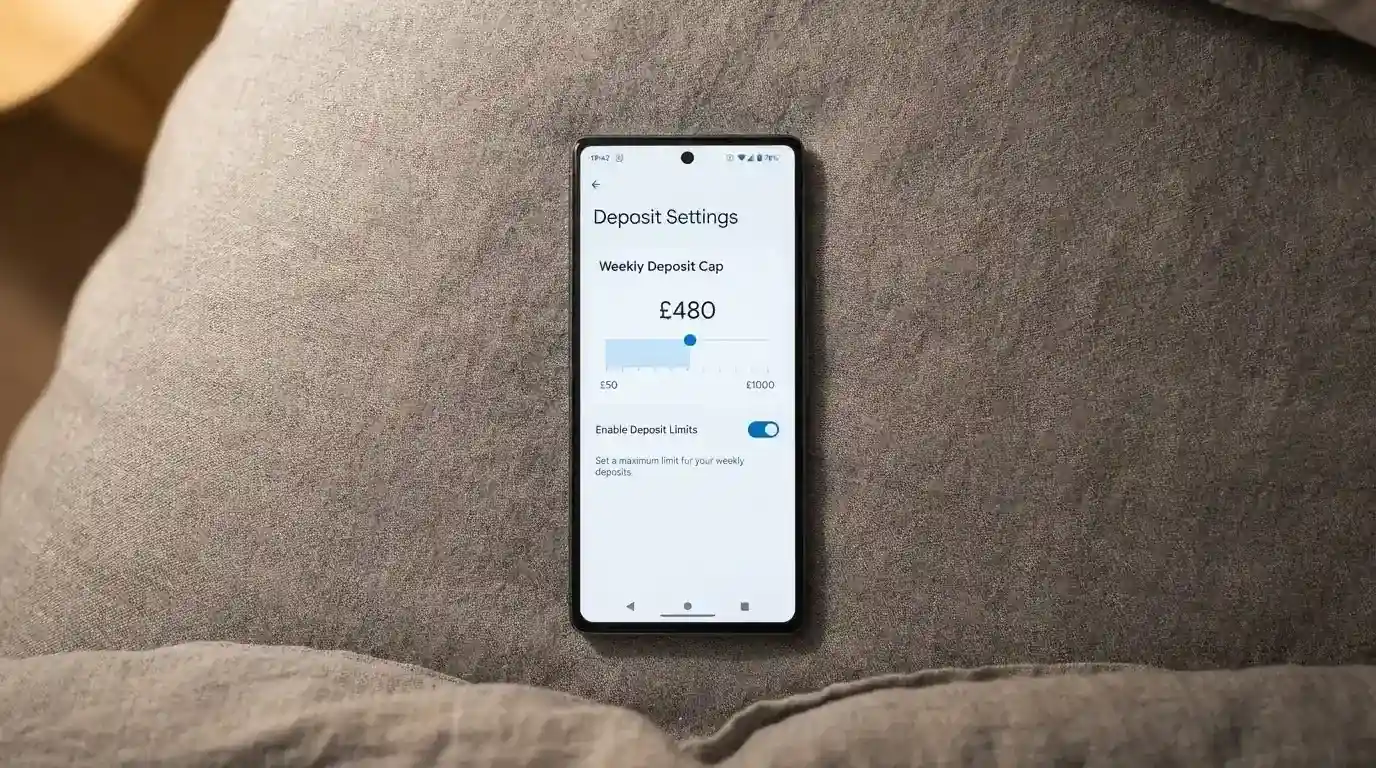
The self-help toolkit, for an Australian-licensed player, can be set up in under five minutes from a phone. BetStop registration at betstop.gov.au takes a few minutes and covers every licensed wagering service. Deposit limits — daily, weekly, monthly — can be set at any operator’s responsible-gambling page and take effect immediately. Take-a-break tools lock the account for a chosen period (24 hours, a week, a month) and cannot be reversed early.
On an offshore casino, none of these are guaranteed. Some offshore operators offer deposit-limit and take-a-break tools voluntarily; many do not. The player who wants these protections at an offshore casino has to set them up with that specific casino, and they take effect only as long as the casino honours them. If the casino changes terms, withdraws from the Australian market, or blocks the player’s account, the protection goes with it.
The National Gambling Helpline — 1800 858 858 — is free, confidential and staffed 24 hours a day, 7 days a week. Gambling Help Online at gamblinghelponline.org.au offers live chat, email counselling and self-test tools. These are the safety net that the offshore gap doesn’t close and that no operator can revoke.
The 2026 reform tightens the marketing side of the picture. From 1 January 2027, direct marketing of inducements is prohibited for 14 days after a customer signs up and indefinitely for customers identified as at risk of gambling-related harm. The reform also prohibits inducement marketing for three months after a person deregisters from BetStop. None of this binds offshore operators — they are not within the Australian regulatory perimeter — but it does reduce the pressure on the Australian-licensed side of the market to keep pushing bonuses at the players who have just opted out.
How these mobile casinos were compared — the criteria behind the list
The ranking in this article rests on a single signal: market-share data, the rough traffic and revenue estimates that show where Australian mobile-casino search demand is concentrated. This is a reach ranking, not a quality ranking, and the choice of reach as the ordering criterion is itself worth explaining.
There is no Australian licensing benchmark to apply, because no Australian online casino licence exists. A ranking that ordered operators by licence quality — best-licensed first — would be empty. The only ordering that produces a non-empty list is one based on data the offshore market does provide: search traffic, market share, public reach.
The operator set was identified through search-demand data targeting the AU-facing mobile casino market. Each operator’s market-share figure is an estimate drawn from that data; it is not a published, audited figure and should be read as a rough ordering signal rather than a precise percentage. The ten brands listed are the ten brands that consistently surfaced in this data; brands that did not surface are not in the ranking, and their absence is not a judgement of their quality — only of their search visibility in the data set used.
What was checked, beyond market share: the ACMA’s public register of blocked services, to confirm that no operator on the list holds an Australian casino licence (none does, because none can). The published payment-method bans under the Interactive Gambling Amendment (Credit and Other Measures) Act 2023, to confirm that credit card and crypto acceptance on any brand places that brand outside the Australian regulatory framework. The BetStop register’s published statistics, to confirm the scope of Australian-licensed self-exclusion.
What was not checked at the operator level: each brand’s current licence jurisdiction, current welcome bonus, current game provider list and current mobile delivery method. The operator-level sweep failed during the data-gathering pass for this article, and the right place to verify those specifics is the operator’s own terms page. This article carries the search-demand and regulatory frame; the reader’s own check on the operator’s terms page fills in the operator-specific details.
The criteria a player should weigh, beyond search share: the licence jurisdiction (Curaçao, Anjouan, Tobique — each carries different complaint mechanisms and different audit requirements); the wagering multiple on the welcome bonus (lower is better, 25x is the floor of reasonable); the deposit and withdrawal methods (PayID and debit card preferred; credit card and crypto are tells); the responsible-gambling tools offered (deposit limits, take-a-break, self-exclusion at the operator level); the published RTP tiers on the games; and the third-party reviews and complaint history on player forums.
What you should actually do next — picking a mobile casino from Australia with your eyes open
The framework the previous sections have built is the framework this verdict stands on. Every mobile casino an Australian player can reach is offshore. None holds an Australian licence, because no such licence can exist. The player is not prosecuted for playing, but is unprotected by Australian consumer law, by BetStop, and by the ACMA’s complaint-handling if the operator acts badly. The welcome bonus costs more than it pays, in expectation, by an amount the wagering multiple and the game RTP determine together. The deposit method tells you which side of the regulatory fence the operator sits on.
The decisions that follow from that framework are not the article’s to make for you. The article’s job is to set the framework; the player’s job is to act inside it.
Before you deposit at any mobile casino from Australia, do four things. Check the licence jurisdiction — open the operator’s terms page or footer and read which regulator issued the licence, then check that regulator’s register to confirm the licence is current. Read the bonus terms in full — the wagering multiple, the game weighting, the max cashout on bonus winnings, the expiry window. Test the withdrawal with a small amount before you commit a larger one — every operator’s withdrawal flow works differently, and the only way to know how this one behaves is to withdraw. Set a deposit limit before you open the account, not after — the limit is harder to set honestly once the balance is already on the site.
The one thing the page’s own figures show is that no bonus is free. The arithmetic is consistent: a 100% match at 35x wagering on a representative high-volatility pokie carries an expected loss above the bonus value, in expectation. A player who treats the welcome bonus as a gift will end up paying for it; a player who treats it as a marketing budget the casino is spending to acquire them — and who would otherwise not have played at all — is the only player for whom the offer makes sense.
Keep the National Gambling Helpline — 1800 858 858 — somewhere a phone already knows about. Save it to contacts. The number is free, confidential and available 24/7. The decision about whether to keep playing is one the reader makes; the decision about whether to call the helpline is one that’s easier to make when the number is already in the phone.
Frequently asked questions
What is BetStop and does it cover offshore casino sites?
BetStop is Australia’s National Self-Exclusion Register, live since August 2023, with 67,480 registrations and 41,290 still active as at July 2026. One registration excludes you from every Australian-licensed wagering service. It does not cover offshore mobile casinos — those brands continue accepting deposits and bets from self-excluded players. Offshore exclusion has to be set up individually at each operator.
How do I know if a mobile casino is safe for Australian players?
No mobile casino is licensed in Australia — no such licence can exist. “Safe” therefore means licensed somewhere reputable (Curaçao, Anjouan or the Tobique Gaming Commission), with audited games, clear bonus terms and a cashier using debit card, PayID or bank transfer rather than credit or crypto. Test the withdrawal with a small deposit first.
Are free mobile pokies available without depositing money?
Yes — demo mode is standard on HTML5 pokies. The same engine runs in demo as in real play, so you see identical reels and features without risking funds. Demo winnings cannot be withdrawn, and demo balances don’t transfer to real money. Free pokies also exist on slot review sites and provider demo pages.
Do I pay tax on mobile casino winnings in Australia?
No — for an ordinary punter. Gambling winnings are not assessable income under section 6-5 of the ITAA 1997, and losses are not deductible under section 8-1, unless you are carrying on a business of gambling. No Australian case has held a punter’s winnings assessable. Recreational gamblers don’t pay tax on winnings and can’t deduct losses.
Can I use PayID to deposit at a mobile casino?
Yes — PayID is the most common AU mobile deposit method at the offshore casinos Australian players use. Deposits are instant, withdrawals often clear under 24 hours, and the flow mirrors a normal Osko bank transfer. PayID is a legal deposit route for licensed wagering. Some operators also accept Apple Pay and Google Pay.
Published by the Bitcoin Casinos Australia team.