
No Wager Casino Bonuses in Australia: The Maths, the Marketing, and the Offshore Trade-Off
Verified against operator bonus terms and ACMA enforcement data as of 18 October 2026
Every “no wager” casino list in Australia reaches the same conclusion: there is almost no such thing. What most affiliate pages call a no-wager bonus is a 30x or 40x playthrough dressed up with a friendly adjective. The real count of confirmed zero-playthrough offers in the Australian-facing market is small enough to name in a single sentence, and the gap between those genuine offers and the standard market is measured in real dollars — not in marketing words.
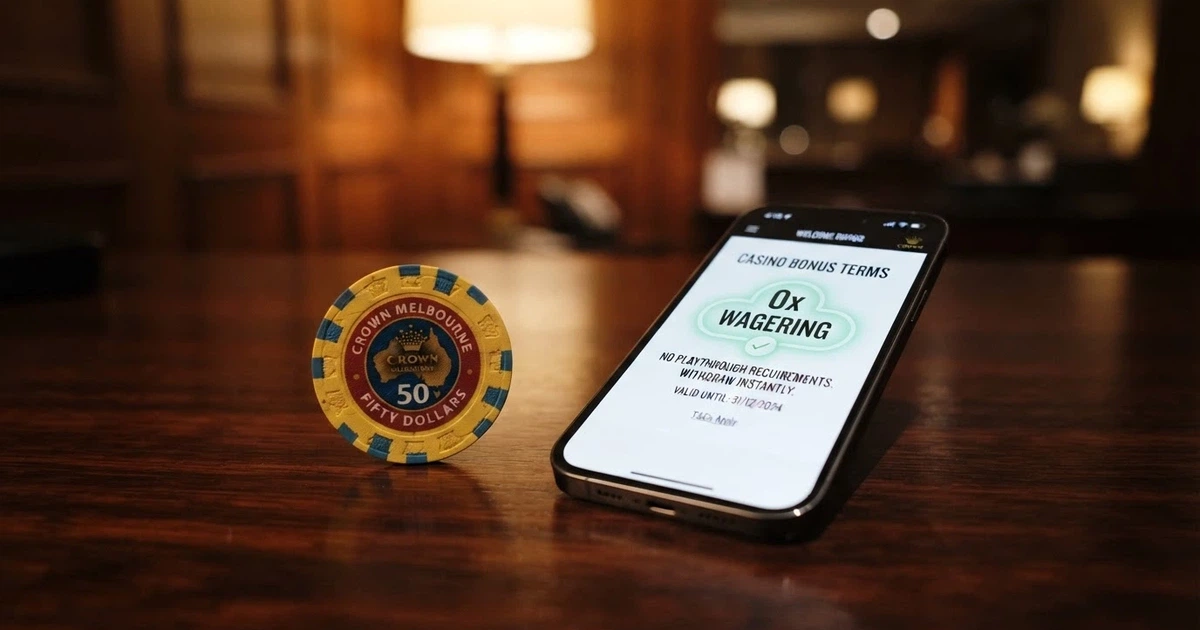
That gap is the reason this page exists. A no-wager bonus sounds like a gift, and in a narrow sense it is: every dollar you win from a wager-free spin is yours to withdraw, no playthrough, no timer, no rollover. The catch sits one layer up, in the offshore status of every casino offering these bonuses to Australians. Online casino is prohibited under the Interactive Gambling Act 2001; no licence exists. Every brand on this page is offshore by definition, and offshore means no BetStop, no ACMA recourse, and a site that can be blocked by Australian ISPs while your balance sits on it. The “no wager” savings you pocket at the reels can be lost at the cashier if the operator decides to slow-walk a withdrawal or disappear.
This page walks through the bonus mechanics, the expected-loss maths, the licensed-versus-offshore divide, and the ten offshore brands that surface most often in Australian no-wager searches. It is written for the player who wants to know what a bonus is worth before claiming, not after.
Table of Contents
- What “No Wager” Actually Means, and What It Does Not
- Understanding Zero-Wagering Mechanics
- The Arithmetic of Zero-Playthrough Offers
- Featured Platforms for Australian Players in 2026
- No-Deposit Bonuses: Strategy and Limitations
- Strategies for Free-Spin Withdrawals
- Middle-Ground Playthrough Offers Reviewed
- Cash Spins: Real-Money Potential Without Turnover
- Segmented Welcome Offers and Playthrough Rules
- Clean Sign-Up Mechanics and Withdrawal Caps
- The Economic Reality of Low-Playthrough Incentives
- Leading Platforms by Playthrough Multiple
- Pokie Variance and Wagering Progress
- Payment Method Diagnostics and Red Flags
- Crypto-Asset Enforcement and Regulatory Boundaries
- Pokie Performance Factors in Wagering Clearing
- Top-Tier RTP Options for Efficient Clearing
- Popular Pragmatic Play Titles and Their Mechanics
- Strategic Evaluation of Bonus Terms and Value
- Multi-Factor Assessment of Offer Viability
- Calculators for Expected House-Edge Loss
- Researching Unverified Brands and Affiliate Listings
- Evaluation of Emerging Offshore Operators in 2026
- Legislative Landscape and Offshore Operations
- Resources for Gambling Harm Mitigation
- Transparency in Selection and Evaluation Criteria
- Trade-Off Analysis: Value Versus Protection Gaps
- Frequently Asked Questions
What “No Wager” Actually Means, and What It Does Not
A wagering requirement is the multiplier a casino applies to a bonus before winnings become withdrawable cash. On a $100 bonus with a 35x multiplier, the player must place $3,500 in qualifying bets before the bonus money, and any winnings tied to it, can be cashed out. A 0x wagering bonus removes that requirement entirely. Every dollar won from a wager-free spin or wager-free chip lands directly in the real-money balance, and from there it is withdrawable. No playthrough. No rollover. No count-down timer on the bonus.
What it does not mean is the marketing reading. Affiliate pages call a 30x or 40x bonus “low wager” and treat the label as a near-equivalent. It is not. On a 96% RTP slot, clearing a $100 bonus at 35x costs the player roughly $140 in expected house-edge loss — most of the headline value of the bonus is gone before the wagering requirement is even met. A genuine 0x bonus keeps that $140 in the player’s pocket. The difference is not a rounding error; it is the entire economics of the offer.
The other loose use of “no wager” is the one that hides behind game weighting. A bonus may advertise 0x on a narrow set of titles while running standard playthrough on the rest of the lobby. A bonus may attach the 0x label only to free-spin winnings while the deposit match behind it carries 40x. Read the small print. A “no-wager free spin” inside a 40x welcome package is a different proposition from a 0x bonus that covers the whole balance.
Understanding Zero-Wagering Mechanics
Three forms of bonus can carry genuine 0x wagering. Each works differently, and each has a different cashout profile.
No-deposit free spins with 0x wagering are the cleanest. The casino credits the spins, the player uses them, and anything won goes straight to the real-money balance. The catch sits in the cashout cap: the operator hedges the no-deposit risk by capping how much a player can withdraw from winnings derived from the free spins. The cap is the real limit on the offer’s value.
No-wager cashback on net losses is the second form. The casino calculates net losses over a period, returns a percentage, and lets the player withdraw the cashback without playthrough. This is the closest thing to a true safety net in the offshore market, and the percentage matters: 10% cashback at zero wagering is materially more generous than 5% cashback at 5x wagering, because the player keeps the full returned amount in both cases but the lower percentage leaves more on the table.
Welcome packages marketed as wager-free are the rarest, and the most often mislabelled. A deposit-gated welcome that advertises “wager-free” on the bonus side but applies 30x to free-spin winnings is not a wager-free welcome; it is a split package where the no-wager label covers only one of two moving parts.
The typical no-deposit bonus in the Australian market sits well above zero: 20 to 100 free spins or a small chip, with 30x to 50x wagering attached. The standard structure is the one that earns the marketing word “low,” and the maths below shows why “low” is doing heavy lifting in that sentence.
The Arithmetic of Zero-Playthrough Offers
The honest comparison between a 0x bonus and a 35x bonus is not qualitative. It is arithmetic. On a $100 bonus at 35x wagering, the player must turn over $3,500. At 96% RTP, the expected house-edge loss on that turnover is roughly $140. The “free $100” has cost $140 to clear, and the player is now $40 behind before any subsequent play. A 0x bonus skips the $3,500 turnover entirely. There is no house edge to absorb because there is no playthrough to grind. The player keeps whatever the bonus paid out, less only the inherent house edge on the spins themselves (which is much smaller than $140 because the turnover is also much smaller).
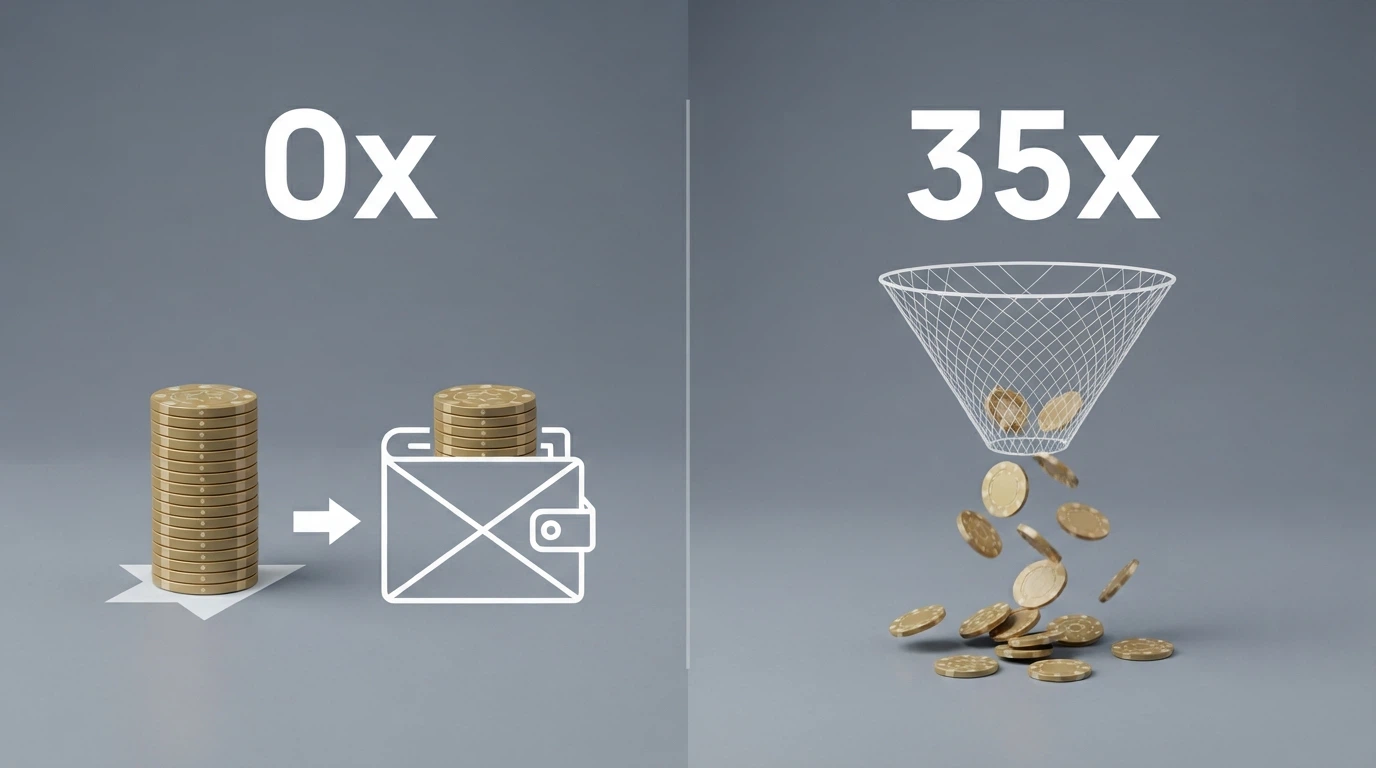
The same logic extends downward. A 10x wagering bonus on $100 requires $1,000 in turnover, costing roughly $40 in expected loss. That is better than $140, and it is far better than a 50x bonus, which costs the player $200 in expected loss. The cost curve is steep, and the gap between “low” and “zero” is the largest single step in it. A 10x low-wager bonus is a real saving. A 35x low-wager bonus is mostly a marketing word.
Australian-facing no-deposit bonuses cluster in the 30x to 60x range, which is the worst part of that curve for the player. The headline value of a no-deposit chip is small — A$10 to A$50 — and the wagering multiple is large, so the effective cost as a percentage of the bonus is high. A A$50 no-deposit chip at 60x carries a $3,000 turnover requirement and roughly $120 in expected loss. The cap on the cashout, often A$180, does not save the player; it limits the upside while the wagering eats most of the headline.
Featured Platforms for Australian Players in 2026
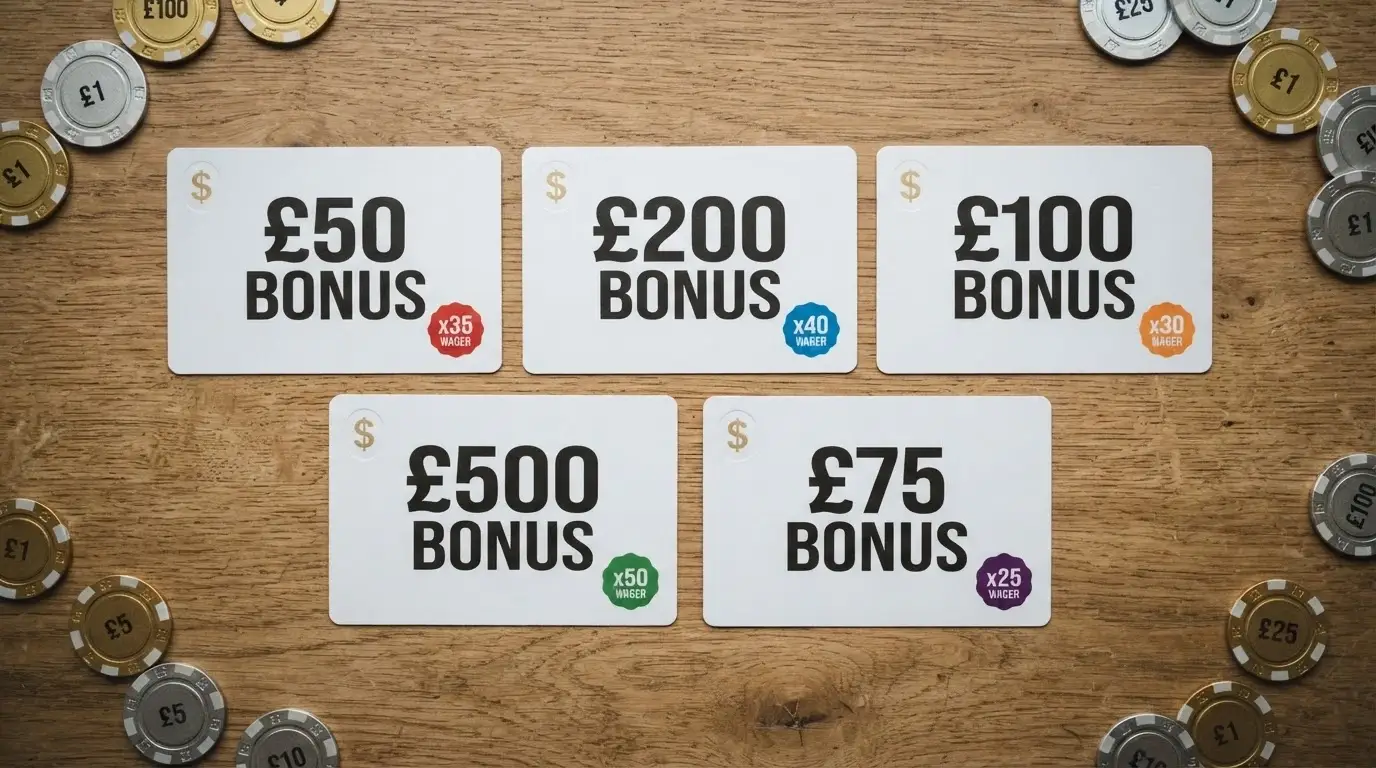
The featured set spans one confirmed 0x wager offer through to standard 40x welcome packages. No brand in the table holds an Australian licence; online casino is prohibited under the Interactive Gambling Act 2001, and no such licence exists federally or in any state or territory. Every entry below is an offshore operator, and the table sorts them by the wagering multiple on the headline welcome offer, from lowest to highest.
| Operator | Welcome Bonus | Wagering Requirement | Free Spins |
|---|---|---|---|
| Fair Go Casino | 300% up to A$3,000 + 50 FS on Cash Bandits 2 | 30x deposit + bonus | 50 on Cash Bandits 2 |
| Rainbet | 100% up to A$300 + 50 FS (mobile) | 30x | 50 (mobile welcome) |
| Royal Reels | A$2,500 + 50 FS across 3 deposits | 35x bonus only | 50 at A$0.20 |
| SkyCrown | A$8,000 + 400 FS across 4 deposits | 40x bonus / 30x FS | 400 (split) |
| RocketPlay | 100% up to A$1,000 + 100 FS | 40x | 100 (20/day × 5) |
| Bizzo Casino | Not confirmed (30 no-deposit FS reported) | 40x | 30 no-deposit |
| WinSpirit | Not confirmed | 45x | — |
| Stake | None confirmed (VIP/rakeback model) | — | — |
| Scream Casino | Not confirmed | Not confirmed | — |
| Rocket Casino | Not confirmed | Not confirmed | — |
A 30x deposit-plus-bonus structure is not the same as a 30x bonus-only structure, and the table tells only half that story. Fair Go’s 30x applies to the combined deposit and bonus, which doubles the effective multiplier on the bonus alone. Royal Reels’ 35x applies to the bonus only, which makes it the lower-cost offer of the two despite the higher headline number. The wagering multiple is the first thing to read; the structure behind it is the second.
The rows for Stake, Scream Casino, and Rocket Casino are honest gaps. Research this run did not surface confirmed bonus terms for these operators. Where a wagering multiple is shown for WinSpirit, it comes from a comparative page and was not verified against the operator’s own terms. Where Stake, Scream Casino, and Rocket Casino have nothing listed, treat the silence as “terms not confirmed this run” rather than “no bonus available.”
SkyCrown — Confirmed Zero-Playthrough Spins
SkyCrown runs the closest thing to a true no-wager bonus available to Australian players this run. The headline welcome package is large: A$8,000 across four deposits, plus 400 free spins, with 40x wagering on the bonus and 30x on free-spin winnings. The free spins themselves are split across the four deposit tiers, and the 30x playthrough on free-spin winnings is not zero.
What is zero is the 15 wager-free spins on Sweet Bonanza 1000 that SkyCrown runs as a separate, no-deposit offer. Those spins carry 0x wagering; winnings credit to the real-money balance, with a A$40 cashout cap and a 7-day expiry. It is a small offer — fifteen spins at a low stake, with a ceiling on what the player can take from it — but it is the only confirmed genuine 0x wager promotion in the featured set.
SkyCrown also runs a 10% weekly cashback up to A$500, credited every Monday, with no wagering attached. That is a meaningful safety net for a regular player: 10% of net losses returned in cash, withdrawable on demand. The percentage is generous by market standards, and the absence of playthrough on the returned amount is what makes the offer worthwhile rather than a token gesture.
The provider list is broad: 70+ studios including Pragmatic Play, Hacksaw Gaming, Nolimit City, Play’n GO and Push Gaming. Sweet Bonanza, the title attached to the wager-free spins, is a Pragmatic Play release at 96.51% RTP with high volatility — a high-variance game means the player will see dry stretches punctuated by occasional larger hits, and at 15 spins the variance matters more than the RTP. The cap is the real constraint, not the slot.
The verdict on SkyCrown is that it carries the only confirmed 0x wager offer in the set, attached to a 15-spin no-deposit promotion that is small in dollar terms. The cashback is the more interesting line in the fine print for a player who intends to play regularly.
Royal Reels — Low-Playthrough Welcome and No-Deposit Entry
Royal Reels’ welcome is A$2,500 plus 50 free spins across three deposits: 100% up to A$500, then 75% up to A$750, then 100% up to A$1,250. The wagering is 35x on the bonus only, with a A$5 maximum bet per spin during the playthrough. The 50 free spins sit at a A$0.20 stake.
The 35x bonus-only structure is the right side of the wagering ledger for the player. Compared to a 35x deposit-plus-bonus structure, the player is grinding half the turnover. Compared to a 40x bonus-only structure, the player is saving 5x of bonus-amount turnover — a meaningful $250 of avoided risk on a $50 deposit bonus.
The no-deposit entry point is a A$10 free chip with 30x wagering. That is not a no-wager offer; it is a low-wager no-deposit offer, and it sits at the better end of the no-deposit curve. A$10 at 30x is a $300 turnover requirement, costing roughly $12 in expected loss at 96% RTP, with a cashout cap on the winnings that the operator sets at activation. The player is paying roughly $12 to chase a capped real-money payout — not free, but the cheapest test drive in the set.
The verdict on Royal Reels is that the combination of a 35x bonus-only welcome and a 30x no-deposit chip puts it at the cheaper end of the featured set, though the absolute size of the welcome is smaller than SkyCrown’s.
Fair Go Casino — RTG Specialist With High Cashback Potential
Fair Go runs RealTime Gaming software, which is a smaller and more concentrated provider list than the multi-studio lobbies at SkyCrown or RocketPlay. For players who like the RTG catalogue — and many Australian players do — that is a feature, not a limitation.
The welcome is 300% up to A$3,000 plus 50 free spins on Cash Bandits 2, with no maximum cashout on the welcome bonus. The 300% match is the largest percentage match in the set, and the absence of a cap on the welcome is unusual — most operators cap the cashout from a matched deposit bonus at 5x to 10x the bonus value.
The wagering is 30x on deposit plus bonus, and the structure matters. On a A$1,000 deposit with the 300% match, the player receives a A$3,000 bonus, and the 30x applies to the A$4,000 combined balance — a $120,000 turnover requirement at 96% RTP, costing the player roughly $4,800 in expected loss. That is not a rounding error, and the 30x number reads very differently once the deposit-plus-bonus structure is in the calculation. The 300% match inflates the bonus, and the inflated bonus inflates the cost of the playthrough.
The no-deposit offer is a A$50 chip with 60x wagering and a A$180 cashout cap. A$50 at 60x is a $3,000 turnover, costing roughly $120 in expected loss. The A$180 cap means the player keeps at most A$180 from the chip, which limits the upside while the wagering absorbs the headline. The A$10 max bet during the bonus is a constraint that slows the grind further.
Fair Go also runs cashback up to 40% of net losses, which is the highest cashback rate mentioned in the set. Cashback terms vary, and the percentage alone is not the full picture, but 40% on net losses is a meaningful cushion for a player who intends to make the welcome bonus last.
The verdict on Fair Go is that the 300% welcome and the no-max-cashout structure look generous on paper, but the 30x deposit-plus-bonus multiplier inflates the cost in proportion to the inflated bonus. A player who maximises the deposit is paying through it. The RTG catalogue and the high cashback are the genuine advantages.
RocketPlay — 100 Free Spins and a 40x Wager Across a 100-Provider Lobby
RocketPlay’s welcome is 100% up to A$1,000 plus 100 free spins, with the spins delivered 20 per day for five days. The wagering is 40x on the bonus, with a A$30 minimum deposit, a A$7.50 maximum bet during wagering, a 5-day bonus validity, and a A$300 maximum win from the spins.
The 5-day validity is the tight constraint in the package. A $1,000 bonus at 40x is a $40,000 turnover requirement, which on a A$1.50 average spin is roughly 26,000 spins. At 600 spins an hour, that is 43 hours of play across five days, or roughly 8.5 hours per day. The validity is achievable for a focused player and punishing for a casual one. The A$300 cap on free-spin winnings is also worth noting: a 100-spin batch at strong returns could clear that ceiling quickly, and any winnings above A$300 from the spins are forfeited.
The 100+ provider lobby is the broadest in the set, and that breadth cuts both ways. A player who wants a specific studio’s catalogue will find it; a player who prefers a curated list of high-RTP titles will have to search. The Pragmatic Play and BGaming catalogues are the bulk of the lobby.
RocketPlay also runs a larger 300% welcome up to A$6,000 plus 300 free spins, with 30x–40x wagering and a weekly cashback at 5x wagering. The cashback at 5x is the kind of structure that requires a calculation: 5x on the cashback amount is a small hurdle, but it is not the 0x that makes SkyCrown’s 10% worth highlighting.
The verdict on RocketPlay is that the 100-spin welcome is competitive for a player who can clear the playthrough inside the 5-day window. The 5x cashback wagering is the kind of detail that should make a reader check the terms page directly, because 5x on the cashback amount is materially different from 0x on the cashback amount.
Rainbet — Mobile-Exclusive Welcome and Proprietary Game Suite
Rainbet’s welcome is mobile-only: 100% up to A$300 plus 50 free spins, with 30x wagering and a A$45 minimum deposit. The mobile-only restriction is unusual, and a player on desktop who tries to claim the welcome will not see it. The A$45 minimum is also higher than the A$20 to A$30 range that the rest of the set uses, which narrows the entry point.
The 30x bonus-only structure is one of the lowest in the set, and on a A$300 bonus the player is looking at a $9,000 turnover requirement. At 96% RTP, the expected loss is roughly $360. That is a meaningful cost, but the multiple is the right one, and the structure is the right one — bonus only, not deposit plus bonus.
The proprietary games catalogue is the point of difference. Rainbet runs its own Plinko, Crash and Mines titles, which are simple, fast, and sit outside the standard pokie catalogue. Crash and Mines are the kind of games a player either loves or ignores, and their contribution to wagering requirements varies. Check the terms before committing a bonus to a proprietary title.
The no-deposit offer is a A$10 chip with 60x wagering. A$10 at 60x is the same structure as Fair Go’s no-deposit chip, scaled down. The cost is roughly $24 in expected loss for a capped real-money payout, which is not a bargain and is not a trap.
The verdict on Rainbet is that the 30x mobile welcome is the lowest bonus-only multiplier in the set, attached to a smaller bonus and a higher minimum deposit. The proprietary games are a feature for the player who already plays them; everyone else should treat them as a curiosity and play the welcome on standard pokies.
Bizzo Casino — Time-Bound No-Deposit Spin Promotion
Bizzo runs a 30 no-deposit free spins offer with 40x wagering, valid until 31 December 2026. The structure is the standard no-deposit template: register, claim, spin, grind the wagering, withdraw up to the cap.
The 40x wagering is the median of the no-deposit range and does the same arithmetic as any other 40x offer: a $300 turnover on a typical 30-spin batch, costing roughly $12 in expected loss. The cap on the cashout was not confirmed in research this run, and the player should read the terms before claiming rather than assume an uncapped withdrawal.
The validity until end-of-year is a known end date, which is more useful than an open-ended offer for a player who wants to plan around it. If the offer is not claimed by 31 December 2026, it expires; there is no rolling extension implied.
The verdict on Bizzo is that the 30 no-deposit spins are a simple, time-bounded test drive at a standard multiple, with no confirmed zero-wager element and no confirmed cashout cap from research. The terms page is the source of truth.
Stake — Crypto-Native Model With Rakeback Incentives
Stake is the most distinct brand in the set. It accepts crypto deposits — Bitcoin, Ethereum, Litecoin and others — which is, under the credit/crypto payment ban of 11 June 2024, a marker of an offshore operator outside Australian rules. The site does not run a traditional welcome bonus in the deposit-match-plus-free-spins format. It runs a VIP and rakeback structure that returns a percentage of the house edge to active players over time.
The model is different from the rest of the set, and the difference matters for the reader comparing welcome offers. A player looking for a “no wager casino bonus” is looking in the wrong place if they land on Stake expecting a SkyCrown-style 0x free spin promotion. Stake competes on being crypto-native and on a long-tail rakeback model, not on a no-wager headline. The proprietary Stake Originals, plus Pragmatic Play and Evolution titles, are the catalogue, and the gameplay emphasis is on the original titles and the live dealer floor.
The verdict on Stake is that it is the right operator for a player who wants crypto deposits and a rakeback model, and the wrong operator for a player comparing welcome bonuses. Crypto acceptance is the clearest offshore marker available to an Australian player, and the absence of a traditional welcome offer is not a gap in the comparison — it is the operator’s product.
WinSpirit — Comparative Playthrough Analysis (45x)
WinSpirit carries a 45x wagering requirement on its welcome, per comparative pages that were not verified against the operator’s own terms this run. A 45x multiple is the higher end of the featured set, and the expected-loss arithmetic is unfavourable at that level: on a $100 bonus, the $4,500 turnover costs roughly $180 in expected house-edge loss at 96% RTP.
Research did not confirm WinSpirit’s full bonus terms, free spin count, or cashout cap. The wagering figure is the one number that surfaced, and even that came from a third-party comparison rather than the operator’s own bonus page. A player considering WinSpirit should verify the wagering multiple, the bonus validity, and the cashout cap on the terms page before depositing.
The verdict on WinSpirit is that the 45x headline is a warning sign, not a feature, and the lack of confirmed terms means a reader is doing more of the verification work than with the other brands in the set.
Scream Casino and Rocket Casino — Overview of Market Data Gaps
Scream Casino and Rocket Casino both surfaced in the Australian-facing affiliate listings this run, and research did not confirm welcome bonus terms, free spin offers, or wagering multiples for either. The honest reading is that the terms exist and were not captured, not that the operators offer nothing.
The standard expectations for offshore brands in this part of the market are: a deposit-match welcome in the 100%–200% range, a 30x–50x wagering multiple, a free spin batch on a high-profile Pragmatic Play or BGaming title, and a cashout cap of 5x to 10x the bonus value. These are not predictions; they are the structure that the majority of Curaçao-licensed offshore brands use, and a reader should expect it until the operator’s own terms say otherwise.
For both operators, the right next step is the terms page. The welcome amount, the wagering multiple, the game weighting, the cashout cap, and the validity window should all be on the operator’s own bonus page or in the bonus terms linked from the lobby. Affiliate listings summarise; they do not replace the source.
The verdict on Scream Casino and Rocket Casino is that neither brand has enough confirmed data in this run to recommend or to warn against, and a reader should verify the bonus terms directly before depositing. The offshore status is the same as every other entry in the set, and the consumer-protection gap is the same.
No-Deposit Bonuses: Strategy and Limitations
A no-deposit bonus with zero wagering is the rarest offer in the Australian-facing offshore market. The mechanics are simple: the casino credits the bonus, the player uses it, and anything won goes directly to the real-money balance. No deposit means the player has not put their own money at risk. No wagering means the player has not committed to a turnover that costs them through the house edge.
The catch is the cashout cap. The operator hedges the no-deposit risk by capping how much a player can withdraw from winnings derived from the bonus. A$40 caps, A$100 caps, and A$180 caps are the common range. The cap is the operator’s protection against a player registering, claiming, hitting a large win, and walking away with the operator’s money. The cap is also the player’s ceiling on what the offer is worth, regardless of how the spins land.
A true 0x wagering no-deposit offer is the cleanest bonus structure in the market. The player risks nothing, plays nothing back to the house, and can withdraw up to the cap. The offer exists in the Australian-facing market, and the count of operators confirmed to run one is small enough to name.
Most no-deposit offers are not wager-free. The typical structure is 20 to 100 free spins or a small chip, with 30x to 50x wagering, and a cashout cap. Free chip no-deposit bonuses tend to carry tighter wagering and tighter caps than free spin no-deposit bonuses, because the chip gives the player more control over the bet size and the operator has less of a statistical edge.
The question to ask before claiming any no-deposit bonus, wager-free or not, is what the cashout cap is. A 0x wagering bonus with a A$40 cap is a real offer; a 0x wagering bonus with a A$500 cap is a rare one. The number is on the terms page.
Strategies for Free-Spin Withdrawals
Where a no-deposit spin carries 0x wagering, the winnings land in the real-money balance immediately. The cap is the only thing standing between the player and a withdrawal, and the cap is set by the operator.
The closest match in the featured set is SkyCrown’s 15 wager-free spins on Sweet Bonanza 1000, with a A$40 cap and a 7-day expiry. Fifteen spins at a low stake, capped at A$40, is not a large offer in dollar terms. It is, however, the only confirmed 0x wagering no-deposit free spin offer in the set this run.
The comparison is to standard no-deposit free spin offers, which carry 30x–40x wagering and a cap. A 30-spin no-deposit offer at 40x wagering, with a A$100 cap, requires a $300 turnover at 96% RTP — roughly $12 in expected loss. The cap is the same shape: a ceiling on the upside. The difference is that the standard offer has cost the player $12 in expected house-edge loss on the wagering, while the wager-free offer has not.
The arithmetic makes the wager-free offer the better of the two, dollar for dollar. A player who values their time and the expected cost of clearing a wager will prefer the wager-free spin, even with the lower cap, because every dollar won is a dollar kept.
Middle-Ground Playthrough Offers Reviewed
A no-deposit bonus at 30x wagering is not free. The player is paying roughly the bonus amount times 0.04 in expected house-edge loss through the turnover. On a A$10 chip at 30x, that is roughly $12 of expected loss for the chance to win up to the cashout cap. The cap is typically lower than the wager-free equivalent, and the cost is real.
Royal Reels’ A$10 no-deposit chip at 30x is the best-positioned no-deposit offer in the set. The wagering is at the lower end of the no-deposit range, the chip is small, and the expected cost to the player is roughly $12. The cap is set at activation and is the ceiling on the upside.
Fair Go’s A$50 no-deposit chip at 60x with a A$180 cap is a larger headline but a worse shape. A$50 at 60x is a $3,000 turnover, costing roughly $120 in expected loss. The A$180 cap means the player can keep at most A$180 from the chip, while paying $120 in expected house-edge loss for the privilege. The trade-off is unfavourable: a larger chip with a larger cost, capped at the same place the smaller chip would be capped on a strong run.
Rainbet’s A$10 no-deposit at 60x is the same shape as Fair Go’s, scaled down. A$10 at 60x costs roughly $24 in expected loss, with a cap on the winnings. The combination of a small chip at a high multiple is the worst-positioned no-deposit structure in the set.
The trade-off across all three is the same: a larger chip with a higher multiple costs the player more, while capping the upside at a similar place. The smaller chip at the lower multiple is the cheaper test drive.
Cash Spins: Real-Money Potential Without Turnover
Cash spins — free spins with no playthrough — turn every win into withdrawable cash immediately. They are the most common form of genuine no-wager bonus in the Australian-facing offshore market, and they sit at the intersection of two player preferences: free play on real-money slots, and no turnover hurdle on the winnings.
The mechanics are simple. The casino credits the spins, the player uses them, the winnings credit to the real-money balance, and the player can withdraw up to the cap. The cap is the operator’s hedge; the wagering is absent; the player keeps what the slot pays, less the inherent house edge of the spins themselves.
The title attached to the spins matters. Sweet Bonanza, the slot on SkyCrown’s 15 wager-free spins, is a 96.51% RTP high-volatility game. High volatility means longer dry stretches and larger payouts when the reels land. On 15 spins, the variance is the dominant force — the player will see most outcomes close to the line and a small number of outcomes far from it. The slot’s RTP describes the long-run average, not the 15-spin distribution.
Pokies’ 100% contribution to wagering requirements is the default for the market, but a 0x wagering offer removes the wagering requirement from the calculation. The contribution rate matters only when there is a requirement to contribute toward.
Segmented Welcome Offers and Playthrough Rules
Most welcome free spin offers carry 30x–40x wagering on the spin winnings. The ones that do not are a different proposition, and the player should read the terms to know which kind they are looking at.
SkyCrown’s 15 wager-free spins on Sweet Bonanza 1000 are the confirmed example. They sit inside a welcome package that, taken as a whole, is not wager-free — the deposit match carries 40x, and the 400 free spins across the four deposit tiers carry 30x on winnings. The 15 wager-free spins are a separate, no-deposit offer, and they are the only part of the SkyCrown package that is genuinely 0x.
RocketPlay’s 100 free spins, delivered 20 per day for five days, carry 40x wagering on the winnings. The A$300 cap on free-spin winnings is the operator’s protection, and a player running the spins at full variance will hit the cap before the wagering is cleared on a strong run. The 40x is at the higher end of the welcome range and the cap is the tighter of the caps in the set.
The pattern across the market is that a no-wager label on welcome free spins is a separate offer, attached to the welcome brand but not to the welcome terms. The bulk of the welcome package is still standard playthrough; the no-wager line is the one-off promotion layered on top.
Clean Sign-Up Mechanics and Withdrawal Caps
A sign-up spin with 0x wagering is the cleanest bonus in the market. The player registers, claims the spins, plays them, and the winnings go straight to the real-money balance. The cap is the operator’s hedge, and the cap is the only thing between the player and a withdrawal.
The cashout cap is the only reading required. A A$40 cap on a 0x wagering spin is the operator saying: “we will let you keep up to A$40 of what you win from these spins, and not a cent more.” A A$100 cap is more generous. A A$500 cap is rare, and a no-cap 0x wagering offer is functionally unheard of in the offshore market, because the operator’s risk model breaks down at that point.
Typical caps in the Australian-facing market cluster around A$40 to A$100 for no-deposit wager-free spins, and around A$100 to A$200 for no-deposit spins with 30x–40x wagering. The cap is on the terms page, and reading it before claiming is the single most useful thing a player can do.
The expiry on a sign-up spin offer is the second number to check. A 7-day expiry is the common range, and a 24-hour expiry is the tight end. A player who registers and walks away loses the spins and any winnings tied to them, and the operator’s terms will not return them.
The Economic Reality of Low-Playthrough Incentives
A bonus at 10x to 35x wagering is not free. The house edge on the turnover is real, and the expected loss is the cost of the bonus in the same way that a ticket price is the cost of entry. The 10x–35x range is, however, materially cheaper than the 40x–60x range that the Australian-facing market treats as standard, and the difference shows in the arithmetic.
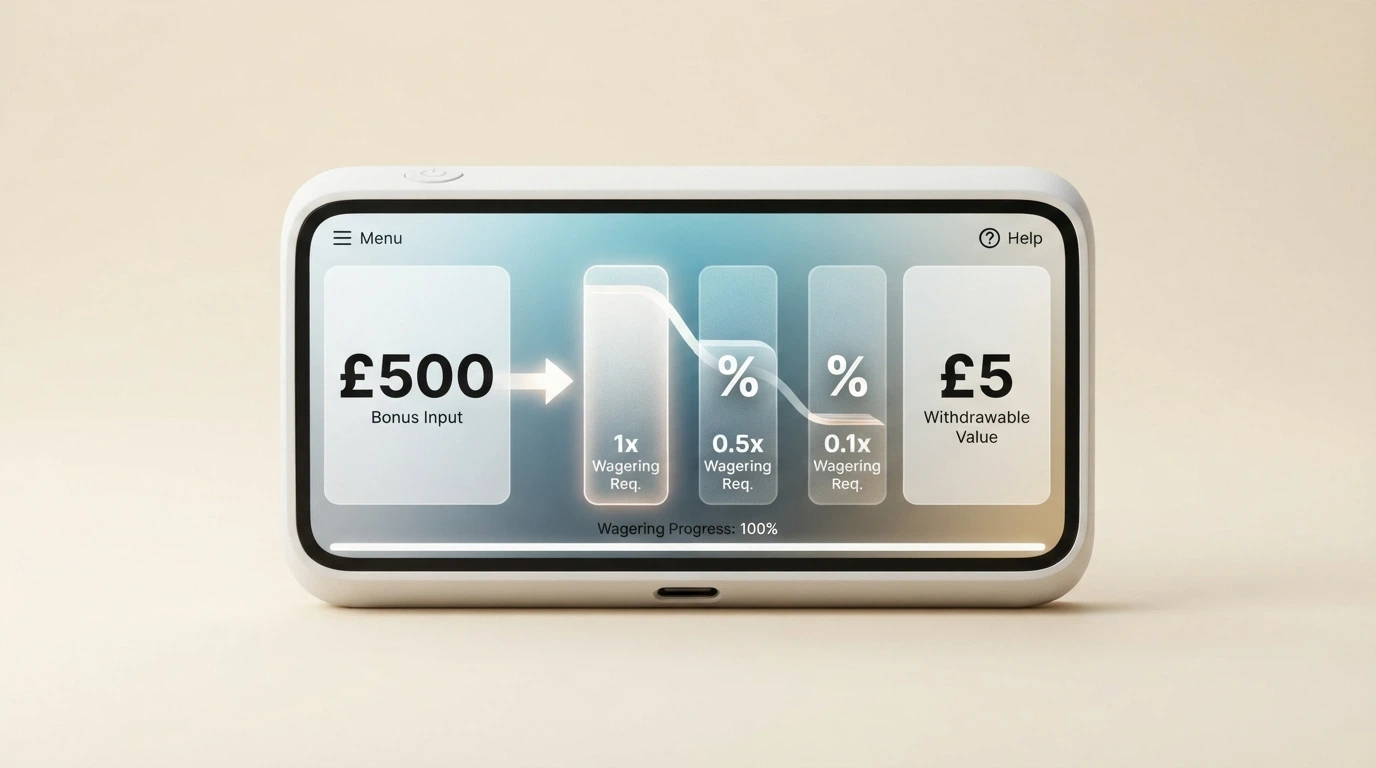
A $100 bonus at 10x wagering costs the player roughly $40 in expected loss. The same $100 bonus at 35x costs roughly $140. The same $100 bonus at 60x costs roughly $240. The cost curve is linear in the wagering multiple, because the house edge compounds across the turnover, and the turnover is the multiple times the bonus.
The Australian-facing market clusters in the 30x–60x range for no-deposit bonuses and the 30x–45x range for deposit bonuses. A 10x–20x bonus would be a genuine low-wager offer by global standards; in the Australian offshore market, 30x is what the marketing word “low” usually attaches to, and the maths is clear about what 30x actually costs.
The structure behind the multiple matters as much as the multiple itself. A 30x bonus-only structure on a $100 bonus is a $3,000 turnover, costing roughly $120 in expected loss. A 30x deposit-plus-bonus structure on a $100 deposit and a $100 bonus is a $6,000 turnover, costing roughly $240. Same number, different structure, double the cost.
Leading Platforms by Playthrough Multiple
Royal Reels at 35x bonus-only and Rainbet at 30x bonus-only are the lowest wagering multiples in the set on bonus-only structures. Fair Go’s 30x deposit-plus-bonus looks comparable on the table but doubles the effective multiplier on the bonus alone, and the 300% match inflates the bonus itself.
SkyCrown’s 40x bonus and 30x on free-spin winnings is the median of the deposit-bonus range, and the 30x on free spins is the median of the free-spin range. RocketPlay’s 40x on the welcome is at the higher end of the deposit-bonus range and is paired with a tight 5-day validity.
The pattern across the set is that bonus-only structures at 30x–35x are the cheaper offers, and deposit-plus-bonus structures at 30x–40x are the more expensive offers dressed in the same numbers. The multiple is the first thing to read; the structure is the second.
Pokie Variance and Wagering Progress
The pokie a player chooses to clear a wagering requirement on matters, because every spin carries a house edge, and the house edge compounds across the turnover. A 96% RTP pokie costs the player 4 cents per dollar wagered, in expectation. A 99% RTP pokie costs 1 cent per dollar. On a $3,500 turnover, that is $140 in expected loss at 96% RTP and $35 in expected loss at 99% RTP. The RTP gap is a fourfold difference in the cost of clearing the same wager.
The high-RTP titles are well known. Blood Suckers sits at 98% RTP, Mega Joker at 99%, and 1429 Uncharted Seas at 98.6%. Starburst, at 96.09% with low volatility, is the workhorse choice for a player who values steady returns over large payouts. The NetEnt classic catalogue broadly sits in the 96%–98% RTP range, and Pragmatic Play’s portfolio averages around 96.5% RTP with mostly high volatility.
Pokies typically contribute 100% toward wagering requirements. Table games and live dealer contribute 0% to 20%, often in the 3%–10% range. A player clearing a wager on roulette is grinding at a fraction of the speed of a player clearing on pokies, and the effective cost per unit of turnover is the same. The 100% contribution on pokies is what makes them the right game for the job.
Payment Method Diagnostics and Red Flags
The payment methods a casino accepts are the clearest diagnostic of where it sits relative to Australian law. Credit cards, credit-related products, and digital currency (crypto) have been banned as payment for online wagering in Australia since 11 June 2024. An operator accepting these from an Australian is, by definition, offshore — the licensed Australian wagering operators cannot legally process them, and any site that does is not one of them.

The legal deposit routes for licensed Australian wagering are debit card, bank transfer, PayID/Osko and BPAY. PayID is the fastest withdrawal route at Australian-facing casinos, with approved withdrawals completing in minutes once KYC verification is done. A player using PayID at a licensed operator is funding and withdrawing through the Australian banking system, and the speed is the main advantage.
An offshore casino that asks for a credit card or crypto deposit is doing two things at once: it is serving an Australian from outside the law, and it is giving the player the clearest possible signal that none of the Australian consumer protections apply. The credit card and crypto ban is a feature, not a bug, of the regulatory framework — it is the diagnostic that separates the licensed market from the offshore one, and the diagnostic is one that a player can run in five seconds on the deposit screen.
The data on offshore payment behaviour shows the diagnostic is being missed. Credit cards remain the most popular deposit method at illegal offshore sites used by Australians, accounting for 28% of deposits and 33% of withdrawals. Approximately 8% of offshore users cite cryptocurrency as a reason for choosing an illegal site, and 66% of that group rate it as critical or very important to their decision. The credit/crypto ban was designed to push players toward the licensed market; the offshore market has absorbed the displaced demand.
The penalty for an operator that fails to enforce the credit/crypto ban is up to A$247,500. The penalty is irrelevant to an operator that is not subject to Australian law, and the offshore casino is not subject to Australian law. The diagnostic is the payment method, and the diagnostic is unambiguous.
Crypto-Asset Enforcement and Regulatory Boundaries
Crypto deposits are banned for licensed Australian gambling. A site accepting Bitcoin, Ethereum, or Litecoin from an Australian is operating outside the Australian regulatory framework, and the credit/crypto ban of 11 June 2024 is the line that defines the boundary.
The offshore crypto market is in a zone of heightened enforcement. The ACMA has the authority to direct ISPs to block illegal sites, and the 1,564 sites blocked since November 2019 — with 225 more withdrawn from the Australian market — is the operational track record. The credit/crypto ban gives the ACMA a new enforcement tool: any site processing a crypto deposit from an Australian is, on the face of it, in violation of the payment rules that bind licensed operators, and the offshore status is the reason the ban is not enforced against the site directly.
The player-side risk is the same as for any offshore brand: no Australian complaints body, no BetStop coverage, no recourse for withheld withdrawals. Crypto adds a layer: a withdrawal delayed or refused in fiat currency is a banking problem. A withdrawal delayed or refused in crypto is a custody problem, and the operator’s custody of the player’s funds is the operator’s discretion. The same offshore protections gap applies, and the same offshore enforcement risk applies to the site itself.
Stake is the crypto-native operator in the featured set, and its position in the comparison is a marker of the model. Stake does not run a traditional welcome bonus; it runs a VIP and rakeback structure that returns a percentage of the house edge to active players over time. The rakeback model is the long-term alternative to a deposit-match welcome, and it is the model that crypto-native operators tend to prefer because it does not front-load the bonus cost.
From 1 January 2027, banks and payment providers gain express authority to block transactions to illegal gambling operators. The reform does not legalise online casino, and it does not change the offshore status of any of the brands on this page. It gives the banks a tool that the credit/crypto ban gave the licensed operators: a way to refuse the transaction at the payment layer.
Pokie Performance Factors in Wagering Clearing
The right pokie for a wagering requirement is high-RTP, low-volatility, and fully contributing to the playthrough. The wrong pokie is low-RTP, high-volatility, or partially contributing. The pokie attached to a free spin offer is rarely the optimal clearing pokie, and a player with a choice should clear on a different title.
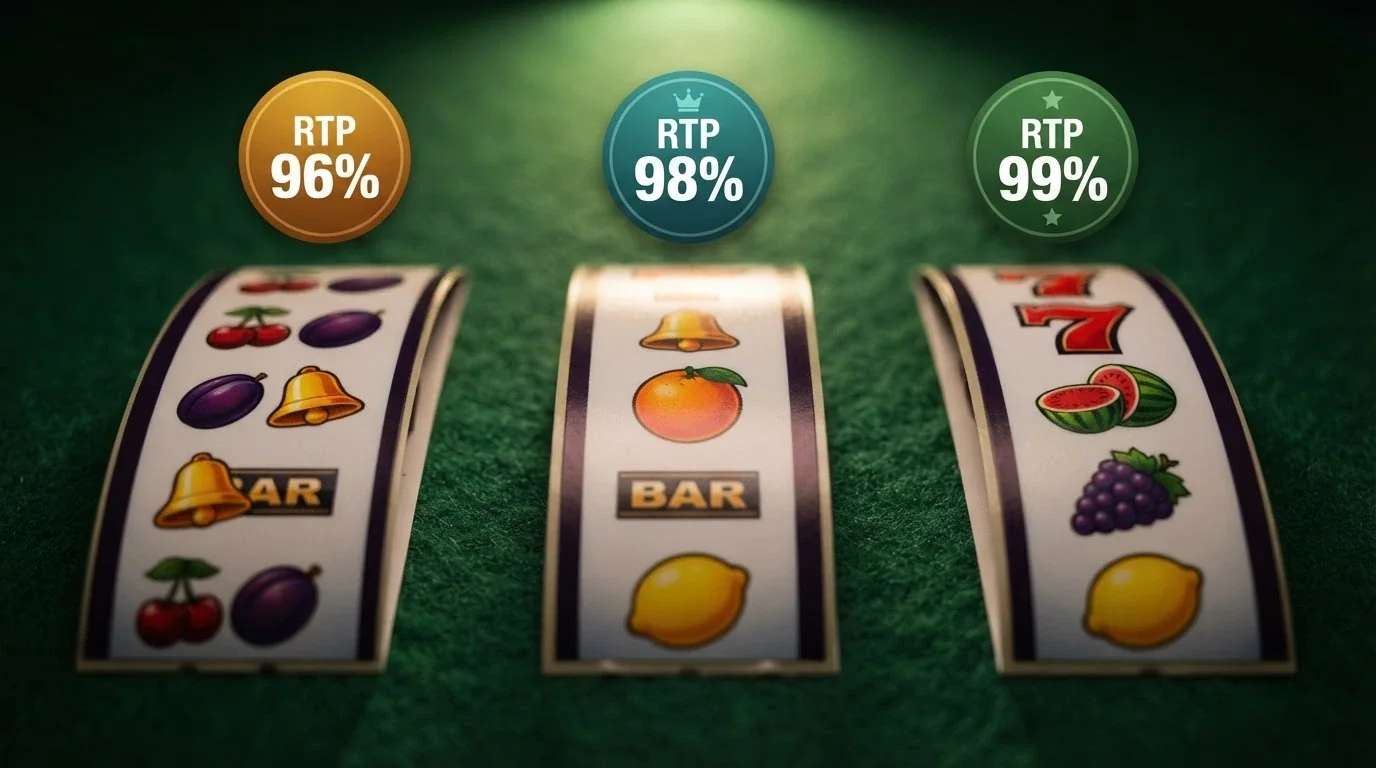
| Slot Title | RTP | Provider | Volatility |
|---|---|---|---|
| Mega Joker | 99.0% | NetEnt | — |
| 1429 Uncharted Seas | 98.6% | Thunderkick | — |
| Blood Suckers | 98.0% | NetEnt | — |
| Big Bass Bonanza | 96.71% | Pragmatic Play | Medium |
| Sweet Bonanza | 96.51% | Pragmatic Play | High |
| Wolf Treasure | 96.13% | Pragmatic Play | Medium |
| Starburst | 96.09% | NetEnt | Low |
Mega Joker, Blood Suckers and 1429 Uncharted Seas are the high-RTP titles that minimise the house edge on the wagering turnover. The NetEnt classic catalogue sits broadly in the 96%–98% RTP range, and Pragmatic Play’s portfolio averages around 96.5% with mostly high volatility. The volatility matters: a low-volatility pokie pays out more often at smaller amounts, which protects the bonus balance through the wagering; a high-volatility pokie pays out less often at larger amounts, which is a worse shape for a player grinding a turnover.
The Pragmatic Play titles — Big Bass Bonanza, Wolf Treasure, and Sweet Bonanza — are the ones that most free spin offers in the Australian-facing market attach to. They are the right titles for the operator’s marketing reasons (recognisable, popular, branded) and the wrong titles for the player’s clearing reasons (medium-to-high volatility, average-to-slightly-above-average RTP). The pokie the offer is attached to and the pokie the player should clear on are usually different.
Top-Tier RTP Options for Efficient Clearing
Blood Suckers at 98% RTP, Mega Joker at 99%, and 1429 Uncharted Seas at 98.6% are the top three in the data research carried this run. The gap between these and a 96% pokie is the gap between a 2% house edge and a 4% house edge, which halves the cost of every dollar of turnover.
The high-RTP titles are not the ones most free spin offers use. Big Bass Bonanza, Wolf Treasure, and Sweet Bonanza are the three Pragmatic Play titles that dominate the AU-facing free spin market, and they sit at 96.13% to 96.71% RTP with medium-to-high volatility. A player who can choose the pokie should choose differently; a player locked to the free spin game plays the game they are given.
The NetEnt classic catalogue — Starburst at 96.09% with low volatility, Blood Suckers at 98%, Mega Joker at 99% — is the closest thing to a clearing-friendly pokie library that is also widely available. Starburst’s low volatility is the structural advantage: a low-volatility pokie stretches a bonus balance further because the payouts come more frequently, even when the individual payout size is smaller.
Popular Pragmatic Play Titles and Their Mechanics
Big Bass Bonanza at 96.71% RTP and medium volatility, Wolf Treasure at 96.13% RTP and medium volatility, and Sweet Bonanza at 96.51% RTP and high volatility are the three titles research named as commonly attached to free spin offers in the Australian market. They are Pragmatic Play releases, and Pragmatic Play is the provider whose games the offshore market defaults to for promotional offers.
The titles are popular with players for good reason: they are well-designed, recognisable, and carry strong brand recognition from the operator’s marketing. They are not the optimal clearing titles, and that is the trade-off. A player who wants to clear a wagering requirement on a free spin offer is grinding the wagering on the title the offer is attached to, and the title is chosen for marketing reasons, not clearing reasons.
Sweet Bonanza’s high volatility is the most expensive of the three for clearing. A 15-spin wager-free batch on a high-volatility pokie will see most outcomes close to the line, with a small number of outcomes far from it. The cap on the wager-free spins (A$40 at SkyCrown) is the ceiling on the upside, and the variance is the dominant force inside that ceiling.
Strategic Evaluation of Bonus Terms and Value
A “no wager” label on a bonus means nothing until four lines in the terms have been read. The four lines are: the wagering multiple (0x in the best case), the cashout cap, the game weighting, and the validity window. Each one of them can turn a good offer into a bad one, and the four together are the difference between a bonus worth claiming and a bonus worth walking past.
The wagering multiple is the headline. Zero is zero. Anything above zero is a playthrough, and the multiple is the cost in turnover. A 10x wagering on a $100 bonus is a $1,000 turnover, costing roughly $40 in expected loss. A 50x wagering is a $5,000 turnover, costing roughly $200. The cost curve is linear in the multiple.
The cashout cap is the upside ceiling. A 0x wagering bonus with a A$40 cap is a real offer; a 0x wagering bonus with a A$500 cap is a rare one. The cap is on the terms page, and reading it is the first thing to do.
Game weighting is what counts toward the wagering. Pokies typically contribute 100%; table games and live dealer contribute 0%–20%, often 3%–10%. A player clearing a wager on roulette at 10% contribution is grinding at one-tenth the speed of a player clearing on pokies. The 100% pokie contribution is why pokies are the right game for the job.
The validity window is the time the player has to clear the wagering. Most bonuses carry 7 to 30 days. A 5-day window on a $1,000 bonus at 40x wagering is tight — the player needs to clear $40,000 of turnover, which is roughly 26,000 spins at a A$1.50 average, or about 8.5 hours a day across the five days. A player who cannot commit the time should not claim the bonus.
Multi-Factor Assessment of Offer Viability
The wagering multiple sets the cost. The cashout cap sets the upside. The game weighting sets the speed. The validity window sets the time budget. Reading all four together, rather than just the wagering multiple, is the difference between choosing well and choosing poorly.
A worked example using RocketPlay’s welcome: 100% up to A$1,000 plus 100 free spins. The wagering is 40x on the bonus. On a A$1,000 bonus, that is a $40,000 turnover. The free spins are capped at A$300 winnings. The bonus validity is 5 days. The max bet during wagering is A$7.50. A player who reads the wagering multiple and ignores the 5-day validity, the A$300 cap, and the A$7.50 max bet will misjudge the offer. A player who reads all four will see that the offer rewards a focused, high-volume grinder and penalises a casual one.
The same exercise on Fair Go’s 300% welcome: 300% up to A$3,000 plus 50 free spins on Cash Bandits 2, 30x deposit plus bonus, no max cashout. On a A$1,000 deposit with the 300% match, the bonus is A$3,000 and the playthrough is 30x on the A$4,000 combined — a $120,000 turnover requirement. The 30x number looks low; the deposit-plus-bonus structure inflates it. The absence of a max cashout is the upside, and the inflated turnover is the cost. Reading the structure is the second read, after the multiple.
Calculators for Expected House-Edge Loss
A 35x wager on a $100 bonus is a $3,500 turnover. At 96% RTP, the expected house-edge loss is $140. The “free $100” has cost $140 to clear, and the player is $40 behind. This is the arithmetic that the marketing word “low” is hiding, and the arithmetic is the same at every multiple.
A wagering calculator is a tool that takes the bonus amount, the multiple, the RTP, and the stake per spin, and produces the turnover, the expected loss, the number of spins, and the play time. The numbers are not exact — the house edge is the long-run average, and any individual session will land somewhere on the distribution — but the order of magnitude is right, and the order of magnitude is what a player needs to choose between offers.
The same $100 bonus at 0x wagering has no turnover cost. The player keeps whatever the bonus pays out, less the inherent house edge on the spins themselves. The difference between 0x and 35x on a $100 bonus is roughly $140 in expected player value. The difference between 10x and 35x is roughly $100. The difference between 35x and 50x is roughly $60. The maths scales, and the maths is the reason the no-wager label, when it is genuine, is worth more than any other single word on the bonus page.
Researching Unverified Brands and Affiliate Listings
Wager Beat is an offshore brand that surfaces in Australian no-wager searches, and it is not in the featured set this run. Research did not confirm its bonus terms, its licence status against a regulator register, or its payment methods. The brand’s appearance in AU-facing affiliate listings is the reason a reader is likely searching for it, and the affiliate listing is also the only verified source on the brand this run.
The honest reading for an Australian player searching for Wager Beat is the same as the honest reading for any offshore brand not in the confirmed set: the bonus terms on the affiliate page are a summary, not a guarantee; the licence status reported by affiliate sources is not a regulator verification; the payment methods offered will tell the player where the operator sits relative to Australian law. A site accepting credit card or crypto from an Australian is offshore, and the offshore consumer-protection gap applies.
The data gap is itself a signal. Brands that have been operating in the Australian-facing market long enough to be widely listed on affiliate pages have terms pages that are easy to verify. Brands that do not have easily verified terms are either new, recently rebranded, or operating in a way that makes the terms hard to pin down. None of those is a reason to avoid the brand; all of them are reasons to read the terms page before depositing.
Evaluation of Emerging Offshore Operators in 2026
New offshore casinos launch regularly targeting Australian players with no-wager claims, and the pattern is consistent: a launch announcement, an aggressive welcome offer, an affiliate push, and a track record that takes twelve to eighteen months to establish. Few of these new entrants are independently verifiable at launch, and the first six months of any new brand is the period when the consumer-protection gap is widest.
The diagnostic for a new no-wager casino is the same as for an established one. Check the payment methods — credit card or crypto acceptance is the offshore marker. Check the licence — Curaçao is the common offshore jurisdiction, and a Curaçao licence number should be verifiable on the Curaçao Gaming Control Board register, not just on the operator’s own footer. Check the bonus terms for the four numbers that matter: wagering multiple, cashout cap, game weighting, and validity. If any of those four is missing or vague, the offer is not ready to be evaluated on its merits.
The context for new-site risk is the ACMA’s enforcement track record. Since November 2019, 1,564 illegal gambling and affiliate websites have been blocked by Australian ISPs, and 225 illegal services have withdrawn from the Australian market since 2017. A new brand entering the Australian-facing market is entering a jurisdiction where the regulator actively blocks sites, and the operator’s business model depends on the player finding it faster than the ACMA can block it. That is the consumer-protection gap in operational terms.
Legislative Landscape and Offshore Operations
Online casino is prohibited in Australia. The Interactive Gambling Act 2001 makes it an offence to provide online casino games, online pokies, and in-play sports betting to a person in Australia. The Interactive Gambling Amendment Act 2017 closed loopholes and gave the ACMA its enforcement and site-blocking powers. There is no Australian licence for online casino — not federally, not in any state or territory. What is licensable is wagering on races and sport placed before the event, lotteries, and keno.

The 1,564 blocked sites and 225 withdrawn services since 2017 are the operational record. The credit/crypto ban since 11 June 2024 is a second enforcement layer at the payment-method level. From 1 January 2027, banks gain express authority to block transactions to illegal gambling operators — a third layer that closes off a payment route the offshore market has been using.
The player is not prosecuted under the IGA. The Act targets the provider, not the person in Australia using the service. That is the only piece of good news in the legal picture, and it is not the protection it sounds like. “Not illegal for you” is not the same as “safe.” No Australian complaints body can recover money from an offshore operator. BetStop does not cover offshore sites. ACMA can block the site but cannot return a balance. The minimum age of 18 is a hard line that licensed operators enforce; offshore sites do not consistently verify it.
The Northern Territory Racing and Wagering Commission, through Licensing NT, is the de facto national licensor for online wagering — sports books, not casino. The brands that hold NT licences (Sportsbet, bet365, Ladbrokes and others) offer wagering on races and sport only, and none of them offer a no-wager casino bonus, because casino is not the product they are licensed to provide.
Identifying Licensed vs Offshore Platforms
The single fastest diagnostic is the deposit screen. A licensed Australian wagering operator cannot accept credit cards or crypto — the 11 June 2024 ban is in force, the penalty for breach is up to A$247,500, and the payment is processed through Australian banking rails. A licensed operator accepts debit card, bank transfer, PayID/Osko, and BPAY. If the deposit screen shows credit card or crypto, the operator is offshore by definition.
The second diagnostic is the licence itself. No Australian licence for online casino exists, so an “Australian licensed casino” claim is either a marketing invention or a reference to a land-based casino licence that does not extend to online play. Curaçao is the common offshore jurisdiction; a Curaçao licence number should be checked against the regulator’s own register, not just the operator’s footer.
The third diagnostic is BetStop. BetStop, the National Self-Exclusion Register launched 21 August 2023, binds every Australian-licensed online and phone wagering service. As at 31 December 2025, 54,859 people had registered and 35,135 had active exclusions. An offshore casino is not on the register, and a self-excluded person who signs up to an offshore brand is signing up to a site that will keep taking their money. That is the diagnostic for consumer protection, and it is one the deposit screen cannot show.
The fourth diagnostic is the ACMA block list. The ACMA publishes a register of blocked services, and a brand that has been blocked once and re-emerged under a new name is a brand that the regulator has already acted against. The list is at the ACMA website, and it is the most current view of the offshore market’s edge.
Federal Reform Impacts Effective January 2027
The Interactive Gambling Amendment (Gambling Reform) Bill 2026 passed Parliament on 19 August 2026 and commences 1 January 2027. The reform does not legalise online casino. It tightens the framework around wagering advertising, inducements, and payment enforcement.
The wagering advertising ban is phased. From 1 January 2027, advertising is prohibited during news and current affairs broadcasts and on commercial radio during school commute times (8:30–9:00 am and 3:30–4:00 pm), with restrictions expanding over three years to a comprehensive prohibition. The live-sport blackout applies between 15 minutes before and 5 minutes after a live sporting event (6:00 am to 8:30 pm). Athletes, celebrities, and influencers are barred from promoting wagering products, and wagering advertising inside sports venues and on player uniforms is banned.
The inducement restrictions layer on top of the advertising rules. Direct marketing of gambling inducements is prohibited for 14 days after a customer signs up, for three months after a person deregisters from BetStop, and indefinitely for customers identified as at risk of gambling-related harm. The restrictions bind licensed operators; the offshore casino offering a no-wager bonus to an Australian is breaking the prohibition itself, not merely an advertising rule.
The payment-blocking authority is the third leg of the reform. From 1 January 2027, banks and payment providers gain express authority to block transactions to illegal gambling operators. The existing credit/crypto ban handles the licensed-operator side; the bank-blocking authority handles the banking-rail side. Together, they cut the offshore market off from the payment methods most Australian players have been using. Approximately 500,000 Australians have already applied gambling blocks to their bank accounts; the new authority makes the block easier to apply at the institution level.
What none of this changes: online casino stays prohibited. The brands on this page stay offshore. The consumer-protection gap stays the same. The reform shifts the enforcement tools, not the underlying prohibition.
Resources for Gambling Harm Mitigation
Australia has some of the world’s best gambling-help infrastructure. The National Gambling Helpline is 1800 858 858 — free, confidential, staffed 24 hours a day, 7 days a week. Gambling Help Online, at gamblinghelponline.org.au, provides online chat and counselling around the clock. BetStop, the National Self-Exclusion Register, lets a single registration exclude a person from every Australian-licensed online and phone wagering service.
The catch is the offshore gap. BetStop binds licensed operators only. An offshore casino is not licensed in Australia, is not connected to the register, and will keep taking a self-excluded person’s money. The 35,135 Australians with active BetStop exclusions are protected from licensed wagering operators; they are not protected from the offshore casino offering a no-wager bonus.
The data on gambling harm in Australia is the reason this section is on the page. As of March 2026, 13.0% of the Australian population — an estimated 2,857,000 people — were experiencing some form of harm from their own gambling. A further 5.4% (1,177,000 people) were experiencing harm from other people’s gambling. The total: 15.1% of the population, or roughly 3.32 million Australians. Approximately 2.1% of adults — about 430,000 people — experience problem gambling specifically. Risky gambling (PGSI) increased from 13.7% in 2024 to 19.4% in 2025, almost doubling since COVID-19 lockdowns. Online gambling now accounts for 56.1% of all gambling participation in Australia.
For every Australian reading this page, the responsible gambling resources are the same: 1800 858 858 for the helpline, gamblinghelponline.org.au for online chat, BetStop at acma.gov.au for self-exclusion from licensed operators, and a bank’s gambling block for an additional layer of friction. None of these resources reach an offshore casino. The 500,000 Australians who have applied bank gambling blocks have added friction; offshore sites that accept crypto or credit cards have added a route around the friction. The help is there. The gap is real.
Transparency in Selection and Evaluation Criteria
The evaluation rests on three foundations: verifiable bonus terms, a check against the Australian regulatory framework, and the operator’s transparency about its own product.
The sources are the operators’ own bonus terms pages, the ACMA’s enforcement and blocking records, and the IGA framework as the legal reference. Where an operator’s terms page states a wagering multiple, that figure is what the article carries. Where the terms page is silent or vague, the absence is noted rather than filled with a guess. The Curaçao licence claims reported by affiliate sources were not verified against the Curaçao register this run, and the article names that as a data gap rather than a confirmed jurisdiction.
The criteria for inclusion were the presence of a no-wager or low-wager offer, the wagering multiple and structure, the cashout cap, the licence transparency, and the payment-method diagnostic. The exclusion was any operator whose terms could not be confirmed against a primary source, beyond a brief qualitative note that the data was thin.
What the ranking is not: it is not a rating of which casino is the best place to play, because the choice depends on the player’s priorities, and the article’s role is to set out the verifiable terms, not to direct a player to one brand over another. The wagering multiple and the bonus structure sort the set on cost. The cashout cap, the game catalogue, and the payment methods sort it on player experience. The legal status — offshore, no Australian licence — is the same for every entry, and the consumer-protection gap is the same.
Trade-Off Analysis: Value Versus Protection Gaps
A no-wager bonus from an offshore casino saves you the playthrough cost. That saving is real, and the maths makes it visible. On a $100 bonus, the difference between 0x and 35x is roughly $140 in expected house-edge loss that the player does not pay. The cap is the operator’s hedge; the playthrough is the player’s tax. A genuine 0x offer eliminates the tax, and that is the genuine value.
The trade is the Australian consumer protections you give up to capture it. BetStop does not cover the offshore casino. The ACMA cannot recover a withheld withdrawal. The site can be blocked by an Australian ISP while a balance sits on it, and the player has no Australian complaints body to approach. The minimum-age verification that the licensed market treats as a hard line is inconsistently applied offshore. The payment methods that the licensed market is banned from accepting — credit card, crypto — are exactly the methods the offshore market offers, and the reason they are on offer is that the operator is not subject to Australian law.
The 1,564 sites blocked since November 2019 and the 225 services that have withdrawn from the Australian market are the operational record of how the offshore market intersects with Australian law. The credit/crypto ban is the diagnostic that a player can run in five seconds on the deposit screen. The bank-blocking authority from 1 January 2027 is the next tool in the enforcement kit, and it does not change the offshore status of the brands on this page.
The honest reading is that a no-wager bonus is the only kind of bonus worth chasing in the offshore market, because the bonus’s value is destroyed by the playthrough at every other multiple. A 30x bonus costs the player roughly 12% of the bonus in expected house-edge loss; a 50x bonus costs 20%. The 0x offer is the one that pays out what the headline says. The reader’s job is to weigh that saving against the offshore-protection gap, and to make the call on the trade before the deposit goes in, not after.
Frequently Asked Questions
Are no wager casino bonuses legal for Australian players?
No Australian licence exists for online casino, and no wager casino bonuses cannot be offered legally to a person in Australia. The Interactive Gambling Act 2001 prohibits the provision of online casino games, including the bonuses attached to them. The individual player is not prosecuted under the Act, but the offshore operators offering these bonuses are outside Australian law, which means no BetStop coverage, no ACMA recourse, and no Australian consumer protection. The credit/crypto ban of 11 June 2024 is the diagnostic at the payment-method level.
Can I win real money from no wager free spins?
Yes. A genuine 0x wagering bonus credits winnings directly to the real-money balance, and the player can withdraw the funds up to the operator’s cashout cap. The cap is the only thing standing between the player and a withdrawal. On SkyCrown’s 15 wager-free spins, the cap is A$40; on most no-deposit wager-free offers in the market, the cap sits between A$40 and A$100. The cap is on the terms page.
What is the maximum amount I can cash out from a no wager bonus?
The maximum is the cashout cap stated in the bonus terms. For no-deposit wager-free free spins, caps in the Australian-facing market cluster around A$40 to A$100. For wager-free cashback, the cap is typically the percentage ceiling (SkyCrown’s 10% weekly cashback, for example, is capped at A$500). No-cap wager-free bonuses are rare in the offshore market because the operator’s risk model assumes a ceiling on the upside.
Do no wager bonuses have an expiry date?
Yes. Even 0x wagering offers carry a validity window, because the operator cannot leave a no-wager bonus open indefinitely. Common expiry windows are 7 days for no-deposit free spins and 14 to 30 days for cashback and welcome offers. A player who does not use the spins or claim the cashback inside the window forfeits the offer. The expiry is on the terms page, alongside the wagering multiple and the cashout cap.
Why do most Australian online casino bonuses still have wagering requirements?
Because the wagering requirement is how the operator manages the bonus cost. A 35x playthrough on a $100 bonus costs the player roughly $140 in expected house-edge loss, which is the operator’s recovery of the bonus value plus a margin. A genuine 0x bonus returns the full bonus value to the player (less the inherent house edge on the spins), which is why genuine no-wager offers are rare and small. The marketing word “low” is doing the work the maths would not, and most “low wager” offers are standard wagering offers with a friendlier adjective.
Are offshore casinos that accept Australian players safe?
Offshore casinos are outside Australian consumer protection law. The ACMA cannot recover money from them. BetStop does not cover them. Site blocking can remove access while a balance sits on the account. The 1,564 sites blocked since 2019 and the 225 services withdrawn from the Australian market are the operational record. The credit/crypto ban of 11 June 2024 and the bank-blocking authority from 1 January 2027 are the enforcement tools. “Safe” is a strong word for a category the regulator is actively blocking; “outside Australian law” is the accurate one.
How does BetStop self-exclusion work with offshore casino sites?
BetStop, the National Self-Exclusion Register launched 21 August 2023, binds Australian-licensed online and phone wagering services only. As at 31 December 2025, 54,859 Australians had registered and 35,135 had active exclusions. An offshore casino is not licensed in Australia, is not connected to BetStop, and is not required to honour a BetStop registration. A self-excluded person who signs up to an offshore casino is signing up to a site that will keep taking their money. The 1800 858 858 helpline and Gambling Help Online are the supports that do reach the player, regardless of which site they use.