
The Offshore Craps Table: What 2026 Looks Like for Australian Players
 Available in US
Every Australian-facing online casino is offshore-licensed. None of them can hold an Australian licence, because the Interactive Gambling Act 2001 prohibits providing online casino games to anyone in Australia. The whole market Australian players reach is unlicensed at home — which is why a licence check is the first thing this page does, before welcome bonuses and before craps variants.
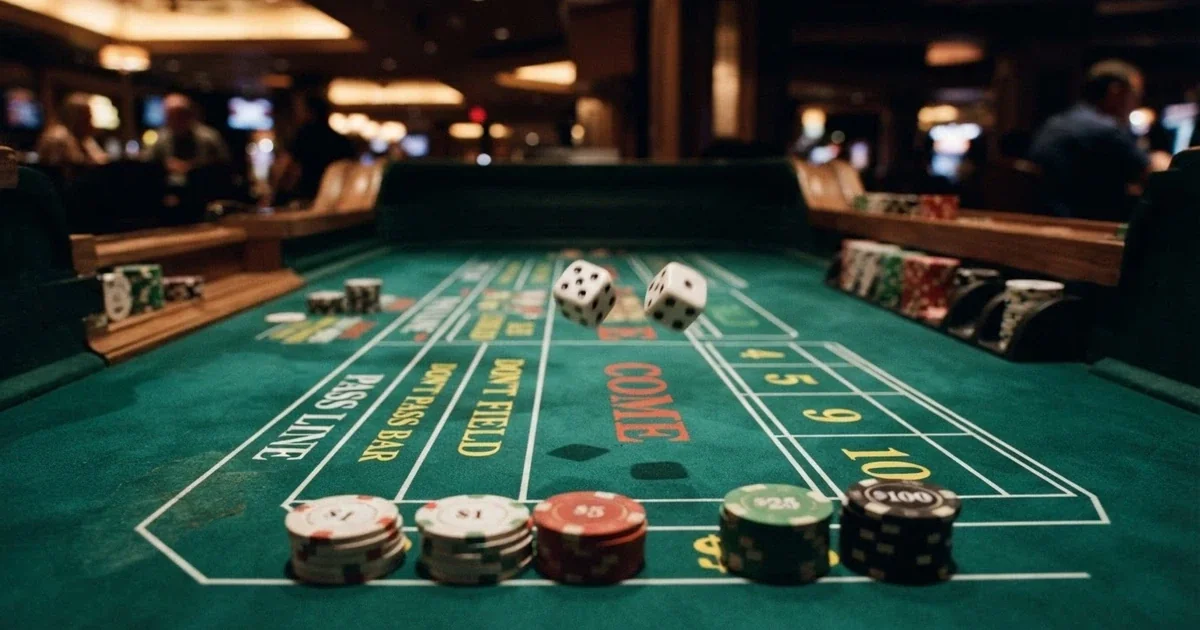
That position has consequences for everything below: the consumer protections that don’t apply, the BetStop gap, the credit-card and crypto payment ban, and the way the 5% craps wagering contribution turns a headline bonus into a slog. The house still has its edge, and the offshore wrapper around it doesn’t soften that.
Data current as of 3 September 2026 and verified against the ACMA’s operator register and the Curaçao eGaming and Kahnawake Gaming Commission licence databases.
Table of Contents
- The Operators Australian Players Reach
- What Online Craps Actually Looks Like at an Australian-Facing Casino
- The Offshore Reality: What Australian Law Says About Online Craps
- Why the Pass Line Is Your Best Friend at the Craps Table
- Beyond the Pass Line: Live Dealer, Electronic, and Variant Craps Tables
- Free Craps vs Real Money: What Changes When the Dice Cost You Nothing
- Why Your Craps Bonus Is Smaller Than It Looks
- Playing Craps Safely: What Australian Responsible Gambling Tools Actually Cover
- How We Ranked These Online Craps Casinos
- Your Move: What the Numbers Say About Playing Online Craps from Australia
- Frequently Asked Questions About Online Craps in Australia
The Operators Australian Players Reach
The table below sets the frame. Every operator named is offshore-licensed; the Australian licence column is empty by design — no Australian licence exists for the product they sell. The market-share figures come from BLASK BRANDS tracking and identify how visible each operator is on Australian affiliate channels, not which one is safest to play with.
| Operator | Status in Australia | Market share |
|---|---|---|
| Joe Fortune | Offshore — Curaçao eGaming #8048/JAZ | — |
| Ricky Casino | Offshore — Kahnawake Gaming Commission | — |
| PlayAmo Casino | Offshore — Curaçao | — |
| Rocket Play | Offshore — licence not in this review’s dataset | 9.4% |
| Skycrown | Offshore — licence not in this review’s dataset | 8.55% |
| Royal Reels | Offshore — licence not in this review’s dataset | 2.51% |
| Stake | Offshore — Curaçao commonly reported | 1.28% |
| Rainbet | Offshore — licence not in this review’s dataset | 1.28% |
| FairGO | Offshore — licence not in this review’s dataset | 0.8% |
| Bizzo Casino | Offshore — licence not in this review’s dataset | 0.57% |
Three things drive the ranking CrapsOnline.au applies to this set: the licence jurisdiction, then AUD-native banking — PayID and POLi, both of which sit on the New Payments Platform — and then the craps bonus contribution rate, which usually sits at 5% of wagering. That 5% figure is the line most operators don’t move, and it reshapes what a welcome bonus is actually worth in craps play.
The rest of the page goes through each operator with what the dataset carries, and then explains what every figure on the page implies for a player betting real AUD.
Joe Fortune
Joe Fortune has run an Australian-facing casino since 2016 under Curaçao eGaming licence #8048/JAZ — one of the longer pedigrees on this list. Craps arrives in two flavours here: a virtual table from Betsoft and Nucleus Gaming, and a live dealer stream from Evolution Gaming’s studio. That mix gives a craps player both the click-on-a-button pace and the real-table feel without leaving the one account.
The welcome offer is a 200% bonus up to AU$1,000, framed as the headline number a player sees at sign-up. Banking runs on PayID and POLi alongside Visa, Mastercard and bank transfer, all settled in AUD with zero conversion fees. PayID deposits typically land in under ten minutes; withdrawals take 24 to 72 hours. The combination matters: an AUD-native cashier means no FX margin eroding either deposit or payout, and the PayID speed is the difference between starting a session now and starting it after lunch.
Bet limits bracket the craps action. Virtual tables accept a minimum of AU$1 and a maximum of AU$500 per round; live dealer tables push the maximum to AU$2,000 on select rooms. A AU$1 minimum is friendly to a low-stakes bankroll; AU$2,000 at the top end is high enough to clear a bonus at speed if the player wants to. The craps bonus contribution rate is 5% — standard for the market, terrible for the maths, as the wagering section below makes plain.
Joe Fortune is the strongest fit for an Australian craps player who wants AUD-native banking without conversion drag, a live dealer option, and a single account that covers both virtual and real-table craps. The Curaçao licence and offshore position apply just as much as they do to any other name on this list.
Rocket Play
Rocket Play is one of the larger operators on the Australian affiliate radar, claiming 9.4% of the offshore casino market share in the BLASK BRANDS data. That share makes it a familiar name at the top of Australian-facing comparison pages. The dataset behind this review does not cover Rocket Play’s craps-specific configuration — variants, bet limits, bonus contribution, cashier options — so this write-up stays at the level the data actually supports.
As an offshore operator Rocket Play falls inside the same legal frame as every other name on this page: no Australian licence, no BetStop coverage, no Australian consumer protection, and a real risk that the site gets blocked with a player balance on it. The market share tells Australian players where the brand sits in the affiliate noise; it does not certify the craps offering.
For a player weighing Rocket Play against the other names here, the missing craps-specific data is the answer: this review cannot tell you what the craps table looks like, what the welcome bonus contributes, or how the cashier runs in AUD. The general casino offering sits on Rocket Play’s own terms page, and that is where the verification has to happen before any deposit.
Skycrown
Skycrown claims 8.55% of the Australian offshore casino market — the second-largest share in this set. Like Rocket Play, it is well-known enough to appear on Australian-facing comparison pages, and like Rocket Play, the craps-specific details — variants, bet limits, bonus contribution — are not part of this review’s dataset.
The general offering sits at a typical offshore-casino level, and the same Australian-player caveats apply: offshore status, no BetStop coverage, no ACMA recourse for disputes. A share figure this size tells a player that Skycrown is a familiar Australian-facing brand, not that the craps experience is any specific thing.
Skycrown is a name the page records because the market share places it on the Australian radar. Whether the craps table is worth the deposit is a question the dataset here cannot answer, and any verdict on the brand as a craps casino would be drawn from speculation rather than the inputs in front of the page.
Ricky Casino
Ricky Casino has operated under a Kahnawake Gaming Commission licence since 2020 and lists four craps variants in its lobby: standard craps, a simplified version, a live dealer table via Pragmatic Play Live, and a speed variant. That depth is the strongest on the list for players who want to move between formats without changing accounts.
The welcome offer is a 150% match up to AU$750 on first deposit, with a 50% reload bonus every Wednesday. Banking covers PayID, POLi, Visa, Mastercard and Skrill. PayID deposits clear instantly on the cashier side; withdrawals take one to three business days after a 24-hour pending window. The pending window is the bit to watch — a player who doesn’t read it will sit on a withdrawal wondering where it is.
The standout figure for craps players is the bet minimum: AU$0.50. That is half Joe Fortune’s virtual floor and the lowest craps minimum in the featured set. A player with a tight bankroll can sit at Ricky’s craps table for the cost of a coffee per round, which changes what a “session” costs in real money and how long a bankroll lasts. The craps bonus contribution rate is not part of this review’s dataset and the wagering multiplier on the welcome bonus is not confirmed in the inputs, so the effective cost of the 150% match on craps play cannot be calculated from this page.
Ricky Casino is the fit for an Australian craps player who wants four variants under one roof, a Pragmatic Play Live table, and the lowest minimum bet in the set. The Kahnawake licence is the regulatory anchor, offshore like the rest.
Royal Reels
Royal Reels sits at 2.51% of the Australian offshore casino market. The brand is established enough to rank on Australian-facing affiliate pages; the craps-specific configuration — variants, bet limits, welcome bonus, cashier — sits outside this review’s dataset.
The offshore status applies in full. Royal Reels is not licensed in Australia, is not connected to BetStop, and any dispute over a withdrawal has no Australian complaints body to escalate to. The market share figure is information about brand visibility, not about product depth, and the page cannot say more about the craps offering than that.
Royal Reels is the sort of brand an Australian player reaches via a search result and then has to verify themselves at the terms page before depositing. The dataset behind this ranking does not support any verdict on the craps table itself.
Stake
Stake carries 1.28% of the Australian offshore casino market and is widely reported as Curaçao-licensed and crypto-focused. The “commonly reported” framing is honest: this review did not verify Stake’s licence or its cashier directly from the operator’s own terms page on this run.
What the dataset confirms is the offshore frame. Stake sits outside the Australian regulatory perimeter in the same way as every other name on this list — no BetStop coverage, no ACMA recourse, and no guarantee that a deposit made today is still withdrawable tomorrow if the site gets added to the ACMA’s blocking list. Crypto focus is itself a complication: the Interactive Gambling Amendment (Credit and Other Measures) Act 2023 banned cryptocurrency as a payment for online wagering in Australia from 11 June 2024, and a site accepting crypto from an Australian player is operating outside Australian rules on payment, even if the player faces no prosecution.
For an Australian craps player, the appeal of a crypto-native operator is the cashier; the cost is that the Australian payment ban and the offshore position compound each other. Whether Stake is worth the trade is a question the page cannot answer from the dataset it has.
PlayAmo Casino
PlayAmo holds a Curaçao licence and stands out for one specific thing: iTech Labs audits its game library and the operator publishes actual RTP certificates publicly. Most offshore casinos do not make their RTP data easy to find; PlayAmo does. For a craps player who wants to verify the theoretical return on the dice game they’re about to play, that transparency is the difference between trusting the marketing and reading the figure.
The rest of the operator profile — welcome bonus, craps variants, bet limits, cashier — sits outside this review’s dataset. PlayAmo appears on the list because the iTech Labs audit is a trust signal that no other name on this page carries in the same form.
For an Australian craps player, PlayAmo is the fit for the player who wants to see the RTP certificate on a craps title before they deposit, and to know the game has been audited by a named testing house. The Curaçao licence and offshore position apply as they do to every other brand here.
Rainbet
Rainbet holds 1.28% of the Australian offshore casino market — tied with Stake at the smaller-share end of this set. The brand appears on Australian-facing affiliate channels; the craps-specific configuration is not part of this review’s dataset.
The offshore frame is identical to every other name on this list: no Australian licence, no BetStop coverage, no ACMA recourse. The market share figure tells Australian players where Rainbet sits in the noise; it does not certify the craps offering.
Rainbet is recorded on this page because the market share places it on the Australian radar. The craps-specific verdict is not in the dataset, and the page does not invent one.
FairGO
FairGO sits at 0.8% of the Australian offshore casino market — small share, recognisable name. The craps-specific configuration is outside this review’s dataset.
The offshore status applies in full, with the same caveats as every other brand on this list. FairGO is recorded here because the BLASK BRANDS data places it in the top ten Australian offshore casinos, not because the dataset supports a verdict on its craps offering.
Bizzo Casino
Bizzo Casino sits at 0.57% of the Australian offshore casino market — the smallest share on this list. The craps-specific configuration is outside this review’s dataset.
Bizzo is recorded because the market data places it on the Australian offshore radar. The craps offering itself is not in the inputs, and the page cannot judge what it does not see.
What Online Craps Actually Looks Like at an Australian-Facing Casino
Online craps is craps on a screen. The bets, the dice probabilities and the house edge are the same as a felt-and-sticks casino floor — but the player is clicking a digital layout rather than sliding chips across green baize, and that changes the pace and the texture of a session. Every Australian-facing casino running the game is offshore-licensed, so the player checks the licence first, then the AUD banking, then the craps bonus contribution.
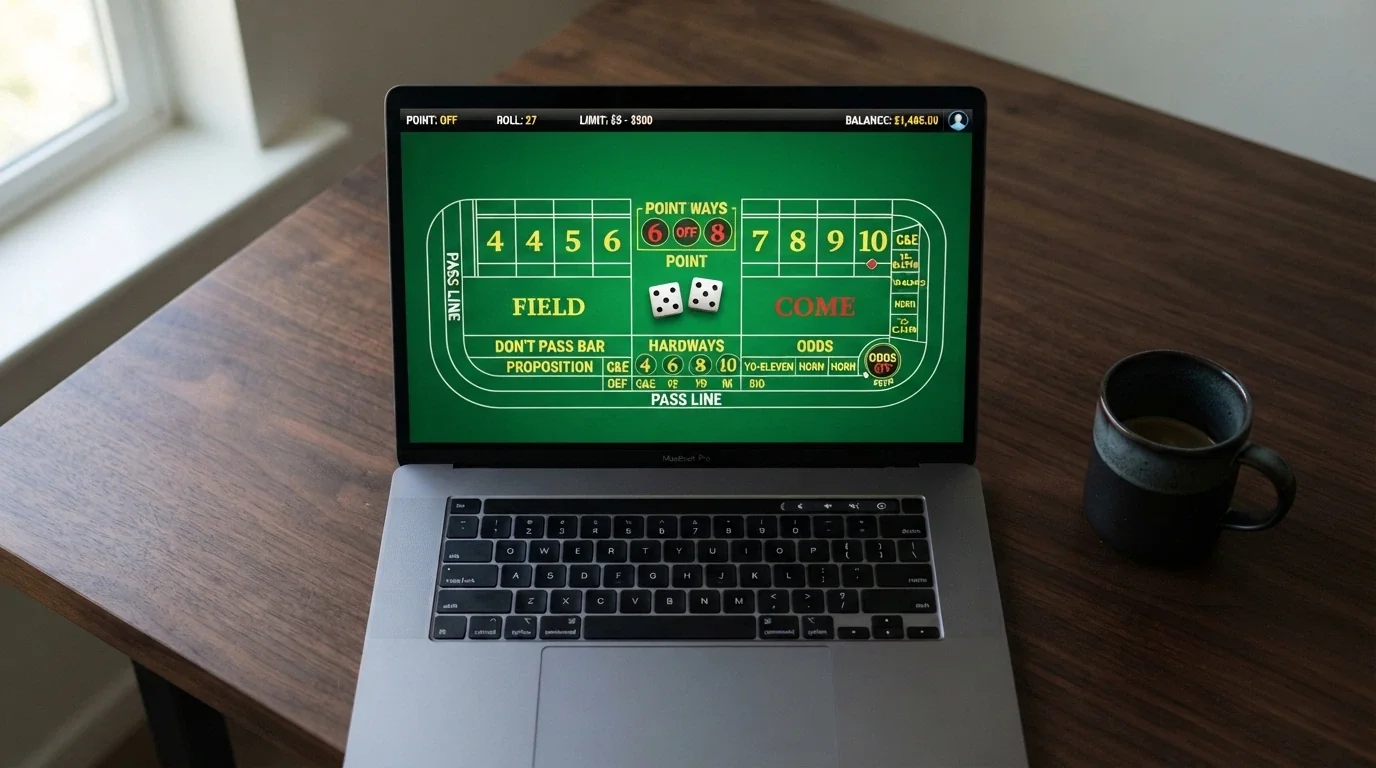
The game’s centre of gravity is the pass line. A pass line bet has a house edge of about 1.4% — among the lowest in any casino game — and a don’t pass bet is fractionally lower at 1.36%. The odds bet stacked behind it is the only wager in any casino that pays at true mathematical odds, with 0% house edge: 2:1 on points of 4 or 10, 3:2 on 5 or 9, and 6:5 on 6 or 8. The maths of craps lives on these wagers. Everything else on the layout — proposition bets, the hardways, the hop bets — is sugar for the casino at the player’s expense, and the worst of them run house edges between 5.56% and 16.67%.
The Game Itself: How Online Craps Works
The round starts with the come-out roll. The shooter throws two dice; the totals 2, 3, 7, 11 and 12 decide the round instantly. A 7 or 11 on the come-out is a pass-line winner, a 2, 3 or 12 is a pass-line loser (the 12 is a “push” on don’t pass, which is why don’t pass has a marginally lower house edge). Any other total — 4, 5, 6, 8, 9 or 10 — becomes the point.
Once a point is set, the round continues until either the point number is rolled again (pass line wins) or a 7 is rolled before the point (pass line loses). The shooter keeps rolling; other players can keep betting. On a digital table the player is both the shooter and the bettor, which removes the social rhythm of a real table — and removes the superstition that goes with it.
The pass line carries the contract through the whole round. Once the point is set, the pass-line bet is locked until the round resolves. The come bet works like a personal pass line that a player can place after the come-out: it moves to whichever number the next roll becomes, and from then on follows the same point-or-seven logic.
Online vs Land-Based: What’s Different When the Table Goes Digital
Online craps runs without the stickman, the boxman, the chips and the noise. What it keeps is the layout, the bet types, and the dice probabilities. What it changes is pace: a digital table resolves roughly one round every few seconds, versus a real table’s 30-to-60-second rhythm. That speed is the single biggest behavioural difference, and it changes how a bankroll ages.
Bet limits compress on virtual tables. Joe Fortune’s virtual craps runs AU$1 minimum to AU$500 maximum; Ricky Casino opens at AU$0.50. Live dealer tables — Joe Fortune’s Evolution Gaming rooms, Ricky Casino’s Pragmatic Play Live rooms — push the top end to AU$2,000 on select tables, with a higher minimum to match. The floor is the same for any player at the table; the ceiling shifts with the format.
What disappears is the social element: the cheering on a hot shooter, the groans on a seven-out, the ritual of passing the dice. The audio cues on a digital craps game simulate some of this, but a player who wants the craps-table atmosphere chooses a live dealer stream. A player who wants pace chooses virtual.
Real-Money Play: What Changes When You’re Betting AUD
The shift from demo mode to real money is psychological before it is mathematical. The RTP on a pass line bet is the same number whether the player is risking play-money credits or AUD, but the emotional weight of a AU$500 live-dealer max-bet on the don’t pass is a different animal from clicking the same button with a 10,000-credit practice balance.
For AUD banking, the relevant rails at the operators in this ranking are PayID, POLi, Visa, Mastercard and bank transfer. PayID deposits at Joe Fortune typically land in under ten minutes; at Ricky Casino the cashier clears PayID instantly. Withdrawals are slower: Joe Fortune runs 24 to 72 hours, Ricky Casino runs one to three business days after a 24-hour pending window. The pending window is the bit Australian players miss — it’s not a payment delay, it’s the operator’s internal processing time before the money even leaves the cashier.
The legal deposit routes for licensed Australian wagering are debit card, bank transfer, PayID/Osko and BPAY. Credit cards, credit-related products and cryptocurrency have been banned as payment for online wagering since 11 June 2024, with penalties up to A$247,500 for non-compliance. An offshore casino accepting credit cards or crypto from an Australian customer is operating outside Australian payment rules, even if the player is not the one who faces the penalty.
On tax: gambling winnings for an ordinary Australian punter are not assessable income under section 6-5 of the ITAA 1997, and losses are not deductible under section 8-1. No Australian case has held an ordinary punter’s winnings assessable. A craps player does not get a tax bill for a lucky session, and a long losing streak does not yield a deduction.
Casinos That Offer Craps: The Offshore Landscape
Craps is not on every offshore casino lobby. Among the operators featured on this page, the ones with confirmed craps coverage are Joe Fortune (virtual from Betsoft and Nucleus Gaming, live dealer from Evolution Gaming) and Ricky Casino (four variants including standard, simplified, live dealer via Pragmatic Play Live, and a speed variant). PlayAmo carries iTech Labs-audited craps with published RTP certificates; the specific variants are not in this dataset. For Rocket Play, Skycrown, Royal Reels, Stake, Rainbet, FairGO and Bizzo, the craps-specific configuration sits outside this review’s data — the verification has to happen on the operator’s own terms page before any deposit.
The provider mix matters as much as the presence of the game. Betsoft and Nucleus Gaming build RNG-driven craps with stable, predictable mechanics; Evolution Gaming and Pragmatic Play Live stream from studios with real dealers and real dice, where the agreement to the random outcome happens on the studio floor rather than in the game’s source code. Both are legitimate, but they answer to different regulators and have different audit trails.
A craps player who wants the craps-table atmosphere picks live dealer. A player who wants pace and tighter bet minimums picks virtual. A player who wants to see the RTP certificate picks an iTech Labs-audited operator. The choice isn’t between safe and unsafe in any clean sense — it’s between offshore formats, each with the same Australian regulatory vacuum around it.
The Offshore Reality: What Australian Law Says About Online Craps
Online casino is prohibited in Australia. The Interactive Gambling Act 2001 — strengthened by the Interactive Gambling Amendment Act 2017 — makes it an offence to provide online casino games, online pokies, or in-play sports betting to a person in Australia. There is no online casino licence available anywhere in the country, federally or in any state or territory. Card Player frames it plainly: “the law doesn’t stop you from playing at offshore online casinos.” It stops no one from playing; it just builds a market that operates outside the Australian regulatory perimeter.

The Interactive Gambling Act and the ACMA: Who Polices the Prohibition
The Australian Communications and Media Authority, the ACMA, is the federal regulator that enforces the online prohibition. The ACMA investigates complaints, issues formal warnings, runs civil penalty proceedings, and directs Australian ISPs to block illegal sites. Since its first blocking request in November 2019, the ACMA has had 1,564 illegal gambling and affiliate websites blocked as of March 2026, and more than 225 illegal services have withdrawn from the Australian market since 2017.
The Interactive Gambling Amendment (Gambling Reform) Bill 2026 passed Parliament on 19 August 2026; its measures commence 1 January 2027. The reform adds: a maximum of three wagering ads per hour between 6:00 am and 8:30 pm; a live-sport blackout from 15 minutes before to 5 minutes after a game; a ban on athletes, celebrities and influencers promoting wagering; an outright ban on broadcasting sporting odds; radio ads barred during school drop-off and pick-up windows; online ads limited to logged-in, age-confirmed users with an opt-out; no wagering advertising in sports venues or on uniforms. From 1 January 2027, banks and payment providers gain express authority to block transactions to illegal gambling operators — the reform’s most direct threat to the offshore market Australian players use today.
The IGA targets the provider, not the player. An Australian who plays at an offshore casino is not prosecuted. What they lose is every Australian consumer protection that would apply if they were playing on a licensed product: no Australian complaints body, no ACMA money recovery, no BetStop coverage, no recourse if the operator refuses a withdrawal or voids a win. The site can also be blocked at any time, with a player balance on it.
BetStop and the Offshore Gap: What the Self-Exclusion Register Doesn’t Cover
BetStop — the National Self-Exclusion Register — has been live since August 2023. As of 31 July 2026, the register had 67,480 registrations, with 41,290 active exclusions (over 60%). 78% of registrants were under 40, and 38% chose lifetime exclusion. One registration excludes a person from every Australian-licensed online wagering service, which is the entire licensed wagering market.
“Licensed” is the word doing the work. BetStop binds Australian-licensed wagering services. Offshore casinos are not licensed in Australia, are not connected to the register, and will keep accepting a self-excluded person’s money. That gap is the most consequential weakness in Australia’s harm-minimisation infrastructure for the segment of the market most at risk.
The 2026 reform tightens the surrounding rules: direct marketing of inducements is banned for 14 days after a customer signs up, for three months after a BetStop deregistration, and indefinitely for customers identified as at-risk. Those controls only work on the licensed operators they cover. They leave the offshore market exactly where it was.
What Playing Without a Licence Actually Means for Your Money
The consumer frame is the sharpest thing on this page. An Australian playing at an offshore casino has no Australian consumer protection: no local regulator to complain to, no ACMA process to recover funds, no BetStop coverage, no enforceable right to a withdrawal, and no guarantee that the operator won’t void a win on a terms-and-conditions technicality. The site can be added to the ACMA’s blocking list at any time, and a player can wake up to find their account inaccessible with a balance on it.
From 1 January 2027, banks and payment providers gain express authority to block transactions to illegal gambling operators — which means a deposit that worked yesterday may not work tomorrow, and a withdrawal in flight may not arrive. That change is the first time Australian payment infrastructure directly reaches into the offshore market.
There is no federal deposit, loss, or stake ceiling for online gambling in Australia — because the product those ceilings would govern is banned outright. Australia caps the payment method (credit cards and crypto banned from June 2024) rather than the stake, and the cap applies to licensed operators, not the offshore market.
The legal deposit routes for licensed Australian wagering are debit card, bank transfer, PayID/Osko, and BPAY. Verification of identity is required to open an account with a licensed operator. The combination — verified identity, Australian-licensed rails, capped payment methods — is exactly what an offshore casino doesn’t sit on, and exactly what BetStop and the ACMA were built to work with.
Why the Pass Line Is Your Best Friend at the Craps Table
A pass line bet has a house edge of about 1.4%. A don’t pass bet is fractionally lower at 1.36%. The odds bet behind the pass line is the only wager in any casino with a 0% house edge, paying at true mathematical odds: 2:1 on 4 or 10, 3:2 on 5 or 9, 6:5 on 6 or 8. Laying maximum odds behind a pass line bet — 3× on points of 4 or 10, 4× on 5 or 9, 5× on 6 or 8 — drops the combined house edge on Pass Line plus maximum Odds to about 0.37%. That is the craps table’s single sharpest edge against the house in any format.
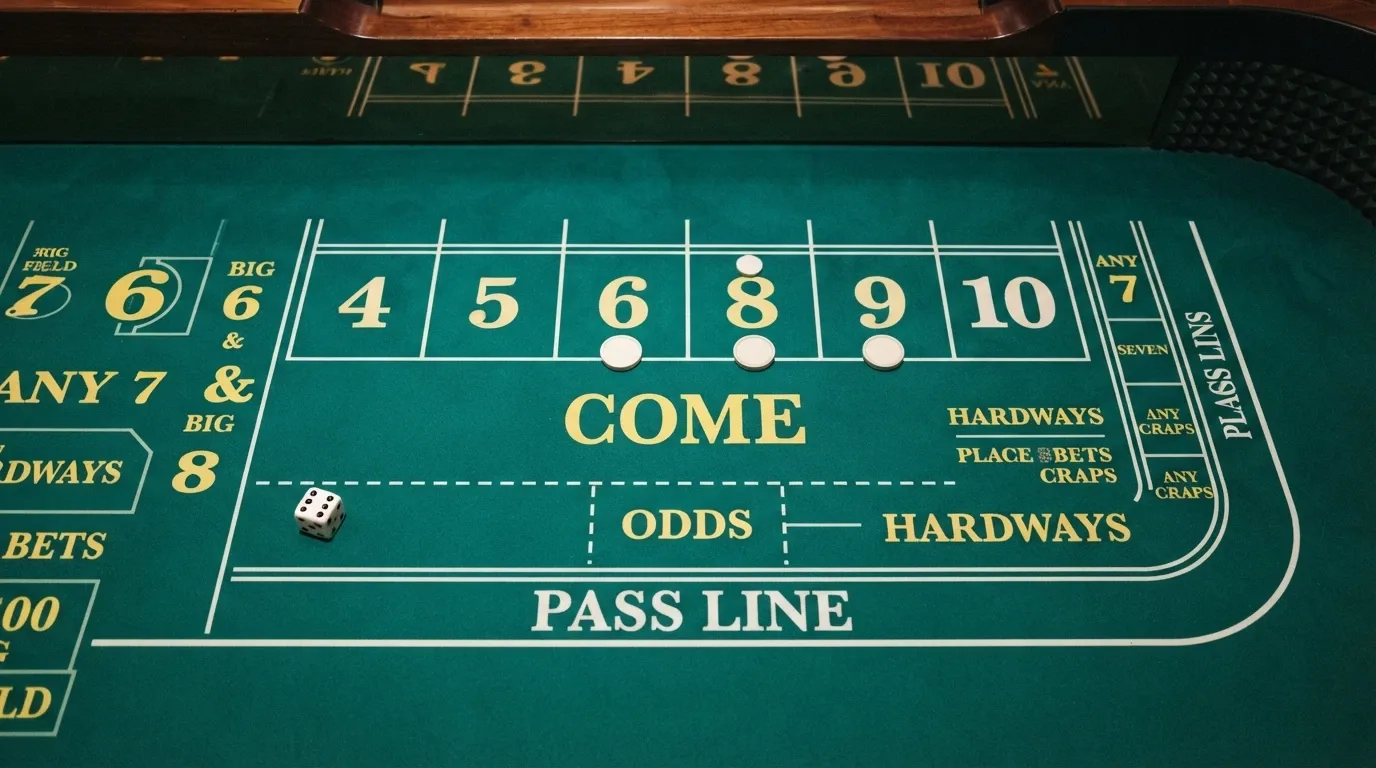
The proposition bets in the centre of the layout — Any 7, Any Craps, the Horn bets, the Hardways, Big 6 and Big 8 — carry house edges between 5.56% and 16.67%. They look attractive because they pay 4:1, 5:1, even 30:1, but the maths of the bet is what it is. The centre of the craps table is the casino’s profit centre on the layout. The pass line and the odds bet are the player’s.
How to Play Craps: The Flow of a Round
A craps round moves through a defined sequence that a player learns once and then never has to think about again. The flow is the same online as it is on a felt table, and the same in an RNG-driven virtual game as it is in a live dealer studio. Six steps describe a round from come-out to resolution.
- The shooter rolls the come-out. A 7 or 11 wins the pass line; a 2, 3 or 12 loses it (with the 12 pushing on don’t pass). The round ends.
- Any other total — 4, 5, 6, 8, 9 or 10 — becomes the point. The puck moves from OFF to ON.
- The shooter keeps rolling until either the point is rolled again (pass line wins) or a 7 is rolled first (pass line loses).
- The come bet works like a personal pass line that a player places after the come-out. The next roll becomes its point; from then on it follows the same point-or-seven logic.
- The odds bet stacks behind a pass line or come bet at true mathematical odds, with 0% house edge.
- At the end of the round, the puck returns to OFF and a new come-out starts.
The pass line and don’t pass contracts ride through the whole point phase. Once the puck is ON, those bets cannot be removed. The odds bet can be removed, which is part of why experienced craps players will sometimes lay it down, watch the shooter, and pull it back if the dice go cold.
The Bets That Matter: House Edge, Payouts and What to Avoid
The table below ranks craps bets from lowest house edge to highest. It is the single most useful reference for any player stepping onto a digital craps table for the first time. The pass line, don’t pass, come and don’t come sit at the top of the table; the odds bet is the only zero-edge wager in any casino; the proposition bets at the bottom are the layout’s margin machine.
| Bet type | House edge | Payout | What to know |
|---|---|---|---|
| Odds bet | 0% | True odds (2:1 on 4/10, 3:2 on 5/9, 6:5 on 6/8) | Only zero-edge bet in any casino; must be backed by a Pass/Don’t Pass or Come/Don’t Come |
| Don’t Pass | ~1.36% | 1:1 | Marginally lower edge than Pass Line; goes against the shooter |
| Pass Line | ~1.4% | 1:1 | The standard table bet; locked in once a point is set |
| Don’t Come | ~1.36% | 1:1 | Mirror of Don’t Pass, placed after the come-out |
| Come | ~1.4% | 1:1 | Mirror of Pass Line, placed after the come-out |
| Place 6 / Place 8 | ~1.52% | 7:6 | Wins on the chosen number before a 7 |
| Place 5 / Place 9 | ~4% | 7:5 | Worse than 6/8 — the payout doesn’t scale with the probability |
| Place 4 / Place 10 | ~6.67% | 9:5 | The least-bad of the place bets, but well above the line |
| Proposition bets (Any 7, Any Craps, Horn, Hardways, Big 6/8) | 5.56%–16.67% | 4:1 to 30:1 | The centre of the layout; sugar for the house |
Pass line plus maximum odds is the rational play. At 3-4-5× odds — 3× on 4 or 10, 4× on 5 or 9, 5× on 6 or 8 — the combined house edge on Pass Line plus maximum Odds drops to approximately 0.37%. The player who takes maximum odds is playing a near-even game against the casino, which is as close to beating craps as the maths allows. The player who wanders into the centre of the layout is paying the casino a 5% to 17% vig on every bet, and the streak that pays for the marketing of those bets is the streak of players who don’t know the difference.
Strategy, Tips and Winning at Craps
No betting system overcomes the statistical probabilities of craps. That isn’t editorial pessimism — it is the framing FanDuel Research puts on the game: “No betting system can overcome the statistical probabilities of craps, but you can improve your experience by following these guidelines.” The guidelines all point in the same direction: stick to low-edge bets, back them with the maximum allowable odds, manage the bankroll.
The “3-Point Molly” strategy extends pass line plus odds by adding come bets. The player places a pass line bet with full odds, then a come bet on the next roll with full odds, then another come bet after that with full odds once its point is established. The result is three active bets simultaneously, each with the low Pass/Come house edge and a zero-edge Odds portion behind it. The bankroll cost is three working bets at all times; the upside is sustained low-edge action across multiple points on the layout.
Bankroll management matters more on craps than on most casino games because of the pace. Virtual craps runs faster than a real table, and a player who doesn’t set a session budget will eat through it in a fraction of the time they expected. Walking away is a discipline, not a system — and it is the only “strategy” that doesn’t promise something the maths can’t deliver.
Beyond the Pass Line: Live Dealer, Electronic, and Variant Craps Tables
The craps layout is the same in every format. What changes is the dealer’s role, the pace of the rounds, and the bet limits on offer. A player who understands the bets can move between virtual craps, live dealer craps and the variant games without relearning anything except the cashier button.
Live Dealer Craps: Evolution, Pragmatic Play and the Real-Studio Experience
Live dealer craps streams a real table from a studio, with a real dealer handling real dice. The player bets on their screen; the dealer rolls for the table. Evolution Gaming and Pragmatic Play Live are the two providers Australian-facing casinos carry. Joe Fortune runs live dealer craps on Evolution Gaming’s studio; Ricky Casino runs live dealer craps via Pragmatic Play Live. Both formats answer the same question — how to give an online player a real craps-table feel — with the same answer: stream it from a real studio with multiple camera angles and a chat host.
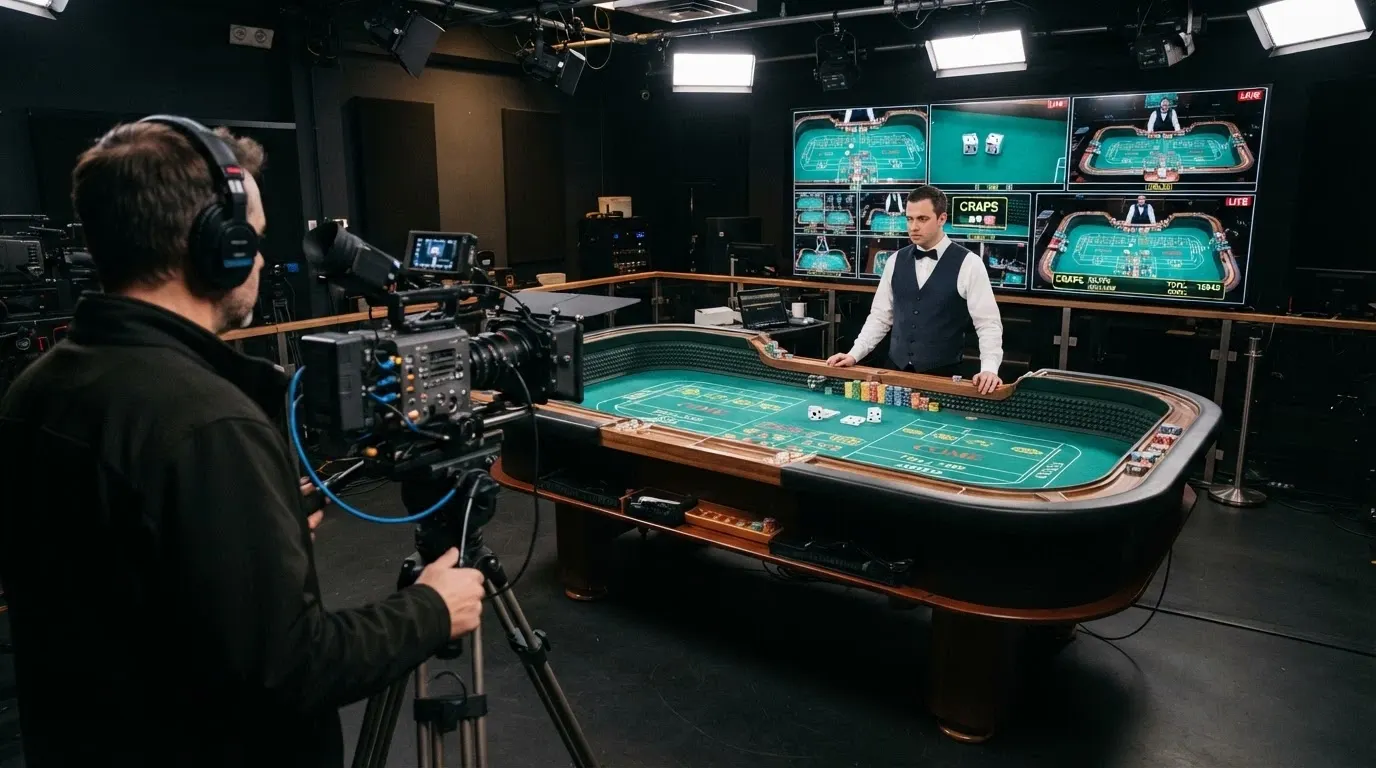
Bet limits on live dealer tables sit higher than on virtual tables. Joe Fortune pushes its live dealer maximum to AU$2,000 on select rooms. The minimum is also higher than the virtual floor; a live dealer craps table is built for higher-stakes play than a virtual one. For an Australian player who wants the atmosphere without the bankroll pressure, a virtual table with a live dealer session on a special occasion is a workable compromise.
The studio atmosphere is the live dealer craps table’s real product. A real stickman calling the rolls, a real dealer taking the bets, real dice hitting real felt. For a player who has played craps in a casino, live dealer craps is the format that recreates the experience. For a player who has never set foot on a real table, live dealer craps is the format that teaches what the digital version is approximating.
Electronic, Bubble and Crapless Craps: The Variants Explained
Electronic craps is the RNG-driven virtual table: a digital layout, a random number generator deciding each roll, no dealer at all. Pace is fast — a roll every few seconds — and bet limits are tight. Joe Fortune’s virtual craps runs AU$1 to AU$500; Ricky Casino’s virtual tables open at AU$0.50. This is the format for low-stakes practice and rapid-fire play, and the format most Australian-facing casinos default to.
Bubble craps is a physical machine: a dome over automated dice, a player pressing a button to fire them, and a digital layout tracking the bets. The pace is faster than a live table but slower than a pure RNG, with the visual hook of watching the dice tumble under the dome. Not every offshore casino carries bubble craps; the variant is more common in US-facing venues than in Australian-facing online lobbies.
Crapless craps removes the losing come-out totals of 2, 3 and 12 — instead, those numbers become points. The trade-off is the house edge: every “point” of 2, 3 or 12 is harder to hit again than 7, so the come-out bet loses less often but pays less when it wins. The net effect is a higher overall house edge than standard craps. Ricky Casino’s “simplified craps” variant sits closer to this rule set; the “speed variant” compresses decision time and the rounds themselves for a faster cadence.
The pass line and the odds bet stay the rational play in every variant. The maths shifts at the edges — a higher or lower house edge on a particular bet type — but the ranking of bets in the house-edge table above holds across formats.
The Craps Table Layout: Reading the Felt
The layout is divided into three zones. The pass line and don’t pass bar run along the bottom edge, framing the contract bets that a player places before or on the come-out. Above them sit the come and don’t come areas, where a player can place the same kind of bet after the come-out. The point numbers — 4, 5, 6, 8, 9 and 10 — sit in their own boxes around the centre, with a place-bet circle for each.
The centre of the layout is the proposition zone. Any 7, Any Craps, the Horn bets, the Hardways (4, 6, 8, 10 as doubles), Big 6 and Big 8 — all the high-payout, high-edge bets live here. The stickman’s domain in a real table is also the centre, which is part of the marketing of these bets: the stickman hypes them, and the louder bets get the attention. The maths of them is at the bottom of the house-edge table above.
The field bet sits apart from both zones. It wins on 2, 3, 4, 9, 10, 11 or 12, and loses on 5, 6, 7 and 8 — a one-roll bet with a house edge above 2.5% on most layouts. It looks simple and pays 1:1 (or 2:1 on the 2 or 12, depending on the table), which is part of why it attracts the same players who wander into the proposition zone. Both bets look like opportunities. Both bets are sugar for the house.
Table Games and Rules: What Changes Between Formats
The pass line house edge of about 1.4% is constant across formats. The bet minimums, the maximums, the pace and the social texture change; the maths of the bets does not. A craps player who knows the layout and the bets can sit at any craps table — virtual, live dealer, bubble, crapless — and play the same game with the same expected return.
What changes between operators is the configuration. Joe Fortune runs virtual craps at AU$1 to AU$500 and live dealer craps up to AU$2,000. Ricky Casino opens the floor at AU$0.50. PlayAmo runs iTech Labs-audited craps with published RTP certificates. The pass line bet pays 1:1 at every table, and the odds bet pays true odds at every table. What shifts is the rails — the cashier, the limits, the audit trail.
For an Australian player, the practical question isn’t which craps variant to play. It’s which operator’s cashier runs in AUD without conversion drag, which operator has been audited by a named testing house, and which operator’s limits match the bankroll the player is willing to commit. The dice are the same on every screen.
Free Craps vs Real Money: What Changes When the Dice Cost You Nothing
Free-play craps teaches the layout. It teaches the pass line, the don’t pass, the come bet, the place bets and the proposition zone. It teaches how the puck moves from OFF to ON, how the point is set, and how the round resolves on either a repeat of the point or a seven-out. The RTP on the pass line is the same number whether the player is risking play-money credits or AUD. What changes between free and real is not the maths. It’s the stakes.
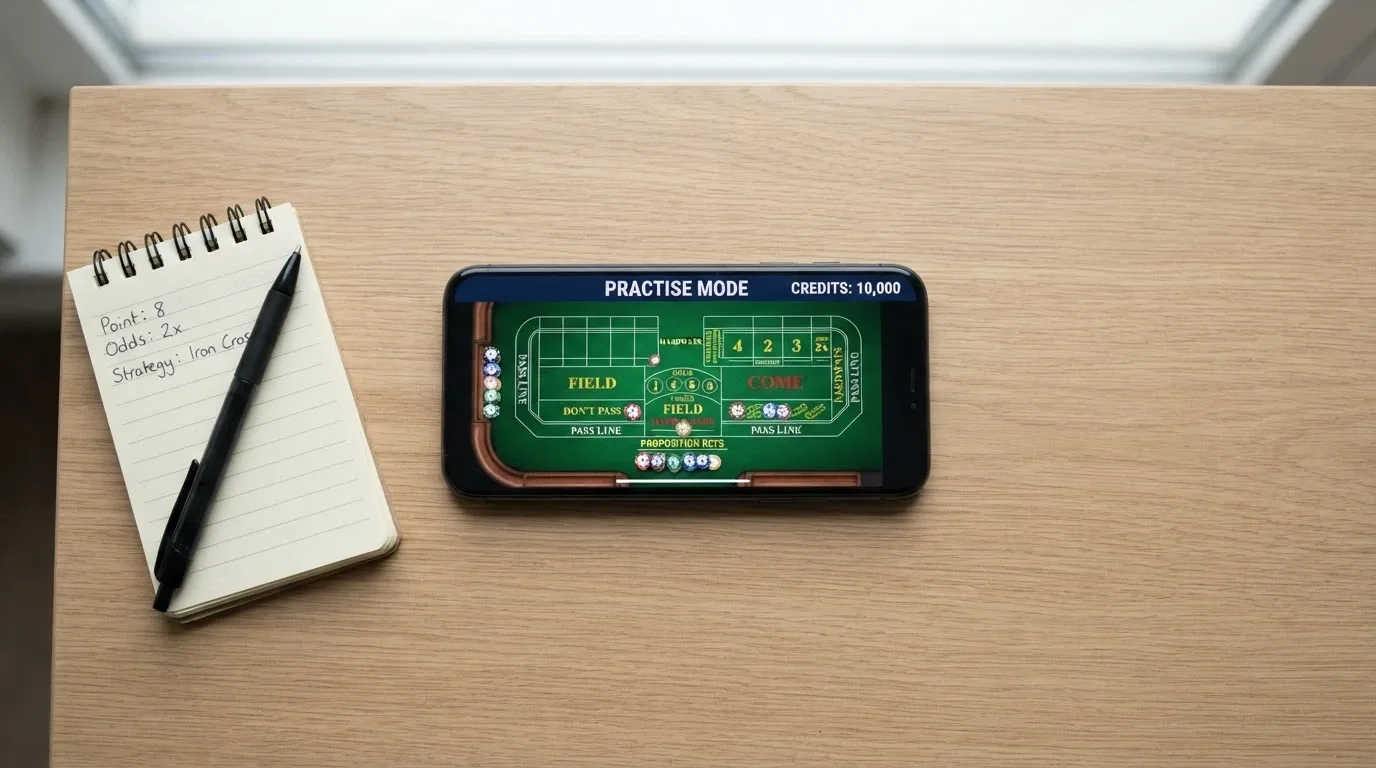
Free Play vs Real Money: The Stakes That Change Everything
A demo-mode craps table with a 10,000-credit practice balance lets a player click every button on the layout without consequence. A player can roll the dice 200 times, hit a hot streak of points, and never feel anything more than mild interest. The same rolls on a live dealer table with AU$500 max bets on each round feel entirely different — the wins land harder, the losses land harder, and the emotional pressure of a hot or cold streak is the variable that demo mode can’t simulate.
The bankroll-management gap is where free play leaves the most on the table. A player who has run a 10,000-credit practice balance up to 30,000 and back down to 8,000 has seen a 50% drawdown without feeling it. The same drawdown on a AU$500 bankroll is the kind of session that triggers the urge to chase, and chasing is the path the responsible-gambling resources below exist to interrupt.
The harm data frames the stakes. About 2.1% of Australian adults — roughly 430,000 people — experience problem gambling; the Australian Institute of Health and Welfare put high-risk gambling at 1.8% in 2022. Free play is not a screen for problem gambling. It is a way to learn the mechanics before the emotional weight of real money arrives.
Where to Find Free Online Craps Games and Demo Mode
The Australian-facing operators in this ranking that carry confirmed virtual craps — Joe Fortune (Betsoft and Nucleus Gaming) and Ricky Casino (four variants) — typically offer demo mode on the RNG-driven tables. The availability of demo play is operator-specific and was not exhaustively verified across every operator in this review’s dataset, so the check at the operator’s site is the verification.
Live dealer craps does not offer demo mode in the same way: a real dealer cannot run free-play hands against an empty table. A player who wants to learn the live dealer format before risking AUD watches a session or two with the chat muted, then steps in on a low minimum. PlayAmo’s iTech Labs audit is the trust signal for the player who wants to see the craps game’s RTP certificate before depositing — that transparency carries over to the demo mode.
The demo mode is for learning the layout and the rhythm of the rounds. It is not a substitute for the bankroll discipline that real-money play requires, and the page returns to that point in the section on responsible gambling below.
Why Your Craps Bonus Is Smaller Than It Looks
The craps bonus contribution rate at Australian-facing online casinos typically sits at just 5% of wagering. A AU$1,000 bonus therefore requires AU$20,000 in craps wagering to clear, compared to AU$1,000 on slots. The maths on a craps bonus is the single biggest gap between the marketing and the real cost of the offer.
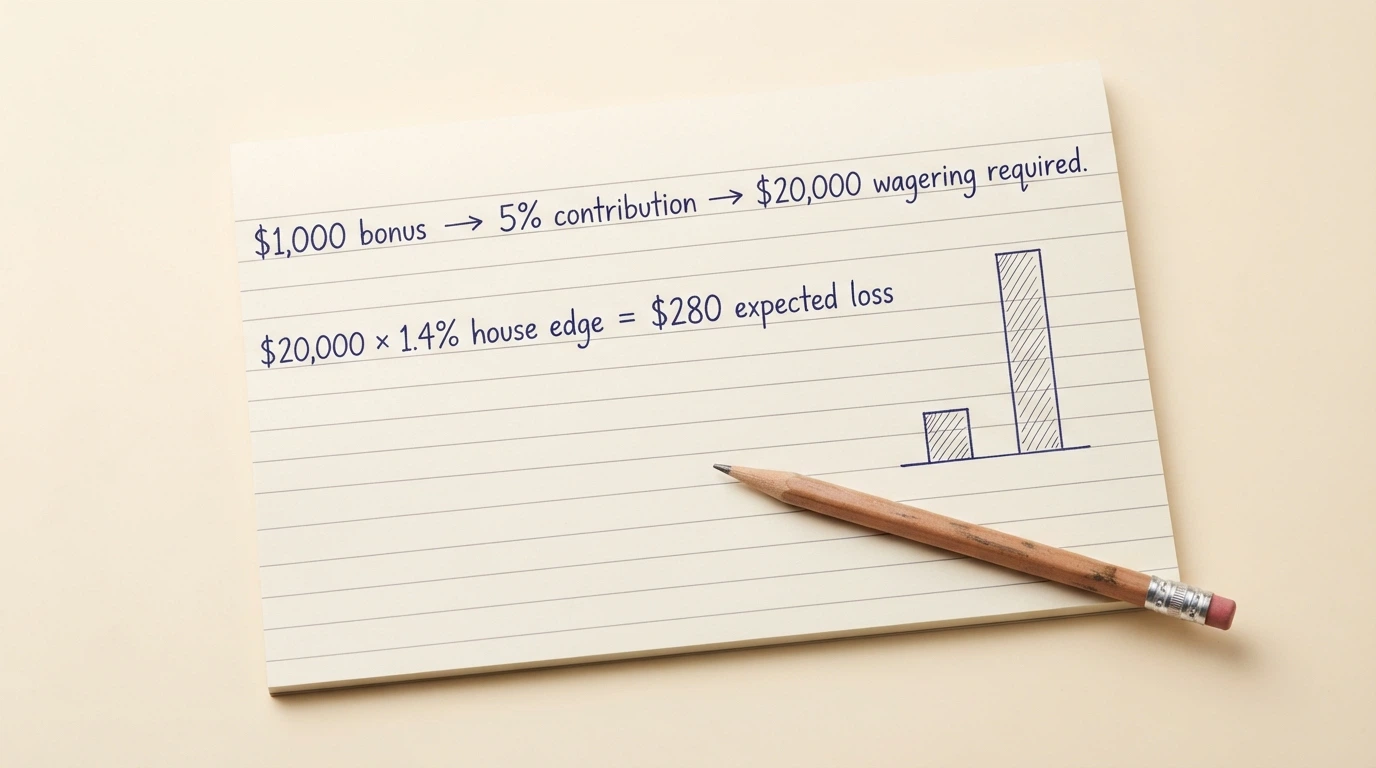
A welcome bonus is a marketing number with conditions attached. The headline is the percentage match and the maximum amount. The real cost is the wagering multiplier times the contribution rate times the bet size — and on craps, the contribution rate kills the offer for any player who reads it carefully.
Craps-Specific Bonuses: What’s Actually on Offer
No operator in this review’s checked dataset currently offers a craps-specific no-deposit bonus. The craps bonus landscape is the general casino bonus landscape, with craps weighted at 5% of wagering.
Joe Fortune’s welcome offer is a 200% match up to AU$1,000. Ricky Casino’s welcome offer is a 150% match up to AU$750 on first deposit, with a 50% reload bonus every Wednesday. For other operators in the ranking — Rocket Play, Skycrown, Royal Reels, Stake, Rainbet, FairGO, Bizzo — the welcome bonus details sit outside this review’s dataset. The wagering multipliers on these offers are also outside the dataset, which means the effective cost of clearing the bonus on craps cannot be calculated for every name on this page.
A player who wants a craps-specific bonus is asking for something the market doesn’t really offer. What the market offers is a general welcome bonus that craps play helps clear at 5% of the rate of slots. The deal is bad for the player on a pure craps bankroll. The deal makes more sense for a player who plans to play slots heavily and treats craps as a side bet during the bonus.
Bonus Wagering: Why 5% Contribution Changes the Maths
The contribution rate is the share of a wager that counts toward clearing a bonus. At 5% on craps, every AU$20 wagered on the craps table counts as AU$1 of cleared bonus. The same AU$20 wagered on slots counts as AU$20.
The cost calculation for a AU$1,000 bonus at Joe Fortune — assuming only the bonus amount is wagered, at the Joe Fortune virtual craps minimum of AU$1 per round, and a pass line house edge of about 1.4% — runs like this. The required craps turnover is AU$20,000. At AU$1 per spin, that is 20,000 spins. At roughly five seconds per spin, that is 100,000 seconds of play, or about 27.8 hours of craps at the digital table. The expected loss on AU$20,000 of pass line wagers at a 1.4% house edge is AU$280 — the bonus’s real cost in player money.
Twenty thousand rounds is not a session. It is multiple sessions, stretched over days, against an outcome that averages out to the house edge over every one of them. A player who reads the AU$1,000 bonus as “free money” hasn’t read the 5% contribution rate. A player who reads it as “27.8 hours of craps for AU$280 in expected loss” has read the offer.
When a bonus is not worth claiming: a welcome bonus at 200% match with a 5% craps contribution and a high wagering multiplier is closer to a marketing cost than a value-add for a craps-specific player. The deposit itself is the better value. The bonus is the operator’s hook; the wagering requirement is the operator’s margin.
Playing Craps Safely: What Australian Responsible Gambling Tools Actually Cover
Craps is one of the fastest casino games a player can run. The pace of digital craps, the multi-bet action on a real table, and the emotional pull of a hot or cold shooter combine into a session that can consume a bankroll in a fraction of the time the player planned. The responsible-gambling tools below are what the Australian regulatory framework actually offers — and the gaps in coverage that offshore play creates.

Deposit Limits, Time Limits and the Tools You Can Set
For licensed Australian wagering operators, deposit limits, session time limits, take-a-break periods and activity statements are standard tools. Verification of identity is required to open an account, which means the operator knows who the customer is and can enforce the limits it sets. That frame is what BetStop is built to work with, and what the ACMA’s complaint process is designed to police.
The offshore operator’s responsible-gambling toolkit is operator-specific. Some offshore casinos offer deposit limits, time-out periods and self-exclusion within their own platform; others do not. The availability varies by operator and was not exhaustively verified across this ranking. The hard fact is that no offshore casino is connected to BetStop, no offshore casino is required to honour an Australian self-exclusion, and an offshore operator that closes a player’s account on a self-exclusion request has no Australian body to escalate to if the player changes their mind and wants back in.
The practical control for an Australian playing at an offshore casino is the player’s own. Set a deposit ceiling before signing in. Set a session timer. Walk away when either triggers. The National Gambling Helpline at 1800 858 858 is free, confidential and staffed 24/7 — a player who finds themselves chasing losses on a craps table picks up the phone and talks to someone who has heard it before.
Self-Exclusion and BetStop: What Works and What Doesn’t
BetStop registration excludes a person from every Australian-licensed online wagering service. As of 31 July 2026, the register had 67,480 registrations, with 41,290 active exclusions (over 60%). 78% of registrants were under 40; 38% chose lifetime exclusion. For the licensed market, the register works: one form, every Australian-licensed operator, immediate effect.
For the offshore market, BetStop doesn’t reach. An offshore casino is not licensed in Australia, is not connected to the register, and will continue accepting a self-excluded person’s money. The most vulnerable cohort in the licensed market — people who have made the explicit decision to stop — remain exposed on the offshore side.
The 2026 reform strengthens the surrounding controls from 1 January 2027: direct marketing of inducements banned for 14 days after sign-up, three months after BetStop deregistration, and indefinitely for at-risk customers. Those rules tighten the licensed market’s responsibility to the people it covers. They don’t extend the register to the operators it doesn’t cover.
A self-excluded Australian who wants the offshore market closed to them has to do it operator by operator, account by account. That’s a much heavier lift than a single BetStop registration, and it’s the reason the offshore gap is the most consequential weakness in Australia’s harm-minimisation infrastructure.
Support Resources: Where to Get Help in Australia
The support infrastructure below is free, confidential, and staffed by people whose job is to listen. It is built for the licensed market, but it is available to anyone in Australia who needs it — including the people the offshore gap leaves exposed.
- The National Gambling Helpline at 1800 858 858 — free, confidential, 24/7.
- Gambling Help Online at gamblinghelponline.org.au — online chat and counselling.
- BetStop at betstop.gov.au — one registration excludes from every Australian-licensed online wagering service.
- A GP or a counsellor — the harm is rarely only the gambling, and a primary-care conversation is the door to the rest of the support network.
About 2.1% of Australian adults — roughly 430,000 people — experience problem gambling; high-risk gambling sat at 1.8% in 2022. A player reading this page is not in that cohort by definition, but the cohort overlaps with people who once thought the same thing. The phone call is the entry point. The chat is the entry point. Asking is the entry point.
How We Ranked These Online Craps Casinos
The ranking methodology CrapsOnline.au applies to this set is the one this page adopts: licence check first, then AUD banking — PayID and POLi, both built on the New Payments Platform — and then craps bonus contribution, which typically sits at 5% of wagering. That ordering puts the regulatory anchor ahead of the marketing number, which is the right way around for a craps page.
The sources behind the ranking are the operator-level inputs from CrapsOnline.au, the BLASK BRANDS market-share data, and the regulatory records of the ACMA, the Curaçao eGaming authority and the Kahnawake Gaming Commission. Where the dataset carries a verified figure — licence number, bet limit, payment method — the page quotes it. Where the dataset doesn’t carry a figure — a market share for Joe Fortune, a craps variant for Stake — the page leaves the cell empty or notes the gap, rather than inventing a value.
Limits of this ranking: it covers the operators named on the plan, not the entire Australian offshore market. The Australian offshore market is much larger than ten brands, and a player who reaches an offshore casino outside this list is on their own verification. The ranking also doesn’t rank by safety — the offshore frame is the same for every name on this list, and a player who treats any one of these as Australian-regulated is reading the page wrong. The ranking ranks by what craps-specific configuration, AUD banking and craps bonus contribution are verifiable for each operator in the inputs.
Your Move: What the Numbers Say About Playing Online Craps from Australia
The numbers on this page point in one direction. An Australian who wants to play online craps is playing at an offshore casino, which means no Australian consumer protection, no ACMA recourse, no BetStop coverage, and a real chance that the site gets blocked with a balance on it. From 1 January 2027, banks can block transactions to illegal gambling operators, which is the first time the Australian payment system reaches directly into the offshore market. None of that is a reason not to play. It is the frame the player has to accept before they deposit.
The craps maths is clearer than the regulatory frame. The pass line plus maximum odds gives a combined house edge of about 0.37%, which is the closest a player can get to beating craps with the bets the game offers. The proposition bets at the centre of the layout charge the house between 5.56% and 16.67% per bet — and they look like the most exciting bets on the table, which is the design. The pass line and the odds bet are the player’s; the proposition zone is the house’s.
The bonus trap is the cost most players don’t calculate. A AU$1,000 welcome bonus at 5% craps contribution is 20,000 spins of virtual craps at a AU$1 minimum — about 27.8 hours of play, against an expected loss of about AU$280 on the pass line at a 1.4% house edge. That’s the real cost of “free money.” A player who clears the bonus pays the time and the expected loss; a player who reads the bonus as value without reading the contribution rate pays more than they bargained for.
The responsible-gambling tools that actually work are the ones built for the licensed market: BetStop at betstop.gov.au, the National Gambling Helpline at 1800 858 858, Gambling Help Online at gamblinghelponline.org.au. They don’t reach the offshore market. A self-excluded Australian who wants the offshore gap closed has to close it operator by operator, which is a much heavier lift than the single BetStop registration the licensed market allows.
A sensible Australian craps player reads the IGA, accepts the offshore frame, picks an operator with AUD banking and a verified licence, plays pass line and odds almost exclusively, ignores the proposition zone, treats any welcome bonus as a marketing cost rather than value, and sets their own session limits because no Australian body will set them for them at an offshore casino. The pass line and the odds bet is the play. The rest of the layout is the house’s marketing. The numbers don’t lie about which is which.
Frequently Asked Questions About Online Craps in Australia
Is it legal to play online craps for real money in Australia?
Online casino games are prohibited to provide to persons in Australia under the Interactive Gambling Act 2001, and no online casino licence exists anywhere in the country. The IGA targets the provider, not the player — an Australian who plays at an offshore casino is not prosecuted, but they lose Australian consumer protection, ACMA complaint recourse, BetStop coverage, and any leverage if the operator refuses a withdrawal or voids a win. Card Player summarises the position: the law doesn’t stop Australians from playing at offshore online casinos.
What payment methods can I use to deposit at Australian craps casinos?
The legal deposit routes for licensed Australian wagering are debit card, bank transfer, PayID/Osko and BPAY. Credit cards, credit-related products and cryptocurrency have been banned as payment for online wagering since 11 June 2024. At offshore casinos Australian players actually reach, PayID and POLi are the AUD-native rails that clear fastest, with deposits at Joe Fortune typically under ten minutes and at Ricky Casino instant. From 1 January 2027, banks and payment providers gain express authority to block transactions to illegal gambling operators.
What is the difference between online craps and live casino craps?
Online craps runs as an RNG-driven virtual table or as a live dealer stream from a studio. The RNG virtual format resolves a round every few seconds, with tight bet limits — Joe Fortune’s virtual floor runs AU$1 to AU$500, Ricky Casino opens at AU$0.50. Live dealer craps, streamed by Evolution Gaming or Pragmatic Play Live, runs a real table with a real stickman at a slower pace, with higher bet limits — Joe Fortune’s live dealer maximum pushes to AU$2,000 on select tables. The house edge on the pass line is the same number in both formats.
How does BetStop work, and does it cover offshore casinos?
BetStop, the National Self-Exclusion Register, has been live since August 2023. One registration excludes a person from every Australian-licensed online wagering service — as of 31 July 2026, 67,480 registrations with 41,290 active. BetStop binds only Australian-licensed wagering services. Offshore casinos are not licensed in Australia, are not connected to the register, and will continue accepting a self-excluded person’s money. The most vulnerable cohort in the licensed market remains exposed on the offshore side.
Which craps bets have the lowest house edge?
The odds bet has 0% house edge and pays at true mathematical odds: 2:1 on 4 or 10, 3:2 on 5 or 9, 6:5 on 6 or 8. The don’t pass bet sits at about 1.36%, the pass line and come bets at about 1.4%. Laying maximum odds behind a pass line bet drops the combined house edge on Pass Line plus maximum Odds to about 0.37%. The proposition bets at the centre of the layout — Any 7, Any Craps, Horn bets, Hardways, Big 6/8 — carry house edges between 5.56% and 16.67%, which is why they sit at the bottom of the rational-play list.
Published by the Bitcoin Casinos Australia team.