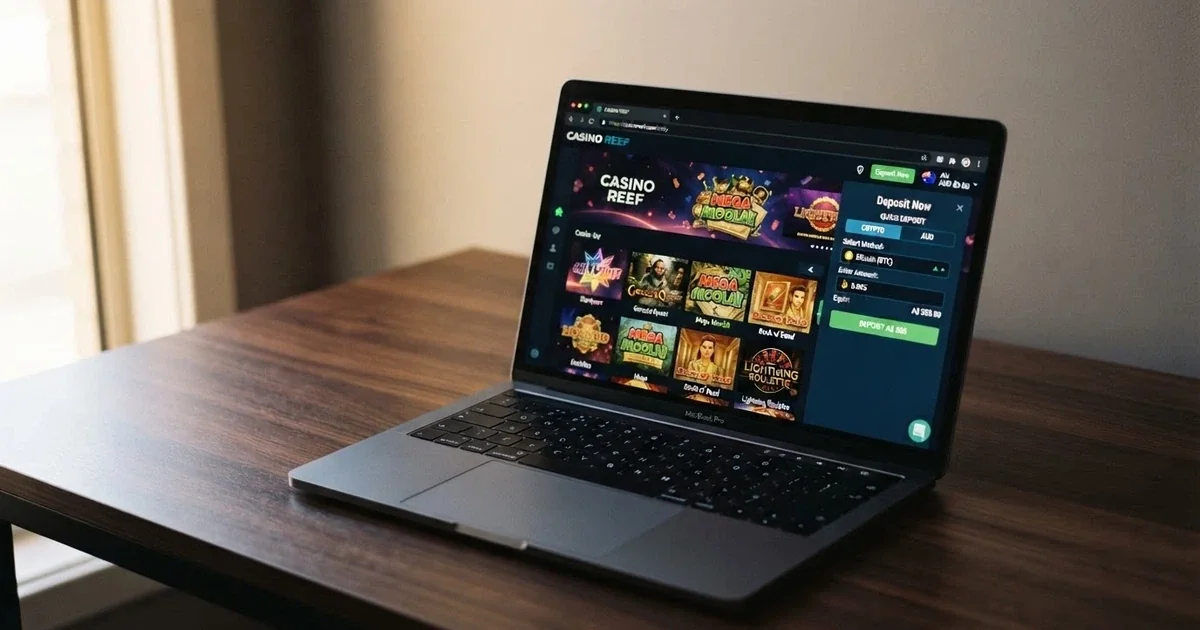
Australian Crypto Casinos: What Offshore Operators Actually Offer — and What the Law Still Says
 Available in US
A crypto casino is a gambling site that takes deposits and pays withdrawals in cryptocurrency, and operates outside the licensed wagering channels available in Australia. It is not a parallel legal system. Online casino games are prohibited services under the Interactive Gambling Act 2001, and there is no licence for online casino anywhere in the country — not federally, not in any state or territory. Every site in this guide is offshore. None holds an Australian licence. None can.

The reason Australian players keep using them is not hard to find. Crypto deposits skip the bank rail. Withdrawals arrive in minutes rather than days. Sign-up asks for an email and a wallet address, not a driver’s licence. The bonus offers are heavier than anything onshore. The cost is the protection you give up: no Australian regulator to chase a refused withdrawal, no BetStop coverage, and a site that can be blocked by ISPs with a balance sitting on it. This guide ranks the offshore crypto casinos Australians actually use in 2026, with the legal frame stated up front and the marketing claims checked against what the terms actually say.
Currency and licence checks current as of 3 September 2026 against the ACMA register and operator terms pages.
Table of Contents
- What a Crypto Casino Actually Is — and Why Australians Keep Using Them
- No KYC, No ID: The Real Story Behind Anonymous Crypto Casinos
- The Legal Reality Australian Crypto Casino Sites Won’t Tell You
- The 10 Offshore Crypto Casinos Australians Actually Use in 2026
- Why Your 2026 Crypto Casino Bonus Is Smaller Than It Looks
- Fast Withdrawals, Real Limits: How Crypto Casino Payouts Actually Work
- Crypto Pokies Australians Play — and What They Really Cost per Spin
- Staying in Control When the Safety Net Has Holes
- How We Evaluated Every Crypto Casino on This List
- What Australian Players Should Actually Do About Offshore Crypto Casinos
- Frequently Asked Questions
What a Crypto Casino Actually Is — and Why Australians Keep Using Them
A crypto casino runs the same product as any other online casino — pokies, table games, live dealer rooms, crash games — but the entire deposit and withdrawal loop runs through digital wallets instead of bank accounts. Players connect a Bitcoin, Ethereum or stablecoin wallet, send coins to a deposit address, and play against a house balance denominated in either the original coin or a USD-pegged token. Withdrawals reverse the process: a payout address, a blockchain confirmation, funds in the player’s wallet.
The Australian connection is what makes the topic more than a product comparison. Online casino is a prohibited interactive gambling service under section 15 of the IGA. The ACMA’s published guidance is blunt: it’s illegal to provide online casinos — roulette, poker, craps, online pokies and blackjack — to someone in Australia. No state or territory has a mechanism to licence what the federal statute prohibits. Cryptocurrency itself is specifically listed as a banned payment method for interactive wagering services under section 15C of the IGA, with the ban commencing 11 June 2024. An Australian player asked for a crypto deposit at a gambling site is therefore being served by an operator that sits outside Australian rules in two distinct ways: the product is prohibited, and the payment method is too.
Why Australians still use them comes down to four attractors that onshore wagering cannot match. The first is privacy at sign-up — email-only registration rather than the multi-step identity verification that licensed bookmakers require. The second is payout speed: blockchain transactions settle in minutes once the operator releases the funds, and the operator’s approval queue is the only meaningful delay. The third is game library size — some offshore operators publish catalogues of 13,000 titles or more, far exceeding what licensed wagering platforms host. The fourth is the bonus arms race: welcome packages measured in thousands of AUD plus hundreds of free spins, terms that onshore operators cannot legally match because their inducement rules forbid it.
The individual player is not prosecuted under the IGA. The Act targets the provider, not the customer. That legal asymmetry is what produces the safety perception that drives traffic: people read “illegal” and assume it means the police will come for them, when the actual mechanism is civil penalty proceedings against the operator, ISP site-blocking, and withdrawal of services from the Australian market. The downside is the protection that disappears with it.
How a Crypto Casino Works — and How It Differs From a Regular Online Casino
The technical loop is straightforward. A player creates an account with an email address and a username. The account generates a deposit address — either a unique wallet address per player or a shared address with a payment ID tag. The player sends cryptocurrency from their own wallet to that address. Once the blockchain confirms the transaction (typically one to three block confirmations for Bitcoin, fewer for Ethereum or Litecoin), the casino credits the account balance.
The difference from a regular online casino runs through three points. First, the account model is wallet-based rather than bank-based: there is no debit card on file, no bank transfer option, no PayID. Second, deposits and withdrawals both run through the crypto rails — no AUD bank transfer exists at any of the operators in the featured set. Third, the games may carry a “provably fair” badge, a verification mechanism unique to crypto casinos that lets the player check that a game’s outcome was not manipulated after the bet was placed. That mechanism is real, but it covers the outcome of one spin, not the operator’s withdrawal behaviour or its published return-to-player figure.
Crypto’s status as a banned wagering payment method since 11 June 2024 has a practical consequence for the deposit flow. Licensed Australian wagering operators cannot accept it; offshore operators do. That single fact tells a player whether the operator they are using is licensed in Australia or not. If the deposit screen offers BTC, ETH, USDT or DOGE, the operator is offshore and the product is prohibited.
Why Australian Punters Turn to Offshore Crypto Casinos
The attractors stack. Anonymity at sign-up matters to players who do not want their gambling history tied to a verified identity that a licensed bookmaker shares with credit-reference bodies. Withdrawal speed matters to players who have spent a weekend waiting for a bank transfer to clear at a licensed bookmaker. Pokies variety matters because offshore libraries run from 280 titles to 13,000-plus, against the smaller catalogues onshore. And the bonus arms race exists because offshore operators compete on headline welcome packages in a way onshore inducement rules prohibit.
VPN use is common among Australian players accessing these sites. Several operators explicitly accept VPN connections rather than treating them as a breach of terms. The ACMA cannot block a VPN connection in the same way it can direct an Australian ISP to block a domain, so the practical effect of site-blocking is to make access inconvenient without making it impossible. The enforcement bar is high and the request volume is high — 1,455 illegal gambling and affiliate websites blocked since November 2019, and roughly 220 services have withdrawn from the Australian market since 2017 once enforcement started.
The other attractor is one the marketing tends to bury: offshore operators are not subject to Australian consumer law, the Australian Financial Complaints Authority, or any of the state-based gambling dispute resolution bodies. A player whose withdrawal is delayed, capped or refused has no local forum to escalate to. That is the trade. Privacy, speed and bonus size on one side. Regulatory recourse on the other.
No KYC, No ID: The Real Story Behind Anonymous Crypto Casinos
The no-KYC pitch is the cleanest marketing line in the offshore crypto casino space. Email-only sign-up. No driver’s licence. No proof of address. No selfie. For an Australian player used to licensed bookmakers that ask for documents before the first deposit, the contrast is stark.
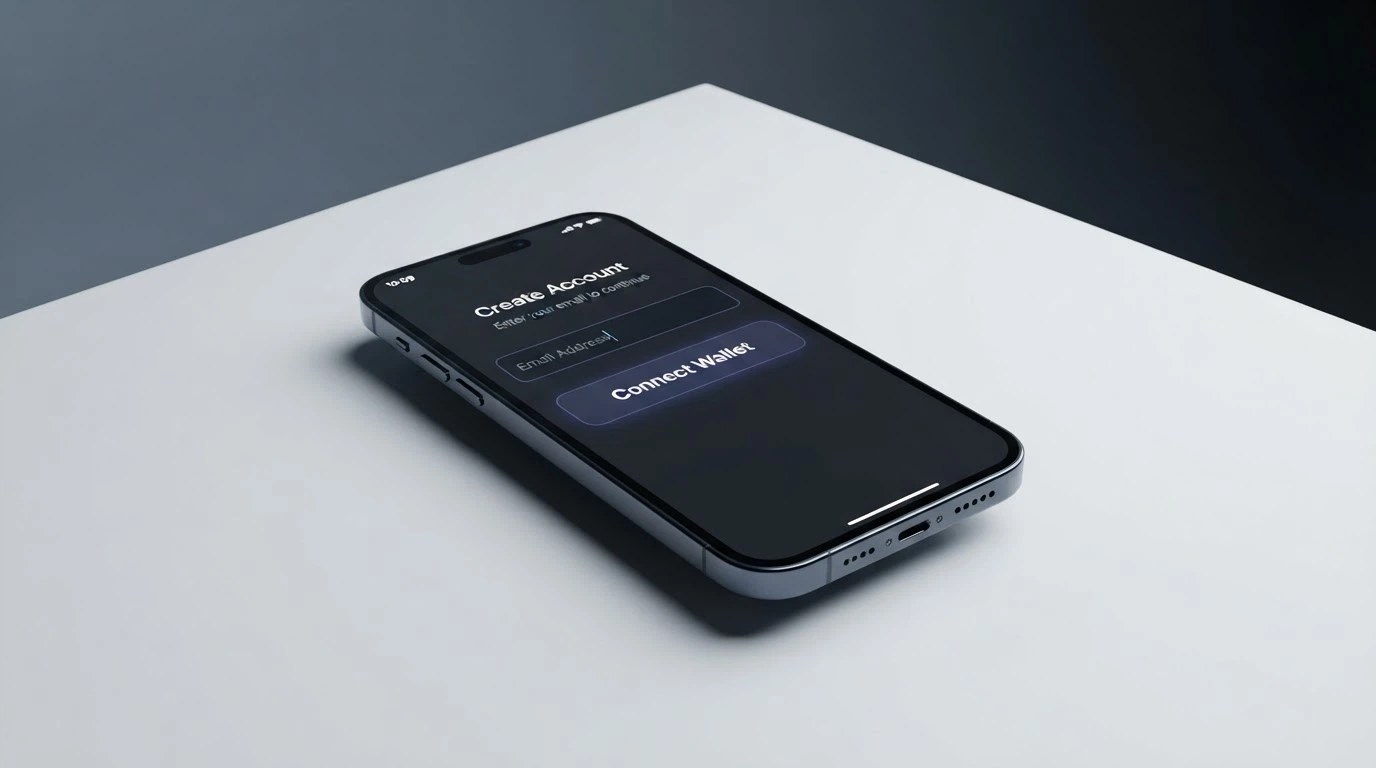
The reality is more complicated, and worth stating plainly. “No KYC at sign-up” and “no KYC ever” are different products. The first is standard at the offshore crypto casinos Australians use. The second is a marketing fiction. AML policies at Curaçao- and Anjouan-licensed casinos typically trigger an identity review at EUR 2,000 to EUR 10,000 in cumulative withdrawals or deposits. At that point the casino can request documents and freeze withdrawals until they arrive. The bigger the balance and the longer the player stays, the more likely the request becomes.
VPN compatibility is part of the same picture. Several offshore operators accept VPN connections, and Australian players use them to mask their IP from the operator’s geo-detection. What a VPN hides is the player’s IP address and their apparent location. What it does not hide is the wallet address they deposit from — blockchain analytics can trace any coin’s path through public ledgers, and an operator’s server-side logs retain the full session history regardless of the VPN tunnel.
What “No KYC” Actually Means at an Offshore Crypto Casino
At registration, an offshore crypto casino asks for an email address, a username and a password. That is the visible field set on the sign-up screen. The invisible field set is wider: the site captures the IP address, the device fingerprint, the wallet address used for the first deposit, and the timestamps of every action. None of this is “KYC” in the regulated sense, because none of it is verified against a government-issued identity document. But it is data the operator retains, and it is data a regulator or law-enforcement body could request if the operator were ever compelled to hand it over.
Compare that with a licensed Australian wagering operator. Sign-up requires name, date of birth, address and identity verification — typically a driver’s licence or passport plus a proof-of-address document. The operator is required to verify identity under Anti-Money Laundering and Counter-Terrorism Financing Act obligations, to report suspicious activity to AUSTRAC, and to retain records for seven years. That infrastructure is what KYC actually is. The offshore equivalent is lighter, faster, and leaves the player holding most of the verification risk themselves.
The data an offshore casino still collects without asking for ID is not nothing. Wallet addresses are pseudonymous on a public blockchain, not anonymous. Anyone who controls the wallet can be identified by transaction graph analysis if the wallet has ever touched a KYC-gated exchange. IP addresses change with VPN and mobile networks but are logged for the duration of the session. Device fingerprints link repeat visits.
The Catch: When a No-Verification Casino Asks for Your ID Anyway
The EUR 2,000 to EUR 10,000 cumulative threshold is the single most important number on this page for any player planning to withdraw more than small-money winnings. AML policies at Curaçao- and Anjouan-licensed casinos typically set a review trigger somewhere in this band — low enough that a serious win will cross it, high enough that casual play may not. Once the trigger fires, the casino can request identity documents, source-of-funds evidence, or proof that the cryptocurrency was legitimately acquired.
The casino does this because its own licence conditions require it. A Curaçao eGaming licensee operating in 2026 sits under EU-style AML expectations even when its regulator’s enforcement is uneven. Anjouan sits under similar expectations. Refusing to provide documents at that point typically means the account is frozen pending review, which can take weeks. The withdrawal sits in limbo while the casino decides whether the player is a sanctions risk, a multi-account fraud, or a source-of-funds problem.
The honest framing of the no-KYC pitch is therefore: it is true at sign-up. It is not guaranteed at withdrawal. Players who plan to deposit and withdraw small amounts casually will probably never see the request. Players whose play crosses the AML threshold, or whose withdrawal pattern looks unusual to the operator’s compliance team, will.
Can You Stay Completely Anonymous? VPNs, Wallets and the Real Privacy Picture
The privacy stack at an offshore crypto casino runs through three layers, and each one is leakier than the marketing suggests.
A VPN hides the IP address and masks the geographic origin of the connection. Several offshore operators — including ones Australians commonly use — explicitly accept VPN traffic, on the basis that they are not enforcing Australian geo-restrictions anyway. A VPN does not hide the wallet address the player uses to deposit. It does not hide the device the player connects from. And it does not protect against a court order requiring the operator to hand over its server logs.
A crypto wallet provides pseudonymity on a public blockchain. Bitcoin, Ethereum and most other cryptocurrencies record every transaction on a permanent, publicly accessible ledger. The wallet address is the identifier. If that wallet has ever interacted with a KYC-verified exchange — and most Australian wallets have, because Australian exchanges require identity verification — the address can be linked back to a real identity through blockchain analytics. Privacy-focused coins exist. They are not what most players use.
Server-side logs are the operator’s own record of the session. The casino knows what time the player connected, what they played, what they deposited, what they won and what they tried to withdraw. This data sits on the operator’s servers under whatever jurisdiction the operator is incorporated in. An Australian player has no right to access it and no regulator who can compel its deletion.
The practical conclusion: the no-KYC pitch reduces friction at sign-up and at small withdrawals. It does not produce anonymity in any rigorous sense. A player who needs real anonymity is not finding it at an offshore crypto casino.
The Legal Reality Australian Crypto Casino Sites Won’t Tell You
The marketing on offshore crypto casino sites treats the legality question as a footnote. The footnote is wrong. Online casino is prohibited in Australia, full stop, and the prohibition has been enforced consistently since 2017.
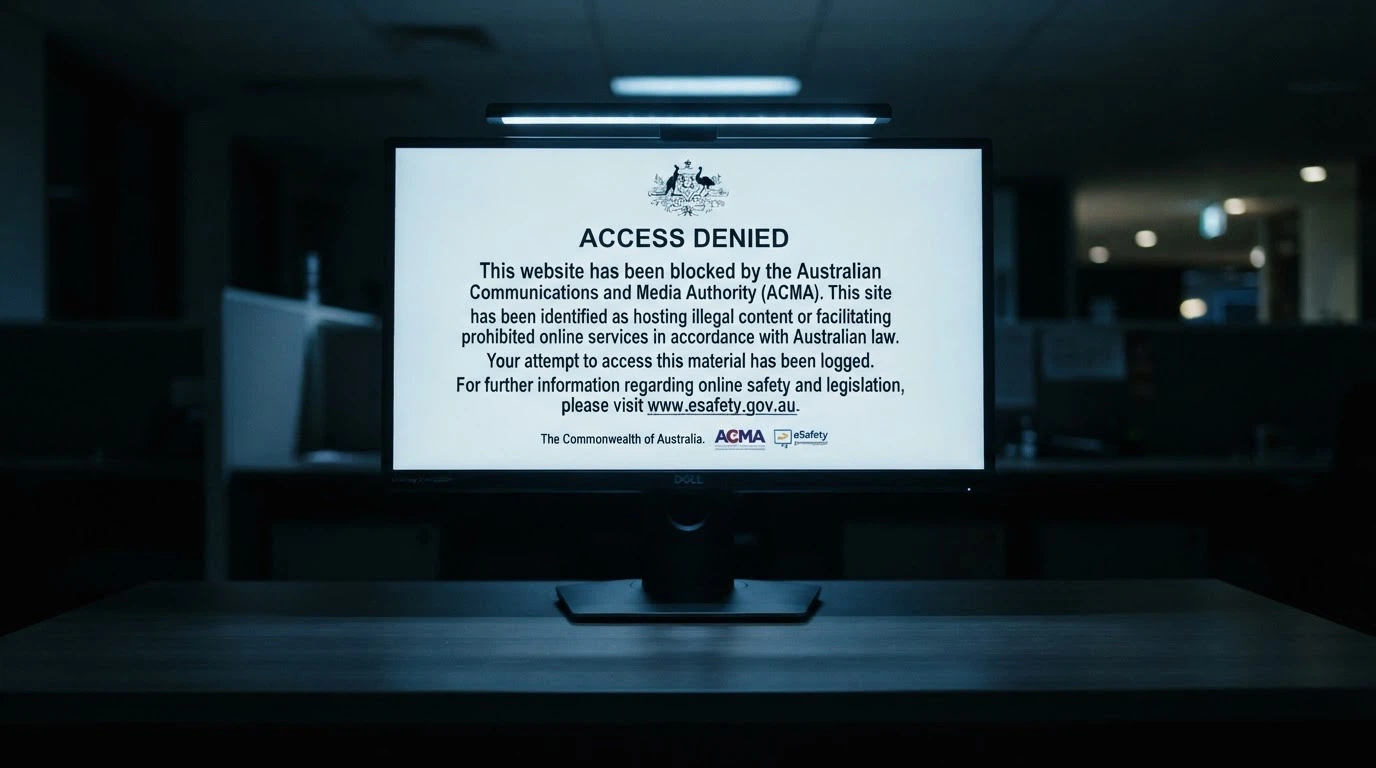
The Interactive Gambling Act 2001 makes it an offence to provide a prohibited interactive gambling service to a person in Australia. Section 15 carries a criminal penalty of 5,000 penalty units. The civil penalty is 7,500 penalty units per day of contravention. The Interactive Gambling Amendment Act 2017 strengthened the framework by giving the ACMA express enforcement powers, including the ability to direct Australian ISPs to block illegal sites. The Interactive Gambling Amendment (Gambling Reform) Bill 2026 passed Parliament on 19 August 2026; its measures commence 1 January 2027.
What is licensable onshore is much narrower than the marketing suggests. Wagering on races and sport placed before the event begins, through operators licensed by a state or territory — principally the Northern Territory Racing and Wagering Commission / Licensing NT — is legal. Lotteries and keno are legal. In-play sports betting is prohibited, just like online casino. Credit cards and cryptocurrency have been banned as payment methods for online wagering since 11 June 2024, with operators failing to enforce facing penalties of up to $247,500.
Online Casino Is Prohibited in Australia — Full Stop
The legal position in plain Australian English: it is a criminal offence to provide an online casino to a person in Australia. No licence exists or can exist for one. The ACMA enforces the prohibition through investigations, formal warnings, civil penalty proceedings and ISP site-blocking requests. Between November 2019 and the end of 2025, 1,455 illegal gambling and affiliate websites were blocked on the ACMA’s request. Roughly 220 services have withdrawn from the Australian market since 2017, many of them after the ACMA’s enforcement activity made the business untenable.
The IGA targets the provider, not the customer. The individual player is not prosecuted. That is the safety perception that drives traffic: players read “illegal” and read it as personal risk, when the actual mechanism is civil and criminal penalty against the operator. The cost the player pays is different. No Australian regulator can help if the operator withholds winnings. No Australian consumer law applies. No BetStop coverage extends to the site. The ACMA’s published warning is explicit on this point: if you use an illegal service, Australian regulators will not be able to help you if the service provider withholds your winnings.
The 2024 reform added crypto to the list of banned payment methods for online wagering, alongside credit cards. The 2026 reform, which commences 1 January 2027, adds bank-blocking authority — banks and payment providers gain express statutory power to block transactions to illegal gambling operators. The enforcement net tightens, year on year. None of this changes the underlying prohibition, but it changes what a player can expect from their own bank if their transactions look like gambling payments to an offshore operator.
Offshore Licences: What a Curaçao or Anjouan Permit Actually Gives an Australian Player
A Curaçao licence is not an Australian licence. It is a permit issued by the Curaçao eGaming regulator, which sits under the laws of Curaçao and applies to operators incorporated there. Most offshore crypto casinos accepting Australians hold a Curaçao eGaming licence. A smaller number hold Anjouan licences. A few operators — notably those that do not carry a recognised gambling licence at all — incorporate in Costa Rica and rely on the absence of a local prohibition rather than the presence of a local regulator.
What a Curaçao licence covers, in practical terms, is a baseline of operational standards: segregated player funds, AML compliance expectations, a route for dispute resolution through the regulator. What it does not cover is any form of recourse for an Australian player. The dispute resolution route runs through Curaçao, under Curaçao law, in a process that costs time and money to navigate. The ACMA cannot escalate a complaint on a player’s behalf. The Australian Financial Complaints Authority has no jurisdiction. The state-based gambling dispute bodies have no jurisdiction.
The player-complaint reality, then, is that an Australian whose withdrawal is refused at a Curaçao-licensed crypto casino has the operator’s own internal dispute process, the Curaçao regulator’s complaint route, and nothing else. That is meaningfully less protection than a licensed Australian bookmaker offers, where AUSTRAC oversight, state-based dispute resolution and consumer law all apply. The marketing pitch of “licensed and regulated” is true on the Curaçao side. It is silent on the Australian side, where the operator is not licensed and not regulated.
The 10 Offshore Crypto Casinos Australians Actually Use in 2026
The table below ranks the featured set on the two facts research could verify for most operators: licence status and game-provider line-up. Cells research could not confirm carry an em dash rather than a guess. Every operator in this table is offshore. None holds an Australian licence. The product they offer is prohibited in Australia under the IGA.

| Operator | Licence | Game Providers |
|---|---|---|
| Stake | Curaçao eGaming | Pragmatic Play, Evolution, Hacksaw Gaming, Nolimit City, Push Gaming |
| Rocket Play | Curaçao eGaming | Pragmatic Play, BGaming, Betsoft, Evolution |
| Skycrown | Curaçao eGaming | Pragmatic Play, BGaming, Evolution, NetEnt |
| Bitkingz | Curaçao 8048/JAZ | Yggdrasil, BGaming, Betsoft, Evoplay, Playson, Wazdan |
| 7Bit Casino | Curaçao eGaming | Pragmatic Play, BGaming, Evolution, Betsoft |
| Royal Reels | — | — |
| Bizzo Casino | Curaçao eGaming | — |
| Fair Go | Curaçao eGaming | RTG |
| Scream Casino | — | — |
| WinSpirit | — | — |
The gaps in the table tell their own story. Three operators — Royal Reels, Scream Casino and WinSpirit — appear in Australian traffic data but carry no licence or provider information that could be confirmed at review time. Bizzo Casino holds a Curaçao licence but its provider line-up was not confirmed. For the operators with confirmed licences and confirmed providers, the table reads clean. For the others, the table reads as it should: incomplete.
Stake: Curaçao-Licensed With a Five-Studio Portfolio
Stake is the largest name in the offshore crypto casino space by traffic, and the one Australian players most often arrive at first. The Curaçao eGaming licence is the entry point; the provider line-up is what distinguishes the product. Pragmatic Play, Evolution, Hacksaw Gaming, Nolimit City and Push Gaming together cover the high-volatility pokie end of the market, the live dealer segment, and the kind of mechanic-driven slots that Australian players tend to search for. Specific bonus details and wagering terms were not publicly disclosed at review time — verify current offers directly on the Stake promotions page before depositing.
Rocket Play: Curaçao-Licensed With Four Major Provider Studios
Rocket Play carries a Curaçao eGaming licence and a four-studio provider line-up spanning Pragmatic Play, BGaming, Betsoft and Evolution. The Pragmatic Play / Evolution combination covers the bulk of Australian pokie demand; BGaming and Betsoft add the crypto-native catalogue that operators in this segment tend to lean on. Australian traffic data places Rocket Play at roughly 9.4% of the offshore crypto casino market. Information regarding welcome bonuses and wagering specifics was not confirmed at review time.
Skycrown: Curaçao-Licensed With NetEnt and Evolution in the Mix
Skycrown is a Curaçao eGaming licensee with a provider set that includes NetEnt alongside the Pragmatic Play / BGaming / Evolution core. NetEnt brings Blood Suckers and other high-RTP, low-volatility titles that fit a player who wants a longer session rather than a high-variance hunt. Australian traffic share sits at roughly 8.55%. The welcome package and wagering terms for Skycrown were not confirmed this run.
Bitkingz: Dama N.V.-Operated, 4,000+ Games and AUD Withdrawal Limits
Bitkingz is the operator in the featured set with the most publicly verifiable specifics. The Curaçao licence number is 8048/JAZ. The operator is Dama N.V., which launched Bitkingz in 2020. The game library sits at 4,000-plus titles, drawn from Yggdrasil, BGaming, Betsoft, Evoplay, Playson and Wazdan. The withdrawal limits are stated in AUD: AU$2,500 per day, AU$5,000 per week, AU$20,000 per month. The accepted currencies include AUD alongside BTC, ETH, LTC and DOGE.
The withdrawal limits are what make Bitkingz worth singling out. Most offshore crypto casinos either do not publish withdrawal caps or publish them in EUR or USD. A player who plans to cash out in AUD has to convert through an exchange and absorb the spread. Bitkingz lets the player set the withdrawal currency at the cashier, which removes the conversion step and the conversion cost. The daily limit is modest by the standards of a high-volume player; it is generous by the standards of anyone playing with a few hundred AUD a week.
7Bit Casino: Up to $10,800 AUD Welcome Bonus and 13,000+ Games
7Bit is the bonus heavyweight of the featured set. The welcome package runs up to 10,800 AUD plus 250 free spins across the first deposits, and the game library sits at 13,000-plus titles — the largest confirmed in the featured set. The provider line-up is Pragmatic Play, BGaming, Evolution and Betsoft. A 12-tier VIP program sits on top of the welcome package, with perks that research did not enumerate in detail.
The headline figure is large enough that it deserves scrutiny. “Up to 10,800 AUD” means the maximum a player can collect across the full welcome package, not the amount that lands in a wallet after the first deposit. The free-spin component is part of the package, not on top of it. The wagering requirement on the bonus was not confirmed at review time, which means a player should check the wagering multiplier and the contribution rate of different game types before treating the 10,800 AUD headline as bankroll.
Royal Reels: An Offshore Operator With Limited Public Detail
Royal Reels appears in Australian traffic data at roughly 2.51% of the offshore crypto casino market. The licence and the provider line-up were not confirmed at review time — Royal Reels is offshore and not licensed in Australia, but the specific jurisdiction and the game studios are unverified. A player considering Royal Reels should check the licence statement in the site footer before depositing and confirm the providers independently through the game lobby rather than relying on marketing pages.
Bizzo Casino: Curaçao-Licensed but Hard to Pin Down
Bizzo holds a Curaçao eGaming licence. Australian traffic share sits at roughly 0.57%. The provider line-up and the bonus terms were not confirmed at review time. The licence is verifiable on the Curaçao register; the rest of the offering needs direct check on the operator’s own terms page and game lobby before a player commits funds.
Fair Go: A Modest but Transparent $1,000 AUD Welcome Package
Fair Go is the smallest library in the featured set, at 280 games, all from RTG (RealTime Gaming). The welcome package totals $1,000 AUD across a five-tier structure, and 24/7 support is published. The trade-off here is the opposite of 7Bit’s: a smaller library, a smaller bonus, and a single provider whose catalogue an Australian RTG player already knows.
The transparency is the differentiator. Fair Go publishes its bonus structure clearly, names its sole provider, and states its support hours. For a player who values knowing exactly what they are getting over chasing a 13,000-title catalogue, Fair Go is the more readable option in the set. The RTG catalogue skews toward classic three-reel and five-reel pokies rather than the mechanic-heavy cluster-pays games that dominate the Pragmatic Play / Nolimit City segment. Wagering multiplier on the bonus was not confirmed at review time.
Scream Casino: An Offshore Brand With Sparse Public Detail
Scream Casino appears in Australian traffic data at roughly 0.99% of the offshore crypto casino market. Licence and providers were not confirmed at review time. The operator is offshore and not licensed in Australia. A player landing here from a search result has very little verifiable information to work with and should treat the site as unverified until the licence and the game providers can be confirmed independently.
WinSpirit: An Offshore Operator With Little Verified Information
WinSpirit appears in Australian traffic data at roughly 1.55% of the offshore crypto casino market. Licence and providers were not confirmed at review time. As with Scream Casino, the operator is offshore and not licensed in Australia, and the public footprint thin enough that a player should verify the licence statement and game-provider list directly before committing funds.
Why Your 2026 Crypto Casino Bonus Is Smaller Than It Looks
A welcome package of “up to 10,800 AUD” sounds like a bankroll injection. It is not. The headline is the maximum a player can collect across the full package, and every dollar of that maximum sits behind a wagering requirement — a multiplier that determines how much the player has to bet before any of the bonus becomes withdrawable.

The wagering multiplier is the single most consequential term in any crypto casino bonus, and it is the term the marketing copy buries. Market-typical ranges for offshore crypto casino bonuses run from 35× to 50×. A 40× multiplier on a $1,000 AUD bonus means the player has to wager $40,000 AUD in qualifying bets before the bonus balance converts to withdrawable cash. The free spins carry their own wagering requirements, often at a higher multiplier or with a cap on the convertible winnings.
No-Deposit Bonus Offers: What Australian Players Can Actually Find
No checked operator in the featured set currently publishes a no-deposit bonus that could be verified at review time. That is the honest state of the market for the operators Australians actually use: no-deposit offers are rare, and where they do appear, they tend to carry the steepest terms of any bonus type — multipliers in the 50× to 70× range, maximum cashout caps measured in tens of dollars rather than thousands, and game-type restrictions that lock the bonus to a handful of low-RTP titles.
A player hunting for a no-deposit offer should read the maximum-cashout clause before anything else. A 50× wagering requirement is hard enough to clear; a $50 maximum cashout on a “free” $20 bonus turns the offer into a marketing drawcard rather than a value proposition. The bonus exists to get a player to register and deposit, not to deliver real bankroll. That is the design.
Welcome Bonuses and Free Spins at Crypto Casinos — the Real Numbers
Two operators in the featured set have confirmed welcome-bonus figures. 7Bit publishes a welcome package of up to 10,800 AUD plus 250 free spins, spread across a multi-deposit structure. Fair Go publishes a five-tier welcome package totalling $1,000 AUD. The other eight operators either do not publish a figure that could be verified or carry terms that did not surface at review time.
The “up to” qualifier is the part of the headline that does most of the work. A “up to 10,800 AUD” welcome package is not 10,800 AUD on the first deposit. It is the cumulative maximum across the full package, and the per-deposit amounts are typically smaller — $1,000 to $3,000 AUD on the first deposit, with subsequent deposits contributing the rest. A player who deposits once and stops sees a fraction of the headline.
The free-spin component requires its own reading. 250 free spins at minimum bet on a low-volatility pokie might be worth $50 to $100 in expected value once the spin cost is netted out. The free-spin winnings typically carry their own wagering requirement and may carry a maximum-cashout cap. A headline of “250 free spins” is a volume figure, not a value figure.
Wagering Requirements: What a 40× Playthrough Actually Costs You
The wagering multiplier is the mechanism that turns a bonus from a gift into a job. A 40× multiplier on a $1,000 AUD bonus means the player must place $40,000 AUD in qualifying bets before the bonus balance moves to the withdrawable side of the account. The qualifying bets are usually weighted by game type: pokies contribute 100%, table games often contribute 10% or 0%, live dealer games often contribute 0%.
The arithmetic the marketing does not show is the expected loss over the wagering volume. A pokie at 96% RTP returns $0.96 for every $1.00 wagered on average. Over $40,000 in qualifying bets, the expected loss is $1,600. That is the player’s price for clearing the $1,000 bonus. The bonus is therefore worth a negative $600 in expected value once the playthrough cost is netted out — before any consideration of the player’s time, the volatility risk of running through $40,000 in pokie spins before the bonus clears, or the chance the player busts the deposit before completing the requirement.
The validity window is the other term that matters. Most bonuses carry a 7-day to 30-day window in which the wagering requirement must be completed. A 40× requirement on $1,000 AUD over 7 days is roughly $5,700 in wagering per day — a volume that requires either high-stakes play or long sessions. The window is what determines whether the bonus is realistic for the player who claimed it.
Fast Withdrawals, Real Limits: How Crypto Casino Payouts Actually Work
“Instant withdrawal” is a marketing claim. What it actually means in practice is: the operator releases the funds immediately after approval, and the blockchain confirms the transaction in minutes. The two parts are different, and they break in different ways.
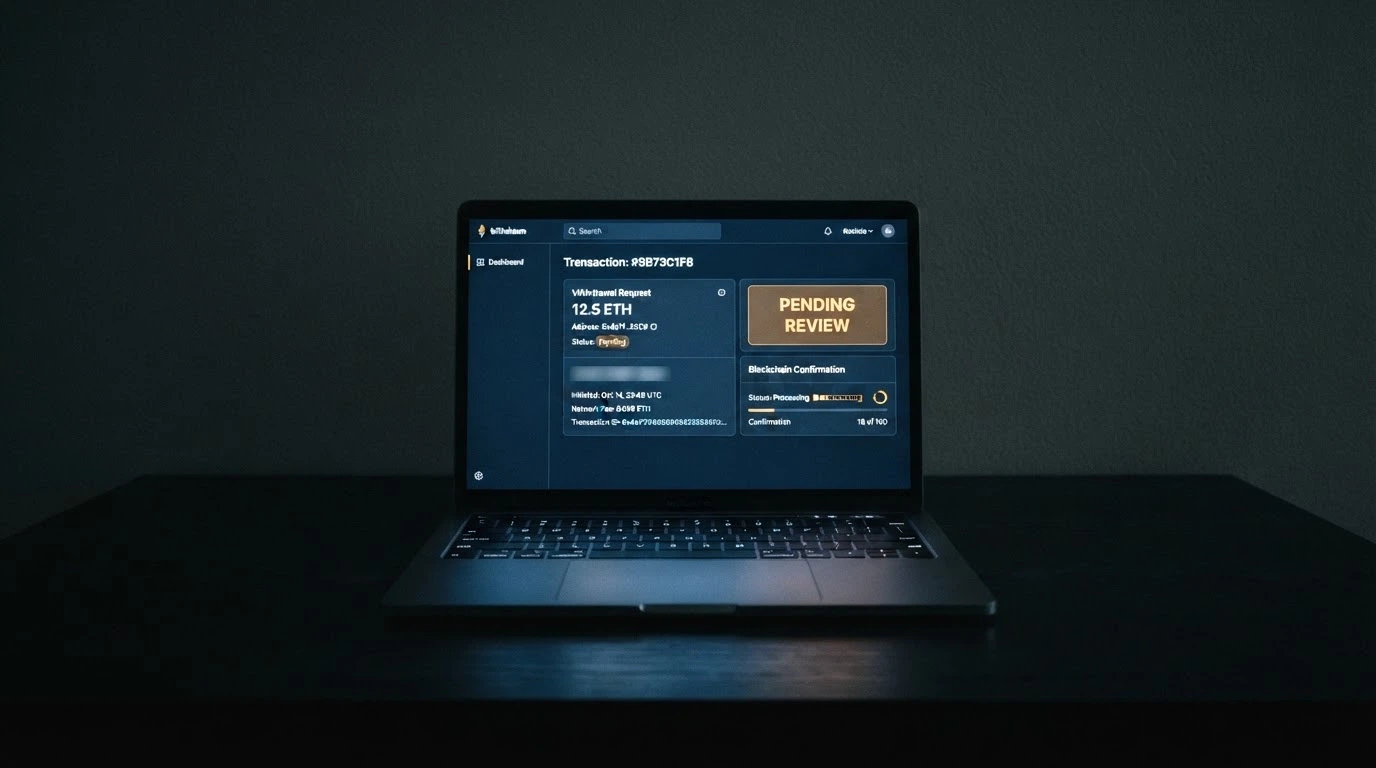
The operator-side approval queue is the first delay. Even at a no-KYC casino, withdrawals typically pass through an automated or manual review. The review checks the AML threshold — the EUR 2,000 to EUR 10,000 cumulative band at Curaçao- and Anjouan-licensed operators — and flags accounts that look unusual. A withdrawal sitting in “pending review” for 24 to 48 hours is not unusual. The blockchain has nothing to do with that delay; it is operator time.
The blockchain confirmation is the second delay, and it is usually the smaller one. Bitcoin blocks confirm every 10 minutes on average; a withdrawal typically requires one to three confirmations before the funds are spendable. Ethereum and Litecoin confirm faster. Stablecoins on fast chains confirm in seconds. The blockchain part of an “instant” withdrawal is genuinely fast.
“Instant Withdrawal” Claims vs the Blockchain Reality
The withdrawal-limit ceiling is the third part of the payout picture, and the one most operators do not publish. Bitkingz is the exception in the featured set: the limits are stated in AUD at AU$2,500 per day, AU$5,000 per week, AU$20,000 per month. A player who wins AU$50,000 on a single session at Bitkingz is looking at 20 days of daily-limit withdrawals to get the funds out. That is not instant in any meaningful sense.
The other operators in the featured set either do not publish withdrawal caps or publish them in EUR or USD. The absence of a published cap is not the same as the absence of a cap. Operators enforce internal limits to manage liquidity, and a player who hits an unusually large win may find the cap surfaces at withdrawal time rather than in the terms page. The lesson: ask the support team about withdrawal limits before depositing, not when the win is sitting in the account.
Crypto Deposits and the 2024 Payment Ban: What Australian Players Need to Know
The deposit side is simpler than the withdrawal side. The player sends crypto from their wallet to the casino’s deposit address, the blockchain confirms, and the casino credits the balance. The coins accepted across offshore crypto casinos are typically BTC, ETH, LTC, USDT, DOGE and SOL — the majors plus a stablecoin plus a couple of the high-throughput altcoins. Bitkingz is the operator in the featured set whose accepted-coin list is confirmed: AUD, BTC, ETH, LTC and DOGE.
The 2024 payment ban changes what an Australian-licensed operator can accept. Crypto is specifically banned as a payment method for online wagering services under section 15C of the IGA, with the ban commencing 11 June 2024. An operator that fails to enforce the ban faces penalties of up to $247,500. The practical consequence for a player depositing at an offshore casino is that the deposit screen offering crypto is, by itself, evidence that the operator is offshore. The payment method and the prohibition are linked: the only operators that accept crypto from Australians are the ones the IGA already prohibits.
From 1 January 2027, banks and payment providers gain express authority to block transactions to illegal gambling operators. That is the next tightening of the net. A player buying crypto through an Australian exchange and sending it to an offshore casino will not be blocked at the bank — the bank sees a crypto purchase, not a casino deposit — but the exchange’s own AML systems may flag the pattern. The enforcement risk moves upstream over time.
Crypto Pokies Australians Play — and What They Really Cost per Spin
Pokies are the dominant product at every offshore crypto casino in the featured set. Australians call them pokies; the international catalogue calls them slots. The terms are interchangeable for this guide.

The cost of a spin is determined by three numbers the player should know before they start: the RTP (return to player), the volatility, and the stake. RTP is the percentage of wagered money the game returns to players over millions of spins. Volatility is the variance around that average — high volatility means fewer winning spins and bigger wins when they hit; low volatility means more frequent smaller wins. Stake is what the player bets per spin. The three together determine both the expected loss over a session and the shape of the session itself.
The Crypto Pokies With Verified RTPs — No Affiliate Guesswork
The table below lists eleven titles with RTPs sourced from non-affiliate reference data. Provider and volatility are listed where research confirmed them; cells research did not cover carry an em dash. The figures are published RTPs from the providers themselves or from independent testing labs, not affiliate-claimed averages.
| Title | RTP | Provider | Volatility |
|---|---|---|---|
| Sweet Bonanza | 96.51% | Pragmatic Play | High |
| Book of Dead | 96.21% | Play’n GO | High |
| Gates of Olympus | 96.50% | Pragmatic Play | High |
| Big Bass Bonanza | 96.71% | Pragmatic Play | High |
| Wolf Treasure | 95.79% | IGT | High |
| 15 Dragon Pearls | 96.70% | BGaming | Medium |
| Aviator | 97.00% | Spribe | — |
| Plinko | 99.00% | Spribe | — |
| Blood Suckers | 98.00% | NetEnt | — |
| 1429 Uncharted Seas | 98.60% | Thunderkick | — |
| Joker Strike | 98.11% | Quickspin | — |
The spread at the top of the table runs from 95.79% (Wolf Treasure) to 99.00% (Plinko). The spread matters because it determines the house edge — the percentage of every wager the casino keeps on average. Wolf Treasure’s house edge is 4.21%; Plinko’s is 1.00%. A player who runs 1,000 spins at $1 AUD per spin on Wolf Treasure loses $42.10 on average; the same session on Plinko loses $10.00. The RTP is the only number the player controls through game selection.
A worked example, using Sweet Bonanza as the reference title. At 96.51% RTP, the house edge is 3.49%. A session of 200 spins at $1 AUD per spin wagers $200 AUD. The expected loss over those 200 spins is $200 × 0.0349, which is $6.98 AUD. That figure is the statistical average over many players running many sessions of 200 spins — not a prediction for any individual session, which can land anywhere from a small loss to a max-win hit. The arithmetic is the cost a player should budget for, knowing that any single session can be very different from the average.
The volatility column adds a second layer. The high-volatility titles — Sweet Bonanza, Book of Dead, Gates of Olympus, Big Bass Bonanza, Wolf Treasure — deliver fewer winning spins and bigger wins when they hit. A 200-spin session on a high-volatility pokie is more likely to produce a near-zero balance than a low-volatility game with the same RTP. The RTP is the long-run return; volatility is the shape of the short-run experience. Both matter.
Free-to-Play Crypto Pokies: Try Before You Risk a Satoshi
Demo mode — sometimes called “fun mode” — lets a player run a pokie with virtual credits rather than real money. The RTP is the same as the real-money version. The volatility is the same. The bonus features trigger the same way. What is missing is the financial consequence: a player cannot win real money and cannot lose real money.
Demo mode is the cheapest way to learn a pokie’s mechanics. A player considering Sweet Bonanza for the first time can run 200 demo spins, see how the tumble feature chains wins, see how often the free-spins round triggers, and form a view on whether the game suits their bankroll before depositing a cent. The feature is offered by most major providers, and most offshore crypto casinos expose demo mode on the game lobby. Whether every operator in the featured set exposes demo mode was not confirmed at review time — check the lobby before depositing.
The honest caveat on demo mode is what it does not test. It does not test the casino’s withdrawal behaviour, its KYC trigger, or its bonus terms. It tests the pokie. For that purpose, it is the right tool.
Provably Fair Gaming: What Blockchain Verification Actually Proves
Provably fair is the crypto casino differentiator that does not exist in the licensed wagering market. The mechanism works like this: before a bet, the casino commits to a server seed by publishing its hash. The player provides a client seed. A nonce increments with each bet. After the bet, the player can verify that the hash of the server seed plus the client seed plus the nonce matches the outcome of the bet — proving that the casino did not change the server seed after seeing the player’s bet.
What provably fair proves is that one specific bet was not manipulated after it was placed. It does not prove the operator’s published RTP is accurate across millions of bets. It does not prove the operator will pay out a winning bet. It does not prove the operator holds a legitimate licence or that the player has any recourse if something goes wrong. The verification is at the spin level. The trust questions above the spin level are still open.
A player who wants to verify a provably fair game needs the operator’s verification tool — typically a page in the account area that accepts the seeds and the bet ID and returns a pass/fail. The tool exists at most offshore crypto casinos that advertise the feature. Using it on a few bets after a session is the practical way to confirm the operator is honouring the commitment.
Staying in Control When the Safety Net Has Holes
Every protection system built for Australian gamblers — BetStop, deposit limits at licensed bookmakers, state-based dispute resolution — binds Australian-licensed wagering services. Offshore crypto casinos sit outside every one of those systems. A self-excluded Australian who has registered with BetStop can still open an account at an offshore crypto casino, deposit crypto, play pokies, and lose money with no register-level intervention.
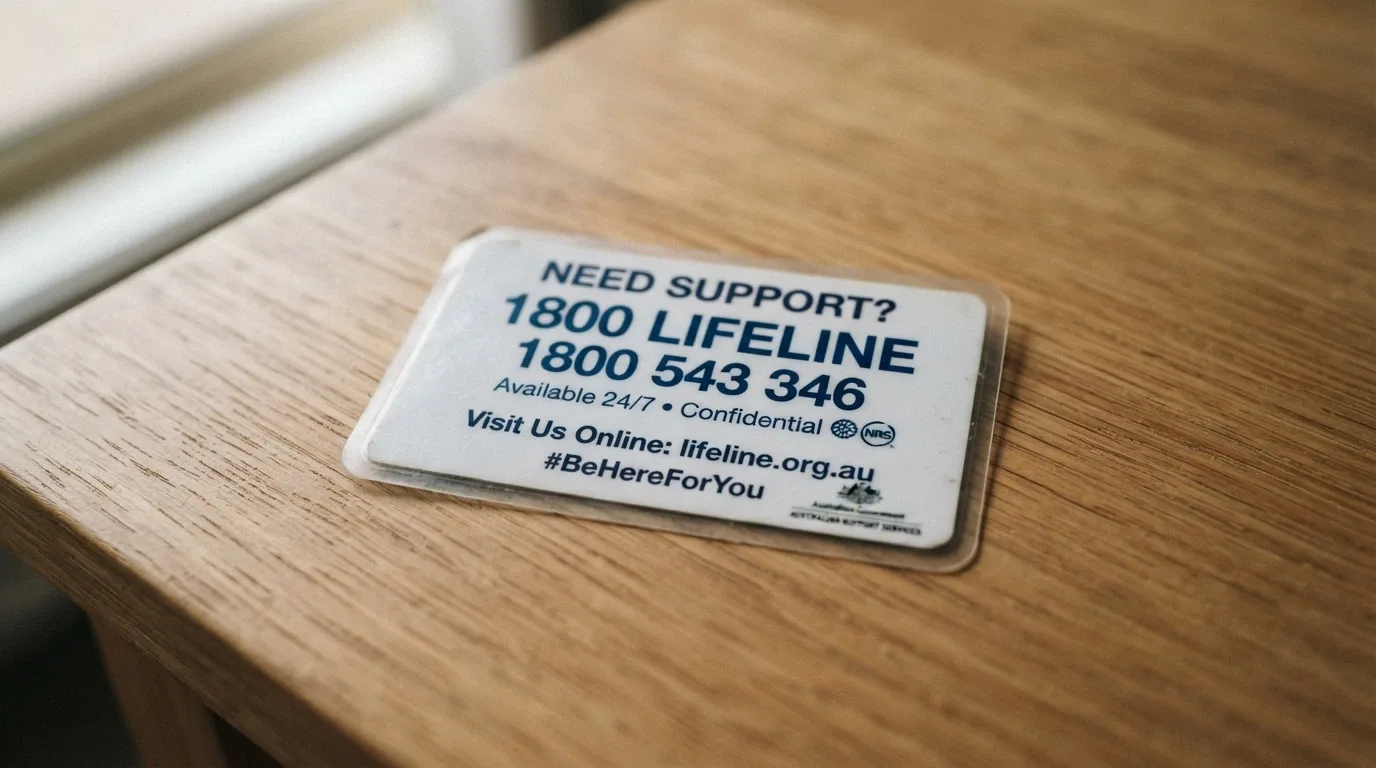
This is not a small gap. BetStop had 67,480 registrations between its August 2023 launch and 31 July 2026, with 41,290 exclusions still active. 78% of registrants were under 40 at the time of registration. 38% chose lifetime exclusion. The register is built to protect Australians who have decided they should not be gambling. It cannot reach the operators on this page.
BetStop Won’t Protect You at an Offshore Crypto Casino
BetStop is the National Self-Exclusion Register, run under federal legislation and live since August 2023. A player who registers commits to a minimum exclusion period — three months, twelve months, or lifetime. Australian-licensed wagering operators are required to refuse the player’s registration attempts, block their existing accounts, and not send them marketing material.
The register binds Australian-licensed wagering services. The word “Australian-licensed” does the work. An offshore crypto casino is not licensed in Australia, is not connected to the register, and is under no obligation to honour a BetStop registration. A self-excluded Australian can register at an offshore crypto casino with an email address and play the next day. The protection that motivated the BetStop registration does not extend.
The 41,290 active exclusions as at 31 July 2026 are real exclusions. The operators in this guide are outside the system’s reach. A player who has registered with BetStop and is looking at offshore crypto casinos needs to understand that the registration did not close the door; it only closed the doors to the licensed side.
Where to Get Help: The National Gambling Helpline and What It Actually Offers
The National Gambling Helpline — 1800 858 858 — is free, confidential and staffed 24 hours a day, seven days a week. The number works regardless of where the player placed the bet. Online chat and professional counselling are available through Gambling Help Online at gamblinghelponline.org.au. Self-assessment tools on the same site help a player gauge whether their gambling is moving from recreational into harmful territory.
The prevalence numbers explain why these resources exist. About 2.1% of Australian adults — roughly 430,000 people — experience problem gambling. The Australian Institute of Health and Welfare put high-risk gambling at 1.8% in 2022. The minimum age for all commercial gambling in Australia is 18. The resources work for any Australian who needs them, including Australians who have been gambling at offshore crypto casinos and want to stop.
The honest framing: BetStop is the structural protection that fails offshore. The Helpline is the resource that does not. A player who finds their offshore crypto casino play is no longer a choice should call 1800 858 858 or open the chat at gamblinghelponline.org.au. The call is confidential. The counselling is free. The tools are real.
How We Evaluated Every Crypto Casino on This List
The evaluation basis for this guide is cross-verification against two primary sources: the ACMA licence register and the operators’ own published terms pages. Where research could confirm a licence number — Bitkingz at 8048/JAZ is the clearest example — that confirmation is published. Where research could confirm a provider line-up from the game lobby, that confirmation is published. Where research could not confirm a figure, the cell is empty rather than filled with an estimate.
The criteria that ordered the ranking reflect what matters to an Australian player using an offshore crypto casino: licence verifiability on the Curaçao or Anjouan register, public disclosure of withdrawal terms, game-provider quality, and relevance to Australian-player demand (pokies-heavy libraries, AUD-friendly cashier, RTPs on the titles Australians search for). The market-share figures that appear in some operator blocks reflect Australian traffic data and are included for context, not as a recommendation.
The honest limits of this review are worth stating plainly. The operator sweep was constrained — bonus terms for several operators were not publicly confirmed at review time, and welcome-bonus specifics for Stake, Rocket Play, Skycrown, Bitkingz, Royal Reels, Bizzo Casino, Scream Casino and WinSpirit are not published here for that reason. No affiliate-claimed figure was taken at face value without cross-verification. Where the cross-verification failed, the gap is shown rather than the gap being filled with a guess. That is the trade-off: an incomplete table that is honest about its gaps reads better than a complete table that is not.
What Australian Players Should Actually Do About Offshore Crypto Casinos
The decision this guide has built is not a recommendation to use offshore crypto casinos. The product is prohibited. No licence exists or can exist. The ACMA’s enforcement record is consistent. The 2024 payment ban blocks crypto at Australian-licensed operators. The 2027 bank-blocking powers will tighten the net further. Every operator in this guide is offshore, and the offshore status is not a technicality.
The practical reality is that Australians use these sites anyway, and the question for a reader who has decided to proceed is what to do about it. Three steps cover the practical ground.
Verify the licence yourself. A Curaçao eGaming licence can be checked on the Curaçao Gaming Authority register. An Anjouan licence can be checked on the Anjouan Gaming Board register. A licence number that does not resolve on the register is a licence number that does not exist. The check takes two minutes and is the single highest-value step before depositing.
Read the withdrawal caps and the AML trigger before depositing, not at withdrawal time. The AML trigger at EUR 2,000 to EUR 10,000 cumulative withdrawals is the threshold at which identity documents may be requested. The withdrawal caps — Bitkingz publishes them at AU$2,500 per day, AU$5,000 per week, AU$20,000 per month; other operators either do not publish or publish in EUR — determine how long a large win takes to clear. Both numbers matter more than the welcome bonus.
Never deposit more than you are willing to lose to a site-block. The ACMA has blocked 1,455 illegal gambling and affiliate websites since November 2019. Any offshore crypto casino on this list can be added to the block list at any time. A balance on a blocked site is not recoverable through any Australian channel. The amount a player deposits is the amount the player accepts that risk on.
If play stops feeling like a choice — if the session lengths are climbing, if the deposits are getting larger, if the crypto wallet is being topped up to chase a loss — call the National Gambling Helpline on 1800 858 858 or open the chat at gamblinghelponline.org.au. The line is free, confidential, and staffed around the clock. The tools work regardless of where the bet was placed. The protection that does not extend to offshore casinos through BetStop does extend through the Helpline.
Frequently Asked Questions
Is it legal to play at a crypto casino in Australia?
Online casino is a prohibited interactive gambling service under the Interactive Gambling Act 2001. No licence exists anywhere in Australia — not federally, not in any state or territory. Crypto is also specifically banned as a payment method for wagering since 11 June 2024. The individual player is not prosecuted, but no Australian regulator can help if an operator withholds winnings.
Are crypto casino winnings taxable in Australia?
Gambling winnings are not assessable income for ordinary Australian punters under section 6-5 of the ITAA 1997, and gambling losses are not deductible under section 8-1. The treatment changes only if the ATO considers the person to be carrying on a business of betting or gambling, which most recreational players are not.
What happens if an offshore crypto casino refuses to pay my winnings?
No Australian regulator can help. The ACMA’s published warning is explicit that Australian regulators will not be able to assist if an illegal service provider withholds winnings. The available routes are the operator’s own internal dispute process and the regulator in the jurisdiction where the operator is licensed — typically Curaçao or Anjouan — at the player’s own cost and time.
Which crypto casinos accept Australian players and pay out in Bitcoin?
The featured set in this guide — Stake, Rocket Play, Skycrown, Bitkingz, 7Bit Casino, Royal Reels, Bizzo Casino, Fair Go, Scream Casino and WinSpirit — all accept Australian registrations and process withdrawals in cryptocurrency. Bitkingz is the operator with confirmed AUD-denominated withdrawal limits and confirmed BTC, ETH, LTC and DOGE acceptance. Every operator is offshore and not licensed in Australia.
What cryptocurrencies can I use to deposit at an Australian crypto casino?
The commonly accepted coins at offshore crypto casinos are BTC, ETH, LTC, USDT, DOGE and SOL. Bitkingz is the operator in the featured set with a confirmed coin list — BTC, ETH, LTC and DOGE. The deposit screen itself is the most reliable source for the current accepted-coin list at any operator, since the list can change without notice.
Can I play pokies with Bitcoin at an online casino in Australia?
Yes — at an offshore crypto casino. Pokies at offshore casinos accept Bitcoin deposits and credit the account balance in either BTC or a USD-pegged stablecoin. The product is prohibited under the IGA and no Australian-licensed operator can offer it. The player funds the balance in crypto, plays the pokies, and withdraws any winnings back to a personal wallet. BetStop does not extend to these sites.
Published by the Bitcoin Casinos Australia team.