
A $1 Minimum Deposit Casino in Australia: What the Dollar Actually Buys, and What It Costs
 Available in US
Verified against the ACMA register and Curaçao licence data as of 3 September 2026.
A $1 minimum deposit casino in Australia is a marketing phrase, not a legal category. No Australian licence exists for it. The product sits outside the Interactive Gambling Act 2001’s prohibited list because that Act bans the entire product rather than capping it. Every brand below is offshore. Every one accepts deposits no Australian-licensed operator is permitted to accept. That is where the page starts, because a $1 deposit at one of these casinos is not the same transaction as a $1 deposit anywhere else — and a reader deserves to know what they are buying before they buy it.
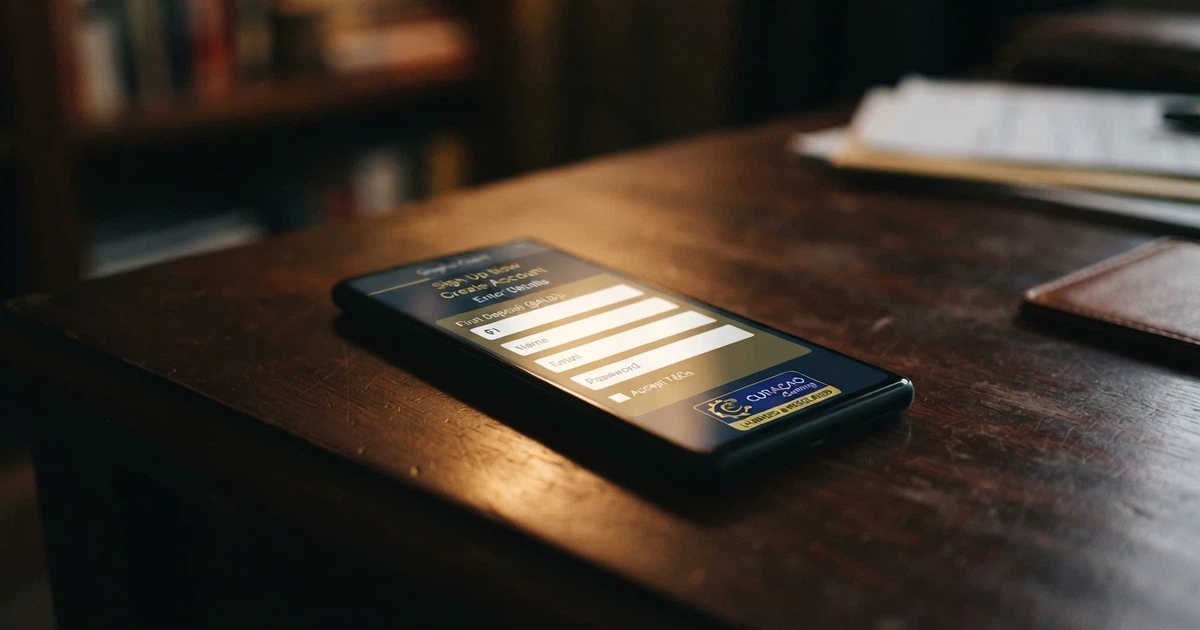
The dollar figure is real. It is also narrow. PayID gets you to A$1 at some operators, sometimes. Cryptocurrency gets you there more reliably, after a fee. Most fiat routes stop at A$5–A$10. Cards and prepaid vouchers rarely go below A$10. And once the dollar is in, withdrawing winnings faces an A$20–A$50 floor at most operators — a 20-to-50-fold growth hurdle that turns the dollar into a long bet rather than a casual flutter.
Table of Contents
- A $1 Deposit Casino in Australia Is Not What You Think It Is
- Why Every $1 Deposit Casino Australians See Is Offshore
- How You Actually Get a Dollar Into an Online Casino
- The Offshore Casinos Australians Can Join — Only a Handful Genuinely Take a Dollar
- What Your Dollar Actually Buys on the Pokies
- Mobile $1 Deposits: Same Casinos, Smaller Screen
- New Low-Deposit Casinos: Fresh Branding, Same Offshore Model
- Why a $1 Deposit Does Not Mean Safer Gambling
- How We Evaluated Every $1 Deposit Casino on This Page
- What a $1 Casino Deposit Actually Costs You
- Frequently Asked Questions
A $1 Deposit Casino in Australia Is Not What You Think It Is
The phrase sounds like a category on a comparison page. It is not. It is a marketing offer at an operator the Australian Communications and Media Authority (ACMA) cannot licence and does not authorise. The Interactive Gambling Act 2001 makes it an offence to provide an online casino, online pokies or in-play sports betting to a person in Australia. There is no licence for it anywhere in the country — not federally, not in any state or territory. State and territory wagering licences cover racing and pre-event sport only. Online casino is the product the licensing system was built to exclude, and the IGA’s 2017 amendments closed the offshore loopholes that had let it in.
What a $1 deposit casino actually is, in practice, is an offshore operator holding a Curaçao licence, accepting Australian customers in Australian dollars, and offering a promotional deposit floor of A$1 on at least one payment method. The dollar deposit itself is not illegal for the player — the IGA targets providers, not customers. But the operator is illegal in the sense that matters for the reader: there is no Australian complaints body, no BetStop coverage, no guaranteed route to a payout, and no recourse if the site vanishes or refuses to honour a withdrawal.
This shape has consequences further down the page. The bonus terms look ordinary; the protection framework behind them is not.
The $1 Minimum-Deposit Promise vs What You Actually Get
The A$1 marketing claim lives in a payment-method footnote, not in the cashier’s headline. PayID gets some operators down to a dollar, with zero fees and under-two-minute processing. PayID is the only fiat route that genuinely reaches A$1 at scale in 2026. Most fiat floors sit higher: A$5–A$10 via PayID, A$10–A$20 via Neosurf or debit card. Cryptocurrency is the only reliable true $1 path across multiple operators, though with a fee catch that can wipe out the deposit itself.
The gap exists for the same reason small deposits are rare anywhere: card processing costs the operator A$0.30–A$0.50 per transaction, so a $1 deposit nets them fifty cents or less. No rational business absorbs that on every deposit, so the dollar tier is a marketing concession rather than an economic proposition. One industry reviewer put it bluntly: a genuine $1 deposit casino where you pick any payment method, drop one dollar, and start playing barely exists.
Crypto avoids the card fee. Litecoin network fees run under A$0.05 per transaction. Bitcoin fees in May 2026 averaged A$1.50–A$3.00 — meaning sending a dollar’s worth of Bitcoin can cost more in fees than the deposit itself. The dollar survives the network, just barely, on the right chain.
Real-Money Play at the Dollar Tier
A dollar is real money, not demo-mode credit. The distinction matters because demo play costs nothing and pays nothing, while real-money play at the A$1 tier turns the deposit into a finite session. The minimum bet across popular pokies runs from A$0.01 on Book of Dead up to A$0.25 on Wolf Gold. That gives a $1 deposit a working life of anywhere from four spins to one hundred spins, depending on the game.
The asymmetry that defines the dollar tier is on the way out, not the way in. Minimum withdrawals at most AU-facing casinos run A$20–A$50. A $1 depositor must grow their balance twenty- to fifty-fold before any withdrawal request is accepted. That is not a small hurdle. It is the structural reason a dollar deposit behaves more like a long bet on the pokie’s volatility than a casual flutter on a few spins.
Why Every $1 Deposit Casino Australians See Is Offshore
The Interactive Gambling Act 2001 is the structural reason every operator on this page sits in Curaçao rather than Canberra. The Act bans the product. No licence exists for it. ACMA enforces the ban by directing Australian internet service providers to block illegal sites — 1,564 illegal gambling and affiliate websites have been blocked since November 2019, with more than 225 illegal services withdrawing from the Australian market since enforcement was strengthened in 2017.
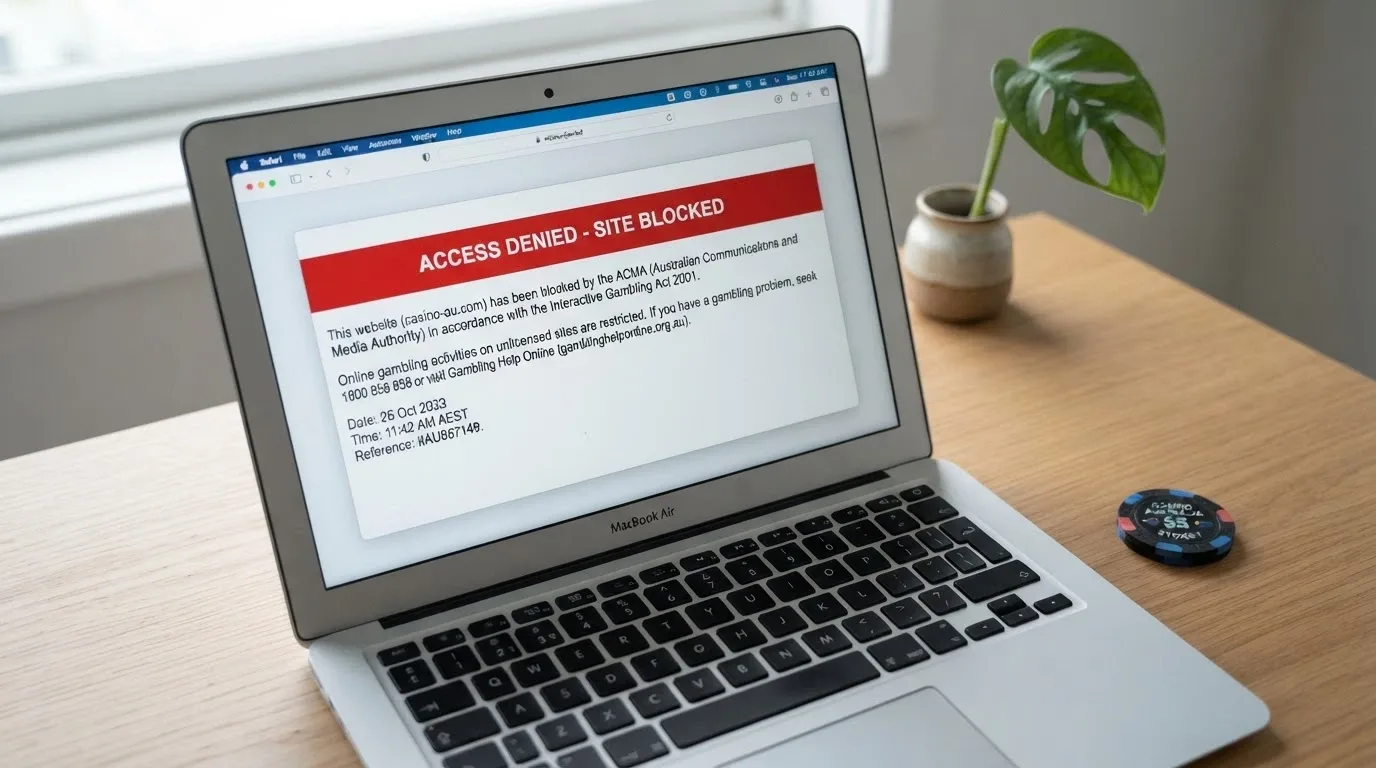
A new licensing regime is not on the horizon. The 2026 reform tightens the existing prohibition rather than opening it. The Interactive Gambling Amendment (Gambling Reform) Bill 2026 passed Parliament on 19 August 2026 and commences on 1 January 2026 — adding advertising caps, payment-blocking powers for banks, and inducement restrictions on the existing prohibition without creating a domestic casino licence for the first time.
The Interactive Gambling Act: No Online Casino Licence Exists in Australia
The legal architecture is unusually clear by international standards. Australia does not license online casinos and does not intend to. The Interactive Gambling Act 2001 prohibits the provision of online casino games, online pokies and in-play sports betting to people in Australia. State and territory wagering licences cover pre-event racing and sports betting only. The Northern Territory Racing and Wagering Commission, administered through Licensing NT, is the de facto national wagering licensor — but its remit ends where casino product begins.
ACMA’s enforcement toolkit includes formal warnings, civil penalty proceedings, referrals for prosecution, and the power to direct ISPs to block illegal sites. Since November 2019, 1,564 illegal gambling and affiliate websites have been blocked. More than 225 illegal services have withdrawn from the Australian market since 2017. The blocks are ongoing — a site that is accessible today can be blocked tomorrow, and any balance sitting on it at that point becomes a recovery problem for the player.
From 1 January 2026, the 2026 reform gives banks and payment providers express authority to block transactions to illegal gambling operators. That is the next enforcement frontier. Today it is ISP blocking. Next year it is transaction blocking, which will reach the dollar deposit even when the site itself remains technically accessible.
The 2026 Gambling Reform: What Changes for Australian Players
The reform is law but not yet binding. Its measures commence on 1 January 2026. The headline changes that affect any Australian-facing casino site, licensed or not, are:
- A maximum of three wagering advertisements per hour between 6:00 am and 8:30 pm on broadcast television and radio.
- A live-sport blackout: no wagering advertising from fifteen minutes before a live sporting event until five minutes after it ends, between 5:00 am and 8:30 pm.
- Direct marketing of inducements prohibited for fourteen days after a customer signs up, for three months after a person deregisters from BetStop, and indefinitely for customers identified as at risk of gambling-related harm.
- Athletes, celebrities and influencers barred from promoting wagering products.
- Wagering advertising banned inside sports venues and on the uniforms of players and officials.
- Online keno “pocket pokies” and foreign-matched lotteries banned outright.
The government’s stated intent is “historic reforms for online gambling harm protection for all Australians, particularly children and young people.” That is the harm-reduction framing. The operational effect, for offshore casinos serving Australian players, is fewer inducement offers in the licensed space and the same unlicensed offshore space they already operate in — minus a few payment routes once the bank-blocking powers take effect.
Offshore vs Local: What Consumer Protection You Actually Have
The gap between a licensed Australian wagering operator and an offshore casino is the entire point of this page. Licensed operators sit inside an enforceable complaints framework. They must comply with the credit-card and crypto payment ban that took effect on 11 June 2024, with penalties of up to A$247,500 for non-compliance. They are connected to BetStop. They are subject to advertising and inducement rules. They publish terms that have legal force in Australia.
Offshore casinos have none of that. The ACMA puts it directly: an Australian who is asked for a credit card or a crypto deposit by a gambling site is being served by someone outside Australian rules. Credit cards and crypto payments for online wagering were banned for licensed operators precisely because the licensed operators could be regulated. The offshore operators that still accept those payment methods are the ones the regulation cannot reach. That is a tell, not a feature.
BetStop coverage is the sharpest version of the gap. The National Self-Exclusion Register binds every licensed wagering provider in Australia. It does not bind offshore casinos. A person who has self-excluded through BetStop can still deposit, play, and lose at every brand listed below. Self-exclusion through the Australian register has no effect offshore.
The site can be blocked at any time. ACMA’s blocking list is updated regularly. A balance sitting on a site when it gets blocked is a balance the player has limited ability to recover. The licensed space does not have that risk.
How You Actually Get a Dollar Into an Online Casino
The dollar is real. The route to it is narrow. The realistic shape is: PayID at the best end, crypto in the middle, and Neosurf or card only if you accept the higher floor.
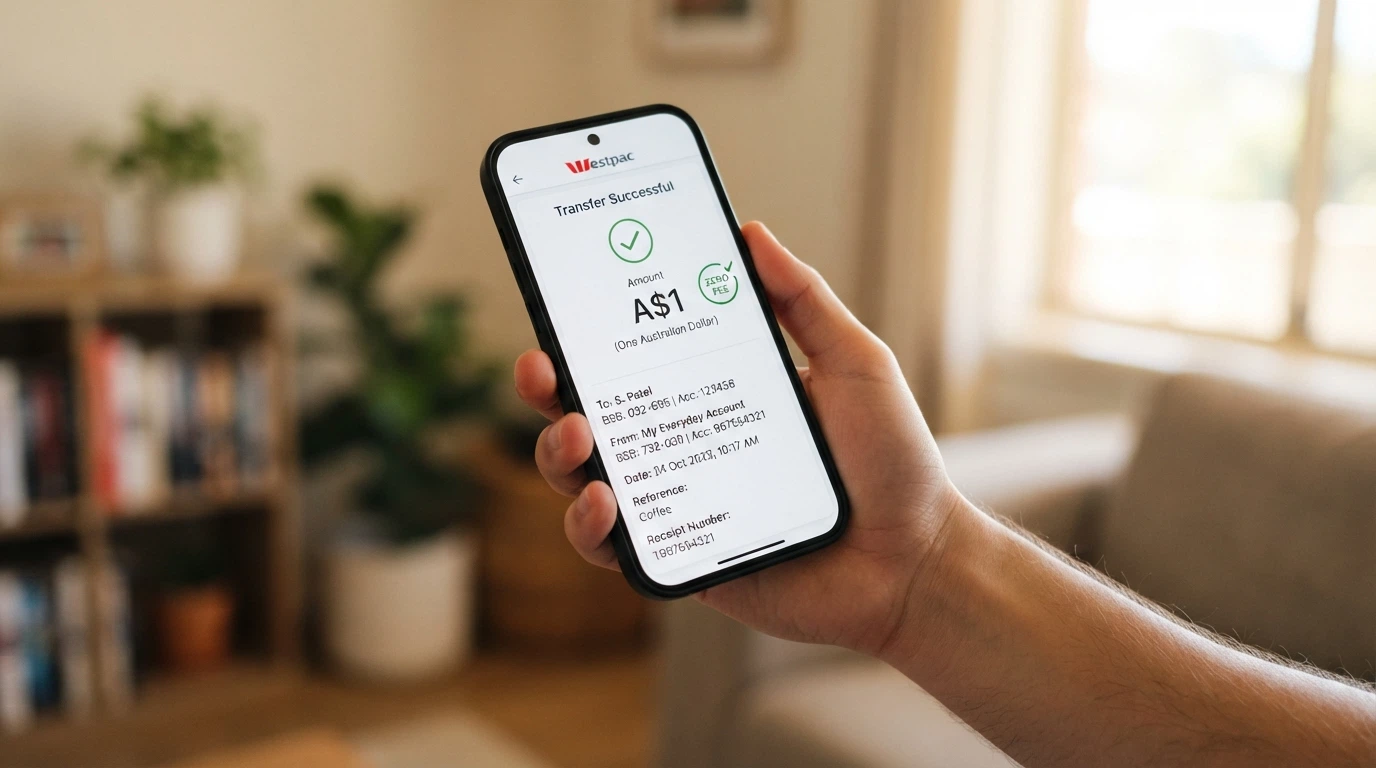
The deposit-to-withdrawal asymmetry is the hidden constraint. A $1 deposit requires growing the balance twenty- to fifty-fold before any withdrawal is accepted. That is not a marketing detail; it is the structural shape of the dollar tier, and it deserves more weight than the deposit headline.
PayID: The Most Reliable Fiat Route for Micro-Deposits
PayID is the only rational route to a $1 pokies deposit at an offshore casino in 2026. It works by linking a bank account to a mobile number or email, processing through the Osko network, and clearing most transfers in under two minutes. Fees are zero on the player’s side. The realistic fiat floor at most AU-facing operators sits between A$5 and A$10 via PayID, with a handful of operators accepting a genuine A$1.
PayID has a second advantage for the offshore market: it is a payment method Australian banks recognise. Banks do not block PayID transfers to offshore casino merchant codes under the current rules — though from 1 January 2026, the 2026 reform gives them express authority to do so. The window for PayID deposits at offshore casinos is open today, but it will not stay open indefinitely.
Cryptocurrency: The Only True $1 Path — With a Fee Catch
Crypto gets you to a dollar more reliably than PayID, and at more operators. The catch is the network fee. Litecoin network fees run under A$0.05 per transaction, so a dollar deposit survives the network intact. Bitcoin fees in May 2026 averaged A$1.50–A$3.00 per transaction, so sending a dollar’s worth of Bitcoin to an offshore casino can cost more in fees than the deposit itself. Ethereum sits between the two, depending on congestion.
Choosing the right coin matters more than choosing the right casino for the dollar tier. A Bitcoin deposit of A$1 is, in practice, a transaction the player pays for rather than a deposit they receive. Litecoin gets the dollar in. USDT on a low-fee chain is the cleanest option when the operator supports it.
A second caveat sits on top of the fee: crypto payments for online wagering have been banned for licensed Australian operators since 11 June 2024. The presence of a crypto deposit option at a casino is therefore a tell of offshore operation, not a sign of progressive payment options. The offshore operators that take crypto are the ones the ban cannot reach.
Cards, Neosurf and the Realistic Fiat Floor
Cards and prepaid vouchers rarely reach the dollar tier. Card processing costs the operator A$0.30–A$0.50 per transaction, and most operators set a minimum above that floor — typically A$10 to A$20. Neosurf vouchers are sold in fixed denominations (A$10, A$20, A$50, A$100), and the smallest denomination is the practical minimum.
Credit cards are a different story. Credit cards for online wagering have been banned for licensed operators since 11 June 2024. An offshore casino that asks for a credit card deposit is operating outside Australian rules by definition. That is not a red flag to ignore — it is a confirmation that the operator sits outside the regulatory perimeter.
The realistic floor for a card or voucher deposit is A$10 to A$20. A reader who wants to deposit less than that is steered toward PayID or crypto, or to a different operator entirely.
The Withdrawal Trap: Why Cashing Out Is the Hard Part
The deposit is easy. The withdrawal is where the dollar tier breaks. Minimum withdrawals at most AU-facing casinos run A$20 to A$50. A $1 depositor must grow their balance twenty- to fifty-fold before any withdrawal request is accepted.
This is not a small hurdle. Even on a high-volatility pokie with a five-thousand-times max win, the path from A$1 to A$20–A$50 is the path from any session to any cashout. The dollar is a long bet, not a casual flutter. And offshore, there is no Australian complaints body to chase a withdrawal that the operator refuses.
The asymmetry is also why a $1 deposit at one of these casinos is not the same as a $1 deposit at a licensed operator with a customer-set deposit limit. The licensed operator’s deposit limit is a self-imposed ceiling. The offshore operator’s withdrawal minimum is a floor on the player’s recovery.
The Offshore Casinos Australians Can Join — Only a Handful Genuinely Take a Dollar
Ten operators are featured below, ranked by relevance to the $1 deposit question. Every one is offshore and unlicensed in Australia. The table captures licence, welcome offer, wagering and free-spin count. Where terms could not be verified, the cell reads as a dash — the gap is the point.

| Casino | Licence | Welcome Offer | Wagering | Free Spins |
|---|---|---|---|---|
| Skycrown | Curaçao | 450% up to A$8,000 + 400 FS across 4 deposits | 40x bonus / 30x FS | 400 (125 on first deposit) |
| Rocket Play | Curaçao | 100% up to A$1,000 + 100 FS first deposit | 40x | 100 (20/day over 5 days) |
| Royal Reels | Curaçao | 100% up to A$500 + 50 FS; A$10 no-deposit chip after phone verification | 30x | 50 |
| WinSpirit | Offshore | 100% up to A$300 + 100 FS first; 200% up to A$300 second | 40x | 100 (20/day over 5 days) |
| FairGO | Offshore | 300% up to A$3,000 + 50 FS (Cash Bandits 2); or 100% × 5 deposits up to A$1,000 | 30x (deposit + bonus) | 50 |
| KatsuBet | Curaçao (Dama N.V.) | 100% up to A$400 + 100 FS first deposit; A$1 deposit unlocks 50 no-deposit FS on Scroll of Adventure | 35x | 100 + 50 no-deposit |
| Stake | Curaçao | — | — | — |
| Rocket Casino | Offshore | — | — | — |
| Bizzo Casino | Offshore | — | — | — |
| SpinFever | Curaçao | 20 FS on Big Bass Splash for A$1 deposit | 35x on FS winnings | 20 |
The table reads honestly. The dashes in the Stake, Rocket Casino and Bizzo rows are the gaps this run could not fill — the operators appeared in Australian-facing search results, but their bonus terms were not available for verification. A reader comparing options should treat a dash as a flag to check directly with the operator before depositing, not as a green light.
Skycrown
Skycrown’s headline number is the 450% match across four deposits, totalling up to A$8,000 plus 400 free spins. The first deposit alone is 120% up to A$1,200 with 125 free spins on Wolf Treasure. Wagering is 40x on the bonus and 30x on free-spin winnings, with a 14-day validity window per tier.
The bonus minimum sits at A$20 — well above the dollar tier. Whether Skycrown accepts a general deposit below that is not stated by the operator. A reader looking for a $1 deposit with the bonus attached will not find it here. What they will find is one of the larger multi-deposit packages in the offshore market, with a Curaçao licence and weekly withdrawal limits of A$7,500 (A$45,000 monthly).
For a player who can fund the A$20 entry and who wants the multi-deposit structure, the package is large by offshore standards. For a $1-first-timer, the bonus is gated out of reach.
Rocket Play
Rocket Play is a multi-deposit package that releases free spins daily over five days — 20 per day for the first deposit’s 100 free spins. The first deposit is 100% up to A$1,000 plus 100 free spins; the second is 100% up to A$1,500 plus 50 free spins. Wagering is 40x on the first-deposit bonus, with five days of validity from receipt. Maximum cashout from free spins is A$300, and maximum bet while wagering is A$7.50.
The bonus minimum for the first deposit is A$30, with A$75 for the second. A $1 depositor sits well below both. Rocket Play is not a dollar-tier casino — it is a daily free-spin release structure with a capped cashout ceiling on the free-spin side. For a player who can fund A$30, the package is reasonable. For a dollar-tier player, it is the wrong product.
Royal Reels
Royal Reels offers a straightforward 100% match up to A$500 plus 50 free spins on welcome, with a 30x wagering multiplier. The general minimum deposit is A$20, with A$30 for the welcome bonus. The 5,400-plus pokie library is large by offshore standards.
The interesting feature is the no-deposit chip: A$10 free, triggered by phone verification, with 30x wagering. For a $1-first-timer, this is the closest the operator comes to the dollar tier — though the chip is technically not a deposit, it is the closest equivalent on a site whose general minimum sits at A$20. Curaçao licence. A player with a phone number willing to verify it gets A$10 in play money; a player without that willingness does not.
The verdict: a wide pokie library and a verification-triggered free chip, but the dollar deposit itself is not the headline. Royal Reels is best for a player who wants the no-deposit path, not the dollar-tier deposit path.
WinSpirit
WinSpirit runs a two-deposit welcome with a 200% booster on the second deposit — 100% up to A$300 plus 100 free spins on first, then 200% up to A$300 on second. Total welcome package up to A$600 plus 100 free spins. Wagering 40x. Free spins valid for seven days from activation, released 20 per day over five days. Maximum bet while wagering is A$7.50.
The minimum deposits are A$30 for the first and A$60 for the second — both above the dollar tier. WinSpirit’s specific licence jurisdiction is Curaçao; readers should treat the status as offshore. For a player who can fund A$30 and wants a high-percentage second-deposit booster, the structure is generous. For a $1-first-timer, the entry price sits above the dollar tier.
FairGO
FairGO is the RealTime Gaming (RTG) specialist in this list — a single-provider casino built around RTG’s catalogue, with the headline offer being 300% up to A$3,000 plus 50 free spins on Cash Bandits 2. An alternative structure offers 100% up to A$200 per deposit across five deposits, totalling up to A$1,000. Wagering is 30x on deposit plus bonus combined. Minimum deposit for the bonus is A$20, with no maximum cashout on deposit bonuses.
FairGO’s specific licence jurisdiction is Curaçao; readers should treat the status as offshore. For a player who values a single-provider catalogue and a high-percentage match without a cashout ceiling, FairGO sits well above the dollar tier — but its absence of a maximum cashout on deposit bonuses is a positive specification for any bonus hunter who can fund the A$20 entry.
The RTG focus is also a signal: the pokie library is narrower than multi-provider operators like SpinFever or KatsuBet, but the games are uniform in look and feel. For players who prefer a consistent catalogue over a sprawling one, that is a feature rather than a limitation.
KatsuBet
KatsuBet is the closest the list comes to a genuine $1 trigger. The headline 100% up to A$400 plus 100 free spins is gated at A$40 minimum deposit. The interesting part is the no-deposit offer: 50 free spins on Scroll of Adventure for a A$1 deposit, with 50x wagering on winnings and a A$200 maximum cashout from free spins.
That makes KatsuBet one of two operators on this list where a A$1 deposit genuinely unlocks a bonus — a real dollar-tier trigger rather than a marketing line. The rest of the welcome package runs across four deposits up to 5 BTC or A$6,000-plus. Wagering is 35x on the welcome bonus with 14-day validity. Maximum cashout from free spins on the first and second deposits is A$200, with no limit on the third and fourth deposit free spins.
Licence is Curaçao under Dama N.V., with 5,000-plus games from providers including BGaming. Maximum withdrawal is A$5,000 per week. For a $1-first-timer who wants the no-deposit free-spin trigger, KatsuBet is the closest fit on the list — the dollar deposit unlocks real bonus play, not just real-money play.
The verdict: a real dollar-tier trigger, a large game library, and the Curaçao licence that every operator on this page shares. The 50x wagering on the no-deposit free-spin winnings is steep, but the A$200 cashout ceiling is a real number rather than a marketing figure.
Stake
Stake is the crypto-native platform in this list. The Curaçao licence is confirmed; the welcome bonus structure is not, because Stake does not run a conventional welcome package in the same way the other operators do. Stake is one of three operators identified by Payoutverdict.com as accepting genuine sub-A$10 crypto deposits from Australian customers.
For a player who wants to deposit small amounts in crypto and is not looking for a deposit-match bonus, Stake is the cleanest option in the list — a crypto-native platform with sub-A$10 deposits confirmed and no conventional welcome terms to evaluate. The absence of a bonus structure is not a defect for the crypto-first player. For a player who reads bonus terms as the point of the casino, it is the wrong product.
Rocket Casino
Rocket Casino’s verified specification is minimal: A$15 PayID minimum deposit, offshore licence Curaçao. Welcome bonus, wagering, free spins and cashout cap could not be verified.
For a reader who needs an A$15 PayID deposit without a bonus structure to evaluate, Rocket Casino sits just above the dollar tier — closer than most fiat-floor operators, further than SpinFever or KatsuBet’s $1 no-deposit triggers. The A$15 PayID entry is reasonable for a small fiat deposit, but readers should check the operator’s bonus terms directly before depositing, because this run could not verify them.
Bizzo Casino
Bizzo Casino is visible in search results, but its bonus terms, deposit minimums and licence jurisdiction are not verified. The operator should be checked directly before depositing, because the public-facing search presence is not matched by a verifiable bonus specification.
The honest read is: Bizzo is visible, but the verification trail runs cold at the bonus terms. A reader who deposits there does so without the same confidence they would have at SpinFever, KatsuBet or Skycrown — all of which carry at least a partial verification from this run.
SpinFever
SpinFever is the only operator on the list with a documented A$1 cashier minimum. The headline offer is 20 free spins on Big Bass Splash for an A$1 deposit — spin value A$0.10 each, 35x wagering on free-spin winnings, maximum cashout from free spins A$50. The 4,200-plus pokie library is drawn from Pragmatic Play, Hacksaw Gaming, Play’n GO and Push Gaming.
Curaçao licence confirmed. Minimum withdrawal A$20. For a $1-first-timer who wants the dollar deposit to actually unlock something at the dollar price, SpinFever is the only option on the list where that is the headline rather than a footnote.
The verdict: the only featured operator with a documented A$1 cashier minimum. Twenty free spins for a dollar, with a A$50 cashout ceiling that is real rather than theoretical, and a pokie library large enough to be useful. The 35x wagering on free-spin winnings is standard for the offshore market. SpinFever is the dollar-tier casino the page’s subject was looking for.
What Your Dollar Actually Buys on the Pokies
A dollar at an offshore casino buys a session whose length depends on the pokie’s minimum bet. Book of Dead’s A$0.01 minimum turns a dollar into one hundred spins. Wolf Gold’s A$0.25 minimum turns the same dollar into four spins. The arithmetic is simple: spins per dollar = 1 ÷ minimum bet. The pokie choice is what determines how long the session lasts.

RTP matters more at the dollar tier than at any other. A high-RTP pokie gives a better statistical return per spin. When the bankroll is small, the difference compounds. A 99% RTP pokie like Mega Joker keeps an average of A$0.99 of every dollar wagered over the long run. A 94.92% RTP pokie like Aloha King Elvis keeps A$0.9492. The gap looks small. Over a hundred spins, it is meaningful.
Minimum Bets and Spins Per Dollar: The Arithmetic of Micro-Stakes
The minimum bet determines the session length. The numbers are concrete:
- Book of Dead (Play’n GO): A$0.01 minimum bet — 100 spins per dollar.
- Fire Joker (Play’n GO): A$0.05 minimum bet — 20 spins per dollar.
- Starburst (NetEnt): A$0.10 minimum bet — 10 spins per dollar.
- Big Bass Bonanza (Pragmatic Play): A$0.10 minimum bet — 10 spins per dollar.
- Sweet Bonanza (Pragmatic Play): A$0.20 minimum bet — 5 spins per dollar.
- Gates of Olympus (Pragmatic Play): A$0.20 minimum bet — 5 spins per dollar.
- Gonzo’s Quest (NetEnt): A$0.20 minimum bet — 5 spins per dollar.
- Wolf Gold (Pragmatic Play): A$0.25 minimum bet — 4 spins per dollar.
A session on Book of Dead at the dollar tier is one hundred spins long. A session on Wolf Gold is four. Both are valid dollar-tier plays, but they are not the same session.
The gap between the headline minimum bet and the realistic play is worth noting. A pokie’s minimum bet is the floor of one payline at one coin. Most players bet on more paylines or at higher coin values, which pushes the effective minimum bet higher. The A$0.01 on Book of Dead is real but requires selecting a single payline at minimum coin value. A player who bets more will exhaust the dollar faster.
The Pokies With the Best RTP for a Micro Bankroll
RTP varies from 94.92% on Aloha King Elvis up to 99% on Mega Joker. High-volatility pokies give larger but less frequent wins. Low-volatility pokies give smaller, more frequent wins. At the dollar tier, the right volatility depends on the reader’s goal — a long session for entertainment value points toward low-volatility Starburst; a session chasing a larger win points toward high-volatility Big Bass Bonanza or Razor Shark.
| Pokie | Provider | RTP | Volatility | Min Bet |
|---|---|---|---|---|
| Mega Joker | NetEnt | 99.00% | High | — |
| Scroll of Adventure | BGaming | 97.12% | High | — |
| Big Bass Bonanza | Pragmatic Play | 96.71% | High | A$0.10 |
| Razor Shark | Push Gaming | 96.70% | High | A$0.10 |
| Trigger Happy | Big Time Gaming | 96.58% | High | A$0.20 |
| Gates of Olympus | Pragmatic Play | 96.50% | High | A$0.20 |
| Gates of Olympus 1000 | Pragmatic Play | 96.50% | High | — |
| Sweet Bonanza | Pragmatic Play | 96.48% | High | A$0.20 |
| Book of Dead | Play’n GO | 96.21% | High | A$0.01 |
| Fire Joker | Play’n GO | 96.15% | High | A$0.05 |
| Starburst | NetEnt | 96.09% | Low | A$0.10 |
| Wolf Gold | Pragmatic Play | 96.01% | High | A$0.25 |
| Gonzo’s Quest | NetEnt | 95.97% | High | A$0.20 |
| Aloha King Elvis | BGaming | 94.92% | High | — |
The dashes are honest gaps. Research gave RTP for every pokie on this list, but volatility and minimum bet for a handful. A cell without a figure is the article-language no-data marker; it tells the reader what could not be verified, not that the figure is zero.
The expected-loss calculation makes the table’s meaning concrete. On Book of Dead at the A$0.01 minimum bet, the dollar buys one hundred spins at 96.21% RTP. The expected session loss — turnover × (1 − RTP), assuming only the dollar is wagered — works out to roughly A$1 × (1 − 0.9621) = A$0.04. On Gates of Olympus at the A$0.20 minimum bet, the dollar buys five spins at 96.50% RTP. The expected session loss is roughly A$1 × (1 − 0.9650) = A$0.04. Same dollar, same expected loss, vastly different session length.
That is the real shape of the dollar tier. The arithmetic on the expected loss converges on a similar number across high-RTP pokies. What diverges is the experience: one hundred quiet spins on Book of Dead, or five tense spins on Gates of Olympus. The reader’s choice, not the casino’s.
The expected loss is a statistical estimate — an average over many spins under the stated assumptions, not a guaranteed outcome for any single player.
Mobile $1 Deposits: Same Casinos, Smaller Screen
Mobile play at a dollar deposit casino means the same offshore operators loaded in a browser. There is no Australian-licensed casino app in official stores that accepts a dollar deposit, because there is no Australian-licensed casino app at all. The Play Store and App Store do not host AU-licensed casino products, and the offshore operators that do appear there are the same operators whose desktop sites serve Australian players in Australian dollars.

The deposit and bonus terms are identical. PayID processes on a phone the same way it processes on a laptop. Crypto deposits work identically. Withdrawal minimums are unchanged. Wagering requirements are unchanged. The mobile experience is a smaller screen, not a different product.
Mobile Browser vs App: No Difference in Deposit Terms
A mobile casino deposit is the same transaction on a smaller screen. No special mobile minimum exists. The deposit and bonus terms in the comparison table above apply on mobile without modification.
The browser route is the only route for most operators. No official app means a responsive site or, in some cases, a progressive web app. Either way, the cashier’s terms do not change with the device. A reader who has verified the deposit and bonus terms on desktop does not need to verify them again on mobile.
New Low-Deposit Casinos: Fresh Branding, Same Offshore Model
New operators entering the Australian-facing market offer the same offshore structure under a newer domain. The IGA prohibition applies regardless of when the operator launched. A domain registered last month has the same legal status as a domain registered five years ago — Curaçao-licensed, unlicensed in Australia, outside the Australian consumer protection framework.
The marketing shape does change. New operators often run higher-percentage welcome bonuses to compete for the same Australian search audience. A 300% match is not unusual for a new entrant. The underlying offer mechanics — Curaçao licence, offshore terms, A$20 minimum deposit for the bonus — tend to stay the same.
For a reader, a new domain means one extra check. The licence jurisdiction and the operator’s bonus terms need to be verified before depositing, because newer operators are less likely to have a public track record on payout disputes or complaint resolution. The IGA prohibition does not become more lenient because the domain is newer.
Why a $1 Deposit Does Not Mean Safer Gambling
A low deposit floor does not reduce harm when the operator sits outside every Australian safeguard. The dollar is a marketing offer, not a harm-reduction measure. BetStop coverage stops at the licensed-wagering border. The offshore casinos on this page keep accepting self-excluded players. The National Gambling Helpline (1800 858 858) and Gambling Help Online (gamblinghelponline.org.au) remain the right contacts for anyone whose gambling is moving from entertainment into something else.
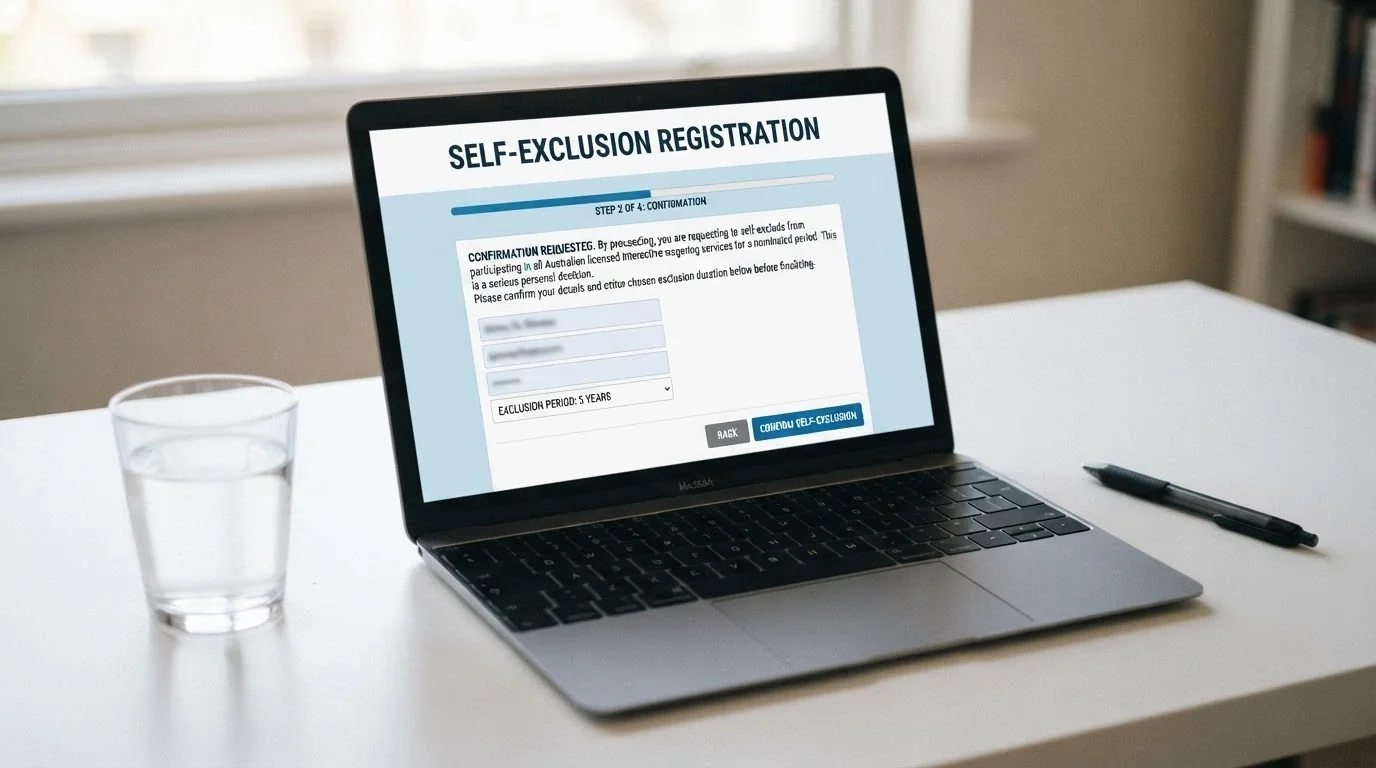
The harm data behind the low-deposit marketing makes the gap concrete. Approximately 3.29 million Australians are affected annually by their own or another person’s gambling. An estimated 1,970,000 Australian adults are classified as having at-risk or problem gambling. About 2.1% of Australian adults — roughly 430,000 people — experience problem gambling. The annual health loss associated with gambling-related harm in Australian adults is estimated at over 400,000 Years Lived with Disability.
A $1 deposit does not screen for any of that. It lowers the entry cost, not the risk.
BetStop: What It Covers and What It Does Not
BetStop is the National Self-Exclusion Register — the strongest player-protection tool Australia has built for online wagering. It launched on 21 August 2023. As of 31 March 2026, 59,830 people had registered to self-exclude from all licensed online and phone wagering providers, with 37,247 active exclusions. BetStop covers roughly 50 licensed wagering providers in Australia. Seventy-eight percent of registrants were under 40, and 38% chose lifetime exclusion.
The coverage stops at the border. BetStop binds Australian-licensed wagering services only. An offshore casino is not connected to the register and will keep accepting a self-excluded person’s money. A person who has self-excluded through BetStop can still deposit, play, and lose at every brand listed above. Self-exclusion through the Australian register has no effect offshore.
The 2026 reform allocates A$28.7 million over four years for BetStop enhancements, with A$3.2 million ongoing annually. That is the harm-reduction investment on the licensed side. It does not extend to the offshore operators on this page.
The Real Harm Numbers Behind Low-Deposit Gambling
The harm prevalence data sits behind every marketing line about “responsible gambling” at the dollar tier. About 2.1% of Australian adults experience problem gambling; the Australian Institute of Health and Welfare put high-risk gambling at 1.8% in 2022. Broader modelling estimates 1,970,000 Australian adults at-risk or problem gambling, with 3.29 million Australians affected annually by their own or another person’s gambling. The annual health loss exceeds 400,000 Years Lived with Disability.
The 2026 reform’s budget reflects the scale of the harm. A$22.6 million over five years from 2025–26 has been allocated for wagering advertising enforcement targeting illegal gambling services. A$22.4 million over three years from 2026–27 funds a national public awareness and education campaign encouraging people affected by gambling harm to seek support.
The National Gambling Helpline (1800 858 858) is free, confidential and staffed 24 hours a day, seven days a week. Gambling Help Online (gamblinghelponline.org.au) provides online chat and counselling. Both are free to Australian residents. Both sit outside the casino operators on this page — a reminder that the help infrastructure is Australian, the operators are not.
How We Evaluated Every $1 Deposit Casino on This Page
The operators on this page were selected based on relevance to Australian players and cross-referenced against the ACMA register and Curaçao licence data where accessible. The evaluation criteria were licence jurisdiction, deposit minimum, bonus terms and wagering requirements. Operators with unverifiable terms are noted as such — those rows in the comparison table carry dashes rather than fabricated figures.
No operator on this page holds an Australian licence for online casino because none exists. Licensed Australian wagering operators are excluded from this list because they do not offer casino games or pokies. Sportsbet, TAB, bet365, Ladbrokes, TABtouch, PointsBet, Neds, Betr, Picklebet and Betfair are all licensed wagering operators, and none of them provide the online casino games this article discusses.
The limitation of this review is the verification trail. Several operators on the list had bonus terms, deposit minimums or licence jurisdictions that could not be confirmed this run. Those gaps appear in the table as dashes and in the operator write-ups as qualitative statements. A reader should treat a dash as a flag to check the operator directly before depositing, not as a green light.
What a $1 Casino Deposit Actually Costs You
The real price of a dollar deposit is measured in the terms you accept and the protections you forgo. The dollar is a deposit. The price is everything else.
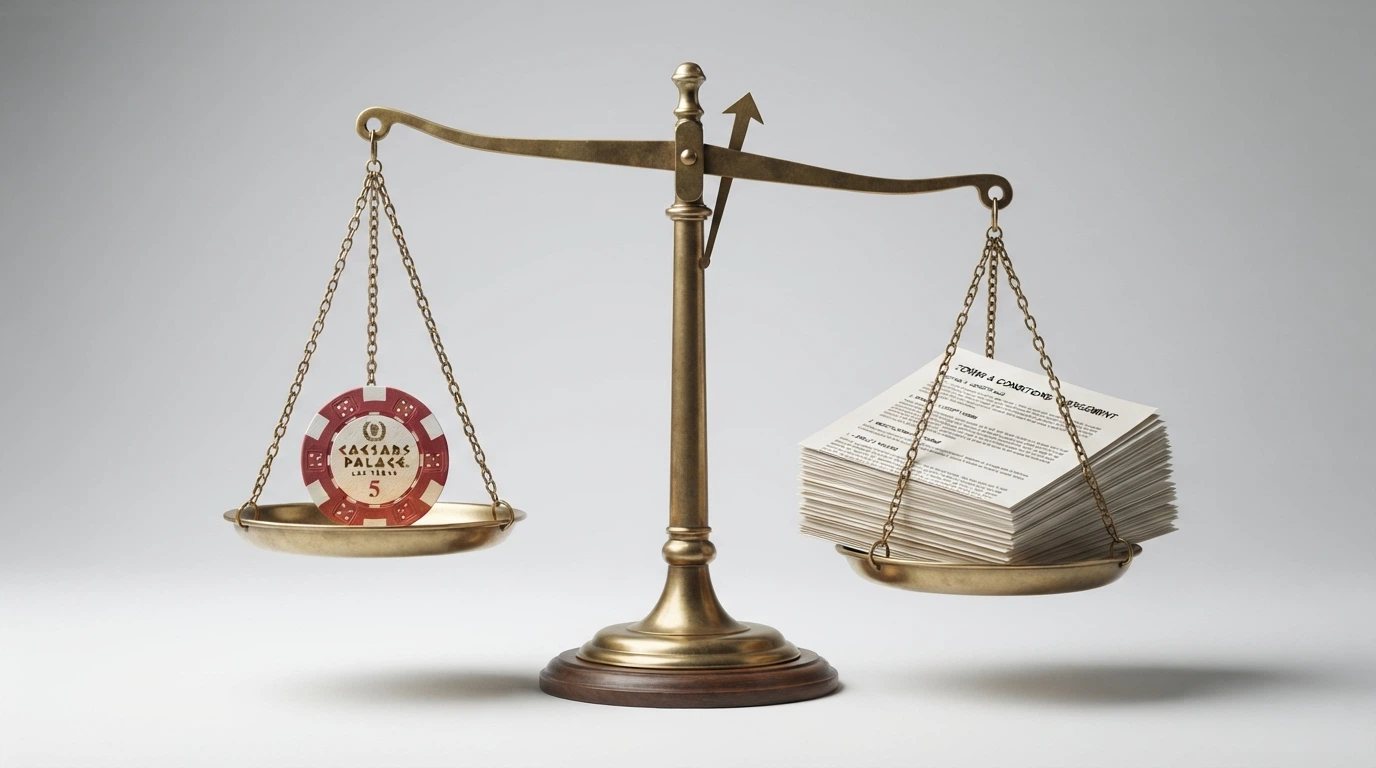
A $1 deposit at an offshore casino costs the player Australian consumer protections, BetStop coverage and any guaranteed route to cash out. The Interactive Gambling Act 2001 prohibits the product; ACMA blocks illegal sites; the licensed-wagering payment ban excludes credit cards and crypto; the offshore casino accepts the dollar precisely because it sits outside that perimeter. A reader comparing options should weigh that cost against the dollar itself.
The arithmetic on the dollar is straightforward. PayID gets some operators to A$1; crypto gets most operators to A$1 after a fee; cards and vouchers stop at A$10–A$20. The withdrawal minimum is A$20–A$50 at most operators, which is a 20-to-50-fold growth hurdle on the way out. The expected session loss on a high-RTP pokie converges on roughly A$0.04 per dollar wagered — same dollar, similar loss across the high-RTP end of the catalogue.
What the dollar buys is real-money play at an offshore site, with the bonus structure of the operator’s choice and the protections of a Curaçao licence. What it does not buy is recourse if the operator refuses a withdrawal, BetStop coverage, or the Australian consumer protection framework that licensed wagering operators sit inside. That is the cost. The deposit is the dollar. The reader’s choice is whether the dollar is worth it.
Frequently Asked Questions
Can Australian players face prosecution for using a $1 deposit casino?
No. The Interactive Gambling Act 2001 targets providers, not customers. No Australian player has been prosecuted for using an offshore casino. The penalty structure — up to A$247,500 for operators that breach the credit-card and crypto payment ban — runs against the operator, not the player. The cost to the player is the absence of Australian consumer protection rather than the risk of prosecution.
How many spins does a $1 deposit actually give you on a pokie?
It depends on the pokie’s minimum bet. Book of Dead at A$0.01 per spin gives one hundred spins per dollar. Fire Joker at A$0.05 gives twenty spins. Starburst and Big Bass Bonanza at A$0.10 give ten spins. Gates of Olympus, Sweet Bonanza and Gonzo’s Quest at A$0.20 give five spins. Wolf Gold at A$0.25 gives four spins. The dollar’s session length is determined by the game choice.
Do Australian consumer laws protect you at an offshore casino?
No. Australian consumer laws apply to licensed operators. Offshore casinos sit outside that perimeter. There is no Australian complaints body with jurisdiction over a Curaçao-licensed operator, no Australian statutory recourse if the operator refuses a withdrawal, and no Australian requirement that the operator honour its bonus terms. The Australian consumer protection framework stops at the border.
Does BetStop stop you signing up to a $1 deposit casino?
No. BetStop is the National Self-Exclusion Register and binds Australian-licensed wagering providers. Offshore casinos are not connected to the register. A person who has self-excluded through BetStop can still deposit, play and lose at every offshore casino listed on this page. BetStop coverage is the licensed-wagering boundary, and offshore casinos sit outside it.
Can you really withdraw winnings from a $1 casino deposit?
The minimum withdrawal at most AU-facing casinos is A$20–A$50. A $1 depositor must grow their balance twenty- to fifty-fold before any withdrawal request is accepted. There is no guarantee the offshore operator will honour a withdrawal request when it is made. The Australian regulatory framework does not apply. The withdrawal is structurally harder than the deposit, and the operator’s discretion is the only constraint on whether it happens.
Published by the Bitcoin Casinos Australia team.