
$20 pokies deposits in Australia go offshore — every single one
A $20 deposit is enough to start playing real-money online pokies from an Australian address. What it gets you is, with no exceptions worth naming, an account at an offshore operator that has no business offering the product on offer. That single fact — that the Interactive Gambling Act 2001 prohibits the supply of online casino games to people in Australia — is the lens for every dollar this page covers. The sections below set out who takes the $20, what it buys, what it costs in player protections, and what changes in the reform window that opens on 1 January 2027.

Data current as of 29 October 2026; player-protection and ACMA enforcement figures verified against the Australian Communications and Media Authority register.
Table of Contents
- Why every $20 pokies deposit in Australia goes offshore
- The best $20-deposit pokies sites Australians use in 2026
- Rocket Play
- Skycrown
- Royal Reels
- Stake
- FairGO
- Scream Casino
- Rainbet
- WinSpirit
- Bizzo Casino
- Rocket Casino
- New $20-deposit pokies sites worth knowing about
- The law you need to know before you deposit $20
- What you actually lose when your pokies site is offshore
- How we chose and ranked these $20-deposit pokies sites
- Your $20 deposit: what to do and what to avoid
- Frequently asked questions
Why every $20 pokies deposit in Australia goes offshore
The Interactive Gambling Act 2001 makes it illegal to provide online casino games — including online pokies — to a person physically in Australia. The Interactive Gambling Amendment Act 2017 tightened enforcement, closed the offshore workarounds operators had been using, and gave the regulator the DNS-blocking power it now deploys routinely. There is no Australian licence for online casino — not federally, not in any state or territory. What is licensed is wagering on races and on pre-event sport, a different product, run by operators such as SportsBet, Tab, Bet365 and Ladbrokes through Licensing NT and the relevant state regulator.
The IGA targets the provider, not the player. Individual Australians are not prosecuted for depositing at an offshore casino, which is why offshore casinos keep advertising into the market. But the absence of prosecution is not the presence of protection. There is no Australian consumer law backing that deposit. There is no Australian complaints body that can chase the operator on a player’s behalf. There is no BetStop coverage when someone needs to exclude themselves. The ACMA can also have the site blocked at the DNS level — a routine enforcement action that can lock a balance at the wrong moment.
The $20 minimum and what it gets you at offshore pokies sites
Twenty dollars is a real entry point. It sits above the lowest deposit tiers some offshore pokies sites advertise — the five- and ten-dollar clusters — and below the heavier first-deposit buckets. It is the point at which most welcome-offer minimums are met, which is why it has become the standard deposit for a first-time look at an offshore casino from Australia. What it buys is a funded account and, in most cases, eligibility for the headline welcome offer.
Lower deposit tiers exist, and they come with their own compromises. Five- and ten-dollar deposits are often excluded from a site’s main welcome offer, leaving the player running a real-money balance alone and forfeiting the matched-deposit or free-spin component. Twenty dollars is the lowest deposit where most operators let the bonus minimum clear cleanly. Above twenty, the calculus flips: a larger bonus almost always carries a heavier wagering requirement, and bonus money locked behind unplayed turnover is not free money. The mid-range deposits maximise bonus value; the low end maximises risk control. Twenty dollars is the balance point.
Deposit methods that take $20
The payment method is the easiest signal of whether a pokies site is operating inside the Australian rules. The legal deposit routes for licensed wagering are debit card, bank transfer, PayID/Osko and BPAY. The routes licensed operators cannot accept are credit cards, credit-related products and digital currency — banned under the Interactive Gambling Amendment (Credit and Other Measures) Act 2023, enforceable from 11 June 2024, with a breach penalty reaching $247,500. An offshore pokies site that asks for credit or crypto is, by definition, outside the Australian regulatory perimeter.
- Debit card — accepted at almost every offshore pokies site, processed through the card network, and the only realistic chargeback route if a withdrawal is later refused.
- PayID / Osko — instant transfers from an Australian bank account, available at a growing share of offshore sites, but functionally identical to a debit card for chargeback purposes because a PayID cannot be reversed once it clears.
- Bank transfer and BPAY — slower settlement, often exempt from the deposit-match eligibility that operators reserve for cards and PayID.
- Crypto (Bitcoin, Ethereum, USDT and the rest) — banned as payment for licensed wagering in Australia; offshore sites accept it because it sits outside the framework the ban covers.
- Credit card — banned outright for online wagering in Australia; an offshore operator that requests one has already stepped outside the perimeter an Australian player would otherwise be transacting inside.
Real-money pokies at $20: what you are actually playing
Twenty dollars buys real-money play, not the demo equivalent. Every spin pays in AUD at the stake the player sets, against an RNG that the offshore operator’s licence — whatever it is — attests is fair. What the deposit does not buy is a guarantee of return. Every pokies game has a built-in house edge, expressed as the gap between the long-run payout rate and one hundred percent of wagering, and a $20 bankroll is small enough that variance dominates a session more than any average ever will.
The practical question for a player at this level is stake size. Higher stakes spend the bankroll faster and produce bigger swings; lower stakes extend the session but flatten the wins. A standard real-money session at the $20 deposit level is short by design, and the math says most players will close the books well before any hot streak becomes statistically meaningful. The bonus question is separate and matters more — see the section below on first-deposit offers and the wagering rules those offers lean on.
Mobile pokies with a $20 deposit
Mobile compatibility at offshore pokies sites is near-universal, because the operators run on browser-based platforms that wrap cleanly to a phone screen. The pokies, the bonus tabs, the cashier and the live-chat help all tend to fit a portrait phone without the awkward horizontal-only layouts older downloadable clients used to force.
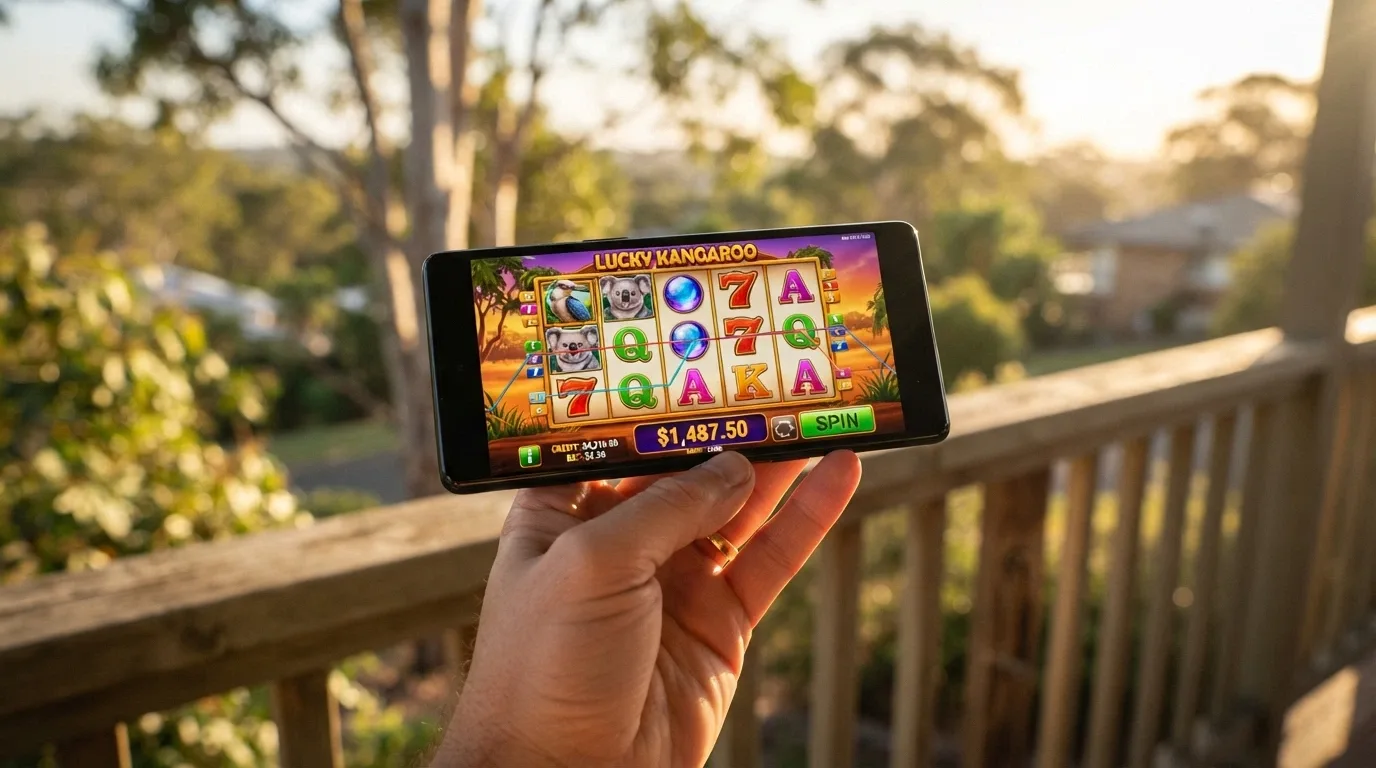
The real question is the deposit flow. PayID’s instant-settlement design works well on mobile because the player’s banking app handles the confirmation step natively. Debit-card deposits on a phone are frictionless for anyone who has saved card details in their browser. Crypto deposits, where supported, route through a mobile wallet rather than an exchange, carrying the same anonymity trade-offs they bring on desktop and the same departure from the Australian rulebook.
A handful of operators still ship a downloadable app. Where one exists it is mostly a wrapper around the same browser platform rather than a separately licensed product, which is the point: a $20 deposit on a phone does not change an operator’s regulatory status. A site that is offshore on desktop is offshore on mobile, and the wrapper does not bring it inside Australian rules.
First-deposit offers and new-player bonuses at $20
A $20 deposit usually clears the minimum for a welcome offer at an offshore pokies site — the operator wants the first deposit large enough that the matched amount makes business sense. What the player gets back depends on the offer type and the small print that follows. The common variants are a matched deposit (the operator adds a percentage of the deposit as bonus funds), a free-spins bundle (a fixed number of spins on a chosen title at a fixed stake), or some combination of both.
The headline figure is not the offer. The wagering requirement is. Wagering — also called a turnover requirement — is the number of times the bonus, and sometimes the deposit too, must be played through before any of it can be withdrawn. A matched-deposit headline attached to a $20 deposit carries a wagering multiple on top, and that multiple is the rule the bonus is built around. Read only the matched amount, and the player has read the wrong number. At a low stake, the turnover grinds on; at a higher stake, the session ends quickly. Either way, the wagering rule is the side of the contract the operator does not put in the headline.
Validity windows matter too. Most offshore bonuses expire within a fixed period — typically a window of days or weeks — and any unplayed turnover vanishes with them. A bonus whose expiry falls before the player can clear its turnover is worth zero. There is also the question of which games contribute to wagering. Welcome offers commonly exclude high-payout-rate titles or weight them at a fraction of the stake, which is the operator’s way of protecting the math behind the matched amount.
Demo mode and free-play: trying pokies before you deposit
Most offshore pokies sites host the same catalogue in two modes: real-money and demo. Demo runs against a notional balance with no account, no identity check and no deposit. It is, in practical terms, the only risk-free exposure to what an offshore operator offers.
The catch is that demo play is not real-money play. Payout-rate settings are the same, but the volatility of a real session — the variance that produces both the long runs of small losses and the occasional bigger win — is the same shape in cash as in demo, while the psychology of playing with real money on the line is not. A player testing a site should treat demo as a way to learn the mechanics of a particular game and the navigation of an operator’s lobby, not as a preview of what a $20 deposit will feel like.
The other use of demo is platform testing. How does the cashier load? How does the bonus tab read? What does the help-centre actually say about withdrawal times? Those are operator-level questions demo mode answers without the deposit. A player who has never used the platform is gambling on the platform at the same time they are gambling on the games — and the platform is the easier of the two to fail at.
State and national scope: NSW, VIC, QLD and beyond
The Interactive Gambling Act is federal, which means the prohibition on online casino and online pokies is the same in every state and territory. A player in Sydney is not in a different legal position from a player in Brisbane or Perth with respect to the offshore casinos named later in this ranking. The variation by state lies elsewhere.
Each state levies its own point-of-consumption tax on licensed wagering operators — typically in the 10–15% range of net wagering revenue — but that tax is collected from the licensed operators, not from the offshore ones. The Northern Territory, which licenses most of the country’s online wagering brands, charges those operators a 5% wagering tax on wagers minus payouts plus a small racing-product levy. None of these levies change a player’s experience at an offshore pokies site.
State-level rules also operate on the inducement side, with NSW and VIC historically running the strictest regimes on bonus marketing to existing customers. The federal reform covered later harmonises a national position across this patchwork. For a player depositing $20 at an offshore site, none of this changes the cashflow — but it shapes how loudly the operator can advertise its welcome offer to that player, and that is where state-level rules have bitten hardest at the Australian-facing end of the market.
The best $20-deposit pokies sites Australians use in 2026
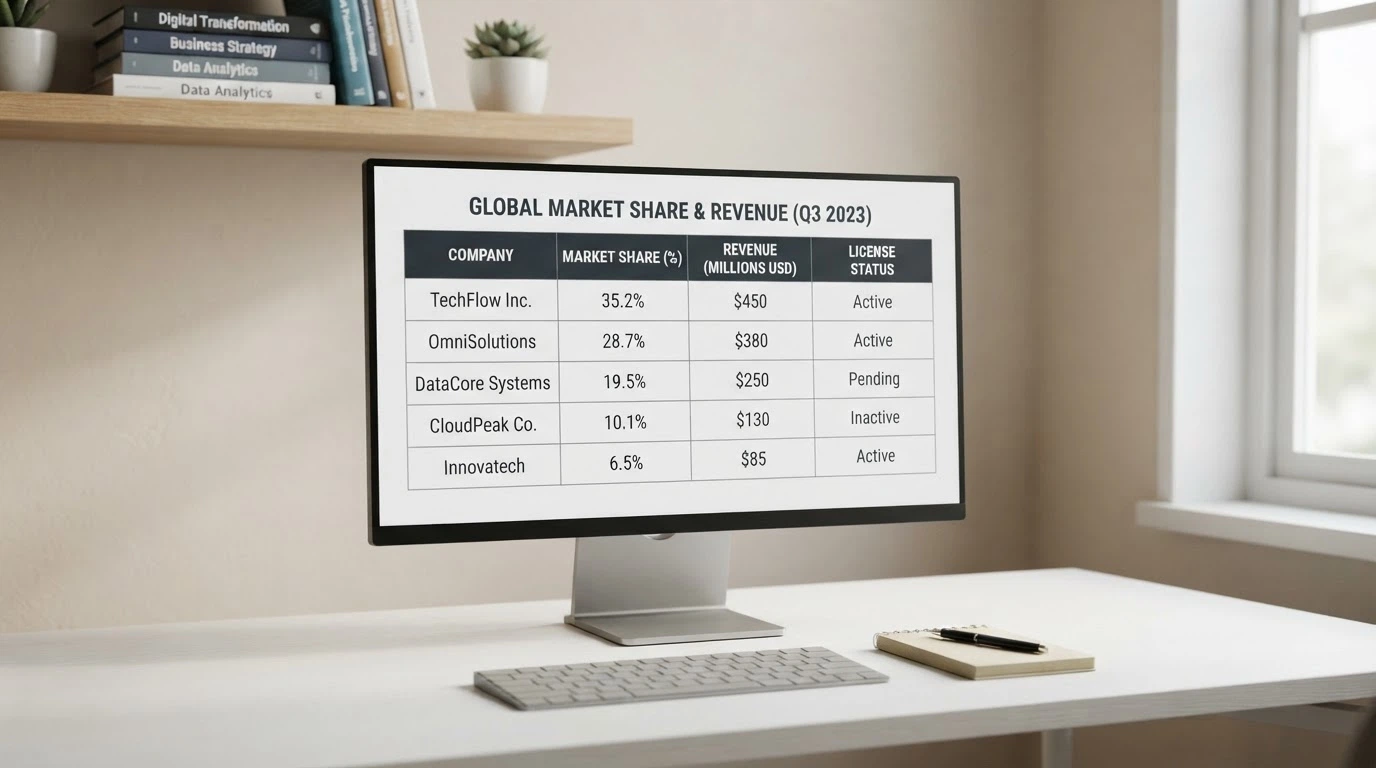
Every operator in the table below is offshore. Every one is offering a product that is illegal to supply to people in Australia under the Interactive Gambling Act 2001. The ranking reflects tracked Australian traffic and revenue data, not licence status — because licence status is uniform across the set. None of them holds an Australian licence; none exists for the product they sell. Treat the table accordingly. It is a market-position snapshot, not a consumer shortlist.
| Operator | Market Share (AU) | Revenue (AUD) | Licence Status |
|---|---|---|---|
| Rocket Play | 9.40% | $632.69M | Offshore, unlicensed in AU |
| Skycrown | 8.55% | $436.07M | Offshore, unlicensed in AU |
| Royal Reels | 2.51% | $243.99M | Offshore, unlicensed in AU |
| Stake | 1.28% | $115.67M | Offshore, unlicensed in AU |
| FairGO | 0.80% | $69.11M | Offshore, unlicensed in AU |
| Scream Casino | 0.99% | $94.87M | Offshore, unlicensed in AU |
| Rainbet | 1.28% | $83.13M | Offshore, unlicensed in AU |
| WinSpirit | 1.55% | $110.30M | Offshore, unlicensed in AU |
| Bizzo Casino | 0.57% | $51.38M | Offshore, unlicensed in AU |
| Rocket Casino | 0.57% | $43.22M | Offshore, unlicensed in AU |
Rocket Play
Rocket Play leads the tracked Australian offshore pokies market by a clear margin. Its 9.40% share and $632.69M in tracked revenue make it larger than every other operator on the page combined against the next two — a function of how many Australians actually click through and deposit. That scale tells a player nothing about the underlying product, which is the same product every Australian-facing offshore casino offers: real-money online pokies that no Australian licence attests to.
What the scale does tell is where Australian players are ending up. The pokies catalogue at the larger operators runs to several thousand titles from the same handful of studio names — Pragmatic Play, NetEnt, Play’n GO and their peers — covering the same themes and volatility bands every other operator in the table covers. Bonus framing is also uniform: a matched first deposit, free spins attached to specific titles, a wagering multiple set on the bonus rather than the deposit, a validity window measured in days. Rocket Play’s version of that template is conventional rather than aggressive, which is itself a kind of signal.
The licence is the same as everywhere else on the page. Rocket Play holds no Australian licence, because none exists. The site operates under the rules of whatever offshore regime granted it permission, and Australian players accessing the platform fall outside any Australian consumer-protection regime the moment they deposit. Rocket Play is the largest Australian-facing offshore pokies site by tracked traffic, and the standard offshore caveats apply in full.
Skycrown
Skycrown sits in second place at 8.55% Australian market share and $436.07M in tracked revenue — meaningfully behind Rocket Play, well clear of the rest of the table. The brand is positioned as a heavier-pokies experience than the sportsbook-leaning sites further down the list, with a catalogue depth that follows from absorbing the cost of several thousand titles.
The catalogue question matters more at the top of the ranking than at the bottom because scale lets the operator absorb licensing costs from more providers and, in theory, return more of that back to the player in title selection. In practice, the gap between Skycrown’s pokies offering and Royal Reels’ is narrower than its revenue rank suggests — the same studios, the same mechanics, the same volatility bands. Where Skycrown differs is in lobby design and the rhythm of its promotional calendar, both of which a player sees on first visit.
Skycrown’s bet is the size of its user base, not the cleverness of its bonus terms. The matched first deposit and free-spin bundles are present but not market-leading; the wagering multiples are within the band readers will see across the offshore set. What the second-place position earns is the ability to absorb the cost of doing business in a high-friction environment, which tends to translate into reliable withdrawals and a less rocky live-chat experience — the kind of asset a player values after they have experienced the alternative.
For a player choosing between Rocket Play and Skycrown, the practical difference is smaller than the share gap. Either routes to a similar product under similar terms and a similar offshore licence. The decision reduces to which lobby the player prefers.
Royal Reels
Royal Reels comes third at 2.51% market share and $243.99M in tracked revenue — a noticeable step down from the top two but well ahead of the rest of the table. The brand leans into an Australian-facing identity with a name and a visual treatment built to land with Australian players, and that branding works: a chunk of the 2.51% share is recognition rather than search.
The branding does what branding does. It does not change what is on offer. Royal Reels is an offshore casino with the same prohibition behind it as every operator on this page; the visual identity is a marketing choice, not a regulatory one. What a player gets for the marketing budget is a recognition signal, which counts for something on a first deposit when the alternative is a less-familiar name.
The pokies catalogue, the bonus structure and the deposit and withdrawal routes at Royal Reels sit within the offshore norm. The matched first deposit is present; the free-spin bundle is tied to a fixed list of titles; the wagering requirement is the rule rather than the headline. The legitimate differentiator Royal Reels can claim is continuity — a larger Australian-facing brand has more skin in the game of staying available, which for an offshore operator is a relative comfort rather than a regulatory one.
For a player with a free choice between Royal Reels and another offshore brand of similar size, the reason to pick Royal Reels is recognition, not regulation. The Australian branding has earned it a slot in this ranking; the protection an Australian player expects is the same absence the rest of the page documents.
Stake
Stake is the most globally recognised brand on this page, with a presence well beyond Australia and a corporate identity built around crypto deposit rails and a high-profile ambassador roster. Its 1.28% Australian share and $115.67M in tracked revenue understate the operator’s position in the global market. The Australian numbers are what count for an Australian player depositing $20, and they put Stake fourth.
The crypto-centric design — bitcoin, ethereum and a suite of altcoins handled natively — is what most distinguishes Stake’s cashier from the rest of the page. For an Australian player that distinction cuts the wrong way. Crypto is not a legal payment route for licensed wagering in Australia, and an offshore operator that routes deposits through crypto is one step further from any Australian rule than an operator that takes a debit card. Stake’s choice to make crypto the default is part of why it sits on this page; it is also part of why the offshore cost bites harder here than at the operators lower in the table that lead with PayID.
Outside the cashier, Stake offers a competitive product in many respects: a deep pokies catalogue, regular tournament-style promotions, a competitive live-casino vertical alongside the pokies. None of that changes the licence question. The brand recognition does not translate into Australian consumer protection — value of a kind, but not the kind that addresses the underlying issue.
For a player who already uses Stake in another market, the deposit is familiar; for a player seeing the name for the first time, the recognition is borrowed rather than earned locally. Neither removes the offshore cost this page registers.
FairGO
FairGO is the operator whose branding is closest to an Australian-themed identity on this page — a name and a visual treatment built to read as local. Its 0.80% Australian market share and $69.11M in tracked revenue place it fifth, and the recognition premium matters more at this scale than it does at the top of the table.
The branding does the work the licence cannot. FairGO is an offshore casino; its name and visual treatment are marketing, not regulatory. A player who treats the Australian-facing name as evidence of Australian regulation has misread it, because no Australian licence exists for the product FairGO sells. The same step that takes a player closer to familiarity takes FairGO no closer to a licence, because no licence is available for this product category.
What FairGO offers is the same offshore template as the rest of the page — a pokies catalogue of several thousand titles, a matched first-deposit offer with a wagering multiple attached, the standard deposit and withdrawal routes, a live-chat help desk that works after the deposit but not always before it. The vertical is conventional rather than distinctive.
A player who can hold “Australian-facing brand” and “offshore operator” in mind at the same time is the right reader for this entry. The name is the pitch. The licence is not.
Scream Casino
Scream Casino sits at 0.99% Australian market share and $94.87M in tracked revenue, putting it in the middle of the ranking by both measures. The brand reads as mid-tier offshore; the position is mid-tier offshore; the product is the same offshore product every operator on this page sells.
What mid-tier means in practice is a pokies catalogue broadly similar in shape to the larger operators’ — the same set of studios, the same mechanics, the same volatility bands — but with a smaller promotional calendar, a thinner recognition base, and a marketing budget that does less of the heavy lifting. The matched first-deposit offer is present; the free-spin bundle is tied to a fixed list of titles; the wagering requirement is the rule rather than the headline. None of that is distinctive at this position.
The cashier carries the same offshore tells as the rest of the page — a credit-card or crypto deposit prompt at the cashier tells the player they are outside the Australian rules. The bonus terms are the same general shape, the bonus validity window similar, the live-chat help desk similar.
The verdict on Scream Casino is that it is a reasonable-but-not-distinctive entry on this list. Recognition is the only asset a mid-tier operator has, and Scream Casino has it; the underlying offer is the same offshore product with the same offshore cost.
Rainbet
Rainbet sits at 1.28% Australian market share and $83.13M in tracked revenue, putting it in the lower middle of the table. The brand carries a modest Australian-facing presence; the operator carries the same offshore product the rest of the page offers; the player who deposits $20 there gets the same offshore experience.
What Rainbet offers on the product side is conventional pokies play — a catalogue of several thousand titles built around the same studios as the larger operators, with a smaller promotional calendar behind it. The matched first-deposit offer is present, with a free-spin bundle attached in many cases. The wagering multiple is set on the bonus rather than the deposit, which is the offshore norm rather than a Rainbet-specific feature.
The credit-card and crypto tell at the cashier applies here as it does to the rest of the page. Rainbet is not a licence to lean on, and it does not pretend to be one — and that is the only thing worth distinguishing an entry at this position from the larger operators above it on the table.
For a player who has heard of Rainbet specifically or has been pointed there through a familiar referral, the entry makes sense; for a player choosing on AU market position alone, the operators higher up give the same product at the same offshore cost, which is the only cost this page registers.
WinSpirit
WinSpirit sits at 1.55% Australian market share and $110.30M in tracked revenue — interesting numbers because the share and the revenue do not sit in the natural order. Either WinSpitit’s players deposit more on average than the operators around it, or some other revenue driver is at work. The page records the data; the explanation is not on it.
The product is the same offshore pokies catalogue as the rest of the table — a multi-thousand-title offering built around the same studios, the same bonuses, the same cashier. What WinSpirit offers on top of that template is harder to pin down for a player who has not visited the brand, because the differentiation at this position tends to sit in user experience (lobby, cashier flow, mobile interface) rather than in headline terms.
For a player who has visited WinSpirit before and had a smooth withdrawal, the brand is a reasonable re-pick. For a new player choosing on the data alone, the position in the table is not a recommendation — it is a record of where the traffic lands. The offshore product, the offshore terms and the offshore cost are uniform across the set.
Bizzo Casino
Bizzo Casino sits at 0.57% Australian market share and $51.38M in tracked revenue — at the bottom of the table on both measures. The brand is a smaller offshore operator with a measurable but limited Australian following; the position is small for a reason.
The product at Bizzo Casino is the same offshore pokies template: a catalogue of several thousand titles built around the mainstream studios, a matched first-deposit offer, a free-spin bundle, a wagering multiple on the bonus. The marketing budget behind the Australian-facing brand is smaller than at the operators higher up the page, which is reflected in the share number.
The payment-method tells apply — credit-card and crypto prompts at the cashier point outside the Australian rules. The play is the same offshore caveat regardless of which operator is offering it.
For a player with no preference between operators, Bizzo Casino is no better and no worse a choice than any of the others; for a player pointed here specifically through a familiar code or recommendation, the brand loyalty is what is being purchased, and the cost of that loyalty is the same offshore cost this page registers for the larger operators.
Rocket Casino
Rocket Casino closes the table at 0.57% Australian market share and $43.22M in tracked revenue. The name is similar to Rocket Play’s, but the operators are unrelated — both are offshore, both accept Australian players for the same prohibited product, and neither holds an Australian licence. The similarity of the brand names is a coincidence, not a relationship.
The product at Rocket Casino is the same offshore pokies template as everywhere else on this page: the same studios, the same mechanics, the same bonuses, the same wagering rules. The smaller scale is reflected in a smaller promotional calendar and a thinner recognition base. None of that is a critique specific to this brand; it is what 0.57% looks like at any offshore operator serving the Australian market.
The cashier tell applies. The offshore caveats apply. The player who deposits $20 there gets the same offshore experience and the same offshore cost.
The right reader for this entry is a player who already knows the Rocket Casino brand specifically and is comparing it to operators elsewhere on the page. For a player choosing on market position alone, the bottom of the ranking is no safer or more dangerous than the top — the offshore product, the offshore terms and the offshore cost are uniform across the set.
New $20-deposit pokies sites worth knowing about
The ranking above lists operators with measurable Australian traffic. New offshore sites launch regularly, and the prohibition does not stop them appearing — the IGA targets the supply of online casino games to people in Australia, and a brand-new operator that has not yet been noticed by the ACMA can run for a period before the enforcement regime catches up with it. This section is a note for a player pointed at a site not in the table above.
New Australian-facing $20-deposit sites
The new-sites landscape for Australian players is dominated by brands that lean into an Australian-facing presentation: AUD as the account currency, AU-friendly payment options, and a name and visual treatment built to read as local. That presentation is marketing, not regulation — the same prohibition applies to a brand-new offshore operator as it does to the established ones in the table above, and the same absence of Australian consumer protection follows. The shorthand is to treat an Australian-facing presentation as a recognition signal, not as evidence of licence.
The reason a brand-new site appears at all is typically one of three: a launch with marketing spend behind it, a referral arrangement with an established affiliate network, or a relaunch of an older brand under a new name. None of those origins change the offer. What a player can do is check whether the brand is named on a recognised affiliate roster, whether the URL has a registration history consistent with a recent launch, and whether the offshore licence (whatever it is) is the same one the established network uses. None of these checks is a substitute for Australian consumer protection; they are simply the tools the offshore market offers.
New $20-deposit sites overall
The broader new-casino pipeline is global rather than Australian-targeted. Operators launch for the international market and accept Australian players because the marginal compliance cost of doing so is zero once the platform is built. The result is that a player willing to play at a brand-new offshore site has more options than a player who insists on an established name; the cost is that the established name brings a track record the new one does not.
The practical asymmetry is in the withdrawal path. An established operator has a history of paying out and a relationship with its payment providers that survives individual sessions. A new operator has neither. The first deposit may go in fine. The first withdrawal is where the absence of track record tends to bite, and that is the asymmetry a player should weight before committing a $20 to a brand with no track record at all.
The law you need to know before you deposit $20
The legal position in Australia is not a grey area. Online casino games — including online pokies — are illegal to provide to people in Australia, and that prohibition predates every offshore operator listed on this page. The player’s position is not the same as the provider’s, but the asymmetry is a practical one (the operator is targeted, not the player), not a regulatory one (the player has no Australian protection behind the deposit).
The Interactive Gambling Act: what it actually bans
The Interactive Gambling Act 2001 prohibits the supply of online casino games, online pokies and in-play sports betting to people in Australia. Section 15 is the operative provision; related sections reach advertising and inducements. The 2017 amendment strengthened the ACMA’s enforcement hand, closed the offshore workarounds operators had been using, and gave the regulator the DNS-blocking power it now uses routinely.
What the IGA does not ban is pre-event wagering on races and sport. That product is licensed and regulated, and Australian operators such as SportsBet, Tab, Bet365 and Ladbrokes hold Australian licences for it through Licensing NT and the relevant state regulator. Lotteries and keno are also licensed. The minimum age across all commercial gambling is 18. The distinction is product-specific, and the line sits between the licensed and the prohibited.
The player is not prosecuted under the IGA. The Act targets the provider. An Australian who deposits $20 at an offshore casino is not committing an offence, which is why offshore casinos continue to advertise to Australian players. The practical asymmetry is that a prohibition enforced against the provider is also a prohibition on the protections players take for granted when they transact in Australia — and those protections end at the border the moment the deposit clears.
The ACMA’s enforcement record: 1,564 sites blocked and counting
The Australian Communications and Media Authority is the regulator tasked with enforcing the IGA online. Its main tool is DNS-level blocking — the regulator requests that Australian internet service providers block specific gambling and affiliate sites at the DNS level, and the ISPs comply. Since the first blocking request in November 2019, the ACMA has had 1,564 illegal gambling and affiliate websites blocked, as at March 2026, and more than 225 illegal services have withdrawn from the Australian market under enforcement pressure since 2017.
Blocking is not unbeatable. A player with a non-DNS workaround — a VPN, an alternative DNS resolver, an offshore mirror — can usually reach a blocked site. The ACMA does not present its blocking regime as catching every player; it presents it as raising the cost of doing business for the operators it targets. The result is that the volume of services withdrawing from the Australian market is the more meaningful enforcement metric than the block count itself.
The practical consequence for a player is timing. A site that is accessible today can be blocked tomorrow, and a balance sitting at a blocked site can be caught on the wrong side of the block. The deposit has cleared at that point; the withdrawal has not. The protection the ACMA offers is the broad one — fewer operators reaching Australian players — not the narrow one of securing an individual player’s funds.
The 2026 reform: what changes on 1 January 2027
The Interactive Gambling Amendment (Gambling Reform) Bill 2026 passed Parliament on 19 August 2026 and commences on 1 January 2027. The reform package tightens the inducement and advertising rules around online wagering and gives Australian banks and payment providers express authority to refuse transactions to illegal operators. The effect on an offshore pokies site accepting Australian players will be sharper than any of the enforcement actions that came before it.

| Reform Measure | What It Changes | Effective Date |
|---|---|---|
| Bank / payment-provider blocking | Banks and payment providers gain express authority to block transactions to illegal gambling operators | 1 January 2027 |
| 14-day post-sign-up inducement ban | Direct marketing of inducements is prohibited for 14 days after a customer signs up with a wagering service | 1 January 2027 |
| 3-month post-BetStop inducement ban | Direct marketing of inducements is prohibited for 3 months after a person deregisters from BetStop | 1 January 2027 |
| 3 ads / hour cap | No more than three wagering ads per hour between 6:00 am and 8:30 pm | 1 January 2027 |
| Live-sport ad blackout | No wagering advertising from 15 minutes before a live sporting event until 5 minutes after it ends | 1 January 2027 |
| Celebrity / influencer ban | Athletes, celebrities and influencers are barred from promoting wagering products | 1 January 2027 |
| Radio restrictions during school times | Restricts wagering radio advertising during school-commute windows | 1 January 2027 |
| Broadcasting sporting odds | Sporting odds banned from being broadcast on radio and television | 1 January 2027 |
The bank-blocking power is the most consequential change for this page. Until 1 January 2027, an Australian can deposit $20 at an offshore casino with relatively little friction from their bank or payment provider. From that date, the same deposit can be refused at the bank level — the legislation gives Australia’s banks explicit statutory cover to block the transaction. The operator’s payment-page tells (credit card, crypto) become secondary tells; the bank’s response becomes a primary one.
BetStop and what it does not cover
BetStop is the National Self-Exclusion Register — a single registration that excludes a person from every Australian-licensed online and phone wagering service. It went live in August 2023 and, as at 31 July 2026, carried 67,480 registrations, of which 41,290 exclusions were still active. Of those registering, 78% were under 40, and 38% chose lifetime exclusion. BetStop is the strongest single tool the Australian system offers a player who wants to step away from wagering.

What BetStop does not do is reach an offshore casino. The register binds Australian-licensed wagering operators — the SportsBet, Tab, Bet365 and Ladbrokes end of the market — through a shared exclusion database and an enforcement mechanism that closes new accounts automatically when a registered user tries to open one. An offshore casino has no connection to that database. Self-exclusion at an offshore site is operated-by-operator, holds for as long as the operator’s compliance team enforces it, and resets the moment the player opens an account at a different offshore site.
For a player registered with BetStop who continues to access offshore pokies, the offshore site is the gap the regime cannot close. The workaround is precisely what the register is designed to prevent at the licensed end — and it is the cleanest single argument for why offshore pokies access sits outside the player-protection net Australia has built.
What you actually lose when your pokies site is offshore
The price of an offshore pokies deposit is not the $20 itself. It is what that $20 leaves behind. Four protections Australian players are used to do not follow the player offshore: Australian consumer law, BetStop coverage, an Australian complaints body, and the routine ability to recover a refused withdrawal. The first is structural; the others are practical.
Deposit limits and session controls you can set yourself
Most offshore pokies sites offer deposit-limit tools inside the player’s account — a daily, weekly or monthly cap on the amount the account can fund, often settable in increments down to the tens of dollars. The same sites tend to offer session reminders (a pop-up at a fixed interval) and take-a-break buttons that lock the account for a chosen window.
These tools are voluntary on both sides. The operator offers them; the player chooses whether to set them; the operator chooses whether to enforce them. There is no Australian regulator checking that an offshore site’s deposit-limit tool is actually configured to the limit the player sets, and there is no statutory backstop if the configuration silently fails. A player using the tools is doing what an Australian player at a licensed operator does by force — but as a matter of choice rather than regulation.
The practical takeaway is that a $20 session budget, set inside the player’s own limits rather than inside the operator’s marketing, is the layer of protection the offshore market cannot take away. The player sets the cap; the player enforces the cap; the rest of this section is built on that.
Self-exclusion that actually works offshore
Self-exclusion at an offshore casino is operator-by-operator, set up through the account’s responsible-gambling tab and enforced (or not) by the operator’s compliance team. A serious exclusion means a closed account, a blocked marketing list and a documented cooling-off window before any reopening. A performative exclusion means a button that says “exclude me for 30 days” and a back-end the player cannot audit.
BetStop does not reach the offshore set. A player registered with BetStop who opens an account at an offshore casino is operating outside the register’s enforcement mechanism, and the offshore operator has no obligation to honour the registration. The asymmetry is the entire point: BetStop binds the licensed operators collectively, through a shared database; offshore self-exclusion binds only the operator the player asks, for as long as that operator chooses.
The practical answer for a player registered with BetStop who is worried about the offshore gap is to combine that registration with a hard, external discipline — a banking block, a partner-managed budget, anything that does not depend on the offshore operator’s compliance. The tools exist; they are not on the offshore operator’s site.
Help resources: Gambling Help Online and the National Helpline
Help is available regardless of where the gambling happens, and the Australian help infrastructure is free, confidential and available around the clock:

- National Gambling Helpline — 1800 858 858 — free, confidential, 24 hours a day, with online chat and email counselling.
- Gambling Help Online — online chat and structured counselling through the federal online service.
- BetStop — the National Self-Exclusion Register (covered in detail in the section on the IGA).
- Problem-gambling prevalence — about 2.1% of Australian adults (roughly 430,000 people) experience problem gambling, with a further 1.8% classified as high-risk.
Help is not the same as protection. The helpline and the online service can support a player through a session that has gone wrong; only structural reforms and licensed operators can prevent the wrong session in the first place. A player who feels the $20 has become more than $20 already has a number to call. The earlier the call, the cheaper the call is.
How we chose and ranked these $20-deposit pokies sites
The ranking on this page is built on tracked Australian traffic and revenue data, not on licence status — and licence status could not be a criterion in any meaningful sense, because no $20-deposit pokies site holds an Australian licence. There is no Australian licence for the product, and there has never been one. The ranking is therefore a market-position ranking among offshore operators serving Australian players.
The metrics are market share (share of tracked Australian traffic at offshore pokies sites) and revenue (tracked Australian-wagered revenue through each operator). Both are snapshot figures from the most recent available tracking period. The operators in the table are the ten offshore brands with the largest measured Australian presence; smaller brands exist and serve the same market, but their share falls below the table threshold.
What the ranking does not measure is product quality. Per-operator specifications — bonus percentage, free-spin count, wagering multiple, bonus validity, payment-route coverage — were not confirmed this run, and the operator write-ups above deliberately stay qualitative on those points. The page does not recommend any entry in the table as a place to deposit. It sets out the market positions and the offshore cost so that a player can compare. A reader who treats the ranking as a consumer shortlist has misread the table; a reader who treats it as a market map has read it correctly.
Your $20 deposit: what to do and what to avoid
A $20 deposit at an offshore pokies site is a calculated risk, not a safe bet. The product is illegal to supply in Australia, the operator is offshore, and the protections a player expects at a licensed Australian wagering site do not follow the deposit across. None of that makes the deposit irrational; it makes the deposit carry a price the marketing does not mention, and the price is the absence of recourse if something goes wrong.
The three things to check before depositing are the payment method, the withdrawal terms, and the operator’s reputation. The payment method is the easiest tell — credit card and crypto prompts at the cashier point outside Australian rules; debit card and PayID work for the deposit but generally not for a chargeback after the fact. Withdrawal terms are the slow tell — read the small print on minimum withdrawal, identity-verification requirements, and the bonus-clearing rules that bind a balance. The operator’s reputation is the catch-all and the hardest to verify from outside; an operator with a long Australian-facing history and a track record of payouts is, all else equal, a cleaner pick than one without either.
The one thing not to do is chase a $20 loss with a second deposit. The arithmetic at this deposit level does not turn around with a follow-on top-up; it tightens. A player who treats the $20 as the budget for the session and stops on either side of that line has used the offshore market’s deposit at the lower bound of risk. A player who reloads is no longer playing the offshore market; they are playing against it.
The reform that commenced parliamentary scrutiny in August 2026 and starts to bite on 1 January 2027 gives Australian banks and payment providers the express authority to refuse transactions to illegal gambling operators. From that date, depositing $20 at an offshore pokies site becomes an exercise the player’s own bank can refuse to process. The decision the law has handed the reader is one the player should be making themselves today, on a deposit the bank has not yet refused.
If the $20 has become more than $20, the National Gambling Helpline — 1800 858 858 — is free, confidential and available 24/7. The number is the cheapest tool on this page.
Frequently asked questions
What happens if an offshore casino refuses my withdrawal?
An offshore casino is outside any Australian consumer-protection regime, and the ACMA cannot recover funds. Your realistic paths are a chargeback through your debit-card issuer — feasible only within the bank’s dispute window — and a written complaint to the operator. Treat the deposit as spend, not savings, because both routes are slow and often fail.
Does BetStop cover offshore pokies sites?
BetStop excludes you from every Australian-licensed wagering service — licensed sports and racing bookmakers, in other words. No offshore pokies site is connected to the register, because no offshore pokies site holds an Australian licence. Self-exclusion offshore is handled operator by operator and reverts the moment you open another account.
What is the minimum age to play pokies online in Australia?
Eighteen is the legal minimum for any commercial gambling in Australia, and online pokies are not exempt. Enforcement at an offshore site relies on the operator’s own identity checks rather than Australian law. Licensed wagering operators enforce the age through KYC at sign-up; the offshore set varies in how rigorously it does so.
Are my pokies winnings taxable in Australia?
Pokies winnings are not assessable income under section 6-5 of the ITAA 1997, and gambling losses are not deductible under section 8-1, unless the person is carrying on a business of professional betting. Most casual players will never owe tax on a session payout. Professional treatment requires evidence well beyond playing offshore for a stake.
What is the ACMA doing to block illegal pokies sites?
The ACMA can have illegal gambling and affiliate websites blocked at the DNS level by Australian ISPs. As at March 2026, it had arranged 1,564 such blocks since November 2019, and more than 225 services had withdrawn from the market under enforcement pressure since 2017. Blocking is not unbeatable, but it is the active enforcement tool the regulator uses.