
A $2 Deposit at an Australian Online Casino: The Gap Between the Promise and the Product
The “$2 minimum deposit” banner sits at the top of affiliate rankings, comparison guides and offshore casino homepages targeting Australian players. It is the lowest entry price in online gambling. It is also, in the Australian market, a price that exists only because the product it buys cannot be sold here legally. No Australian-licensed online casino exists. None can exist while the Interactive Gambling Act 2001 prohibits the provision of online casino games and pokies to anyone in Australia. Every site offering a $2 deposit to an Australian player is operating from outside Australian law.

That is not a balanced statement. It is the conclusion the evidence leads to, and a reader weighing whether to deposit two dollars is owed the conclusion before the comparison table.
Current as of 29 October 2026 and verified against the ACMA register and the Interactive Gambling Act 2001.
Table of Contents
- Your $2 Deposit at an Online Casino: What the Offer Doesn’t Tell You
- Why Most Australian Payment Methods Can’t Touch a $2 Casino Deposit
- The Offshore Operators Courting Australian Players at $2 a Deposit
- What a $2 Deposit Actually Buys You at the Pokies
- $2 Deposit Casino Play on Mobile: Convenient, but the Same Offshore Rules Apply
- New $2 Deposit Casinos in 2026: Fresh Branding, Identical Offshore Model
- Is It Legal to Play at a $2 Deposit Casino in Australia? The Full Legal Picture
- Staying in Control: Responsible Gambling Tools and Where $2 Deposits Fit
- How We Evaluated Every $2 Deposit Casino on This Page
- Your $2, Your Call: What to Weigh Before You Deposit
- Frequently Asked Questions
Your $2 Deposit at an Online Casino: What the Offer Doesn’t Tell You
The offer looks simple. Deposit two dollars, receive a welcome bonus, play pokies or table games for real money, withdraw what you win. The structure of the actual product is less tidy. Australian players cannot fund any Australian-licensed casino at the $2 level — because no such licence exists — so the entire market is offshore. Every site in the ranking below holds a Curaçao registration and operates from outside Australia. The deposit minimum is real. The Australian regulatory floor is not.
Two structural catches sit behind the headline. First, withdrawal minimums at these sites typically sit at A$25–A$50, and sometimes A$50–A$100 — a ratio of twelve to fifty against a A$2 deposit. A player who deposits two dollars and wins has to keep winning until the balance clears the withdrawal floor before any money leaves the site. Second, the payment rail that delivers the $2 minimum is itself a tell. Cryptocurrency is the only path that reliably delivers sub-A$10 deposits at most AU-facing offshore sites. If a casino is asking for a credit card or a crypto deposit, it is operating outside the Australian rules — credit cards and digital currency have been banned as payment for online wagering since 11 June 2024.
The marketing claim and the operational reality diverge. A reader who treats the $2 deposit as a casual stake is welcome to do so. A reader who treats it as a bargain should know what the bargain costs.
The Offshore Reality Behind Every $2 Casino That Accepts Australians
The market is structurally offshore because it is structurally prohibited. The Interactive Gambling Act 2001 makes it an offence to provide online casino games, online pokies and in-play sports betting to a person physically in Australia. The Act was strengthened in 2017 to give the Australian Communications and Media Authority enforcement and site-blocking powers. There is no federal licence for online casino and no state or territory licence either. Any site ranking for “best $2 deposit casino Australia” is necessarily operating from outside the regime that would otherwise govern it.
Curaçao and Kahnawake are the two most common licensing jurisdictions for these offshore sites. The Curaçao eGaming licence is the dominant pattern across AU-facing casino brands. What an offshore licence actually provides is permission to operate from the issuing jurisdiction and a route for complaint resolution through that jurisdiction’s regulator. What it does not provide is any Australian consumer protection, any connection to BetStop, and any recourse through an Australian complaints body. A reader comparing offshore licences should know that the relevant difference between jurisdictions is the complaint pathway in the event of a dispute, not the Australian player protections — because there are none.
The enforcement picture is not theoretical. Since November 2019, ACMA has had 1,564 illegal gambling and affiliate websites blocked by Australian ISPs. More than 225 illegal gambling services have withdrawn from the Australian market since the 2017 amendment strengthened enforcement. A site can disappear from an Australian player’s screen with a balance on it. That is the structural reality behind the licence badge on the homepage.
When a $2 Entry Price Meets a $50 Exit Barrier
The withdrawal minimum is where the low-deposit model breaks for the player. Most low-deposit casinos enforce a A$25–A$50 withdrawal floor, sometimes stretching to A$50–A$100. Against a A$2 deposit, that is a ratio of twelve-and-a-half to fifty. The asymmetry is built into the product.
The reason is straightforward. Withdrawal processing carries fixed costs — payment-processor fees, compliance checks, anti-fraud review — that make sub-A$25 payouts uneconomic for the operator. The deposit rail is cheap because the house expects to keep most of it. The withdrawal rail is expensive because the house would rather not pay it out. A player who deposits two dollars and wins a small amount has not necessarily won anything they can take home. They have won a balance that may be below the withdrawal floor.
This is the single sharpest structural feature of the $2-deposit casino market, and it is almost entirely absent from the affiliate pages that rank these sites. A reader weighing a $2 deposit against a $50 withdrawal floor is reading a different offer than the marketing suggests. The deposit is the price of admission. The withdrawal is the price of exit. The two are not the same number.
How to Tell a Genuine Low-Deposit Casino from Marketing Hype
The payment rail and the terms page reveal whether a $2 claim is real. Crypto is the only rail that reliably delivers sub-A$10 deposits. PayID is the best Australian fiat option — operator-dependent, but the most consistent Australian method. Credit and debit cards typically reject below A$10–A$20 because processing fees make micro-transactions unviable. Neosurf vouchers work in some cashiers but not others.
The single most important check a player can make before signing up is the cashier page. A site advertising a $2 minimum but only delivering it via one obscure payment method — and only after the third deposit — is not offering a $2 casino. It is offering marketing. The “A$2 from the second deposit via crypto only, on selected games, with a 45x wagering requirement on a maximum A$20 bonus” version of the offer is real. It is also not what the banner suggests.
Two red flags worth flagging. A site that lists POLi is using outdated information — POLi was discontinued at the end of September 2023. A site that asks for a credit card is operating outside Australian rules outright.
Why Most Australian Payment Methods Can’t Touch a $2 Casino Deposit
The Australian payment landscape is a filter, and most rails fail at the $2 threshold. The methods that work are narrower than the affiliate guides suggest. Cards reject below A$10–A$20. POLi is gone. Crypto is legal only in the sense that the offshore casinos accepting it are outside the law that would prohibit it. PayID is the cleanest Australian option — but it depends on which operator has wired it into their cashier.
The credit card ban of 11 June 2024 reshaped what an Australian-facing casino can accept at all. Credit cards, credit-related products and digital currency are banned as payment methods for online wagering. Operators that fail to enforce the ban face penalties up to A$247,500. A site that still asks an Australian player for a credit card or a crypto deposit is, by definition, being served by someone outside the Australian rules. The payment method is itself a tell.
PayID: The AU-Specific Rail That Makes $2 Deposits Work
PayID — built on the New Payments Platform and routed through Osko — is the most reliable Australian payment method for low-deposit casino play. The mechanics are simple: a player sends funds from their bank app to a PayID identifier (typically an email or phone number, sometimes an ABN) registered to the casino. The transfer clears in seconds. The processing fee is negligible. The minimum is set by the operator, not by the rail.
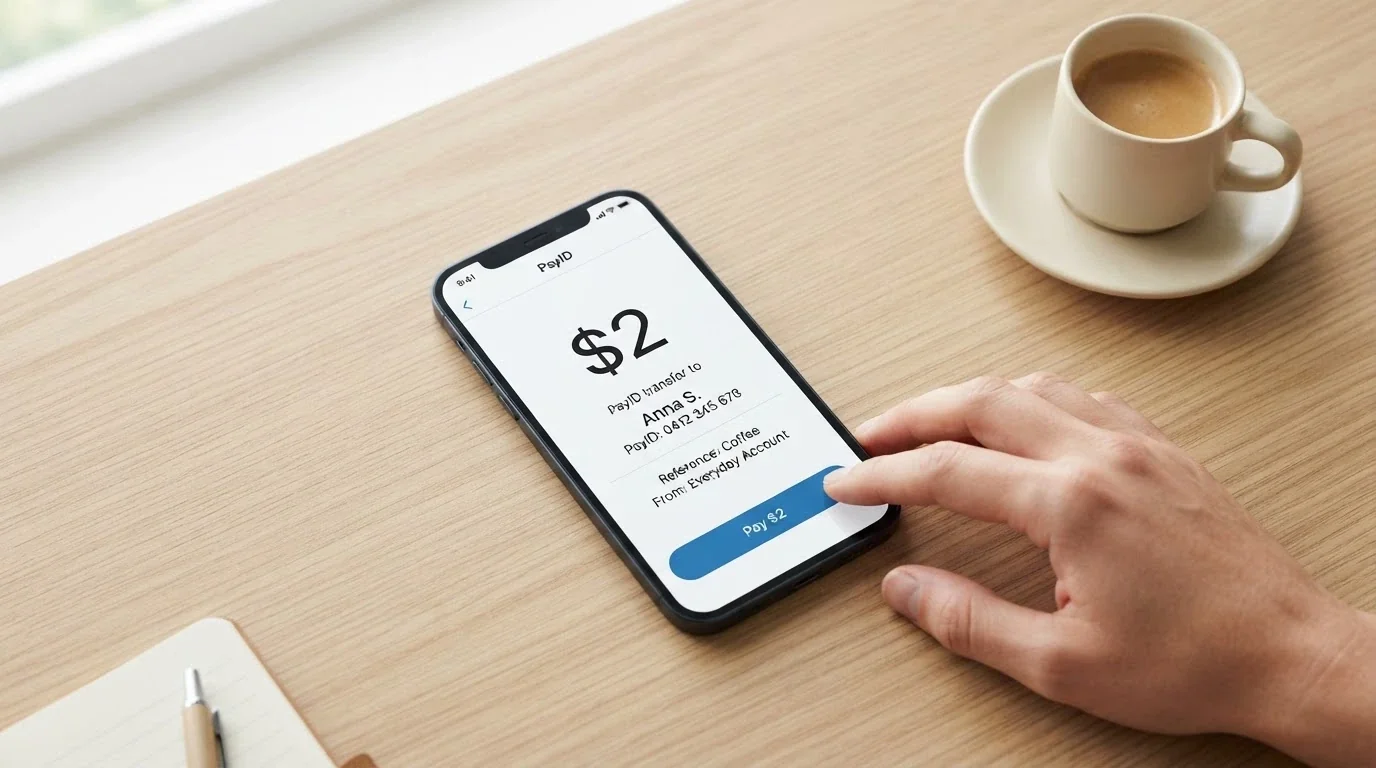
Not every operator in the featured set accepts PayID, and not every operator that accepts it does so at the A$2 floor. SkyCrown sometimes offers PayID for A$2 deposits. Fair Go Casino accepts PayID among its low-deposit rails. For other sites, PayID availability at the A$2 level is operator-by-operator and must be checked on the cashier page before sign-up. The rail works. The cashier setting is the variable.
The comparison that matters here is against the card rails. PayID clears at any amount the operator sets because the bank-to-bank transfer carries no fixed processing cost in the same way a card transaction does. A$2 is not a special case for PayID — it is just a small transfer. A$2 is a special case for cards because the card-rail economics stop tolerating micro-amounts somewhere above A$10.
Why Credit and Debit Cards Rarely Go Below A$10 — and Credit Cards Are Banned
Cards fail at the A$2 mark on two separate counts. On the processing side, interchange and gateway fees make sub-A$10 card transactions marginal for the operator. Most card processors decline below A$10–A$20 because the per-transaction fee represents a meaningful percentage of the deposit amount. The rail stops being economic.
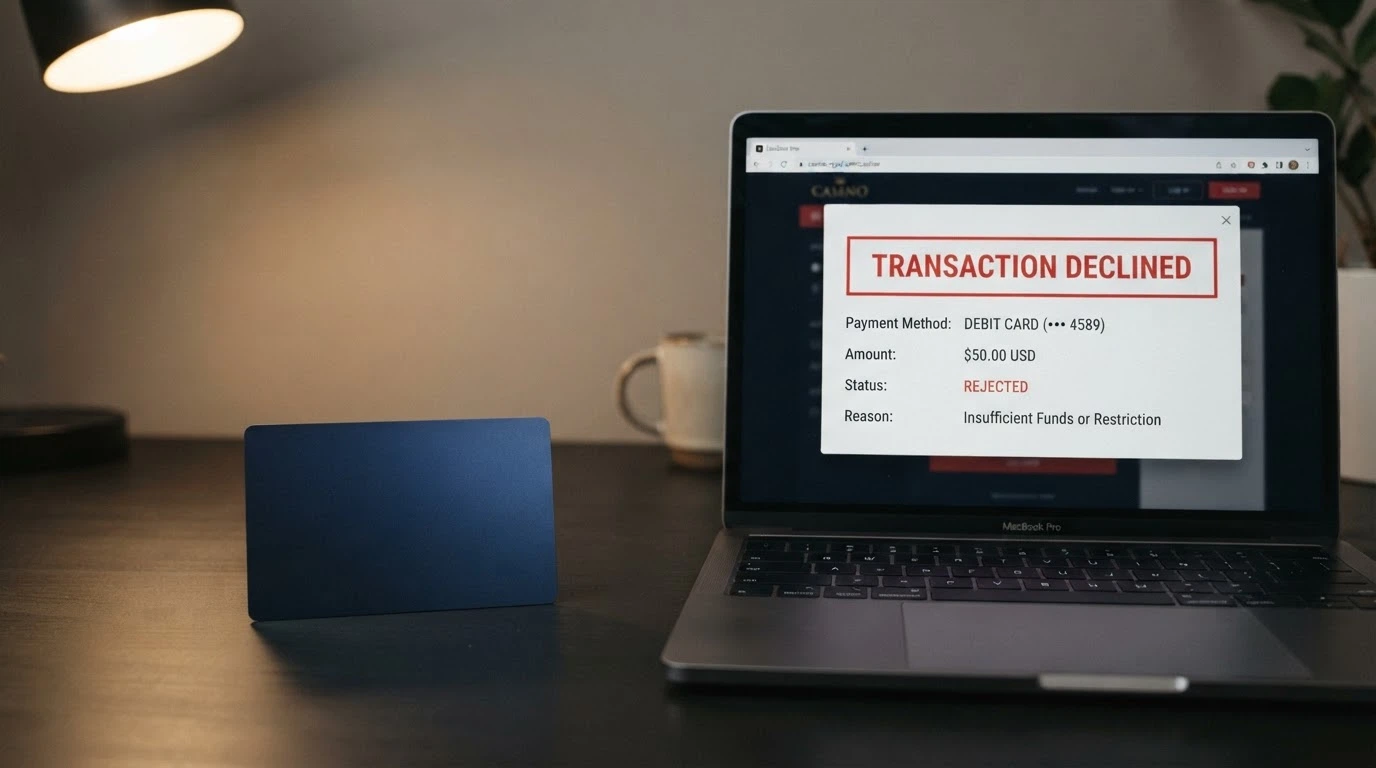
On the legal side, the picture is sharper. The Interactive Gambling Amendment (Credit and Other Measures) Act 2023 banned credit cards, credit-related products and digital currency as payment methods for online wagering. The ban commenced on 11 June 2024. Operators failing to enforce it face penalties up to A$247,500. The prohibition applies to licensed Australian wagering operators — but the practical effect for a player is that any gambling site asking for a credit card from an Australian player is, by definition, operating outside that licensed regime.
Debit cards sit in a different category. They are not banned. They are also not reliably functional at A$2. A player holding a Visa debit card and trying to deposit A$10 at most offshore casinos will get through. Trying to deposit A$2 will usually produce a decline. The processing economics are the reason, not Australian law.
Crypto Deposits: The Only Reliable Path Below A$10
Cryptocurrency is the one rail that consistently delivers genuine sub-A$10 deposits. Operators like Stake, BC.Game and Bitcasino.io accept Bitcoin, Ethereum, Litecoin and a roster of other tokens at minimums well below the A$10 fiat floor. Bitcoin minimums tend to sit around the A$20 equivalent at many operators, though Litecoin sometimes clears lower. The transfer clears in minutes. The processing cost is borne by the network, not by the operator’s gateway.
The legal status of crypto gambling deposits for Australians is a deliberate gap. The crypto ban of 11 June 2024 applies to licensed wagering. Offshore casinos are not licensed wagering. The ban does not reach them. An Australian depositing Bitcoin at a Curaçao-licensed casino is in a grey zone — not because the law is unclear, but because the law was not written to reach the offshore sites that sit outside it. From the player’s seat, the question is whether the operational benefits of crypto deposits (genuine A$2 minimums, fast clearance, network-level settlement) outweigh the structural risks of dealing with an unregulated offshore operator.
The volatility consideration is real. A Bitcoin deposit of A$2 worth today may be worth A$2.50 or A$1.50 by the time the player withdraws. The token’s price moves independently of the gameplay. For a micro-deposit player, this is a small consideration in dollar terms but a meaningful one in principle — the player is carrying an additional source of variance on top of the pokie’s RTP.
Payment Methods That Used to Work but Don’t Anymore
The Australian payment landscape keeps contracting. POLi — once the dominant Australian-specific deposit method for online gambling — was discontinued at the end of September 2023. The credit card and crypto ban took effect on 11 June 2024. From 1 January 2027, banks and payment providers gain express authority to block transactions to illegal gambling operators.
The trajectory is one-way. Deposit rails are contracting, not expanding. Every method that has disappeared has been replaced by something narrower. A reader evaluating an offshore casino’s cashier in 2026 should weight the likelihood that the method that works today will work in two years — and the answer for most fiat methods is that the regulators have an active interest in making it not work.
The implication for the $2-deposit market is direct. Crypto is the rail of last resort because it sits outside the banking system that the regulators can pressure. PayID survives because it sits inside the banking system but the banks have not yet been directed to block gambling transactions through it. From 1 January 2027, that direction changes.
The Offshore Operators Courting Australian Players at $2 a Deposit
Ten offshore casinos sit in the comparison below. Every one holds a Curaçao licence. None holds an Australian licence. None can — because no such licence exists. The table ranks the operators by confirmed $2-deposit support, game-library breadth, and the shape of the welcome offer. Columns research could not verify — wagering requirements, bonus validity windows, exact free-spin counts — appear as gaps rather than fabricated figures, because a number invented to fill a cell reads the same to a reader as a number that came from the operator’s own terms page.

| Casino | Licence | Welcome Offer | Free Spins |
|---|---|---|---|
| Rocket Play | Curaçao | Deposit match + free spins | Yes (count unverified) |
| SkyCrown | Curaçao | Generous welcome package | — |
| Royal Reels | Curaçao | — | — |
| Fair Go Casino | Curaçao | Welcome bonus + free spins | Yes (count unverified) |
| WinSpirit | Curaçao | — | — |
| Stake | Curaçao | Rakeback/reload model (no traditional match) | No |
| Rainbet | Curaçao | — | — |
| Scream Casino | Curaçao | — | — |
| Bizzo Casino | Curaçao | Multi-tier welcome package | — |
| Rocket Casino | Curaçao | — | — |
The em-dash entries are deliberate gaps. Research could not confirm the bonus shape, the free-spin count, or the wagering requirement for Royal Reels, WinSpirit, Rainbet, Scream Casino or Rocket Casino this review cycle. The reader should check the operator’s own cashier and terms page before depositing. A table that fills those cells with plausible-sounding numbers would be harder to use than one that shows the gaps.
Rocket Play: Deposit-Match Welcome Package Accessible from a A$2 Crypto Deposit
Rocket Play operates under a Curaçao licence and advertises an A$2 minimum deposit through cryptocurrency. The welcome offer combines a deposit match with a free-spins allocation, though the exact match percentage, wagering multiplier, and free-spin count were not confirmed in this review cycle — the operator’s terms page is the source of record. The game library spans Pragmatic Play, NetEnt, Microgaming and Play’n GO, which gives the pokie section enough breadth to cover both low-volatility and high-volatility titles.
The crypto rail is the confirmed A$2 path. Fiat payment methods typically require higher minimums. A player planning to deposit two dollars should plan to deposit it in crypto. The structure of the welcome offer — match plus spins — is standard for the segment, but the unverified terms make it impossible to compare the effective value of the package against competitors without checking the live terms page. Worth a look for the breadth of providers and the confirmed low-deposit crypto entry. The terms need a closer read before any commitment.
SkyCrown: 6,000+ Games and a Crypto Rail That Delivers Genuine A$2 Deposits
SkyCrown has the largest game library in the featured set — over 6,000 titles across multiple providers. The A$2 minimum deposit is confirmed via cryptocurrency and sometimes available via PayID. Live-dealer tables on the platform start at A$0.50 minimums, which means a $2 deposit funds a few hands of blackjack or roulette — not just pokie spins. Crypto payouts clear in under an hour in many cases.
The welcome package is advertised as generous, but the full bonus requires a higher first deposit than A$2. The A$2 minimum is a genuine entry point; the welcome offer is a separate question. A player depositing A$2 will get onto the platform and can play — the welcome package is something the player triggers with a larger deposit if they choose to stay. The combination of library size, live-dealer access from a tiny stake, and fast crypto payouts makes SkyCrown one of the more usable entries on the list for a player who wants to test a site with real money and a real budget.
Royal Reels: A Curaçao Licence and Little Else Confirmed for Australian Players
Royal Reels holds a Curaçao registration. Beyond the licence, the review sweep did not return verified deposit minimums, bonus terms, game-provider lists, or free-spin counts this cycle. A reader approaching this operator should expect to verify the cashier minimums directly on the site before depositing and to read the bonus terms page before claiming any welcome offer.
The absence of confirmed data is not a verdict on the operator’s quality — it is a verdict on what this review could establish in the time available. Royal Reels may well support A$2 deposits via crypto with a working welcome package. The reader cannot rely on this page to confirm that. The page can confirm that the licence is Curaçao, that the operator is offshore, and that the verification step sits with the player.
Fair Go Casino: RTG-Focused Operator Accepting Bitcoin, Neosurf and PayID for Low Deposits
Fair Go Casino specialises in RealTime Gaming software — pokies, keno and scratch cards. The payment mix is one of the broader ones in the featured set: Bitcoin, Neosurf and PayID are all accepted for low deposits. The welcome package combines a deposit bonus with free spins, though the exact match and spin count are unconfirmed this cycle.
The RTG focus is a different product profile from the Pragmatic Play / NetEnt / Play’n GO spread at other sites. The game catalogue is narrower — RTG does not run Gates of Olympus or Sweet Bonanza — but it is a stable software platform with a long Australian-facing track record. For a player who knows RTG pokies and prefers them, Fair Go is one of the more credible low-deposit options. The PayID acceptance is the operational advantage here: it gives an Australian fiat path at low minimums that most offshore competitors do not.
WinSpirit: Another Curaçao-Registered Casino With Unverified $2 Deposit Support
WinSpirit appears in $2 deposit rankings from affiliate sources. The Curaçao licence is confirmed. The deposit minimum, bonus structure, game-provider list, and free-spin arrangement are not. The operator sweep did not return specifics for this site in this review cycle.
The practical advice is the same as for any operator with incomplete review data: check the cashier page for the current minimum deposit, read the bonus terms before claiming a welcome offer, and verify the payment methods actually available to Australian players rather than the payment methods advertised on the homepage. WinSpirit is not disqualified by the absence of confirmed terms — it is simply not confirmed.
Stake: Crypto-Native Casino With Sub-A$10 Deposits and No Traditional Welcome Bonus
Stake is the structural outlier in the featured set. The platform is crypto-only — no fiat deposits, no credit cards, no PayID. The minimum deposit sits well below A$10 in crypto terms. The welcome offer is not a traditional deposit match; Stake runs a rakeback and reload model, where a percentage of house edge returns to the player over time rather than as a one-time bonus on the first deposit.
The game library includes in-house originals (Stake’s proprietary crash, dice and plinko titles) plus Pragmatic Play, Hacksaw and Evolution. The live-dealer suite is substantial. Free spins are not part of the standard offer. For a player who wants the genuine low-deposit crypto path, the platform delivers. For a player who wants a deposit-match welcome package, the model is wrong — Stake is not competing on that axis.
The legal status of Stake for Australian players is the standard offshore status. The IGA does not reach the platform. The Australian player has no BetStop coverage, no Australian complaints body recourse, and no Australian consumer protection framework. Stake is one of the better-known crypto casinos globally, which is a different kind of reassurance than a regulatory licence — but it is the only kind of reassurance available in this segment.
Rainbet: Curaçao-Licensed but With No Verified Low-Deposit Terms
Rainbet holds a Curaçao registration. The operator sweep did not return verified deposit minimums, welcome bonus terms, game-provider lists, or free-spin counts for this cycle. The reader should verify the current cashier minimums and bonus structure directly on the site before funding an account.
The pattern across Rainbet, Royal Reels, WinSpirit, Scream Casino and Rocket Casino is the same: the Curaçao licence is confirmed, and the operational terms are not. These five are not ranked lower because they are worse operators — they are ranked at the bottom of the comparison because the page cannot tell the reader what they offer beyond the licence. A player willing to do their own verification at the cashier may find any of these competitive. A player relying on this page alone does not have enough information to choose between them.
Scream Casino: Offshore Operator With Terms Still Unconfirmed This Review
Scream Casino is registered in Curaçao. The bonus structure, minimum deposit amount, game-provider catalogue and free-spin arrangement were not confirmed in the operator sweep this cycle. The reader should check the cashier page for the current minimum deposit figure and read the bonus terms before claiming any welcome offer.
The page can confirm the licence jurisdiction and the offshore status. The page cannot confirm what the operator actually delivers at the A$2 deposit level. The verification step sits with the player.
Bizzo Casino: Multi-Tier Welcome Package from a Widely Listed Curaçao Operator
Bizzo runs a multi-deposit welcome package — bonus funds and free spins spread across the first several deposits rather than concentrated on the first. The game library covers Pragmatic Play, NetEnt and Play’n GO, which is the standard mainstream spread. The Curaçao licence is confirmed.
The minimum deposit amount and the wagering requirements were not confirmed this cycle. The welcome structure is attested by the operator’s own marketing, but the specific dollar threshold to trigger each tier is unverified. A player attracted by the multi-tier shape should read the terms page to see what the first deposit needs to be to claim the first bonus and what the wagering multiplier is on each tier. The multi-tier design is a retention mechanism — it rewards continued deposits rather than a single large first deposit — which is worth knowing before signing up.
Rocket Casino: Curaçao Registration Confirmed, Deposit Terms Unverified
Rocket Casino holds a Curaçao licence. The deposit minimum, bonus structure, game-provider catalogue and free-spin arrangement are not confirmed this review cycle. The reader should verify the cashier minimums and bonus terms on the operator’s own site before depositing.
The position at the bottom of the comparison table reflects the data, not the operator. There is no information on this page beyond the licence that distinguishes Rocket Casino from the other unconfirmed entries. A player who arrives at Rocket Casino via another ranking should use the same verification checklist as for any other incompletely-reviewed site.
What a $2 Deposit Actually Buys You at the Pokies
A two-dollar deposit funds real-money play. The question is how far it goes. At an A$0.10 minimum bet — the floor on Starburst, Book of Dead and most other mainstream pokies — A$2 buys twenty spins. The return from those twenty spins depends on the pokie’s RTP and volatility, and on which RTP version of the pokie the operator is running.

Six pokies dominate the Australian low-stakes market. The table below carries the RTP, volatility and maximum win for each — though only where research confirms a specific figure for a specific title. Titles where research carries no RTP or volatility data stay out of the relevant columns, because a figure invented to fill a cell would be a guess dressed as a fact.
| Slot Title | Provider | RTP | Volatility | Max Win |
|---|---|---|---|---|
| Starburst | NetEnt | 96.09% | Low | 500x |
| Big Bass Bonanza | Pragmatic Play | 96.71% | Medium-High | 2,100x |
| Wolf Gold | Pragmatic Play | 96.01% | Medium | 2,500x |
| Gates of Olympus | Pragmatic Play | 96.50% | High | 5,000x |
| Sweet Bonanza | Pragmatic Play | 96.51% | High | 21,100x |
| Book of Dead | Play’n GO | 96.21% | High | 5,000x |
The numbers in the table are real — they are the published RTPs for the top configuration of each game. What they do not show is the configuration risk: operators can run different RTP versions of the same title, and the player cannot tell which version is loaded from the lobby. Big Bass Bonanza has three published RTP versions at 96.71%, 95.67% and 94.78%. Wolf Gold swings wider — 96.50%, 94.50%, 92.50%, a four-percentage-point gap between the top and bottom configurations. A player who picks a pokie because its RTP is listed at 96.71% may be playing a version that returns 94.78%. The difference compounds across twenty spins.
Pokies You Can Spin at $2 a Pop — and the RTP Rates Behind Each Title
The six titles in the table above all accept minimum bets at or below A$0.10. That is the practical threshold for a $2 deposit — twenty spins is the upper bound of what two dollars buys on the lowest stake setting. The volatility column is what determines how those twenty spins feel. Starburst at low volatility stretches the balance out — small frequent wins, rare big swings. Gates of Olympus and Sweet Bonanza at high volatility burn through the balance fast — long dry patches, rare but large payouts.
The RTP figures look close together — between 96.01% and 96.71% on the top configurations. The gap between them is small in percentage terms and meaningful in dollar terms. A pokie running at 96.71% returns A$1.94 to the player over twenty A$0.10 spins in expectation. The same twenty spins at 92.50% — the bottom Wolf Gold configuration — returns A$1.85. The eleven-cent gap over twenty spins does not change the player’s life. The cumulative gap across a session of a hundred spins is closer to A$0.55 — still small, still a meaningful percentage of a two-dollar bankroll.
The harder fact is the configuration risk. A player cannot verify which RTP version of Big Bass Bonanza is loaded. The operator chooses. The player sees the title. The maths underneath the reels is not visible.
Table Games and Live Dealer: Yes, a $2 Deposit Goes Further Than You Think
Live-dealer tables at SkyCrown have minimums from A$0.50. A two-dollar deposit funds four hands of blackjack or four spins of low-stake roulette. The session is short — but it is real table play, with a real dealer, against a real wheel or shoe. The RTP on blackjack sits near 99.5% with basic strategy. On roulette, it sits in the mid-90s depending on the variant. Either way, table-game RTP exceeds pokie RTP.
The implication for a $2 deposit is direct. Four hands of blackjack at A$0.50 returns approximately A$1.98 in expectation — the balance barely moves. Twenty spins of Starburst at A$0.10 returns approximately A$1.94. The table-game session is shorter but mathematically gentler on the bankroll. A player who wants to stretch a $2 deposit as far as possible is better served by the live-dealer floor than by the pokie lobby — assuming the operator they have chosen offers live-dealer tables at A$0.50 minimums.
The catch is that not every operator in the featured set offers live-dealer tables at that floor. SkyCrown does. Most of the other nine do not, or do not confirm it through the review sweep. A player choosing between operators partly on this basis should check the live-casino lobby before depositing.
RTP Reality Check: The Pokie Return Rates That Matter at Low Stakes
A low deposit makes RTP the decisive factor. A two-dollar bankroll cannot absorb a long losing streak. A four-percentage-point RTP gap — between the top and bottom Wolf Gold configurations — is the difference between a session that loses A$0.74 over twenty spins and a session that loses A$1.00 over the same twenty spins. The dollar difference is small. The percentage difference in bankroll retention is twenty-six percent.
The volatility lever matters more than the headline RTP. A high-volatility pokie at 96.50% RTP will still drain a $2 balance faster than a low-volatility pokie at 96.09% RTP, because the high-volatility game concentrates its returns into rare large payouts. A $2 player is not waiting for the 21,100x Sweet Bonanza maximum. They are waiting for the next spin to land a small win — and on a high-volatility game, the gap between spins that land and spins that do not is wider.
The operator’s choice of RTP configuration is the lever the player cannot see. The lobby says Big Bass Bonanza. The maths under the reels might be 96.71%, 95.67% or 94.78%. The player picks a site. The site picks the version.
$2 Deposit Casino Play on Mobile: Convenient, but the Same Offshore Rules Apply
The mobile experience at offshore casinos is technically clean. Browser-based delivery means the games load in the phone’s browser without requiring an app download. The deposit flow runs through the same PayID, crypto or card rails as the desktop version. The pokie RTP is identical regardless of the device. The legal status is identical regardless of the device. The offshore rules do not change on a smaller screen.

What does change is the deposit mechanics. PayID via a mobile banking app is arguably the smoothest $2 deposit path available — the player opens their bank app, enters the casino’s PayID, confirms the transfer, and the balance appears within seconds. Crypto deposits through a mobile wallet work the same way they do on desktop, with the added friction of QR-code scanning or wallet-address copying on a smaller screen. Card deposits on mobile carry the same processing-fee decline risk as desktop.
Mobile Browsers, Not Apps: How $2 Deposit Casinos Actually Reach Your Phone
Offshore casinos do not appear in the Australian App Store or Google Play. Apple’s and Google’s policies restrict real-money gambling apps in the Australian market to licensed operators — and no Australian operator holds an online casino licence. The delivery channel is the mobile browser.
The experience is a mobile-responsive website. The lobby loads. The games load — most pokies and table games are built in HTML5 and run directly in the browser without plugins. The cashier is reachable through the same flow as desktop. There is no native app to update, no app-store review process standing between the operator and the player, and no Australian platform gatekeeper filtering what reaches the user.
The trade-off is the same as it is on desktop: speed, accessibility and friction-free deposits come with the absence of any Australian platform-level protection. An app-store-distributed casino would have been reviewed by Apple or Google before the player downloaded it. A browser-based casino has not. The convenience is real. The verification step moves from the platform to the player.
Mobile Pokies at Minimum Deposit: What Changes on a Small Screen
The pokies are the same. Big Bass Bonanza at 96.71% returns the same expected value per A$0.10 spin whether the player is on a six-inch phone screen or a twenty-seven-inch desktop monitor. The volatility profile is identical. The RTP configuration risk is identical. The device does not change the maths.
What changes on mobile is the session mechanics. Smaller screen means smaller pokie reel display — the game is still legible, but the visual real estate for the spin button, balance display and bet adjustment is tighter. Mobile sessions tend to be shorter — a player on a phone is more likely to play ten spins and put the device down than a player at a desktop is to play a hundred. The deposit flow through PayID is faster on mobile because the bank app is already on the same device. Responsible-gambling tools — session timers, deposit limits, reality checks — are usually present at the offshore casino level, but they are operator-side controls, not Australian regulatory requirements.
The responsible-gambling infrastructure that does apply to Australian players — BetStop, the National Consumer Protection Framework, activity statements — is not present at any offshore casino, on any device. Mobile does not change that.
New $2 Deposit Casinos in 2026: Fresh Branding, Identical Offshore Model
A new offshore casino launching in 2026 enters the Australian market with a welcome bonus, a game library and a Curaçao licence. The branding is fresh. The regulatory framework is not. No new entrant is an Australian-licensed online casino — because no such licence exists. The market mechanics for a new casino are the same as for an established one: offshore licence, offshore jurisdiction, offshore complaint pathway.
New casinos compete on welcome-package aggressiveness and game-library breadth. The offers tend to be larger than the established operators’ — higher match percentages, more free spins, lower wagering multipliers. The offers also tend to carry shorter validity windows and tighter game restrictions. The trade-off is the standard one in this segment: bigger headline bonus, smaller practical value.
What a New Casino Launch Means for the Australian Low-Deposit Player
A new casino launching in the Australian offshore market offers aggressive welcome packages. The licence is Curaçao. The payment rails are crypto, sometimes PayID, sometimes Neosurf. The $2 deposit, if advertised, is delivered through the same crypto rail as at the established operators. The game library is usually drawn from the same Pragmatic Play / NetEnt / Play’n GO pool, sometimes with the addition of smaller studios that have signed recent supply deals.
The evaluation checklist for a new casino is identical to the checklist for an established one. Check the licence — Curaçao is the dominant pattern. Check the cashier minimums — does the $2 deposit actually deliver through the payment methods available to Australian players. Check the bonus terms — wagering multiplier, validity window, game contribution rates. Check the withdrawal minimum — is it the same A$25–A$50 floor as the rest of the segment, or higher. The newness of the brand is not a positive signal — it is a negative one, because the operator has no track record of payouts, no history of customer disputes, and no reputation in the market.
A player who wants the largest welcome package in the segment is well-served by considering new entrants — after doing the same verification work the established operators require. A player who wants the lowest-risk experience is better served by an operator with a multi-year payout history.
Is It Legal to Play at a $2 Deposit Casino in Australia? The Full Legal Picture
The Interactive Gambling Act 2001 prohibits the provision of online casino games, online pokies and in-play sports betting to anyone in Australia. The prohibition targets the provider, not the player. No Australian has been prosecuted for playing at an offshore casino under the IGA. The Act makes the activity illegal at the supply end and leaves the demand end outside the criminal law.
What the player gives up by playing offshore is the Australian regulatory floor. No BetStop coverage. No National Consumer Protection Framework. No Australian complaints body. No Australian consumer law recourse. The offshore casino can block a withdrawal, freeze an account, or disappear — and the Australian player has no domestic remedy. ACMA can block the website from Australian ISPs, which has happened to 1,564 sites since November 2019. The block prevents new Australian players from reaching the site. It does not return funds to players who already have a balance on it.
The Interactive Gambling Act: Why No Australian Casino Licence Exists
The IGA is structured as a prohibition, not a licensing regime. There is no application pathway for an online casino licence because the Act does not provide for one. The federal prohibition covers online casino games, online pokies and in-play sports betting. State and territory gambling legislation does not fill the gap — no Australian state or territory issues online casino licences either.
The 2017 amendment strengthened the Act by giving ACMA enforcement and site-blocking powers. The enforcement record since then is significant: 1,564 illegal gambling and affiliate websites blocked since November 2019, more than 225 illegal services withdrawn from the Australian market since 2017. The enforcement is real and ongoing. The supply of offshore casinos to Australian players is illegal. The demand for offshore casinos by Australian players is not.
What is legal in Australia: wagering on races and sport placed before the event begins, lotteries, and keno — all through state or territory-licensed operators. The Northern Territory Racing and Wagering Commission, administered through Licensing NT, is the de facto national licensor for online wagering. Sportsbet, bet365, Ladbrokes and about fifty other brands hold NT licences. None of them offers online casino games or pokies — because no licence for those products exists to be held.
What the Player Risks: No BetStop, No Complaints Body, No Consumer Protection
Playing at an offshore casino means leaving every Australian player protection at the door. BetStop — the National Self-Exclusion Register, with 67,480 registrations and 41,290 active exclusions as at 31 July 2026 — binds Australian-licensed wagering services only. An offshore casino is not a licensed wagering service. BetStop does not reach it. A player who has registered with BetStop and then opens an account at an offshore casino has not extended their self-exclusion to that casino.
The National Consumer Protection Framework for Online Wagering includes ten measures: prohibition of lines of credit, identity and age verification, restrictions on inducements, account closure, voluntary opt-out pre-commitment, activity statements, consistent gambling messaging, staff training, the National Self-Exclusion Register and a complaints body. Every one of these ten measures applies to licensed wagering only. An offshore casino is not bound by any of them.
The recourse gap is the structural feature. If an offshore casino declines a withdrawal, an Australian player has no Australian body to complain to. The Curaçao eGaming regulator is the complaint pathway — assuming the operator holds a valid Curaçao licence, which not every offshore casino does. A complaint to a Curaçao regulator takes months, requires documentation in English and Dutch, and produces no enforceable outcome for the player. The practical recourse is the payment rail. If the player deposited via credit card (impossible since the ban for licensed operators but possible at some offshore sites), a chargeback is the fastest route. If the player deposited via crypto, there is no recourse at all — crypto transactions are irreversible by design.
The site-blocking risk compounds the picture. ACMA can order Australian ISPs to block an offshore casino’s domain at any time. The block prevents new players from reaching the site. It does not return funds to existing players. A player with a balance on a site that gets blocked has lost access to that balance through no action of their own.
The Gambling Reform Bill and What Changes for Australian Players
The Interactive Gambling Amendment (Gambling Reform) Bill 2026 passed Parliament on 19 August 2026. Its measures commence on 1 January 2027. The reforms reshape the advertising landscape, add a bank-blocking power, and create a new opt-out register for wagering advertising.
The advertising caps apply to licensed wagering operators. From 1 January 2027, wagering advertising on television is capped at three ads per hour between 6:00 am and 8:30 pm, with a live-sport blackout from fifteen minutes before to five minutes after a live event. Radio ads are barred during school drop-off and pick-up times. Broadcasting of sporting odds is banned outright. Online wagering ads are restricted to logged-in, age-verified users with an opt-out option. Wagering advertising inside sports venues and on player or official uniforms is banned. Athletes, celebrities and influencers are barred from promoting wagering.
The bank-blocking provision is the structural change for offshore casinos. From 1 January 2027, banks and payment providers gain express authority to block transactions to illegal gambling operators. The authority was announced on 2 April 2026 by the Department of Social Services. The practical effect for a player at an offshore casino is that the PayID, BPAY and direct-deposit rails may be interrupted at the bank’s discretion — even though those rails work today.
The inducement marketing prohibitions add a further layer. Direct marketing of inducements is prohibited for fourteen days after a customer signs up, for three months after deregistering from BetStop, and indefinitely for customers identified as at risk. AdStop — the Wagering Advertising Opt-out Register, administered by ACMA — lets individual Australians opt out of wagering advertising across digital platforms.
The reforms do not legalise online casino. They do not create an Australian online casino licence. They tighten the regulatory framework around the wagering that is already legal and add new tools for enforcement against the gambling that is not. For a player at an offshore casino in 2026, the reforms mean that the payment rails may narrow further from 1 January 2027, and that the offshore casino itself is operating under increasing Australian regulatory pressure.
Staying in Control: Responsible Gambling Tools and Where $2 Deposits Fit
A two-dollar deposit is, by design, a deposit limit. The player is not betting more than they can afford to lose by definition. The structural problem is not the deposit — it is the cumulative effect of deposits over time, the escalation from A$2 to A$20 to A$200, and the absence of any Australian regulatory framework constraining the offshore operator’s behaviour.
The Australian responsible-gambling infrastructure is real and well-resourced. The National Gambling Helpline (1800 858 858) is free, confidential and staffed 24 hours a day, seven days a week. Gambling Help Online (gamblinghelponline.org.au) provides online chat and counselling. BetStop has 67,480 registrations with 41,290 active exclusions as at 31 July 2026. The harm prevalence is the context: approximately 2.1% of Australian adults — roughly 430,000 people — experience problem gambling, with high-risk gambling estimated at 1.8% in 2022. The tools exist because the harms are real.
The tools apply to licensed wagering. They do not reach the offshore casinos. That is the gap.
The Tools That Protect Australian Players — and Why Offshore Casinos Sidestep Them
The National Consumer Protection Framework for Online Wagering includes ten measures. Every one applies to licensed operators only. The prohibition on lines of credit, the identity and age verification requirements, the restrictions on inducements, the account-closure mechanisms, the voluntary opt-out pre-commitment, the activity statements, the consistent gambling messaging, the staff training, the National Self-Exclusion Register — all of these are Australian-licensed-wagering constructs. An offshore casino is not bound by any of them.
BetStop is the most concrete gap. The National Self-Exclusion Register lets a player exclude themselves from every Australian-licensed wagering service with a single registration. The exclusion periods are minimum three months, maximum lifetime. 78% of BetStop registrants are under 40. 38% have chosen lifetime exclusion. The register works for licensed wagering because every licensed operator is required to check it before opening an account. The register does not work for offshore casinos because offshore casinos are not required to check it and most do not.
A player who has registered with BetStop and is tempted to play at an offshore casino has not extended their self-exclusion to that casino. The casino will accept the account if the offshore operator’s own KYC processes pass. The player is on their own.
Where to Get Help: Numbers, Registers and Resources That Work from Australia
The National Gambling Helpline is 1800 858 858. It is free, confidential and available 24 hours a day. The line routes callers to the nearest state or territory counselling service. Gambling Help Online (gamblinghelponline.org.au) provides online chat, email counselling and self-help resources. BetStop registration is available online through the Australian Communications and Media Authority.
These resources work regardless of where the gambling happens. A player at an offshore casino can call the helpline, use the online chat, or register with BetStop. The BetStop registration will not block the offshore casino — but the counselling and the self-help resources treat the gambling, not the casino. The harm-prevalence context is worth keeping in mind: roughly 430,000 Australian adults experience problem gambling, and the help infrastructure exists because that number is real.
How We Evaluated Every $2 Deposit Casino on This Page
The ranking was built from three primary sources. The ACMA register and the Interactive Gambling Act 2001 establish the legal framework — which is that no Australian online casino licence exists. The operator’s own cashier pages and published bonus terms establish the operational facts — the deposit minimums, the bonus structures, the payment methods. Affiliate comparison sources establish the market pattern — which operators appear consistently in $2-deposit rankings, what their typical offers look like, what their licence jurisdictions are.
The criteria that ordered the ranking were: confirmed $2 deposit rail (crypto or PayID), Curaçao licence status, game-library breadth, and the shape of the welcome offer. The criteria are descriptive — what each operator delivers — not prescriptive. No operator is recommended over another for a reader to play at. The ranking is a summary of what the public-facing information shows, ordered by how much of that information the review could confirm.
The operator sweep did not return confirmed bonus terms, wagering multipliers, bonus validity windows, or exact free-spin counts for five of the ten operators in the featured set (Royal Reels, WinSpirit, Rainbet, Scream Casino and Rocket Casino). The gaps are shown as em-dashes in the comparison table, not as invented figures. A reader who needs those specific terms should check the operator’s own published terms page — which is the authoritative source in any case.
A reader should always verify the cashier minimums and the bonus terms on the operator’s own site before depositing. This page is a starting point, not a substitute for that check.
Your $2, Your Call: What to Weigh Before You Deposit
The case for depositing two dollars at an offshore casino is the case for any small-stakes real-money play: it costs two dollars, it funds a session on a real pokie or at a real table, and it can return more than two dollars. The crypto and PayID rails that deliver the A$2 minimum work at the operational level. The games at the operators in the featured set — Pragmatic Play, NetEnt, Play’n GO, RTG, the live-dealer suites — are legitimate gambling products built by mainstream providers.
The case against is structural. No Australian licence exists for any of these sites, because no such licence can exist. No BetStop coverage. No Australian complaints body. No consumer protection framework. The withdrawal floor at A$25–A$50+ sits twelve to fifty times above the deposit floor — a player who wins on a $2 deposit has not necessarily won anything they can take home. ACMA has blocked 1,564 illegal gambling sites since November 2019, and any site on this list can be the next one — with a balance on it. From 1 January 2027, banks gain express authority to block transactions to illegal gambling operators, narrowing the payment rails further.
The single most important step before depositing is the cashier check. The payment rail that delivers the $2 minimum, the withdrawal floor that gates the payout, the bonus terms that govern the welcome offer — these are operator-specific facts that change over time. The page above carries what research could confirm. The cashier page on the operator’s own site carries what the player needs to know before funding an account.
The decision sits with the player. The information on this page is the starting point.
Frequently Asked Questions
What bonuses can I get with a $2 deposit at Australian online pokies?
Bonuses at the A$2 tier typically range from a small free-spins allocation — twenty spins is common — to matched deposits at modest percentages. Wagering requirements in this segment usually sit between 30x and 45x the bonus amount. The welcome packages at operators like SkyCrown and Bizzo require a higher first deposit than A$2 to claim the full bonus, so the A$2 deposit itself often unlocks the platform but not the headline offer. Check the bonus terms on the operator’s site for the specific match percentage, wagering multiplier and validity window before claiming.
Is it safe to play at offshore casinos that accept $2 deposits from Australia?
Safety in this context means two different things. Operational safety — that the games are legitimate, the payouts are honoured, the platform is stable — is broadly comparable to the licensed-wagering market at the better-known Curaçao operators. Regulatory safety — that the player has recourse in the event of a dispute — is absent. No BetStop coverage, no Australian complaints body, no consumer protection framework applies. ACMA has blocked 1,564 illegal gambling sites since November 2019. The site itself can be blocked at any time, with a balance on it.
Can I win real money with a $2 deposit at online pokies?
Yes. Real-money play at offshore casinos pays out real money, subject to the site’s withdrawal minimums. The withdrawal floor at most operators in this segment sits at A$25–A$50, sometimes A$50–A$100. A A$2 deposit that wins A$5 has not produced a withdrawable balance — the player must keep playing until the balance clears the floor. A A$2 deposit that wins A$100 has produced a withdrawable balance at most operators. The return is governed by the pokie’s RTP and volatility, and by which RTP version of the pokie the operator is running.
What is the minimum withdrawal amount at $2 deposit casinos in Australia?
Most low-deposit casinos enforce a A$25–A$50 withdrawal floor, with some operators stretching to A$50–A$100. The withdrawal minimum is set to cover the operator’s fixed processing costs — payment-processor fees, compliance checks, anti-fraud review — which make sub-A$25 payouts uneconomic. A player with a A$2 deposit that wins A$10 has not crossed the threshold. The ratio of withdrawal minimum to deposit minimum is the structural feature of the segment, and it is worth checking on the cashier page before depositing.
What happens if an offshore casino blocks my withdrawal — do I have any recourse in Australia?
No Australian complaints body has jurisdiction over an offshore casino. The Curaçao eGaming regulator is the formal complaint pathway, but it requires documentation in English and Dutch, takes months to resolve, and produces no enforceable outcome for the player. The practical recourse is the payment rail: a credit-card chargeback is the fastest route where possible, but credit cards are banned for licensed wagering in Australia since 11 June 2024 and most offshore sites that accept credit cards are operating outside Australian rules. Crypto deposits carry no chargeback mechanism — the transaction is irreversible by design.
Can I use a credit card to deposit $2 at an Australian online casino?
Credit cards have been banned as payment for online wagering in Australia since 11 June 2024 under the Interactive Gambling Amendment (Credit and Other Measures) Act 2023. The ban applies to licensed wagering operators. An offshore casino asking an Australian player for a credit card deposit is operating outside the Australian rules — the payment method is itself a tell. Debit cards are not banned, but they typically reject below A$10–A$20 due to processing fees. The practical answer for a A$2 deposit is crypto or PayID, not a card.