Online Keno Casinos in Australia in 2026: The Picture Behind the Marketing
 Available in US
Online casino is prohibited in Australia. Keno the product is permitted. Those two facts, and the gap between them, are why this page exists.

Current as of 3 September 2026 | Data cross-checked against the Interactive Gambling Act 2001 and ACMA enforcement records
Table of Contents
- Why Online Keno in Australia Isn’t What It Looks Like in 2026
- The Offshore Keno Casinos Australians Are Using in 2026
- Not All Keno Games Are the Same — Here’s What Separates Them
- Free Keno — Try Everything Before You Risk a Dollar
- Crypto Keno Casinos and the Anonymity Australian Players Are Chasing
- The Law — What Australia Actually Allows and What It Doesn’t
- Staying in Control — the Help an Australian Keno Player Actually Has
- How We Chose and Ranked Every Keno Casino on This Page
- What the Australian Keno Player Should Actually Do With This Information
- Frequently Asked Questions
Why Online Keno in Australia Isn’t What It Looks Like in 2026
The screen promises an experience the law says no Australian can legally be sold. An offshore operator will happily take a deposit, hand over a keno card, and process a withdrawal — for as long as it can stay ahead of the regulator. For the player, the risk is not the dollar amount wagered. The risk is the absence of any Australian backstop if the operator decides not to pay.
This page is not a list of “the best licensed online casinos in Australia”. A page with that headline describes something that does not exist, and writing one produces a factual lie on every screen. The ten operators below reach Australian players in significant volume. Every one of them is offshore. None holds an Australian casino licence, because no such licence is available. The page works through what they offer, how they rank against one another on Australian market presence, and the specific risks the player carries the moment a deposit clears.
The keno itself is unremarkable as a product. It is a permitted and licensable game in Australia — sold in pubs and clubs, run by state lotteries, and embedded in licensed wagering operators’ products where the law allows. The reason online keno lands in a prohibition grey zone is that the operator offering it is barred from offering any online casino game to an Australian at all. Keno is the game. Offshore is the route. The breach is the provider, not the player.
That distinction matters, and it cuts both ways. The individual player is not prosecuted under the Interactive Gambling Act — the Act targets the provider of the prohibited service. Not being prosecuted is not the same as being safe. No ACMA complaints body can compel an offshore operator to honour a withdrawal. No Australian Consumer Law applies. No deposit limit, no BetStop registration, no activity statement reaches across the border to bind the operator’s behaviour. The deposit is the moment the player steps outside Australian consumer protection entirely.
What Keno Is and How the Online Version Works
Keno is a lottery-style numbers game. The player picks a set of numbers — typically between one and ten, sometimes up to twenty — from a pool of eighty. The house draws twenty numbers. Each match pays according to a paytable that scales with how many numbers the player picked and how many they caught. The fewer spots the player picks, the more frequently they hit something. The more spots, the rarer the catch but the larger the top-end payout.
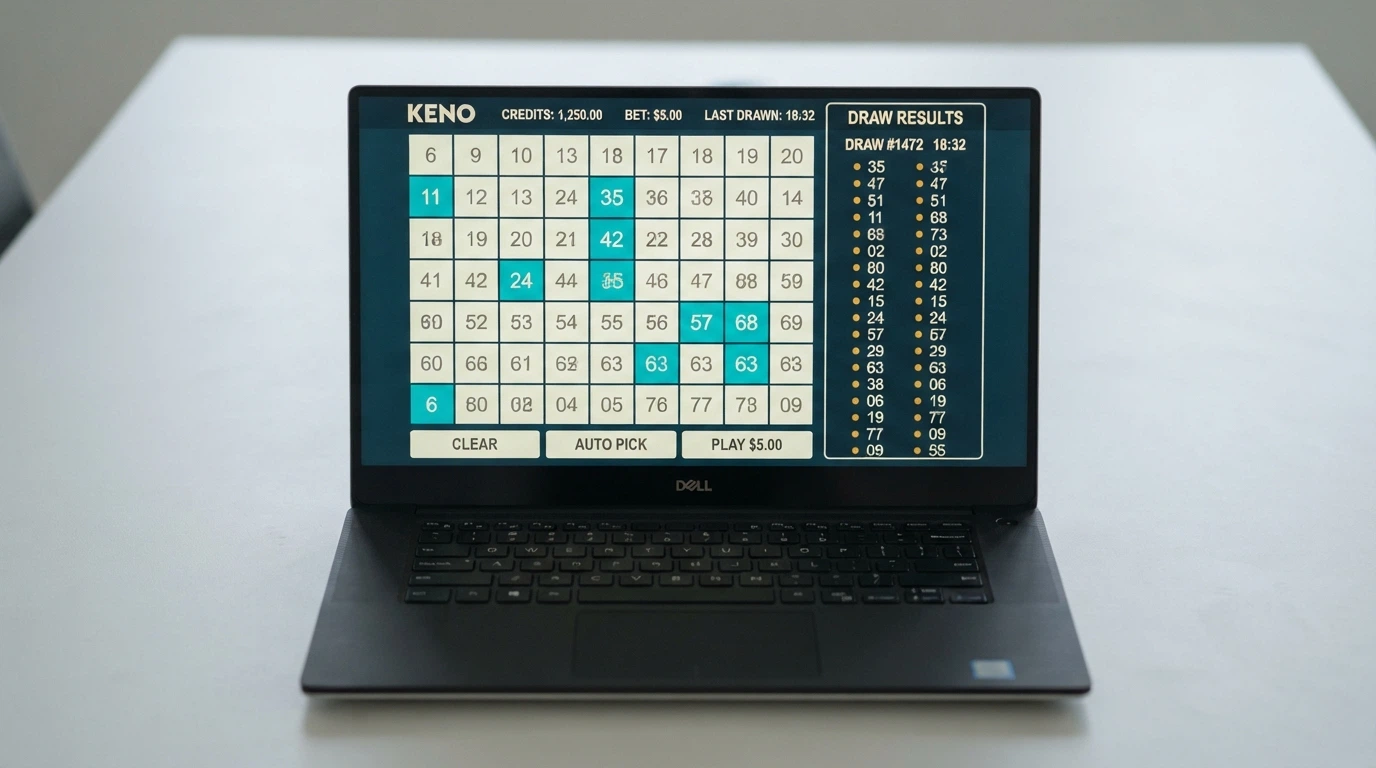
Online keno strips out the pub/club version’s physical card, the marker pen, the caller’s patter, and the slow tick of the draw. An RNG resolves the outcome in a fraction of a second. The card sits on a phone or laptop screen. The player taps numbers, sets a stake, and presses draw. The result lands in the same breath. There is no waiting for a draw, no sharing a screen with other patrons, no ambient noise. The pace is the only feature that changes substantially, and the pace is what changes the cost.
The paytable drives everything else. Most online keno variants publish a paytable on screen — usually accessible through an info or rules button — that shows what each match count pays at each spot count. The shape of that paytable is what sets the game’s return to player and its house edge. A paytable that pays a great deal for catching ten out of ten and almost nothing for everything else returns less to the typical player than a paytable that pays more modestly across the spread. The numbers themselves are irrelevant to the outcome — every draw is independent — but the structure of the prize table is the only thing the player can actually read.
The distinction between keno the product and online casino keno matters here. Keno sold through licensed Australian channels — pubs, clubs, the state lotteries, licensed wagering operators’ approved products — sits inside Australian consumer protection. Online casino keno sold through an offshore operator does not. The maths of the game is the same. The player’s legal position is not.
The Rules That Shape Every Keno Round
Three decisions drive every keno round: how many numbers to pick, which numbers to choose, and how much to stake on the draw. None of them beats the RNG. They each shape the return profile the player experiences, which is the only thing the player can actually influence.
Spot count is the lever that changes the risk curve most. Pick one number and the round is roughly a coin flip against a fixed payout. Pick ten and the round becomes a long-odds chase for a top-end prize that is rare enough to feel almost fictional. The middle ground — four to eight spots — is where most keno variants publish their best return to player, because the prize structure pays enough on partial hits to keep the expected value from collapsing at the extremes. The house-edge curve runs wider at the very low and very high spot counts than in the middle, and the exact shape varies by paytable.
Number selection is where players spend time they will never recover. Quick-pick, manual picks, “hot” numbers, “due” numbers, patterns across the grid — none of them changes the next draw. The RNG does not remember previous draws. Twenty numbers drawn from eighty without replacement gives each set of twenty the same probability on the next round. A player who picks their own numbers plays the same game as a player who lets the machine do it.
Stake sizing interacts with the paytable in a way that is easier to underweight than to overstate. Most online keno variants allow the player to set a denomination and a multiplier — stake per draw is the product of the two. Raising the multiplier raises the absolute win on every line of the paytable, including the small hits that the bulk of the session will actually produce. The cost rises linearly. The hit rate does not. A player staking four times as much per draw pays four times as much to play the same game with the same frequency of any particular outcome.
House edge in keno runs wider than most casino games. Slots and blackjack typically return more to the player than keno does. The structural reason is the size of the prize pool relative to the number of possible outcomes: with twenty numbers drawn from eighty, even a ten-spot catch is a long-odds event, and the paytable has to price that top-end prize into every ticket. The result is a game where the house takes a larger cut than it does on most table games or slots. That is the trade the player is making every round, and it is worth naming out loud before any stake goes down.
Playing Keno for Real Money — What’s Actually at Stake
Real-money online keno at an offshore casino works the way real-money play works at any online casino. The player registers an account, deposits, picks a keno game from the lobby, sets the spot count and the stake, plays, and — if they win — requests a withdrawal. The mechanics are unremarkable. The legal frame around them is not.
There is no AU consumer protection for an offshore casino withdrawal. If the operator declines to pay, voids a win on a terms-of-service ground, delays a payout indefinitely, or simply closes the account, the Australian player has no Australian court to take the matter to and no regulator to complain to. ACMA’s enforcement remit covers the provider’s breach of Australian law. It does not function as a dispute resolution body for individual player complaints about money. The player who has been treated badly by an offshore operator has, in practice, the operator’s own internal complaints process and whatever chargeback rights their original payment method offers — and in the case of crypto, not even that.
The deposit methods that are legal in Australia for licensed wagering are debit card, bank transfer, PayID/Osko and BPAY. An offshore casino asking for a credit card or a crypto deposit is by definition operating outside Australian rules. That is the test in either direction: the payment method on the cashier page tells the player, before they commit a cent, which side of the line the operator sits on.
The tax position is, against the rest of the picture, almost cheerful. Betting and gambling winnings are not assessable income under section 6-5 of the ITAA 1997, and gambling losses are not deductible under section 8-1 — unless the person is carrying on a business of betting or gambling. No Australian case has held the winnings of an ordinary punter assessable. The reader who wins at offshore keno keeps the win, free of Australian income tax. They cannot, however, deduct the losses against it. The arithmetic on a bad run is what it costs, gross.
Keno Apps, Mobile Browsers and How Australians Actually Play
Most Australian keno play now happens on a phone. The two routes are a mobile browser reaching the casino’s website, and a dedicated casino app the player installs. They feel similar and they behave differently.
Browser-based mobile play needs no download. The player opens the casino’s site in Safari or Chrome, signs in, and the keno lobby is there. The experience is mostly smooth on modern phones, and it is the route most Australian players use because it requires no commitment beyond an account. The site’s responsiveness depends on the operator’s engineering and on the player’s connection. Live-draw games that stream over a flaky mobile data link can stutter, but RNG-driven keno is no heavier than any other browser-based casino game.
Dedicated casino apps exist at most of the major offshore brands. They are downloaded directly from the operator’s site rather than from the App Store or Google Play — both stores prohibit real-money casino apps in jurisdictions where online casino is unregulated or prohibited, and Australia’s prohibition regime falls inside that net. iOS sideloading requires the player to override a security prompt. Android sideloading is more permissive but still requires the player to allow installs from unknown sources. The act of installing the app is itself a small signal that the operator is operating in territory the app stores will not touch.
The mobile experience itself is what players notice first. The keno card shrinks to fit a portrait phone screen. The number grid compresses. The paytable scrolls rather than sitting on a single panel. Touch number-picking replaces mouse-clicking, and the round-trip from “pick” to “result” tightens to a tap. Speed-of-play changes on a phone because the player’s thumb is faster than the old draw cadence ever was. Sessions can run twice as long as they would at a desktop for the same dollar amount, because the friction of starting the next round is so much lower. That is a useful feature when the player is learning the game. It is an expensive one when the player is meant to be stopping.
Data use on live-draw games is heavier than on RNG keno. The streamed video of a live ball draw consumes meaningful mobile data, and on a patchy connection the stream can stall mid-draw. Most players on mobile data default to RNG keno for that reason. The choice is theirs to make.
The Welcome Offers That Reach Australian Players
Offshore casinos advertise welcome bonuses to Australians — deposit matches, free spins, the occasional no-deposit offer that lets the player try a game without funding the account. The shape of the offer varies. The shape of the cost does not.

A deposit match returns a percentage of the player’s first deposit as bonus funds, up to a cap. A 100% match up to $500 means a $500 deposit returns $500 in bonus money on top of the deposit itself. The bonus funds are not the player’s cash. They sit behind a turnover requirement — also called a wagering requirement — that has to be met before any of it can be withdrawn. A 35x turnover requirement on the $500 bonus means $17,500 of wagering through eligible games before the bonus converts to withdrawable cash.
Free spins follow the same logic with a different number. Twenty free spins at $1 each are $20 of slot action. Whatever the spins win is paid as bonus funds, which then carry their own turnover requirement. The headline number is the spin count. The real number is the wagering multiple sitting underneath it.
No-deposit bonuses are smaller — a few dollars of bonus funds or a handful of free spins credited on sign-up. They exist to let the player try the casino, and they almost always carry the heaviest turnover multiples on the site. The cost of clearing them is rarely worth the small cash value they pay out.
The validity window is the part of the offer the headline does not mention. Most bonuses expire — seven days, fourteen, thirty. If the player does not clear the turnover in time, the bonus and any winnings tied to it are voided. The expiry date is set so that a player who slows down loses what they would have won. The faster the player plays, the more the house edge compounds on them. The slower they play, the more likely the bonus expires first.
An Australian player cannot enforce bonus terms against an offshore operator. If the operator voids the bonus on a technicality, declines a withdrawal on a max-cashout rule, or simply refuses to pay, the player has the same complaint path as the rest of the offshore experience — none worth relying on. The bonus terms are written by the operator, interpreted by the operator, and enforced by the operator.
From 1 January 2027, the federal reform tightens inducement marketing across the wagering industry. Direct marketing of inducements is prohibited for 14 days after a customer signs up, for three months after a person deregisters from BetStop, and indefinitely for customers identified as at risk. The rules apply to Australian-licensed operators. Offshore casinos advertising welcome bonuses to Australians are already breaking the prohibition itself, not merely an advertising rule. The reform will not change that. The prohibition already covers it.
The Offshore Keno Casinos Australians Are Using in 2026
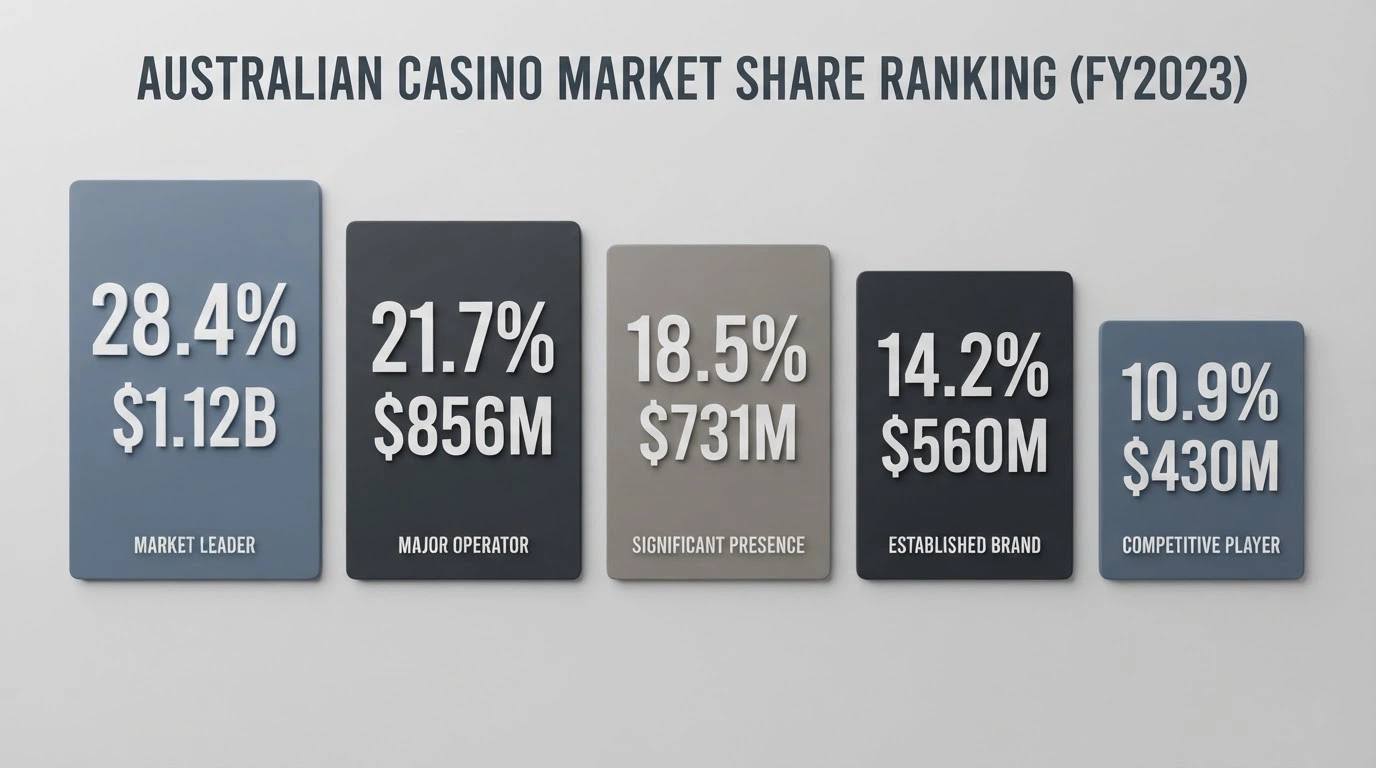
Every brand on this list operates from outside Australia. No AU casino licence exists, and no operator on this page holds one. The ranking is built on Australian market presence — how much of the offshore casino market each brand captures in Australia — drawn from publicly aggregated brand-tracking data and confirmed against the operators’ own footprints. What the ranking does not capture is operator-specific bonus terms, keno game catalogues, or licence jurisdictions. The reader should treat each brand write-up as a description of market position and what the available data does and does not show, not as a recommendation.
How We Compared These Keno Casinos
| Brand | AU-legal status | AU market share % | Est. AU revenue (AUD) |
|---|---|---|---|
| Rocket Play | Offshore — not AU-licensed | 9.40% | $632,690,000 |
| Skycrown | Offshore — not AU-licensed | 8.55% | $436,070,000 |
| Royal Reels | Offshore — not AU-licensed | 2.51% | $243,990,000 |
| WinSpirit | Offshore — not AU-licensed | 1.55% | $110,300,000 |
| Stake | Offshore — not AU-licensed | 1.28% | $115,670,000 |
| Rainbet | Offshore — not AU-licensed | 1.28% | $83,130,000 |
| Scream Casino | Offshore — not AU-licensed | 0.99% | $94,870,000 |
| FairGO | Offshore — not AU-licensed | 0.80% | $69,110,000 |
| Bizzo Casino | Offshore — not AU-licensed | 0.57% | $51,380,000 |
| Rocket Casino | Offshore — not AU-licensed | — | — |
The table sorts the ten featured operators by AU market share, largest first. Every cell under “AU-legal status” is the same fact, restated for every row: not AU-licensed, because no AU casino licence exists. The market-share and revenue columns are drawn from the same source, and the gaps are stated. Rocket Casino has no market-share or revenue data to cite, and its row sits at the foot of the table on that basis, not on any ranking judgement.
The table tells one part of the picture. It does not tell the reader what each operator’s bonus terms look like, which keno titles they carry, or which licence jurisdiction their terms page claims. The operator profiles that follow cover what the data does show — market position, the offshore status every brand shares, and the concrete gaps the reader needs to fill in themselves before they deposit.
Rocket Play
Rocket Play sits at the top of the Australian offshore market by both share and revenue — 9.4% of the AU market and an estimated $632.69 million in Australian-facing revenue. That is a meaningful lead over the second brand in the table, and it is the single most important fact about Rocket Play as a keno destination. The largest operator by player volume in the featured set.
What the data does not show is what the reader actually needs to know before they deposit. The bonus terms — the welcome offer structure, the wagering multiple, the max-cashout rule, the validity window — could not be cited here. The keno catalogue — which titles Rocket Play carries, which software providers built them, which RTPs they publish — sits in the same gap. The licence jurisdiction Rocket Play claims on its terms page is unconfirmed. None of that is unusual for the offshore market. All of it is exactly what an Australian player cannot afford to skip checking themselves.
Rocket Play is not AU-licensed. No AU casino licence exists. The brand operates offshore, serves Australian players in volume, and offers no Australian consumer protection. This operator’s market position is substantial; readers should balance this reach against the complete lack of local safeguards for their deposits.
Skycrown
Skycrown holds 8.55% of the Australian offshore market and an estimated $436.07 million in Australian-facing revenue. It is the second-largest brand by both metrics, and the gap between Skycrown and the leader is large — about $196 million, or roughly a 31% revenue shortfall against Rocket Play. That is a meaningful concentration at the top of the market, and it tells the reader something useful about the offshore landscape before they look at a single bonus.
The same data gaps apply here. Documentation normally relied upon—such as verifiable licence numbers or published RTPs—requires independent verification on the operator’s site. Skycrown’s presence is substantial, but players must assess this reach against the reality of operating offshore.
Skycrown is not AU-licensed. The operator runs offshore, reaches Australian players in volume, and offers no Australian consumer protection. Market share alone, however, provides no guarantee of safety for individual players.
Royal Reels
Royal Reels holds 2.51% of the Australian offshore market and an estimated $243.99 million in Australian-facing revenue. The drop from Skycrown to Royal Reels is sharp — roughly half the share and a little over half the revenue. That is the shape of the offshore market at the top: a leader, a near-peer, then a steep fall to a long tail of smaller brands, each pulling meaningful revenue without approaching the volume of the top two.
Royal Reels sits at the top of that long tail. Its market position is real. It draws almost a quarter of a billion Australian dollars a year from Australian players — more than most licensed wagering brands pull in from their racing and sports products combined. The data gaps are the same as the rest of the table — bonus terms, keno titles, and licence jurisdiction not cited here.
Royal Reels is not AU-licensed. No AU casino licence exists. The brand operates offshore, reaches Australian players, and offers no Australian consumer protection. Players choosing mid-volume offshore brands like this should remember they operate entirely outside the scope of Australian consumer rules.
WinSpirit
WinSpirit holds 1.55% of the Australian offshore market and an estimated $110.3 million in Australian-facing revenue. That is comfortably in the mid-tier of the offshore landscape — smaller than the top three by an order of magnitude in some cases, but pulling more than a hundred million dollars a year from Australian players. WinSpirit’s position is the kind of brand a reader encounters when looking past the top of the table, and its presence in the rankings is what tells the reader how long the offshore tail actually runs.
WinSpirit is not AU-licensed. Details regarding specific bonus terms, keno games, or licence jurisdictions were not verifiable for this review. Players should always review operator terms directly to understand their position before funding an account.
Stake
Stake holds 1.28% of the Australian offshore market and an estimated $115.67 million in Australian-facing revenue. It is the smallest brand in revenue terms of the operators that the market-share table sorts above the median, but it is the only one in the featured set whose identity is unambiguous on the payment side. Stake is a crypto casino. The cashier accepts cryptocurrency and does not offer fiat on-ramps in the conventional sense.
That single fact puts Stake in a category of its own against Australian law. Credit cards, credit-related products and digital currency are banned as payment for online wagering in Australia, commencing 11 June 2024 under the Interactive Gambling Amendment (Credit and Other Measures) Act 2023. An operator asking an Australian player for a crypto deposit is, by that test alone, operating outside Australian rules. The penalty for an Australian-facing operator that accepts crypto from an Australian player is up to $247,500 per breach — a number the regulator reserves for the operator, not the player, but a signal of how seriously the prohibition is treated.
Stake is not AU-licensed. The brand operates offshore, runs on crypto, and offers no Australian consumer protection. By choosing a crypto-only platform, players engage with an operator that explicitly sidesteps standard Australian payment rails and regulatory frameworks.
Rainbet
Rainbet holds 1.28% of the Australian offshore market and an estimated $83.13 million in Australian-facing revenue. The market-share figure ties Stake — same 1.28% — but Rainbet’s revenue is materially smaller, which suggests a smaller average deposit or smaller average player rather than fewer players in raw count. The brand sits in the same mid-tier band as WinSpirit and Scream Casino, drawing real money from Australian players without approaching the volume of the top three.
Rainbet is not AU-licensed. Specific bonus terms, keno titles, and licence jurisdiction remain unconfirmed for this review. Choosing a mid-volume brand like Rainbet offers the same general experience as other offshore operators: zero Australian legal oversight.
Scream Casino
Scream Casino holds 0.99% of the Australian offshore market and an estimated $94.87 million in Australian-facing revenue. Its revenue sits between WinSpirit and Rainbet, and its share is just under the 1% line. The brand is part of the long tail of offshore operators serving Australian players — smaller than the top tier by a wide margin, but still drawing close to a hundred million a year from the Australian market.
Scream Casino is not AU-licensed. Information regarding bonus terms or licence jurisdictions remains unverified. As with other offshore brands, players carry the full risk of depositing funds into an environment that lacks any Australian consumer protection.
FairGO
FairGO holds 0.8% of the Australian offshore market and an estimated $69.11 million in Australian-facing revenue. The brand name is worth a moment. “FairGO” is Australian colloquial — the kind of name an operator picks to signal that it understands the local market and is designed to feel familiar to an Australian reader. That is a marketing choice, and it tells the reader who the operator is targeting, not anything about how the operator is licensed or how it pays out.
FairGO is not AU-licensed. Although marketed with Australian cues, specific bonus terms and licence information remain unavailable for confirmation. Players should exercise caution, as this brand operates offshore without local consumer safeguards.
Bizzo Casino
Bizzo Casino holds 0.57% of the Australian offshore market and an estimated $51.38 million in Australian-facing revenue. It is the smallest operator in the featured set by both metrics. The brand sits at the very end of the offshore tail — a smaller player base, a smaller revenue figure, but still drawing more than fifty million Australian dollars a year from the market.
Bizzo Casino is not AU-licensed. While it draws a notable volume of revenue, full confirmation of its licence standing or bonus terms was not possible. Every player must weigh these unknowns against the fact that this operator is not regulated locally.
Rocket Casino
Rocket Casino sits at the foot of the table because there is no market-share or revenue data to sort it on. The brand is offshore, not AU-licensed — the same status every other brand on this page carries, for the same reason: no AU casino licence exists. No further fact about Rocket Casino’s market position could be cited here.
The name echoes the largest operator in the table — Rocket Play. That is a coincidence, not a connection. There is no shared ownership, no shared terms page, no shared licence jurisdiction, and no basis to assume Rocket Casino’s terms resemble Rocket Play’s. The reader who encounters both names in a search should treat them as separate brands.
Rocket Casino is not AU-licensed. The reader considering Rocket Casino should verify the operator’s current standing directly with the operator itself before depositing. The data this page carries does not.
Not All Keno Games Are the Same — Here’s What Separates Them
Keno is a category, not a single game. The variant the player picks changes the pace, the paytable, the strategy, and the cost of a session. Two casinos can offer the same variant and run it on materially different maths, depending on the paytable each one publishes. The player who treats keno as one game is making a category error before they place a bet.
What separates variants is structural: how many numbers the player picks from, how many the draw resolves, how often the draw runs, what the paytable pays at each match count, and whether the draw is an RNG event or a streamed live draw. The provider that built the game sets the maths. The casino that hosts the game is the shop window — same maths in every shop window that licenses the same title. The variant matters more than the operator, and the provider matters more than the variant.
Standard Keno and the Core Game Types
The standard keno format runs on a fixed grid of eighty numbers. The player picks between one and ten numbers — sometimes up to twenty, depending on the variant. The draw resolves twenty numbers. The paytable pays on match count, scaled by spot count. That is the basic shape, and every variant on this page builds on it.
Spot count shifts the risk curve in a way the paytable makes visible. Pick one number: the round is roughly a coin flip against a fixed payout, and the game feels closer to a binary bet than to a lottery. Pick ten: the round becomes a long-odds chase for a top-end prize — catching all ten out of twenty drawn — that is rare enough to feel almost fictional. The middle ground — four to eight spots — is where most standard keno paytables publish their best return to player, because the prize structure pays enough on partial hits to keep the expected value from collapsing at the extremes. The house-edge curve runs wider at the very low and very high spot counts than in the middle, and the exact shape varies by paytable.
The draw mechanism matters less than the paytable, but the player notices it. Video keno resolves through an RNG — a fraction of a second from “pick” to “result”. Physical-ball keno runs through a mechanical draw — seconds, sometimes longer, depending on the machine. The math is the same in principle. The pace, and therefore the session cost, is not.
4-Card, Multi-Card and Extended-Play Formats
Multi-card keno buys the player more action per round. The player purchases a set of cards — two, four, sometimes up to twenty — each with its own number picks. A single draw resolves against all the cards. Every card pays independently on its own match count.
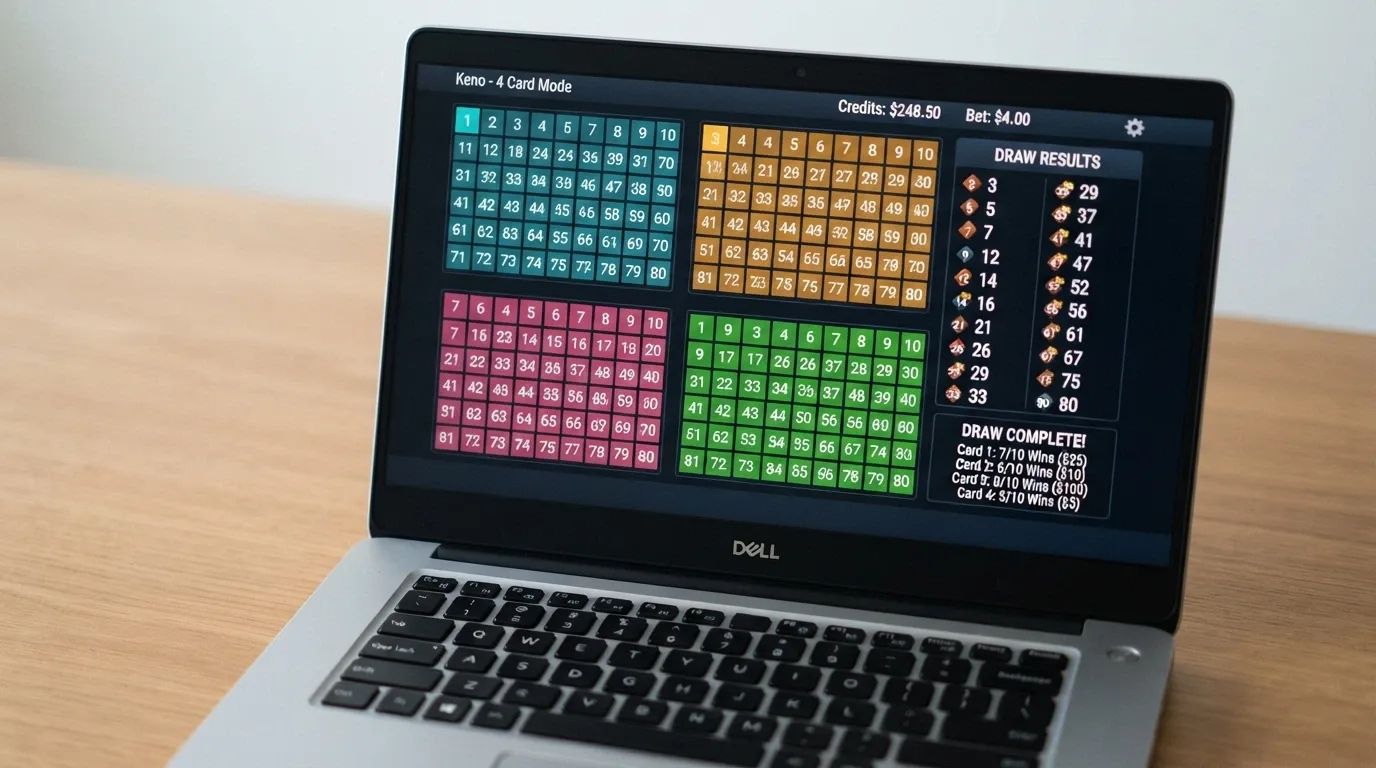
The format is the most common extended variant at offshore casinos. Four-card keno is the standard — the player picks a different set of numbers on each card, the draw resolves once, and the player collects whatever each card matches. The session cost rises by a factor of the card count. A player staking $1 per draw on a single card is now staking $4 per draw on four cards — same stake per line, four lines per draw.
Multi-card play shifts the strategy in a way the player feels before they understand it. The hits come more often because the player has four chances to catch a match. The big wins are rarer on any single card because each card is a thinner slice of the action. Multi-card keno rewards coverage and frequency of small hits rather than big singles. The variance drops. The session cost rises. The entertainment extends. For a player who wants a longer session on a smaller stake, multi-card is the format that delivers it. For a player chasing a single large payout, it is the wrong shape.
Keno Slot Machines and Pokies — a Different Beast
A keno-themed pokie is a slot machine dressed in keno graphics. The reels spin, the paylines resolve, the bonus round triggers — the same machinery as any other online pokie. The keno imagery is cosmetic. The number grid on the screen is not a keno card. It is a visual skin over a slot engine. Catching “numbers” pays on the slot’s paylines, not on a keno draw.
The distinction matters because the return profile is the slot’s, not keno’s. Slot RTPs vary widely across titles and providers; keno RTPs run in their own narrower band. A player who picks a “keno” game in a lobby expecting keno’s maths and lands in a keno-themed pokie is playing a different game with the same visual cues. The way to tell them apart is structural. Keno games have a number pick and a draw panel. Keno pokies have a spin button, reels, and paylines. The first resolves in a fraction of a second against a draw. The second resolves against a payline evaluation on every spin.
The attraction is the familiarity of keno visuals with slot pacing and the slot category’s jackpot potential. The risk is that a player expecting one game gets the other and judges keno by the slot’s return.
Live Keno Tables vs RNG Draws
Live keno streams a studio draw to the player’s screen. A presenter runs the ball machine, the balls drop, the numbers land on the screen, and the paytable resolves against the player’s picks. The pace is minutes per draw, not fractions of a second. The atmosphere is the closest online keno gets to the pub/club version.
The trust model shifts from RNG certification to visible mechanics. A player can see the balls drop, which is a different kind of reassurance than a certified random number generator provides. What the player cannot see is the paytable — still controlled by the operator — and the withdrawal button. Live keno adds transparency to the draw, not to the contract. The same offshore caveats apply: no AU consumer protection, no ACMA complaints body, no recourse if the operator declines a withdrawal.
The reader interested in live keno should check the operator’s lobby directly. Most offshore casinos that carry live dealer products run live keno as a side offering rather than a flagship. The presence of the product is not guaranteed across the featured set.
The Software Houses Behind the Games
The provider that built the keno game sets the RTP, the volatility model, and the certification. The casino is the shop. The provider is the factory, and the maths is the factory’s. Two casinos offering the same provider’s keno title run on identical numbers. Two casinos offering different providers’ keno titles may run on materially different ones.
A certified RNG means the draw is genuinely random and not rigged at the draw level. It does not mean the operator is licensed in Australia. It does not mean the paytable is generous. It does not mean the operator will pay out. RNG certification is a necessary floor for the maths. It is not a substitute for any of the consumer protections an Australian player gives up when they leave the licensed market.
The provider name usually sits inside the game’s info panel — a small “i” or rules button on the game window. The player who wants to know what they are actually playing looks there first.
Free Keno — Try Everything Before You Risk a Dollar
Free-play keno is the one risk-free move an Australian player has. Demo mode lets the player learn the mechanics, test the pace, and compare variants without depositing a cent. For a player who has never played keno before, demo mode is the difference between learning on the house’s money and learning on their own.
The argument for free play is sharper in the offshore context than it is in a licensed market. The licensed Australian player has BetStop, deposit limits, activity statements, and an ACMA complaints path. The offshore player has none of those. Testing without committing real money is the only safe trial, and the cost of skipping it is paid by the player when something goes wrong.
Free Keno Slots and What They Actually Teach You
Free keno and free keno slots are different products. Free keno is the demo mode of an actual keno game — number pick, draw, paytable resolution. Free keno slots are the demo mode of keno-themed pokies — reels, paylines, bonus rounds. Both are useful. They teach different things.
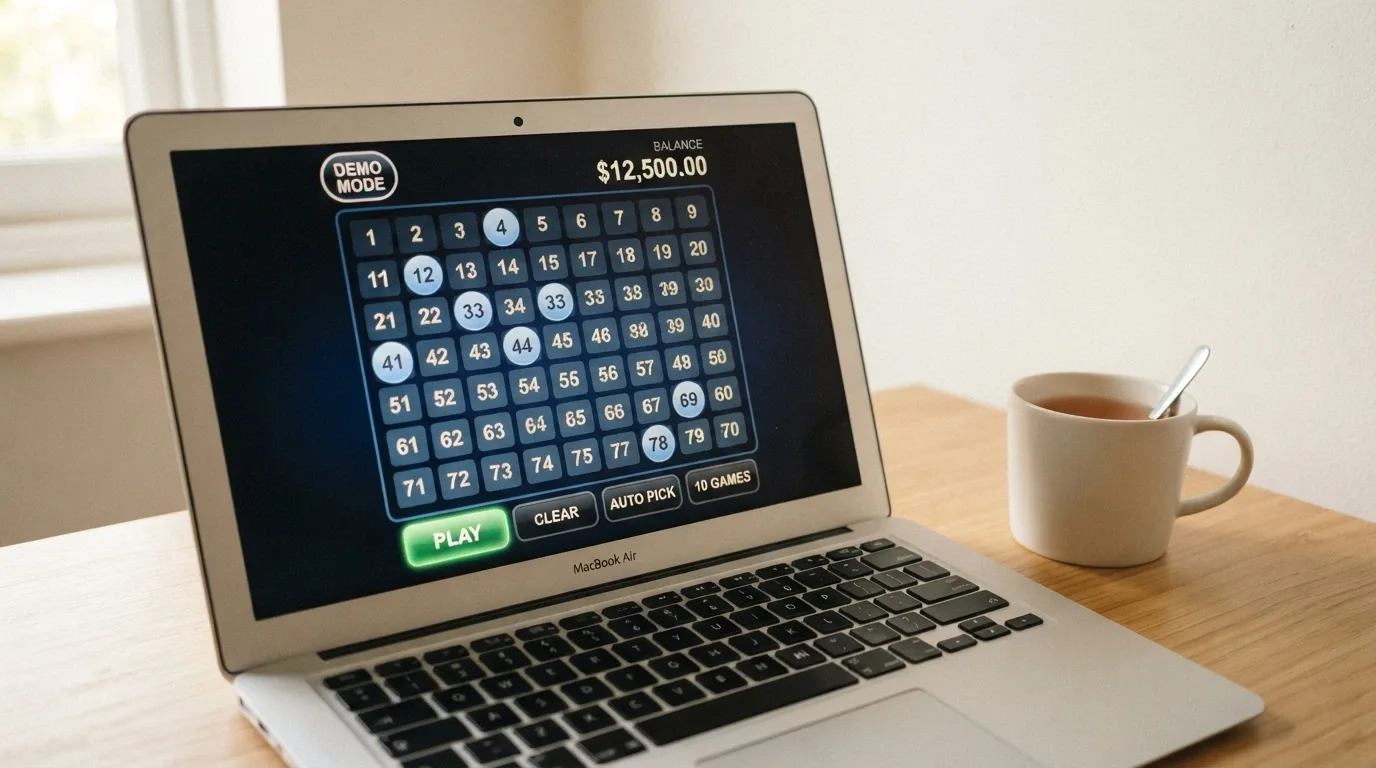
Demo mode typically does not require an account at most offshore casinos. The player clicks “Play for Fun” or “Demo” on a game tile, the game opens with a virtual-credit balance, and the player can play as long as the balance holds. Some operators gate demo mode behind account creation — a friction designed to convert the demo player into a depositor, but not a barrier that takes long to clear.
What demo mode teaches is the game’s mechanics: how the paytable works, how the spot count changes the risk curve, how fast the rounds resolve, what the bonus rounds look like in the slot variants. What demo mode does not teach is anything about the operator. Withdrawal reliability, bonus-term fairness, customer-service conduct, deposit-processing speed — none of those are visible in demo mode. The player who tests in demo and then deposits is testing the game, not the casino.
Free Slot Machines and the Play-Money Demo Mode
Play-money mode extends across most offshore casinos’ full game libraries. The keno titles sit inside it. The mechanics are the same as demo keno — virtual credits, no real-money withdrawal, full game rules apply. The player can move between keno, keno pokies, multi-card variants, and live keno (where available) without changing the play-money balance.
The limit is the same as for free keno. Demo mode tells the player what the games feel like. It tells the player nothing about how the operator behaves with real money. The player who treats demo mode as a complete trial of an offshore casino is mistaking the game for the casino.
Where to Play Keno Online Free in Australia
The general pattern at offshore casinos is that demo mode is available — sometimes immediately, sometimes after account creation. A “Demo” or “Play for Fun” toggle usually appears on each game tile in the lobby. The player looking to test before depositing should look for that toggle first.
Demo availability varies across operators. Some offer demo across the full library. Others gate it behind sign-up or restrict it once the player has deposited. The reader who wants to test a specific keno title at a specific operator should check that operator’s lobby directly.
Some operators offer a small no-deposit bonus or free spins on sign-up — a few dollars of bonus funds or a handful of free spins credited without a deposit. Whether any specific operator on this page offers one is something the reader needs to verify on the operator’s own promotion page. No-deposit offers exist at offshore casinos in general. They are not guaranteed at any of the brands listed here.
Crypto Keno Casinos and the Anonymity Australian Players Are Chasing
Crypto casinos pitch anonymity to Australian players. The pitch has two parts: faster deposits, and a payment method the player’s bank does not see. Both are real. Neither delivers what the player is being sold.
The legal reality is direct. Credit cards, credit-related products and digital currency are banned as payment for online wagering in Australia, commencing 11 June 2024. The penalty for an operator that fails to enforce it is up to $247,500 per breach. The ban applies to the operator; the player is not the target of the prohibition. But the operator that asks for crypto from an Australian player is, by that ask alone, operating outside Australian rules. The payment method is itself the tell.
What crypto actually delivers is pseudonymity, not anonymity. The player’s name is not attached to the wallet, but the wallet address is. Every transaction is permanent and public on the blockchain. The casino sees a wallet, not a bank statement. A researcher with the wallet address can trace every transaction the wallet has ever made. Anonymity, in the sense the marketing uses the word, is not what crypto provides.
What crypto does not deliver is the protection the player is giving up. No chargeback rights, because there is no card issuer to charge back against. No AU complaints body, because no AU regulator has jurisdiction. No recourse if the operator refuses the withdrawal, voids the bonus, or closes the account. Crypto delivers a faster deposit and a permanent record of the player’s gambling. It does not deliver safety.
Bitcoin and Crypto Deposits at Keno Casinos
A crypto deposit works the way any crypto transfer works. The player opens the casino’s cashier page, copies the casino’s wallet address, sends the funds from their own wallet, and waits for the blockchain confirmations. The casino credits the player’s account once the confirmations clear — usually one to three, depending on the coin. The balance is denominated in fiat equivalent (USD or EUR most commonly) for play purposes.
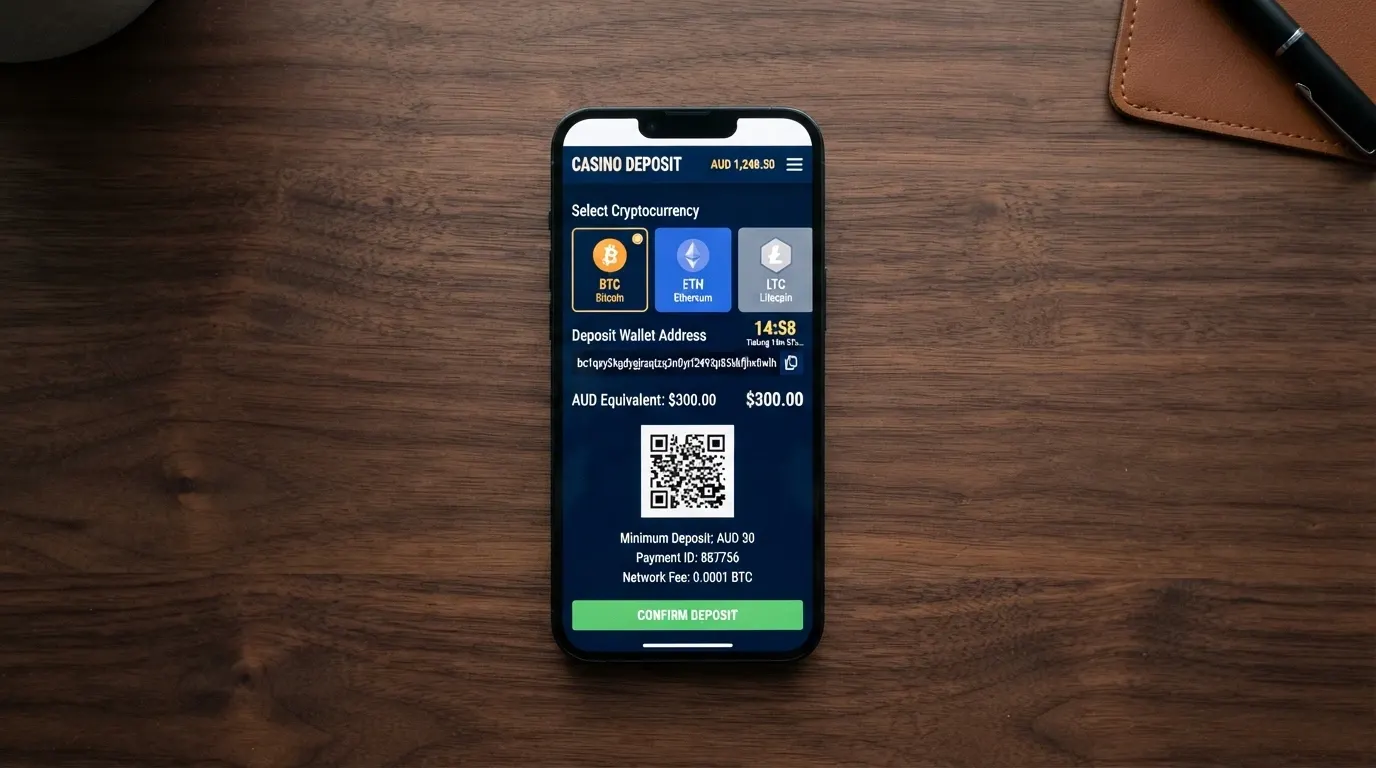
The exchange-rate exposure is the cost most players do not count. The player deposits BTC at one rate, plays in fiat, and withdraws in fiat at another. The BTC-to-AUD rate moves between deposit and withdrawal. The player can win on the keno and lose on the exchange rate, or vice versa. The exposure is real, it is constant, and it is outside the casino’s control.
Crypto withdrawals are usually faster than bank transfers — minutes to hours rather than days. The same no-recourse problem applies once the funds leave the casino’s wallet, but the speed of the payout itself is a real advantage over traditional banking rails. The reader considering crypto for speed should weigh it against the legal position and the exchange-rate exposure, not just the time saving.
Anonymity, KYC and What Crypto Actually Buys You
Most offshore casinos still demand identity documents before a withdrawal. ID upload, proof of address, sometimes a selfie, sometimes a source-of-funds check. Crypto depositors are not exempt. The casino that lets a player deposit anonymously is, almost always, the same casino that demands the player’s passport before they can withdraw.
The reason is structural. The casino holds the funds, runs the games, and processes the withdrawal. The player has no leverage once the money is in. KYC is the casino’s defence against fraud, money laundering, and the small minority of players who abuse bonus offers and disappear. The player who wants their winnings out supplies the documents. The player who refuses does not get the winnings out.
For an Australian player who values privacy, the legal payment channels at a licensed wagering operator — debit card, PayID/Osko, BPAY — carry identity verification by design and consumer protection by jurisdiction. Those operators do not offer online casino keno. The trade is real: privacy and protection at the licensed bookmaker, no keno. Offshore keno with crypto, no protection and limited privacy.
The Law — What Australia Actually Allows and What It Doesn’t
The Interactive Gambling Act 2001 draws the line. Online casino is illegal to provide to an Australian. Keno the product is permitted. The space between those two facts is where the offshore casino lives and where the Australian player’s risk sits.
The statute was strengthened by the Interactive Gambling Amendment Act 2017, which closed the offshore loopholes the original Act left open. ACMA gained enforcement and site-blocking powers. The 2026 reform, passed 19 August 2026, commences 1 January 2027, and tightens advertising, inducements, and bank transaction blocking for illegal operators. None of the reform changes the underlying prohibition. Online casino remains illegal to provide to an Australian. No licence will be issued. The offshore operators on this page will continue reaching Australian players as long as they can stay ahead of the regulator.
The individual player is not prosecuted under the IGA. The Act targets the provider. Not being prosecuted is not the same as being safe. The rest of the page works through what “not safe” actually means in concrete terms.
The Interactive Gambling Act and ACMA Enforcement
The Interactive Gambling Act 2001 prohibits online casino games, online pokies and in-play betting. Wagering on races and sport placed before the event begins, lotteries and keno are permitted and licensable products. The 2017 amendment gave ACMA the tools to enforce that prohibition against offshore providers.
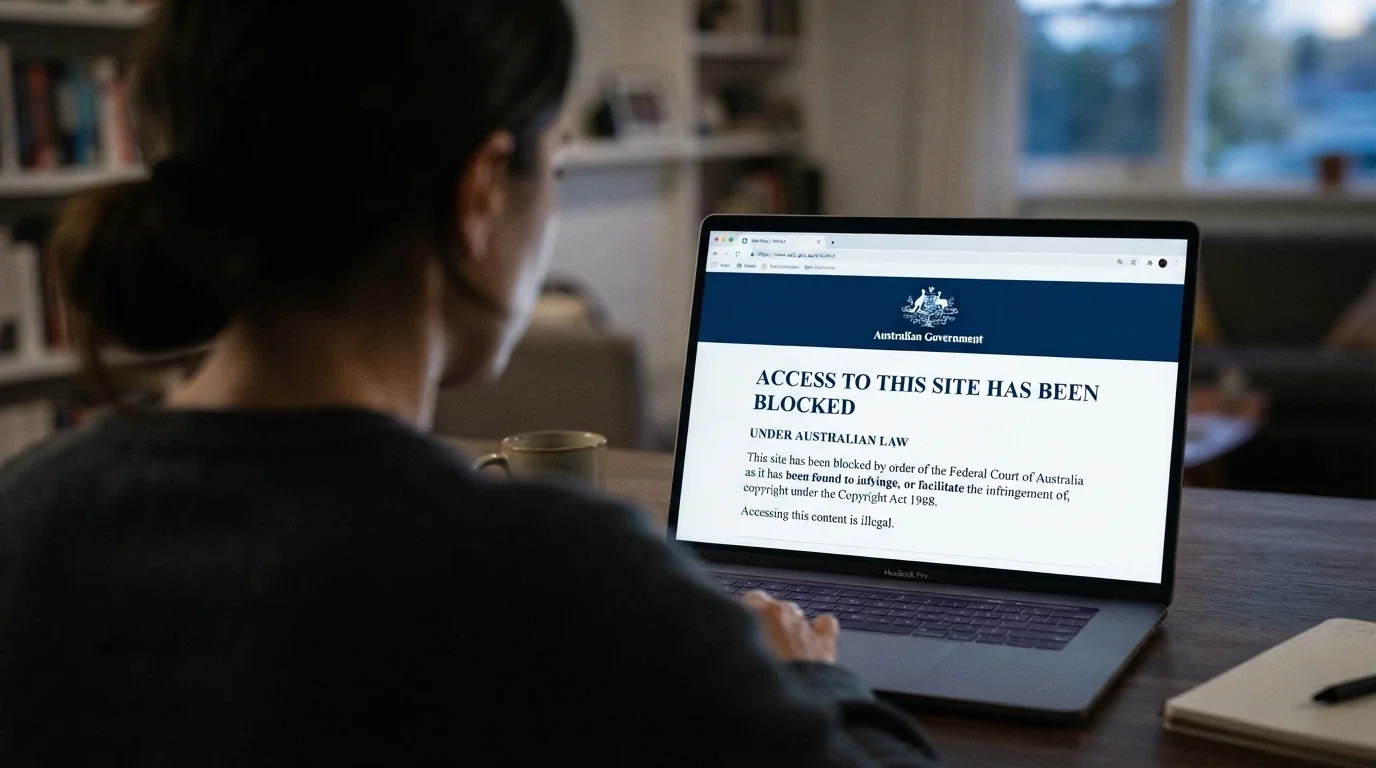
ACMA — the Australian Communications and Media Authority — is the federal regulator. It investigates complaints, issues formal warnings, initiates civil penalty proceedings, and directs ISPs to block illegal sites. The enforcement record is concrete: since November 2019, ACMA has had 1,564 illegal gambling and affiliate websites blocked by Australian ISPs. More than 225 illegal services have withdrawn from the Australian market since the 2017 enforcement strengthening.
- The Interactive Gambling Amendment (Gambling Reform) Bill 2026 passed Parliament on 19 August 2026; its measures commence 1 January 2027.
- From 1 January 2027, wagering advertising is limited to no more than three ads per hour between 6:00 am and 8:30 pm.
- From 1 January 2027, a live-sport blackout bans wagering advertising from 15 minutes before a live sporting event until 5 minutes after it ends.
- From 1 January 2027, athletes, celebrities and influencers are barred from promoting wagering products in Australia.
- From 1 January 2027, direct marketing of inducements is prohibited for 14 days after sign-up, three months after BetStop deregistration, and indefinitely for at-risk customers.
- From 1 January 2027, banks and payment providers gain express authority to block transactions to illegal gambling operators.
What none of this changes is the underlying prohibition. Online casino remains illegal to provide to an Australian. No licence will be issued. The offshore operators on this page are already in breach by offering the product. The 2027 reform tightens the marketing around them, gives banks a tool to choke their payment rails, and adds penalties for the inducements that already sit on the wrong side of the Act. It does not legalise online casino, and it does not bring any of the brands on this page inside Australian regulation.
Licensed Wagering vs Offshore Keno — the Real Difference
An Australian-licensed wagering operator is not an online casino. The licence covers sports and race betting placed before the event, lotteries, and keno through licensed channels. It does not cover online casino games, online pokies, or in-play betting. The brands that hold these licences — SportsBet, Tab, Bet365, Ladbrokes — are bookmakers. They are not on this page because they are not casino brands. They do not offer online casino keno.
| Payment method | Legal for AU online wagering? | What it tells the keno player |
|---|---|---|
| Debit card | Yes | The standard legal route at a licensed AU wagering operator |
| Bank transfer | Yes | A legal route, slower than card or PayID |
| PayID / Osko | Yes | Instant Australian real-time payments rail; legal for licensed wagering |
| BPAY | Yes | A legal route; common at AU-licensed operators |
| Credit card | No | Banned since 11 June 2024; an operator asking for one is outside Australian rules |
| Cryptocurrency | No | Banned since 11 June 2024; an operator asking for crypto is outside Australian rules |
| Other e-wallets / vouchers | — | Not part of the regulated payment-method set for AU online wagering |
Licensing for online wagering in Australia is state and territory business. The Northern Territory Racing and Wagering Commission, administered through Licensing NT, is the de facto national licensor for online wagering. NT licences run for terms of up to twenty years. The NT regime was reformed in 2026. The licensed operator is the only point on the wagering side of the market that an Australian player can rely on for consumer protection, dispute resolution, and BetStop coverage.
The licensed operator gives the player what the offshore casino does not: BetStop coverage, ACMA complaint paths, legal deposit methods, consumer protection under Australian law, deposit limits the player can set and rely on, and activity statements that show exactly what the player has spent. The offshore casino gives the player none of that. The payment method on the cashier page is the test that tells the player, before any money moves, which side of the line they are on.
Staying in Control — the Help an Australian Keno Player Actually Has
Australia has built real player-protection infrastructure. BetStop, the National Gambling Helpline, deposit limits, activity statements, self-assessment tools — the architecture is there. Every tool on that list works through a licensed operator. None of the operators on this page is licensed in Australia. The safety net ends where the offshore casino begins, and the player needs to know exactly where that line sits.
About 2.1% of Australian adults — roughly 430,000 people — experience problem gambling. The Australian Institute of Health and Welfare put high-risk gambling at 1.8% in 2022. Those numbers are the reason the infrastructure exists. They are also a reminder of how widely the harm extends.
BetStop and What It Covers (and What It Doesn’t)
BetStop — the National Self-Exclusion Register — has been live since August 2023. One registration excludes a person from every Australian-licensed online and phone wagering service in a single step. The minimum exclusion period is three months. A lifetime option is available.
The numbers, as at 31 July 2026: 67,480 registrations in three years of operation. 41,290 exclusions still active — more than 60% of everyone who has ever registered. 78% of registrants are under 40. 38% chose lifetime exclusion.
The hard limit: BetStop binds Australian-licensed wagering services only. An offshore casino is not licensed in Australia, is not connected to BetStop, and will keep taking a self-excluded person’s money. The reader who registers on BetStop to control their gambling is closing every door the register can reach. The offshore casino is not one of those doors.
The 2027 reform adds a further protection: a ban on direct marketing of inducements for three months after a person deregisters from BetStop. The reform applies to licensed operators. It does not extend to the offshore casino’s marketing, which is already in breach of the prohibition.
Deposit Limits, Activity Statements and the Tools That Turn On
Licensed Australian wagering operators offer customer-set deposit limits, activity statements, take-a-break, and self-exclusion. The deposit limit is the single most useful tool for a player who wants to control spend — the player sets a cap, the operator enforces it, and the player’s bankroll stops where the player said it would.
The offshore casino may offer some of these tools voluntarily. The player cannot enforce them. No Australian regulator checks the offshore operator’s compliance. The deposit limit the player sets on an offshore site is a setting the operator can ignore, and the player who needs it enforced has no recourse when it isn’t.
- The National Gambling Helpline is 1800 858 858 — free, confidential, staffed 24 hours a day, seven days a week.
- Gambling Help Online, at gamblinghelponline.org.au, offers online chat and counselling.
- Self-assessment tools are available through Gambling Help Online.
- About 2.1% of Australian adults — roughly 430,000 people — experience problem gambling; high-risk gambling sat at 1.8% in 2022.
- There is no federal deposit, loss or stake ceiling for online gambling in Australia — because the product those ceilings would govern is banned outright.
How We Chose and Ranked Every Keno Casino on This Page
The ranking is built on Australian market presence — how much of the offshore casino market each brand captures in Australia. The data comes from publicly aggregated brand-tracking and the operators’ own footprints. The legal status of every operator was verified against the Interactive Gambling Act and ACMA records. The result is the same fact in every row of the table: not AU-licensed, because no AU casino licence exists.
What was not confirmed at the level the page requires is the operator-specific volatile material: bonus terms, keno game catalogues, licence jurisdictions, and software provider lists. The reader who needs that information should verify it on the operator’s own terms page before depositing.
The ranking is not a recommendation. No operator on this page is licensed, safe, or recommended. The page’s job is to describe what the market looks like and what the player risks. The reader’s job is to decide.
What the Australian Keno Player Should Actually Do With This Information
Keno is a legal product in Australia. Online casino keno is only available through offshore operators that are not licensed here and offer no Australian consumer protection. The reader has three choices.
Play keno through a licensed Australian channel where available — pubs and clubs, state lotteries, the keno products licensed wagering operators carry within the rules. The game is the same keno. The protections are Australian.
Play at an offshore casino with full awareness of the risks. The deposit is the moment the player steps outside Australian consumer protection. The withdrawal is the test. The reader who chooses this path is choosing it on the legal ground the page has described — outside Australian rules, no Australian backstop, the burden of checking the operator’s own terms before any money moves.
Decide the risk is not worth it. That is a legitimate choice, and it is one the page supports. The page’s job is to inform, not to push a reader toward any particular outcome.
The risk is concrete, not theoretical. ACMA has blocked 1,564 illegal gambling sites. BetStop covers 41,290 active exclusions — none of them binding the offshore casinos those players might also use. The payment method on the cashier page tells the player which side of the line the operator sits on. The withdrawal is the test of every offshore promise. The reader who values any of those protections cannot get them at the offshore casino.
The one risk-free move is free-play demo mode. The reader who wants to learn the game without depositing can do that at most offshore casinos without committing real money. Demo mode teaches the mechanics. It does not teach whether the operator pays out. That test comes only when real money is on the line.
No bonus code, no promo code, no voucher, and no instruction to deposit appears on this page. The page’s job is to inform. The reader’s job is to decide.
Frequently Asked Questions
What is the difference between live keno and online keno slots?
Live keno streams a studio draw — a presenter, a ball machine, the balls dropping — and resolves the player’s picks against that draw. Online keno slots are slot machines with keno graphics: reels, paylines, and a spin button instead of a draw. The return profile of a keno slot belongs to the slot category, not to keno.
Are keno winnings taxable in Australia?
No. Betting and gambling winnings are not assessable income under section 6-5 of the ITAA 1997, and gambling losses are not deductible under section 8-1, unless the person is carrying on a business of betting or gambling. No Australian case has held ordinary punter winnings assessable.
What payment methods can I use to deposit at an online keno casino in Australia?
The legal routes at a licensed Australian wagering operator are debit card, bank transfer, PayID/Osko and BPAY. Credit cards and crypto are banned as payment for online wagering since 11 June 2024. An offshore casino asking for a credit card or crypto is, by that ask alone, outside Australian rules.
What is the return-to-player (RTP) rate for online keno?
Keno RTPs run narrower than slots but wider than most table games, with the exact figure depending on the paytable and spot count. The house-edge curve runs wider at the very low and very high spot counts than in the middle. No specific title-level figure could be cited here.
Are crypto keno casinos legal in Australia?
Crypto is banned as a payment method for online wagering in Australia since 11 June 2024. An operator that accepts crypto from an Australian player is, by that ask alone, operating outside Australian rules. The penalty for the operator is up to $247,500 per breach. The player is not the target of the prohibition.
Is it legal to play keno online in Australia?
Online casino is illegal to provide to an Australian under the Interactive Gambling Act 2001. Keno the product is permitted and licensable. Online casino keno through an offshore operator occupies the same prohibition zone as any other offshore casino product. The individual player is not prosecuted. The player is also not protected.
Created by the ”Bitcoin Casinos Australia” editorial team.