
The Best Aussie Online Casinos in 2026 Are All Offshore — Here Is How to Choose One Anyway
 Available in US
The shortest, most honest version of this page: there is no licensed online casino in Australia. None. Not in New South Wales, not in Victoria, not under a Northern Territory wagering licence, not anywhere. The Interactive Gambling Act 2001 makes it an offence to provide online casino games, online pokies or in-play betting to a person physically in Australia, and no licence exists — federally, or in any state or territory — for that product. So when Australian players search for the “best aussie online casino”, they are searching for a product that is illegal to supply, and the answer is necessarily a list of offshore operators.
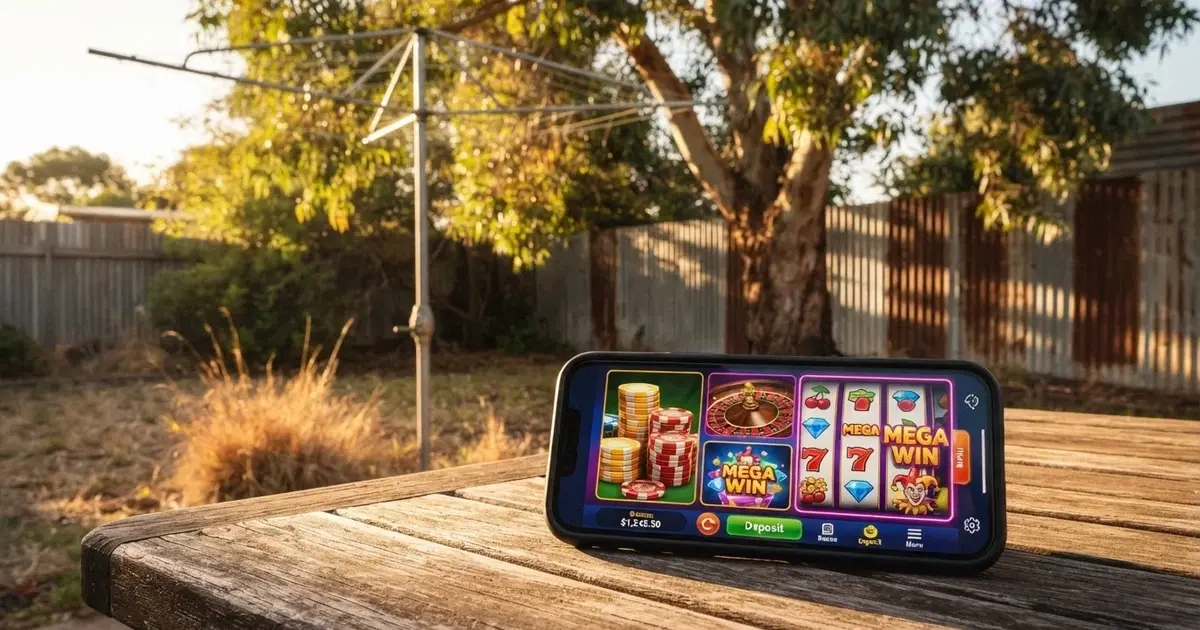
This is not a disclaimer tacked on the bottom. It is the shape of the market, and it changes what “best” means. A “best casino” page that does not name the offshore status, the lack of Australian consumer protection, the gap in BetStop coverage, and the ACMA’s active blocking of these sites is doing the reader a disservice — it is selling a comparison without telling the buyer the comparison is between products that operate outside Australian law. The page that refuses to compare them at all is just as unhelpful, because the demand is real and the players searching for this term are real.
Verified against the ACMA register and the latest operator terms as of 3 September 2026.
Table of Contents
- The Real Aussie Online Casino Landscape in 2026
- 10 Offshore Casinos Australian Players Actually Use in 2026
- Why Every Aussie Online Casino Is Offshore — and What That Means for You
- Why Your Aussie Casino Bonus Is Smaller Than It Looks
- PayID Is the Fastest Way to Fund Your Aussie Casino Play
- Playing Pokies on Your Phone: What Aussie Mobile Casino Really Looks Like
- Fresh Faces: New Aussie-Facing Online Casinos Worth a Look in 2026
- When the Pokies Stop Being Fun: Gambling Help That Actually Works
- How We Picked and Ranked the Casinos on This Page
- What You Should Actually Do Next: Picking an Offshore Casino With Your Eyes Open
- Frequently Asked Questions
The Real Aussie Online Casino Landscape in 2026
The gap between what Australian punters search for and what the law permits is the reason this page exists. The Interactive Gambling Act 2001 — strengthened by the 2017 amendment that handed the ACMA its enforcement and blocking powers — prohibits the provision of online casino games and online pokies to anyone in Australia. The IGA targets the provider, not the player, which is why the individual punter is not prosecuted. It is also why the offshore operators keep operating: the law punishes them, but it does not punish the customer.
The scale of demand is not in dispute. Offshore brands like Rocket Play and SkyCrown hold substantial Australian traffic. The ACMA, which has had 1,788 illegal gambling and affiliate websites blocked by Australian ISPs since November 2019, has watched over 230 illegal services pull out of the Australian market since 2017 — a figure that says as much about the squeeze on supply as about the operators’ willingness to keep serving the country. The product cannot be licensed here, but the players searching for it have not gone away.
What “aussie online casino” actually means, in practice, is one of three things: a Curaçao-licensed offshore casino that accepts Australian players, a similar operator licensed in Malta or another offshore jurisdiction, or one of the smaller grey-market brands that operate without the polish of the larger names. The first two are the bulk of the operators ranked on this page. The third is where most of the ACMA’s 69 breaches in the October–December 2025 quarter came from.
What Aussie Punters Actually Play: Real-Money Casino Games
Pokies dominate, and the gap is wide. Walk into any AU-facing offshore casino and the lobby is built around slots — five reels, free-spin rounds, Megaways mechanics, jackpot networks. Royal Reels lists over 5,400 pokies from 40+ software providers; that is a small casino by offshore standards. The largest lobbies on the market push well past 6,000 titles, and pokies account for the overwhelming majority of them. Australian players use the word “pokies” rather than “slots” and the offshore operators have followed them into it.
Beyond pokies, table games are present everywhere: roulette, blackjack, baccarat, in their RNG and live-dealer forms. Live dealer studios — Evolution, Pragmatic Play Live, Ezugi — have become standard at the larger operators, with hundreds of tables running around the clock. Game shows (Crazy Time, Monopoly Live and the like) sit alongside them, and the studios that supply them are largely the same handful of names regardless of which offshore casino the player uses.
The game-provider ecosystem at an offshore casino is a small number of studios supplying most of the catalogue. Pragmatic Play, NetEnt, Microgaming (now Games Global), Betsoft, Yggdrasil and a handful of others do the heavy lifting; the long tail of smaller studios fills in the gaps. For an Australian player, the practical question is rarely “what games does this casino have” — most of the big-name offshore operators stock the same providers — but “how well do the games run” and “does the casino pay out when you win”.
Free-Play vs Real-Money: What the Demo Mode Actually Tells You
Every AU-facing offshore casino offers demo mode on its pokies. You load a game, the casino lets you spin with virtual credits, and you get a feel for the mechanics, the bonus round, the volatility. It is genuinely useful for testing a title before you put real money on it.
It does not test the casino. Demo mode is offered by the same offshore operator whose real-money game you are evaluating, but it does not run through the same systems. The RNG, the payout engine, the bonus round mechanics — those are generally consistent between demo and real-money play on a given title, because the game comes from the same provider and runs the same code. What demo mode does not show you is whether the operator will actually pay out your winnings, how fast, whether the bonus terms change between demo and real-money play, or whether the KYC process will let you withdraw. The RTPs quoted on the game’s info panel — typically 92% to 98% on the offshore pokies in the featured set — are the same in both modes, but the casino’s behaviour around your money is not something a free spin can tell you.
For an Australian player, demo mode is a tool for picking which pokie to play, not which casino. Use it that way.
Crypto and Alternative Banking at Aussie-Facing Casinos
The 11 June 2024 ban on credit cards and crypto as payment for online wagering — backed by penalties of up to A$247,500 for operators that fail to enforce it — created a strange situation. Australian-licensed wagering operators (sports and racing bookmakers) cannot accept credit cards or crypto. Offshore casinos, sitting outside Australian law, can and do. Most of the operators on this page list crypto among their deposit methods, with USDT on the TRC20 network the most common.
The speed argument is real. USDT TRC20 withdrawals are verified at 0.2 to 8 hours depending on the operator; Stake tested at 1 to 4 hours; BitStarz at 0.2 to 2 hours. That is faster than any bank rail, including PayID. The trade-off is consumer protection: a USDT transfer that goes to the wrong address is gone, and an offshore casino that delays a withdrawal has no Australian ombudsman to appeal to. Crypto gives you speed and removes a layer of friction; it does not give you recourse.
The payment method is itself a tell. If an offshore casino is asking an Australian player for a credit card or a crypto deposit, it is operating outside Australian rules — those methods are banned for online wagering in Australia and the offshore operator is not subject to the ban. That is not a moral judgement, it is a description of the market. A player who wants the legal route uses PayID, Osko, BPAY or bank transfer through a licensed wagering operator — and that operator cannot offer casino games.
10 Offshore Casinos Australian Players Actually Use in 2026
The 10 operators ranked on this page are the brands Australian players most commonly search for, use, and complain about. None of them holds an Australian casino licence, because no such licence exists. All 10 are offshore entities — Curaçao, Malta, Comoros, or operating without a public licence at all — offering a product that the Interactive Gambling Act 2001 prohibits them from offering to Australian customers.

The ranking is built on four criteria, in order: bonus terms (the wagering multiple, the max bet during wagering, the validity window, the FS win cap), game depth (how many pokies, from how many providers), payout speed (PayID, crypto, bank wire), and trust signals (how long the operator has been in the market, how openly it discloses its licensing and dispute process). The legal-status column is identical for all 10 — offshore, no Australian casino licence — because the situation is the same for every one of them. A page that ranks offshore casinos and buries that fact is not being honest with the reader.
| Casino | Legal status in Australia |
|---|---|
| Rocket Play | Offshore — no Australian casino licence |
| SkyCrown | Offshore — no Australian casino licence |
| Royal Reels | Offshore — no Australian casino licence; ACMA-blocked domain |
| Stake | Offshore — no Australian casino licence; crypto-only |
| FairGO | Offshore — no Australian casino licence |
| WinSpirit | Offshore — no Australian casino licence |
| Bizzo Casino | Offshore — no Australian casino licence |
| Scream Casino | Offshore — no Australian casino licence |
| Rainbet | Offshore — no Australian casino licence |
| Rocket Casino | Offshore — no Australian casino licence |
The comparison that follows this table is honest about what the table cannot show. None of these operators is licensed by an Australian regulator. None is subject to Australian consumer protection law. None will accept a BetStop self-exclusion. The differences between them are in the size and shape of their offers, the depth of their game lobbies, and how quickly they pay out — not in whether the Australian government stands behind them, because it does not.
Bonus Wagering Comparison
| Casino | Wagering Requirement | Bonus Validity | Max Bet During Wagering |
|---|---|---|---|
| Rocket Play | 40x | 5 days | A$7.50 |
| SkyCrown | 40x | 14 days | A$5.00 |
| Royal Reels | 35x | unbekannt | A$5.00 |
What “Best” Means When Every Casino Is Offshore
The word “best” needs unpacking. In a licensed market it means “the safest, the most rewarding, the one that treats its players fairly” — and a regulator and an ombudsman back the safety. In a market where every operator is offshore and unregulated by Australian authorities, the word shifts. Safety here is a function of operator longevity, complaint history, payout speed, and how transparently the operator discloses its licensing and terms. Reward is a function of bonus terms, game RTP, and how quickly winnings reach your bank.
The ranking on this page measures the second set of things. It does not claim any of these operators is safe in the way a BetStop-covered, ACMA-supervised, Northern Territory-licensed wagering operator is safe — that category of operator does not offer casino games, so it is not on this page. What the ranking measures is which offshore operator, for a given Australian player with a given priority, is likely to be the least bad option among the choices available.
A Curaçao or Malta licence is not the same as Australian regulation. The Curaçao Gaming Control Board reformed its licensing framework in 2024 and now issues four licence classes, with stricter KYC and dispute-resolution obligations than the old master-licence system. The Malta Gaming Authority has been a recognised European regulator for two decades and carries more weight. Neither has jurisdiction over an Australian player — they will not chase an offshore operator on a complaint from a customer in Sydney. The safety a player gets from those licences is reputational, not legal: an operator that loses its MGA licence is finished in the European market, which gives it a reason to behave, and a reason is more than nothing.
Best for Real Money: Where the Stakes Matter
If the priority is real-money play — serious bankroll, real stakes, real attention to payout reliability and game depth — the ranking shifts toward operators with the deepest lobbies and the most consistent payout records. Royal Reels’ 5,400+ pokies from 40+ providers is the headline number in the set; the next operators are within a few hundred titles of that. Game depth is not a real differentiator among the top three.
Payout speed is. SkyCrown’s 11-minute PayID withdrawal — the fastest recorded in a test of 40+ Australian-facing sites — is the kind of figure that gets a player to switch operators. PayID payouts at 24 to 48 hours are the norm, bank wires at 3 to 5 business days are slower, and crypto at 0.2 to 8 hours is fastest. The operator you choose for real-money play should match your payment method: crypto players should pick an operator that supports USDT TRC20 with verified fast payouts, and PayID players should pick one that has actually been tested on the rail rather than just listing it as an option.
Stake-to-game-quality is the real trade-off. A higher max bet per spin during bonus wagering (Rocket Play’s A$7.50 versus SkyCrown’s A$5) means you can clear wagering faster, but it also means a single spin erases more of your bankroll. For a high-roller bankroll this is fine. For a small bankroll, a tighter cap is safer. The max bet during wagering is the most consequential number on a welcome bonus, and most players skip past it.
Most Trusted: Safety Signals at Offshore Casinos
Trust at an offshore casino is not a licence — the offshore licence tells you the operator has met some minimum standard somewhere, not that it will pay you out next Tuesday. Trust is built from signals: how long the operator has been in the market, how it responds to complaints on forums like AskGamblers and Casino Guru, whether its KYC process is straightforward, whether it actually pays out the big winners. None of these is a guarantee, and an offshore operator that has been good for five years can stop being good next month.
The most concrete safety signal in the AU-facing market is operator longevity. The ACMA’s enforcement has pushed over 230 services out of Australia since 2017 and has blocked 1,788 websites since November 2019. An operator that has survived several rounds of that enforcement — by moving domains, by re-licensing, by adjusting its offering — is one that has decided the Australian market is worth the friction. That is a different kind of trust signal than a regulated market provides, and it is what the offshore market offers.
There is no Australian ombudsman. There is no ACMA recourse for a player who has been stiffed by an offshore operator. The ACMA can investigate the operator and refer it for blocking, but it cannot recover the player’s money. The closest a player gets to Australian protection is the payment rail — a chargeback through a debit card, a complaint through the bank — and both are limited in how far they reach into a Curaçao-incorporated entity. The 230+ services that have withdrawn from the Australian market did not do so because they were forced to refund players; they did so because the regulatory squeeze made the market unprofitable. That is not the same thing as a safety net.
Rocket Play
Rocket Play runs a two-deposit welcome structure that is the tightest in the set. The first deposit is a 100% match up to A$1,000 plus 100 free spins — credited 20 per day for five days — with a A$30 minimum and 40x wagering on the bonus. The second deposit is a 200% match up to A$1,000, with a A$75 minimum. Both have a five-day bonus validity, the shortest window in the featured set, and a A$7.50 max bet during wagering.
That combination — high match percentage, low minimums, very tight clock — is what Rocket Play is built around. The 200% on the second deposit is unusually generous on paper; the five-day validity on both tiers means a casual player who does not get to the casino the day they deposit will lose the bonus. The 40x wagering is at the high end of the set, and the A$7.50 max bet is the loosest in the featured group. For a player who is going to deposit, sit down, and grind through 40x in five days, Rocket Play’s bonus is a reasonable deal. For anyone who treats a bonus as a side benefit, it is mostly noise.
The five-day window is the number to watch. A typical casino bonus in this market gives the player 14 to 30 days; Rocket Play gives five. Read the terms before depositing, and clear the bonus in the time available, or do not take it.
SkyCrown
SkyCrown runs the largest welcome package in the featured set: a four-tier structure that totals up to A$8,000 in matched deposits plus 400 free spins. The first tier is 120% up to A$1,200 with 125 free spins; the second is 100% up to A$1,300 with 75 free spins; the third is 80% up to A$1,500 with 50 free spins; the fourth is 150% up to A$4,000 with 150 free spins. Wagering is 40x on the bonus, 30x on the free-spin winnings, with a 14-day validity per tier and a A$300 free-spin win cap per tier. Minimum qualifying deposits step up from A$20 on the first tier to A$50 on the fourth.
The free-spin cap is the tightest in the set. At A$300 per tier, a player who hits a lucky free-spin round is not going to walk away with a four-figure payout from the spins alone — the bonus terms cap it. The 14-day validity per tier is more generous than Rocket Play’s five days, but the per-tier structure means each tier is its own bonus with its own clock. A player who deposits A$50 and walks away for three weeks has lost two tiers, not one.
The headline is the 11-minute PayID payout — the fastest in any AU-facing test. For a player whose priority is getting winnings back into their bank account quickly and who can commit to grinding through four tiers in 56 days, SkyCrown’s package is large. The crypto exclusion from the welcome bonus is the relevant catch: if you want to deposit USDT, the bonus is not available.
Royal Reels
Royal Reels runs the deepest game lobby in the featured set: 5,400+ pokies from 40+ software providers, plus a 10-tier VIP program. The welcome package is a three-deposit structure totalling A$2,500 plus 50 free spins at A$0.20 per spin (A$10 headline value), with wagering of 35x on the bonus and a A$5 per-spin cap during wagering. Royal Reels is also the only operator in the top three that offers a no-deposit free chip — A$10 after phone verification, with 30x wagering.
The wagering multiple is the lowest in the set. At 35x, a A$500 first-deposit bonus needs A$17,500 of turnover to clear, against A$20,000 to A$40,000 at the higher-wagering operators. The A$10 no-deposit chip is genuinely free in the sense that no deposit is required, but the 30x wagering still needs to be cleared before the winnings are withdrawable, and there is typically a cap on the maximum cashout from a no-deposit bonus.
The catch is the domain. Royal Reels is on the ACMA’s blocked list, which means Australian ISPs are required to block the primary domain. The operator runs mirror domains to get around the block, and the mirror is the URL the player actually uses. The mirror can be blocked too — and the next mirror after that, and the next — which means the URL a player bookmarks today may not work next month. For an Australian player, Royal Reels is a working operator with a working game lobby and a working bonus, but the site itself is a moving target. Set yourself up for that.
Stake
Stake is the only crypto-only platform in the featured set. There is no fiat deposit, no credit card, no PayID, no bank transfer — the deposit and withdrawal methods are crypto, and the wagering, the bonuses, and the promotions are built around that. Welcome-bonus structure varies by region; for Australian players there is no traditional deposit-match welcome offer, and the promotional calendar is built around rakeback, races and reloads rather than the conventional first-deposit match.
The relevant figure is the payout speed. Stake tested at 1 to 4 hours for crypto withdrawals — not the fastest in the AU-facing market (BitStarz’s 0.2 to 2 hours is faster), but consistently at the front of the field and well ahead of any fiat rail. For a player who has decided crypto is how they want to fund their play, Stake is the operator with the most consistent track record on withdrawal speed in the featured set.
The trade-off is product fit. A crypto-only player is a specific kind of player, and Stake is built for them. The fiat player — the player who wants to use PayID, who does not want to set up a wallet and learn about TRC20 versus ERC20 gas fees — will not find a working deposit method here. For the player Stake is built for, the experience is fast and the payouts are quick. For everyone else, it is a closed door.
FairGO
FairGO runs on RealTime Gaming as its sole software provider. That single fact sets the operator apart in the featured set: a one-provider casino is a different product from the multi-provider lobbies at Royal Reels, SkyCrown and Rocket Play. The RTG catalogue is large and well-known — Aztec’s Millions, Bubble Bubble, Achilles — but it is also stable and unchanged year on year, which means a player who has used RTG before knows exactly what they are getting.
The relevant data point is same-day withdrawal reports. FairGO’s reputation in the AU-facing market rests on processing withdrawals within 24 hours for verified accounts, which puts it in the faster half of the set. Bonus-term data from the available searches is limited; the welcome offer, the wagering multiple and the validity window are not surfaced in the same level of detail as Rocket Play’s or SkyCrown’s. For a player who values a familiar provider over a wide catalogue and who has an RTG preference, FairGO is the operator in the featured set built around that.
The trade-off is breadth. A 5,400-pokie lobby is not what FairGO offers. A 100-pokie RTG lobby, plus table games and a few specialty titles, is. For a player who already knows which RTG pokies they want to play, this is irrelevant. For a player who wants to browse, it is the whole question.
WinSpirit
WinSpirit is on the featured list because it has Australian-facing presence and the brand is searched by Australian players, not because this run surfaced detailed bonus terms for it. What is known: it is an offshore operator with no Australian casino licence, it accepts Australian players, and it offers the standard fare — pokies, table games, live dealer — that the offshore market provides. What is not known from the available data: the exact welcome bonus structure, the wagering multiple, the validity window, the max bet during wagering, the FS win cap. None of those figures is fabricated here.
For an Australian player evaluating WinSpirit, the practical position is: treat the bonus as unknown until you read the operator’s own terms page, do not deposit more than you are willing to lose on an operator whose payout record you have not independently verified, and prefer operators in the featured set with publicly available bonus terms if the terms matter to your decision. A player with a specific reason to use WinSpirit — a referral, a familiar interface, an existing account — will use it regardless. A player choosing on bonus alone has better-evidenced options above it.
Bizzo Casino
Bizzo is a recognised name in the AU-facing offshore set, with a presence on the major affiliate review sites and a position in the AU market-share table. Like WinSpirit, the detailed bonus terms are not surfaced in this run’s research: the welcome offer, the wagering multiple, the max cashout, the validity window are not in the available data set, and none is invented here. The operator is offshore, holds no Australian casino licence, and offers casino games to Australian players through the standard offshore route.
For a player choosing between Bizzo and the operators above it, the honest comparison is that the operators above have publicly available terms and Bizzo’s are not in this run’s evidence base. That is not a value judgement on the operator — Bizzo may well have fair terms and a solid payout record. It is a fact about what the comparison can show. A player who has already used Bizzo and had a good experience has more information than this page can offer. A player choosing cold should weigh the evidence asymmetry.
Scream Casino
Scream Casino is a newer face in the AU-facing offshore market, with a smaller footprint than the top three but enough Australian traffic to make the featured list. Like WinSpirit and Bizzo, the detailed bonus terms are not in this run’s research — the welcome offer, the wagering multiple and the validity window are not surfaced — and nothing is invented to fill the gap.
The honest framing is the same as for the other data-thin operators. A player who is already on Scream Casino, or who has a specific reason to use it, has information this page cannot provide. A player choosing between Scream Casino and the operators with publicly available terms is choosing on less information for Scream Casino than for the others. That is not a verdict on the operator. It is a description of what the comparison can show. Read the terms page before you deposit, and read it with the same scepticism you would bring to any other offshore operator’s terms.
Rainbet
Rainbet is in the AU-facing offshore set and shows up in the searches, but the detailed bonus terms — welcome offer structure, wagering multiple, max cashout, validity window — are not in this run’s research. The operator is offshore, holds no Australian casino licence, and offers casino games to Australian players through the standard offshore route. Nothing is invented to fill the data gap.
For a player evaluating Rainbet, the same advice applies as for WinSpirit, Bizzo and Scream Casino. The operator may well be perfectly reputable and may offer fair bonus terms. This page cannot show those terms because the terms were not surfaced in the available data. The decision rests on the player’s own research — reading the terms page, checking the operator’s complaint history on AskGamblers or Casino Guru, testing with a small deposit before committing a larger bankroll. The featured-set ranking is not a recommendation; it is an ordering by the criteria the page can verify, and Rainbet ranks where the verifiable evidence places it.
Rocket Casino
Rocket Casino shares a name with Rocket Play but is a separate operator. The two are not the same brand and they do not share the same bonus terms, the same wagering rules, or the same game lobby. A player who has used Rocket Play is not familiar with Rocket Casino, and vice versa. Both are offshore operators with no Australian casino licence; the brand confusion is the only thing they share.
The detailed bonus terms for Rocket Casino are not in this run’s research. Welcome offer structure, wagering multiple, max cashout and validity window are not surfaced, and nothing is invented to fill the gap. For a player choosing between the two Rocket-named operators, the practical advice is: check which one you are actually on, and read the specific operator’s terms page. The brand confusion is a small risk, but it is a real one, and an Australian player who deposits at the wrong Rocket has not gained anything from this page’s ranking.
Why Every Aussie Online Casino Is Offshore — and What That Means for You
The Interactive Gambling Act 2001 is the reason. The Act prohibits providing online casino games, online pokies and in-play betting to persons in Australia. There is no licence for online casino anywhere in the country — not federally, not in any state or territory. The 2017 amendment to the IGA closed the loopholes offshore operators had been using and gave the ACMA its enforcement and blocking powers. The 2024 amendment banned credit cards and crypto as payment for online wagering. The 2026 reform, passed on 19 August 2026 and commencing 1 January 2027, gives banks and payment providers express authority to block transactions to illegal gambling operators.
The ACMA uses its powers. Since its first blocking request in November 2019, the regulator has had 1,788 illegal gambling and affiliate websites blocked by Australian ISPs. Over 230 illegal services have withdrawn from the Australian market since 2017. In the October–December 2025 quarter alone, the ACMA completed 23 investigations into 45 gambling sites, found 69 breaches of the IGA, and issued 10 formal warnings to providers including Dama N.V. (Vegas Now, Rooster Bet, Rocketspin), NovaForge Ltd (CrownPlay, Spinsy, Cashed, Spinight, King Maker and others), and Stellar Ltd (Bass Bett, Frumzi, Legiano). The ACMA referred 133 websites to ISPs for blocking in the same quarter. The blocking happens under section 313 of the Telecommunications Act 1997, which gives the regulator the authority to direct ISPs to block sites providing prohibited interactive gambling services.
The enforcement is real, and it is what keeps the offshore operators moving domains, rebranding, and pulling out of the Australian market. The demand is also real, and that is what keeps new operators launching.
Licensed vs Offshore: What You Give Up Outside the Australian Rules
A licensed Australian wagering operator is supervised by a state or territory regulator — in practice, the Northern Territory Racing and Wagering Commission, which is the de facto national licensor for online wagering. The operator is subject to Australian consumer law, to a state-based complaints body, to a national self-exclusion register (BetStop), to advertising restrictions, and to a point-of-consumption tax in the state where the customer is. If the operator refuses to pay out a verified customer, the customer can complain to the regulator and has a real chance of getting the money.
An offshore casino offers none of that. There is no Australian consumer protection. There is no Australian complaints body — the ACMA can investigate the operator, can refer it for blocking, can issue formal warnings, but it cannot recover the player’s money. There is no BetStop coverage: a self-excluded person is still able to deposit and play at every offshore casino on this page, because BetStop binds Australian-licensed wagering services only. There is no recourse if the operator refuses a withdrawal or closes the account, and the site can be blocked at any time with the player’s balance still on it.
The credit card and crypto ban since 11 June 2024 is a useful tell. An Australian-licensed wagering operator cannot accept either. An offshore casino that asks for credit card or crypto is operating outside Australian rules — the payment method is the evidence. The legal deposit routes for licensed wagering are debit card, bank transfer, PayID, Osko and BPAY, all of which require identity verification. An offshore casino offering those is offering them as a courtesy to a customer it does not need to verify; an offshore casino offering crypto is offering the method the Australian law has banned.
The 2026 reform makes the gap wider. From 1 January 2027, banks and payment providers gain express authority to block transactions to illegal gambling operators. The player who is using PayID to deposit at an offshore casino is one step away from having that PayID payment declined. The player who is using crypto is outside the Australian rails entirely and the new powers do not reach them — but they are also outside any consumer protection the Australian banks provide.
The 2026 Reform: What Changes on 1 January 2027
The Interactive Gambling Amendment (Gambling Reform) Bill 2026 passed Parliament on 19 August 2026. Its measures commence on 1 January 2027. Three changes matter for an Australian player who is using an offshore casino today.
First, banks and payment providers gain express authority to block transactions to illegal gambling operators. A PayID or bank transfer to a known illegal operator can be declined at the bank’s discretion. This does not affect crypto deposits — those do not pass through the Australian banking system — but it does affect every fiat rail an Australian player would normally use.
Second, advertising is tightened. No more than three wagering ads per hour between 6:00 am and 8:30 pm. No wagering advertising from 15 minutes before a live sporting event until 5 minutes after it ends. Radio ads are barred during school times, broadcasting sporting odds is banned outright, online ads are restricted to logged-in, confirmed-over-18 users with an opt-out, no ads inside sports venues or on uniforms, and athletes, celebrities and influencers are barred from promoting wagering. These are rules the licensed wagering operators will follow. The offshore casino will not, because the offshore casino is not subject to Australian law.
Third, inducement marketing is restricted. Direct marketing of inducements is prohibited for 14 days after a customer signs up, for three months after a person deregisters from BetStop, and indefinitely for customers identified as at risk of gambling-related harm. An offshore casino that emails a welcome bonus to a newly registered player 13 days after sign-up is breaking the new rules, but it is also breaking the IGA by offering online casino games to an Australian at all. The new inducement rules add a layer on top of the existing prohibition; they do not replace it.
Why Your Aussie Casino Bonus Is Smaller Than It Looks
A 100% welcome bonus up to A$1,000 is the headline. The reality is the wagering requirement, the max bet cap, the validity window, and the free-spin win cap. These are the numbers that turn a four-figure headline into a much smaller effective offer, and they are the numbers a player should look at before depositing.

Wagering requirements are the first thing. A 40x wagering on a A$1,000 bonus means A$40,000 of qualifying turnover before the bonus and any winnings from it become withdrawable. The turnover is not money the player spends — it is money the player wagers. A$40,000 wagered at 96% RTP costs the player A$1,600 in expected losses before the bonus is cleared. The bonus was A$1,000. Net, the player is down A$600 on the bonus alone, before they have made any deposit-related decisions. The bonus is a marketing number, not a free A$1,000.
Max-bet caps are the second thing. During wagering, the player cannot bet more than a fixed amount per spin or per hand — A$5 at SkyCrown, A$7.50 at Rocket Play, A$5 per spin at Royal Reels. The cap exists to stop a player from blowing through the wagering requirement in three spins of a high-volatility pokie. The practical effect is that a 40x requirement on a A$1,000 bonus, with a A$5 max bet and a 5-second average spin interval, takes roughly 11.1 hours of continuous play to clear. Spread that over a 5-day validity window, and the player is wagering for about 2.2 hours a day. That is the realistic clearing pace, not the “turn A$1,000 into A$2,000” pace the headline suggests.
Validity windows are the third. Rocket Play gives 5 days; SkyCrown gives 14 per tier; Royal Reels is in the same 14-day range. A short window turns a generous bonus into a deadline. A player who deposits on a Friday and does not log in until the following Wednesday has lost a third of their wagering time at Rocket Play. A player who deposits and forgets about the bonus for two weeks has lost it entirely. The clock is part of the bonus.
No-Deposit Bonuses: Free Cash That Is Not Really Free
A no-deposit bonus — A$10 in cash or 20 to 100 free spins, credited without a deposit — looks like a free sample. It is a free sample in the sense that no money changes hands, but the wagering requirements and the maximum cashout caps make it a tightly bounded one.
Typical no-deposit offers in the AU-facing offshore market run A$10 to A$50 in bonus cash or 20 to 100 free spins on a nominated pokie. The wagering is 40x to 60x on the bonus amount, and the maximum cashout is capped at A$50 to A$100. Royal Reels’ A$10 no-deposit free chip, credited after phone verification, carries 30x wagering — at the lower end of the range, but with the same kind of cashout cap.
The math is unforgiving. A A$10 no-deposit bonus with 50x wagering needs A$500 of turnover to clear. At a typical 96% pokie RTP, the expected loss on that A$500 of turnover is A$20. The bonus was A$10. The maximum the player can cash out is A$50 to A$100. So the player is risking an expected loss larger than the bonus to clear the bonus, and the upside is capped. A player who hits a lucky spin during the wagering and clears A$100 walks away with A$100. A player who does not has spent more in expected losses than the bonus was worth. The free sample is not a profit opportunity; it is a way to test the casino’s withdrawal process on the casino’s money.
No-deposit free spins typically expire in 3 to 7 days. No-deposit cash bonuses typically expire in 7 to 14 days. The window is short because the bonus is small and the casino does not want a no-deposit bonus sitting in a player’s account for months.
Free Spins and Free Chips: What the Fine Print Takes Back
Free spins are not the same as bonus cash. The free-spin offer comes with a fixed stake per spin (typically A$0.10), a fixed game (the casino nominates which pokie the spins are played on), a win cap (the maximum amount that can be won from the spins), and a separate wagering requirement on the winnings (typically 30x to 40x).
SkyCrown’s 400 free spins, distributed across four deposit tiers, are credited at A$0.10 per spin and capped at A$300 in winnings per tier. That is up to A$1,200 in free-spin winnings across the four tiers if the player clears every tier, capped at A$300 each. The winnings are then subject to 30x wagering. Rocket Play’s 100 free spins on the first deposit are credited 20 per day for five days, on a nominated pokie. The structure of a drip-fed free-spin offer is itself a delay tactic — the player must log in for five consecutive days to claim the full 100, and the bonus clock starts on the first deposit, not on the day the final spins land.
The free-spin win cap is the most consequential number on a free-spin offer. A A$0.10 spin with a 96% RTP and a 30x wagering requirement on capped winnings is not the same offer as a A$0.10 spin with no cap. A player who hits a 100x win on a free spin is paid up to the cap and nothing more. The cap is the difference between a memorable bonus and a meaningless one.
Expiry on free spins runs 3 to 7 days from credit. Expiry on the winnings from free spins is the bonus validity window — 14 days at SkyCrown, 5 days at Rocket Play. The clock is short, and the player who does not clear it loses the winnings and the bonus.
Deposit-Match Bonuses: The Big Headline Numbers, Unpacked
A 100% match up to A$1,000 sounds generous. The full terms: 40x wagering on the bonus, A$5 to A$7.50 max bet during wagering, 5 to 14 days to clear, and a free-spin component that is itself capped. Run the calculation for three operators.
Rocket Play’s first deposit: A$1,000 bonus at 40x wagering means A$40,000 of qualifying turnover. At a A$7.50 max bet and a 5-second average spin interval, that qualifying turnover requires roughly 7.4 hours of continuous play. Over the 5-day validity window, the player is wagering for about 1.5 hours a day. The expected loss on the A$40,000 turnover at 96% RTP is A$1,600. Net: the A$1,000 bonus costs A$1,600 in expected losses to clear, assuming only the bonus amount is wagered.
SkyCrown’s first tier: A$1,200 bonus at 40x wagering means A$48,000 of qualifying turnover. At a A$5 max bet, that is 9,600 spins, or 13.3 hours of continuous play. Over the 14-day validity window, the player is wagering for about 1 hour a day. The expected loss on A$48,000 at 96% RTP is A$1,920. Net: the A$1,200 bonus costs A$1,920 in expected losses to clear.
Royal Reels’ first tier: A$500 bonus at 35x wagering means A$17,500 of qualifying turnover. At a A$5 max bet, that is 3,500 spins, or 4.9 hours of continuous play. The expected loss on A$17,500 at 96% RTP is A$700. Net: the A$500 bonus costs A$700 in expected losses to clear.
The three calculations tell the same story. The bonus is a marketing number; the cost is the expected loss during wagering; and the cost is consistently larger than the bonus because the house edge compounds across the turnover. The headline A$1,000 or A$1,200 is what the casino gives you; the A$1,600 or A$1,920 is what it costs you to take it. The bonus is a smaller number than it looks, and the only way to come out ahead on it is to hit a payout large enough to overcome the expected loss — which is a session-specific outcome, not a bonus-mechanic outcome.
Crypto deposits are excluded from SkyCrown’s welcome bonus. A player who wants to use USDT cannot take the four-tier package; they can play at SkyCrown, but without the matched-deposit structure. That is the trade for the faster crypto rails.
Bonus Codes and Loyalty Rewards: What Keeps You Playing
Beyond the welcome offer, the typical AU-facing offshore casino runs a calendar of reload bonuses, cashback offers, free-spin drops, and a loyalty or VIP program that pays back a percentage of the player’s wagers in cash, bonus money, or perks. Royal Reels’ 10-tier VIP program is the explicit version: the player climbs tiers based on cumulative play, and each tier unlocks better conversion rates on loyalty points, higher withdrawal limits, and a personal account manager at the top end.
Reload bonuses are typically smaller than the welcome offer — a 50% match up to A$200 rather than a 100% match up to A$1,000 — and carry the same kind of wagering requirements. Cashback is paid on net losses over a period (a week, a weekend) at a percentage that scales with VIP tier. Free-spin drops are credited without a deposit, typically on a new pokie the casino is promoting, with the same 30x to 40x wagering on winnings and the same A$300-ish cap.
Bonus codes are a feature of the older offshore casinos and a few of the smaller ones. The structure is: a code is published on an affiliate site or in a promotional email, the player enters it at the cashier, and the bonus is credited. The terms on a code-activated bonus are the same as the terms on a cashier-activated bonus; the code is not a discount, it is an unlock. The market has moved away from codes toward opt-in bonuses at the cashier, but codes still exist, and the same scepticism about wagering and caps applies.
The loyalty program is where an offshore casino tries to keep a high-volume player from moving to a competitor. The math on a loyalty program depends entirely on the conversion rate — how many loyalty points per dollar wagered, and how many points per dollar of bonus. The publicly available Royal Reels structure (10 tiers) and similar programs at other operators are not standardised, and the effective cashback at the top tier is typically in the 5% to 15% range. That is meaningful for a high-volume player and irrelevant for a casual one. If you are a casual player, the loyalty program is a reason to choose one casino over another only insofar as the lower tiers offer something the welcome bonus does not.
PayID Is the Fastest Way to Fund Your Aussie Casino Play
PayID is the Australian real-time payment rail built on Osko, run through the New Payments Platform, and accepted at most AU-facing offshore casinos for both deposits and withdrawals. PayID deposits are instant and fee-free. PayID withdrawals average 24 to 48 hours across the operators that have been tested. SkyCrown’s 11-minute PayID payout is the fastest recorded figure and the exception rather than the rule.
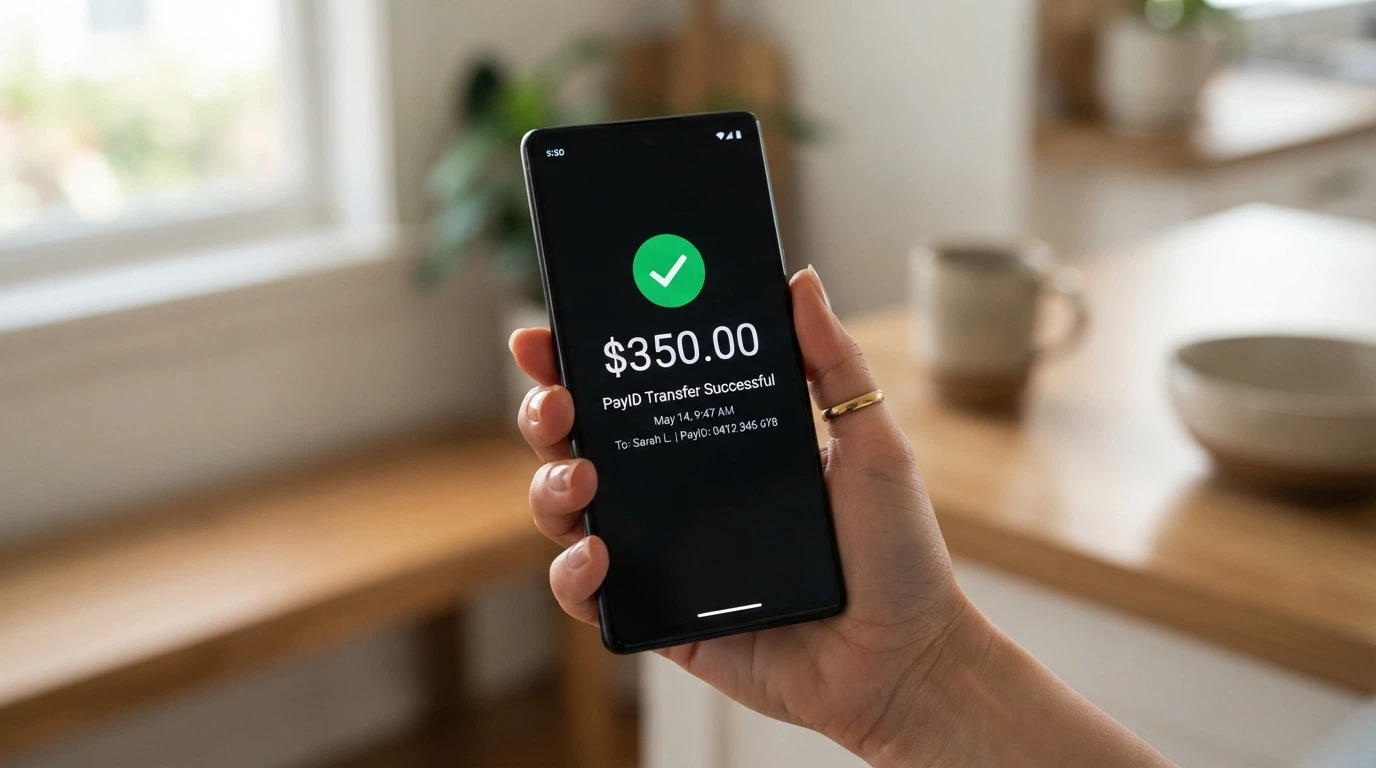
The minimum PayID deposit is in the A$10 to A$30 range across the featured operators; the maximum is set by the casino and by the player’s bank. PayID does not require a credit card (which is banned for online wagering in Australia since 11 June 2024) and does not require crypto (also banned). For an Australian player who wants to use a local rail that the banks recognise, PayID is the default.
POLi is no longer available anywhere in Australia. The POLi Payments service was acquired by Australia Post and shut down in 2024. Any AU-facing offshore casino that lists POLi as a payment method is showing a stale payment page.
Depositing at an Offshore Casino: What Methods Actually Work
The legal deposit routes for online wagering in Australia are debit card, bank transfer, PayID, Osko and BPAY. Credit cards, credit-related products and digital currency (crypto) are banned as payment for online wagering since 11 June 2024, with the operator facing penalties of up to A$247,500 for failing to enforce the ban.
An offshore casino that asks for credit card or crypto is operating outside Australian rules. That is not a value judgement; it is a fact about the regulatory perimeter. The payment method is the tell. An Australian-licensed wagering operator will not ask for either. An offshore casino will, because the offshore operator is not subject to the Australian ban.
For an Australian player, the practical choice is: use PayID or Osko through the Australian banking system, and accept that the operator is offshore and unlicensed. Or use crypto through an offshore operator, and accept that the transaction is outside the Australian banking system entirely and outside the protection that system provides. Or use a debit card, which is the slowest of the three options for withdrawals but the most familiar.
From 1 January 2027, banks and payment providers gain new powers to block transactions to illegal gambling operators. A PayID deposit to a known illegal operator can be declined. The bank is not obliged to block; it has the authority to. A player who has been depositing via PayID for six months without issue may find the seventh month is declined.
Withdrawal Speed: Crypto vs PayID vs Bank Transfer
USDT on the TRC20 network is the fastest verified withdrawal method at AU-facing offshore casinos. Times are 0.2 to 8 hours depending on the operator. BitStarz tested at 0.2 to 2 hours; Stake at 1 to 4 hours. The TRC20 network is fast and the fees are low, which is why it is the rail most operators recommend for crypto withdrawals.
PayID withdrawals average 24 to 48 hours across the tested operators. SkyCrown’s 11-minute payout is the outlier. The PayID rail is real-time on the NPP, but the operator’s internal processing queue adds the delay — the casino has to approve the withdrawal, which takes minutes to hours depending on whether the account is fully verified and whether the request is flagged for additional checks.
Bank wire withdrawals take 3 to 5 business days regardless of operator. The wire is not real-time; it goes through the SWIFT network and the correspondent banking system, and the receiving bank may add a day on its end. Bank wires are also the most expensive method for the operator, and some operators pass the fee on to the player.
The trade-off: crypto is fastest, PayID is in the middle, bank wire is slowest. The choice depends on the player’s tolerance for the consumer-protection gap. Crypto gives up the most protection (no chargeback, no bank complaint) for the most speed. PayID gives up less protection (the bank can sometimes help) for less speed. Bank wire gives up the least protection for the least speed. A player who has won a meaningful amount at an offshore casino and is deciding how to withdraw is choosing between speed and the slim chance the bank will help if the operator does not pay.
Playing Pokies on Your Phone: What Aussie Mobile Casino Really Looks Like
The App Store and Google Play do not carry Australian real-money casino apps. The Google Play Store policy prohibits real-money gambling apps in most regions and Apple has its own restrictions. The result is that most AU-facing offshore casinos do not have a downloadable app in the conventional sense. What they have is one of two workarounds.

The first is a mobile-responsive browser site. The player opens the casino in Safari or Chrome on their phone, the site detects the device, and the layout adjusts to fit the screen. The game lobby, the cashier, the bonus page — all of it works in the browser. No download, no install, no app store involved. The site is always the current version because the player is loading it from the operator’s server, not from a cached app.
The second is an Android APK — a native install file that the operator hosts on its own site. The player downloads the APK, may need to allow installation from unknown sources in the phone’s settings, and the app installs outside the Google Play Store. The APK gives the operator access to push notifications, deeper OS integration, and potentially smoother performance. It also means the player is installing software from an offshore source, with the security implications that carries.
iOS users do not have the APK option. Apple’s restrictions on sideloading are tighter than Android’s, and the only path for an iPhone user is the mobile browser. For Australian players, the practical answer to “how do I play pokies on my phone” is: through the browser, on any device. The casino will work.
Mobile Browser vs Native App: What Australian Players Actually Get
The mobile browser experience at a well-built offshore casino is, in 2026, indistinguishable from a native app for most purposes. The game lobby loads, the games launch in HTML5, the cashier accepts deposits, the bonus page renders, the live-dealer tables stream. The main thing missing is push notifications — a native app can ping the player about a new bonus, a mobile browser cannot.
The native APK adds the notifications, potentially smoother performance on lower-end Android devices, and the option of a biometric login (face or fingerprint) without the browser’s password manager in the loop. The cost is manual updates — the player must re-download the APK when the operator pushes a new version — and the sideloading friction: the phone’s security settings have to allow installation from unknown sources, and the player has to trust the file they are downloading.
The middle ground is a progressive web app, or PWA. A PWA is a mobile browser site that the player can add to their home screen as if it were an app, with a custom icon and a full-screen launch experience. The PWA loads from the operator’s server, so it is always current, and it gives the player a one-tap launch without the App Store or the APK. Not every offshore casino offers a PWA, but the ones that do offer the best compromise between the browser experience and the native app.
For most Australian players, the right answer is the mobile browser. It works on iOS and Android, it does not require installing software from an offshore source, and it gives up very little in practice. The APK is for the player who has a specific reason to want the native experience.
Fresh Faces: New Aussie-Facing Online Casinos Worth a Look in 2026
The new-casino market in 2026 is busy. New AU-facing operators are launching with welcome packages of up to A$8,000, game lobbies of 1,000+ titles, and 10+ crypto deposit options. The headline numbers are large because the operators are buying attention. A new casino has no reputation, no track record, and no existing player base; the welcome bonus is the only tool it has to get a deposit through the door.

The new-casino value proposition is real. A fresh operator offers a modern interface, a current game catalogue, and a bonus that is genuinely generous on the headline. The bonus terms are typically in line with the established operators — 40x to 60x wagering, A$5 to A$7.50 max bet, 5 to 14 day validity — because the new operator cannot afford to be noticeably worse than the established ones. Where the new operator differs is in the soft factors: customer support responsiveness, KYC processing speed, and how the operator handles the first big withdrawal request.
The risk is also real. A new operator has not yet been tested by a large player base, has not yet had to pay out a significant win, and has not yet been on the receiving end of a complaint campaign. A player who deposits at a new casino in its first six months is, in part, testing the operator’s payout reliability with their own money. The no-deposit bonus is the new operator’s acquisition tool for exactly this reason — it lets the player test the casino on the casino’s money.
When the Pokies Stop Being Fun: Gambling Help That Actually Works
About 15.1% of the Australian adult population — an estimated 3.32 million people — are experiencing some level of harm from their own gambling or that of someone close to them. 13.0% (around 2.86 million) are experiencing harm from their own gambling, and 5.4% (about 1.18 million) are experiencing harm from someone else’s gambling. The Roy Morgan Gambling Harm Index, which uses the Gambling Harm Scales developed by Central Queensland University — 10 questions capturing financial, emotional and social impacts — has measured these figures across the Australian adult population. The AIHW’s 2022 estimate put problem gambling at 2.1% of adults, roughly 430,000 people, with high-risk gambling at 1.8%.

A separate model-based study estimates that around 3.29 million Australians aged five and over are affected annually by their own or another person’s gambling, including about 1.38 million adult affected others and 280,000 affected children. The annual health loss associated with gambling-related harm in Australian adults is over 400,000 Years Lived with Disability.
These are not small numbers. They are the reason BetStop exists, the reason the National Gambling Helpline runs 24/7, and the reason this section of the page exists.
Self-Exclusion and the Tools That Put You Back in Control
- BetStop — the National Self-Exclusion Register, launched 21 August 2023. One registration excludes a person from every Australian-licensed online and phone wagering service in a single step. By the end of March 2026, 59,830 people had registered, and 37,247 had active exclusions — more than 62% of everyone who has ever registered.
- Coverage — BetStop binds approximately 150 Australian-licensed wagering providers. Self-exclusion can be for a minimum of three months and up to a lifetime. An offshore casino is not connected to BetStop. The register does not cover the operators on this page. A person who self-excludes via BetStop is protected from licensed Australian wagering operators and not protected from any offshore casino.
- What registrants report — 77% of BetStop registrants reported a better overall quality of life; 79% experienced improved mental health; 69% experienced better personal relationships. The tools work. They work only within the licensed Australian wagering market.
- Deposit and session limits — licensed wagering operators offer customer-set deposit limits, session time reminders and take-a-break periods. Offshore casinos offer these in some cases but are not required to. A player who wants a deposit limit enforced cannot rely on the offshore operator to enforce it; the limit must be self-enforced, or the player should not be playing at the offshore operator at all.
- From 1 January 2027 — the 2026 reform strengthens the register and adds restrictions on direct marketing: inducements are prohibited for 14 days after a customer signs up, for three months after a person deregisters from BetStop, and indefinitely for customers identified as at risk of gambling-related harm.
The most important sentence in this list is the second item. BetStop does not cover the casinos on this page. A player who is concerned about their gambling and who registers with BetStop has closed off the licensed Australian wagering market. They have not closed off the offshore casino market. If the goal is to stop playing entirely, BetStop is one part of the answer; the offshore casinos are a hole in the protection, and the player who has self-excluded must also stay away from the offshore operators to be fully protected.
Where to Get Help: Helplines, Counselling and Support Services
The National Gambling Helpline — 1800 858 858 — is free, confidential and staffed 24/7 Australia-wide. The line is the first call for anyone who is worried about their own gambling or someone else’s, and the counsellors on the other end can help with immediate crisis support, with referral to local counselling services, and with the practical steps of registering with BetStop or contacting a financial counsellor.
Gambling Help Online — gamblinghelponline.org.au — offers online chat and counselling for people who prefer not to call. The service is the same counsellor network as the helpline, accessed through a web interface. The chat is staffed during business hours and the online counselling sessions are booked in advance.
The Roy Morgan Gambling Harm Index, published regularly since 2019, tracks the prevalence of gambling harm across the Australian adult population and uses the Gambling Harm Scales as its measurement instrument. The Index is the source for the 3.32 million figure above and for the trend data on whether gambling harm is increasing, decreasing or shifting between population groups. A player who wants to understand the scale of the issue in Australia — not just their own situation, but the broader picture — can read the Index reports on the Roy Morgan website.
For an Australian player, the practical version is: if gambling is causing harm, the help is free, confidential and available right now. The BetStop register and the helpline are the two tools that matter. The offshore casinos are not part of the protection; the helpline and the register are.
How We Picked and Ranked the Casinos on This Page
The ranking on this page is built from publicly available data: the ACMA’s published list of blocked sites and enforcement actions, the operators’ own terms and conditions pages, the bonus terms as reported on review sites (AustralianGamblers, CasinoAudit, Tech Insider, Wildfish, PayoutVerdict), and the payout-speed data from PayoutVerdict’s testing. No operator on the list holds an Australian online casino licence, because no such licence exists. The ranking does not claim the operators are licensed in Australia; it ranks them on the criteria that the offshore market offers.
The criteria, in order: bonus terms (wagering multiple, max bet, validity window, free-spin win cap), game depth (number of pokies, number of providers), payout speed (PayID, crypto, bank wire), and trust signals (how long the operator has been in the market, how openly it discloses its licensing, how it handles complaints). Operators 1–3 — Rocket Play, SkyCrown, Royal Reels — have detailed bonus terms in this run’s research; operators 4–10 have thinner data and are included for completeness of the featured set. The data asymmetry is reflected in the write-ups: the top three are described in detail; operators 4–10 are described qualitatively with the gaps named honestly.
The ranking is not a recommendation to play at any of these operators. It is an ordering of the options the Australian market offers, against the criteria a player with a given priority might use. A player whose priority is the largest possible welcome package and who can commit to grinding through four tiers in 56 days has a different top pick than a player whose priority is same-day crypto withdrawals. The ranking is one ordering; the match between an operator and a player is a separate decision.
What You Should Actually Do Next: Picking an Offshore Casino With Your Eyes Open
The first thing to do is accept the legal reality. Every casino on this page is offshore and unlicensed in Australia. That is not going to change while the Interactive Gambling Act 2001 is in force, and the 2026 reform does not legalise online casino — it strengthens the existing prohibition. If the legal position matters to you, the licensed Australian wagering operators offer sports and racing but not casino games, and there is no licensed Australian online casino to choose. If you have decided to play offshore anyway, the operators on this page are the ones to compare.
The second thing is to use the comparison to match a casino to your priorities. The largest welcome package is SkyCrown’s four-tier structure (A$8,000 and 400 free spins), and the largest single-tier bonus is Rocket Play’s 200% on the second deposit. The deepest game lobby is Royal Reels (5,400+ pokies, 40+ providers). The fastest PayID payout is SkyCrown’s 11-minute record. The fastest crypto withdrawal is Stake’s 1–4 hours. A player with a small bankroll and a preference for RTG pokies will land on FairGO; a player who wants the broadest possible lobby will land on Royal Reels. Match the casino to the priority.
The third thing is to read the bonus terms before depositing. The wagering multiple (35x to 40x across the top three), the max bet during wagering (A$5 to A$7.50), the validity window (5 to 14 days), the free-spin win cap (A$300 at SkyCrown), and the crypto exclusion (SkyCrown’s welcome bonus is not available for crypto deposits) are the numbers that determine what the bonus actually costs. The headline is the marketing; the terms are the reality. A 40x wagering on a A$1,000 bonus costs the player about A$1,600 in expected losses during the wagering period. The bonus is a smaller number than it looks.
The fourth thing is to set your own deposit and session limits. The offshore operator will not do it for you. BetStop does not cover the offshore casinos. The licensed Australian wagering operators’ deposit-limit tools do not reach the offshore market. A player who wants a deposit limit enforced is the player who has to enforce it themselves, with a separate bank account, a budget, and the discipline to walk away. The 3.32 million Australians experiencing gambling harm did not all start with the intent to be one of them.
The fifth thing, if gambling is causing harm, is the National Gambling Helpline on 1800 858 858. Free, confidential, 24/7. Gambling Help Online at gamblinghelponline.org.au offers chat and counselling. BetStop at betstop.gov.au is the national self-exclusion register for the licensed Australian wagering market. The helpline, the online counselling and the register are the Australian system’s response to gambling harm, and they are the right place to start.
The offshore casinos on this page are a description of a market, not an endorsement of it. The legal reality is that the product is prohibited in Australia, the operators are unlicensed here, and the consumer protection is not what a licensed Australian wagering operator provides. The ranking tells a player which offshore operator is the least bad option for their priorities. The rest of the decision is the player’s.
Frequently Asked Questions
Can I legally play at an online casino from Australia?
Online casino is prohibited in Australia under the Interactive Gambling Act 2001, and there is no licence for it anywhere in the country. The IGA targets the provider, not the player, so an individual punter is not prosecuted for playing. The casino itself is breaking Australian law by offering the product, and the ACMA actively blocks these sites. Every operator on this page is offshore and unlicensed in Australia.
Can I use PayID to deposit at Australian online casinos?
PayID works at most AU-facing offshore casinos for both deposits and withdrawals. Deposits are instant and fee-free, with minimums typically in the A$10 to A$30 range. Withdrawals average 24 to 48 hours, with SkyCrown’s 11-minute PayID payout the fastest recorded figure. PayID is a legal rail — it is not banned for online wagering the way credit cards and crypto are.
What is BetStop and how does self-exclusion work for online gambling?
BetStop is the National Self-Exclusion Register, launched 21 August 2023. One registration excludes a person from approximately 150 Australian-licensed wagering providers. Self-exclusion can be for three months or up to a lifetime. By 31 March 2026, 59,830 people had registered, with 37,247 active exclusions. The critical gap: BetStop does not cover offshore casinos, so a self-excluded person is still able to play at every operator on this page.
Are online casino winnings taxed in Australia?
No. Betting and gambling winnings are not assessable income under section 6-5 of the ITAA 1997, and gambling losses are not deductible under section 8-1 — unless the person is carrying on a business of betting or gambling. The ATO’s IT 2655 sets out the criteria for what counts as a betting business. For a casual player, winnings are tax-free and losses are not deductible. The casino operator pays tax where the customer is.
How do I know if an online casino accepting Australians is safe?
There is no Australian regulator who will vouch for an offshore casino. The signals to look for: the operator’s track record of market presence, the licensing jurisdiction (Malta is more rigorous than Curaçao under the post-2024 framework, but neither has jurisdiction over Australian players), the complaint history on independent forums like AskGamblers and Casino Guru, and whether the operator pays out the big winners. No signal is a guarantee, and no offshore casino offers the consumer protection an Australian-licensed operator provides.
New-Venue Bonuses: Are They Really Better?
The headline bonus amounts at new casinos are competitive. Up to A$8,000 across multiple deposit tiers is the upper end of what the established operators offer, and a new operator may match that to enter the market. The 1,000+ game lobby is on the smaller side of the established operators (Royal Reels’ 5,400+ is the outlier) but still large enough to keep most players occupied.
The wagering terms are typically the same 40x to 60x on the bonus, with 30x on the free-spin winnings. Max bet during wagering is in the A$5 to A$7.50 range. Free-spin win caps are in the A$200 to A$300 range. The numbers are familiar because the market converges — a new operator with noticeably worse terms than the established ones will not get the deposits, and a new operator with noticeably better terms will run out of money paying out the bonuses.
The no-deposit bonus is the new-casino acquisition tool. A$10 to A$50 in cash or 20 to 100 free spins, credited without a deposit, lets a new player test the casino’s withdrawal process on the casino’s own money. The wagering and the cashout cap still apply — the no-deposit bonus is a tightly bounded test, not a profit opportunity — but it is a free test, and a player who is choosing between two new casinos should use the no-deposit offers to compare.
Written by the editors at Bitcoin Casinos Australia.