
Low Deposit Online Casinos in Australia: What $10 Actually Buys and What It Costs
Every casino in this guide accepts Australian players and sits in the A$10–A$20 deposit range, and not by coincidence. Below A$10 the welcome bonus disappears, the game library thins, and the payment method starts to dictate what you can actually do. Online casino is prohibited in Australia under the Interactive Gambling Act 2001, so every brand covered here runs on an offshore licence, with the consequences that brings. This page works through what low deposit means in practice, which payment rails keep the entry point genuinely low, how the bonus terms stack against a small bankroll, and what protections you give up the moment you play offshore.

Current as of 24 November 2026 and checked against the ACMA’s online gambling register.
Table of Contents
- The A$10–A$20 Sweet Spot — Why Lower Isn’t Better for Australian Players
- Every Low-Deposit Casino That Accepts Australians Is Offshore — Here Are the 2026 Standouts
- Not Every Payment Method Lets You Deposit $10 — Here Are the Ones That Do
- Why Your 2026 Welcome Bonus Is Smaller Than It Looks
- A $10 Deposit Won’t Get You Every Game — Here’s What It Actually Buys
- Crypto Deposits — The Trade-Off Nobody Mentions
- The Legal Reality: What You Give Up Playing Offshore
- Staying in Control When the Minimum Is Low
- How We Reviewed These Low-Deposit Casinos
- Frequently Asked Questions
The A$10–A$20 Sweet Spot — Why Lower Isn’t Better for Australian Players
The minimum deposit that works for Australian players is not the lowest number a casino publishes. It’s the lowest number that still lets you claim the welcome bonus and reach the full game library. In practice that floor sits at A$10–A$20. Below that, the casino either strips the bonus out, restricts the deposit method to a rail most Australians don’t use, or quietly routes you to lower-tier game providers.
The “A$1 deposit” tag on a casino’s landing page is a marketing position, not a functional one. The actual minimum a player meets at the cashier depends on the payment method: PayID, Neosurf and crypto can in principle process a dollar, while Skrill or Neteller typically start at A$30. So the same casino may quote A$1 in one headline and require A$10, A$20 or A$30 to do anything useful, depending on how you try to pay. The discrepancy is structural, not accidental, and it is the reason the A$10–A$20 range keeps appearing across serious low-deposit rankings: it is where you get a genuinely low entry point without sacrificing the quality of your experience.
There is another reason not to go lower than A$10. A welcome bonus almost always carries its own minimum deposit, and that minimum is separate from, and almost always higher than, the casino’s stated minimum. A site may accept deposits from A$10 but require A$20 or A$30 to unlock the welcome offer. Deposit at A$5 or A$10 with that site and you bypass the bonus entirely, and you cannot usually retroactively claim it. The casino’s A$10 minimum, in other words, is the price of admission; the bonus minimum is the price of the welcome package, and the two numbers refer to different things.
The A$1 and A$5 tiers also tend to cluster around crypto-only or single-method rails. PayID, Neosurf and crypto are the only rails where a one-dollar deposit makes economic sense for the operator, because the transaction costs of card and bank transfers eat into any deposit that small. That is why the cheapest headlines pair with the narrowest payment menus, and why a player at the A$5 tier is often steered toward a wallet they don’t already use.
Mobile play at low minimums mirrors the desktop experience with two practical differences. The payment flow happens inside a banking app rather than a browser tab, and PayID works particularly well there because it runs on the New Payments Platform, which means transfers clear 24/7. A player on a phone with PayID can fund an account and be playing within minutes. The minimums and the bonus terms, however, are identical to the desktop experience. There is no mobile-specific discount, no smaller minimum, no bonus override. The casino sees the same account regardless of which screen you used to open it.
Every Low-Deposit Casino That Accepts Australians Is Offshore — Here Are the 2026 Standouts
Every online casino that takes Australian players runs on an offshore licence. The Interactive Gambling Act 2001 makes it an offence to provide online casino games, online pokies or in-play betting to a person physically in Australia. There is no licence for online casino anywhere in the country, not federally, not in any state or territory. The Northern Territory Racing and Wagering Commission licenses online bookmakers for pre-event wagering only. That product, online casino, has no Australian regulator, no Australian licence, and no Australian complaints body. The ACMA cannot recover a player’s funds from an offshore operator.
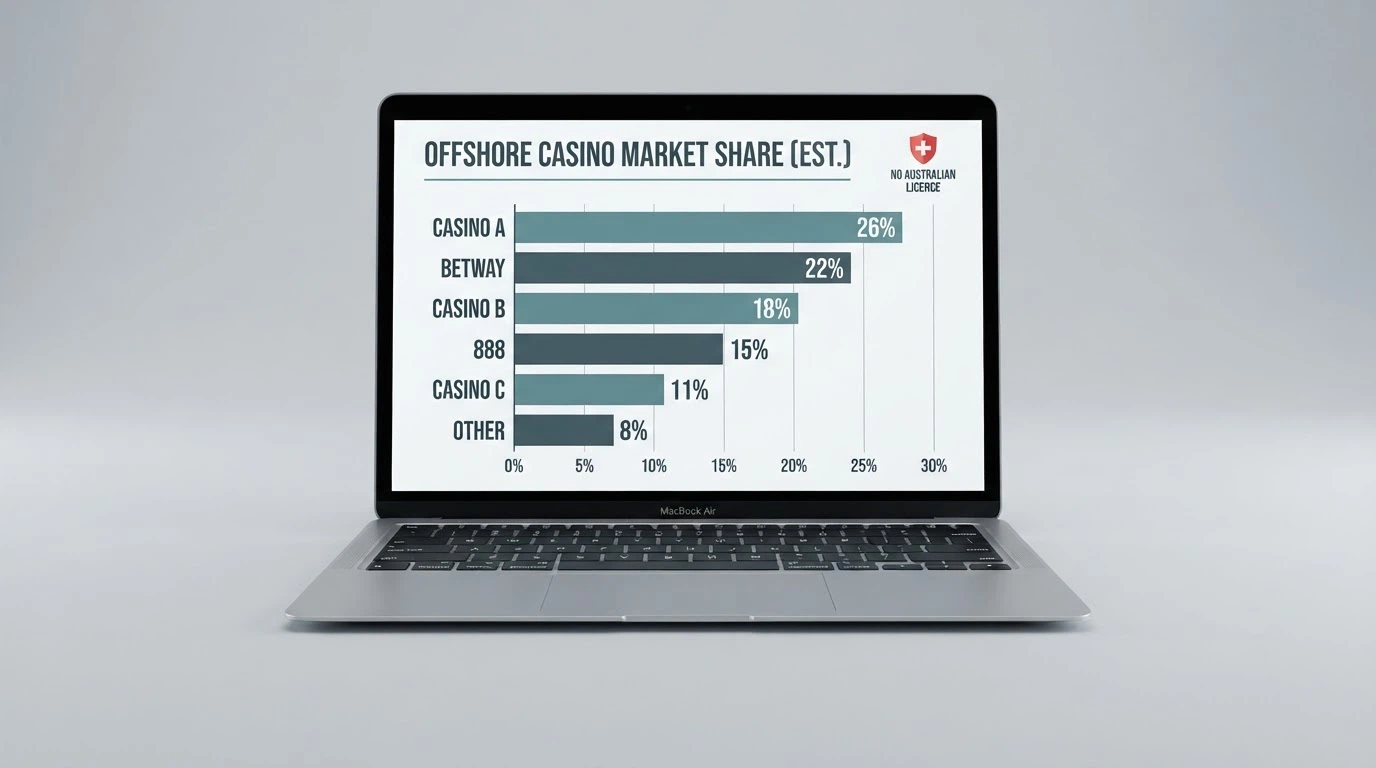
The table below lists the ten offshore brands with the highest tracked Australian traffic share in the current cycle. Each operator was checked against the ACMA’s register of licensed wagering providers: none holds an Australian licence. Their AU market share reflects how many Australian players each brand reaches, not how legitimate they are. It is the best available proxy for what Australians actually use.
| Casino | AU licence? | Market share — AU tracked traffic |
|---|---|---|
| Rocket Play | No, offshore | 9.4% |
| Skycrown | No, offshore | 8.55% |
| Royal Reels | No, offshore | 2.51% |
| WinSpirit | No, offshore | 1.55% |
| Stake | No, offshore | 1.28% |
| Rainbet | No, offshore | 1.28% |
| Scream Casino | No, offshore | 0.99% |
| FairGO | No, offshore | 0.8% |
| Bizzo Casino | No, offshore | 0.57% |
| Rocket Casino | No, offshore | 0.57% |
The two brands named “Rocket” are separate platforms with separate ownership; their identical-sounding names are a coincidence of the offshore market. Stake and Rainbet are the two crypto-focused operators in the set. FairGO is the brand with the most Australian-facing identity — its name evokes local slang — but its licence sits offshore like the rest. None of these operators is an Australian company, none holds an Australian licence, and none is regulated by the ACMA.
The offshore status changes three things that matter at the deposit screen. First, the operator is not connected to BetStop, which means a self-excluded Australian can still deposit and play. Second, the operator is not bound by the National Consumer Protection Framework, so voluntary deposit limits, monthly activity statements and the rest of the protection stack are not required. Third, the ACMA can direct Australian ISPs to block the site at any time, and 1,564 illegal sites have been blocked since 2019. The remaining sections look at each brand in turn.
Rocket Play
Rocket Play holds 9.4% of tracked Australian traffic among the gambling brands in this cycle, ranking third in AU traffic share. That makes it the highest-reaching low-deposit casino for Australian players by a margin of nearly a full percentage point over its closest neighbour. The brand is offshore, unlicensed in Australia, and its licence is issued by a Curaçao-equivalent regulator. The casino’s game library covers the standard offshore range, and its deposit floor sits in the A$10–A$20 band that defines the cluster. Bonus terms at the minimum deposit tier follow the typical offshore pattern of a percentage match on the first deposit, though players should always confirm the exact wagering requirements. Rocket Play’s reach is what distinguishes it: it is the brand a casual Australian search for “low deposit casino” is most likely to land on, and the rest of the comparison below is shaped by that. A reader looking for the single brand with the deepest Australian footprint has the answer here; a reader who cares more about wagering fairness or crypto support will find it elsewhere.
Skycrown
Skycrown sits at 8.55% of tracked Australian traffic, ranking fourth. The platform is a full-service casino rather than a niche operator, and its game library spans the same offshore catalogue as the rest of the cluster. Its deposit floor also sits at the A$10–A$20 level, with bonus terms in line with industry norms. Skycrown’s distinguishing feature is reach combined with catalogue depth: a player who wants mainstream offshore variety rather than a single-vertical brand finds more here. Like every brand in this ranking, Skycrown holds no Australian licence and cannot be regulated by the ACMA. The traffic share reflects Australian players’ actual choices, not the brand’s standing with any Australian authority.
Royal Reels
Royal Reels holds 2.51% of tracked Australian traffic, a meaningful drop from the top two but a substantial share among offshore brands. The brand positions itself with a heavy pokies library, which matches what most Australian players actually look for at a casino. Its deposit minimum sits in the standard offshore A$10–A$20 range, and its bonus terms follow the cluster norm. Royal Reels is an established offshore brand rather than a newcomer, and its pokies-heavy catalogue makes it a natural fit for the player whose interest is online slots and nothing else. Like the rest of the set, it operates offshore, holds no Australian licence, and falls outside the National Consumer Protection Framework.
Stake
Stake holds 1.28% of tracked Australian traffic and is the most recognisable crypto casino in the set. The brand is built around cryptocurrency deposits and withdrawals — Bitcoin, Ethereum and a handful of altcoins — and its fiat rails are deliberately narrow. For a low-deposit Australian player, the relevant point is the legal one: credit cards, credit-related products and digital currency are banned as payment for online wagering since 11 June 2024 under the Interactive Gambling Amendment (Credit and Other Measures) Act 2023. A casino that asks a player for crypto is, by definition, operating outside Australian rules. Stake’s crypto focus is therefore not just a payment preference; it is a regulatory signal. A player who chooses Stake for the deposit speed and the anonymity is also choosing an operator that the ACMA cannot regulate and that the 2027 reform will empower banks to block transactions toward. The trade is real, and it is the reason this brand sits in the ranking rather than the foreground.
WinSpirit
WinSpirit holds 1.55% of tracked Australian traffic, a small but consistent share among Australian players. The brand runs a low-deposit-friendly offshore platform, and its catalogue and bonus structure fit the cluster norm. Its deposit floor is in the A$10–A$20 band, and its terms follow the same industry-standard pattern as the rest of the set. WinSpirit’s position in the ranking reflects steady Australian traffic rather than a specific feature or specialisation. A player who arrives at this page looking for an option outside the top three finds a brand with established Australian reach and standard offshore terms. Like every operator in the ranking, WinSpirit holds no Australian licence and is regulated only by the offshore authority that issued its licence.
Rainbet
Rainbet holds 1.28% of tracked Australian traffic and shares the crypto-native position with Stake. The platform is built around crypto deposits and withdrawals, and its fiat rails are limited. The trade-off it offers is the mirror image of the fiat-first brands in the set: faster settlement, broader coin support, fewer identity checks, but the same offshore status and the same absence of Australian consumer protection. The relevant fact for Australian players is the same one that applies to Stake: a casino that asks for crypto operates outside Australian rules. Rainbet is therefore a fit for the player who wants crypto-native play and accepts that the Australian regulator has no authority over the operator. The protection gap is the cost of that choice, and it is the reason Rainbet is included in the ranking rather than presented as a default.
Scream Casino
Scream Casino holds 0.99% of tracked Australian traffic, putting it just below the 1% mark. The brand is a newer entrant among offshore casinos, and its position in this ranking reflects growing Australian reach rather than an established position. Its deposit minimum sits in the standard A$10–A$20 band, and its terms follow the cluster norm. For a player building a shortlist of low-deposit offshore options, Scream Casino is one of the names worth knowing. Its offshore status means the same absence of Australian consumer protection as the rest of the set.
FairGO
FairGO holds 0.8% of tracked Australian traffic and is the brand with the most Australian-facing identity in the ranking. The name evokes the local phrase “fair go,” and the brand’s design and copy lean into that positioning. The licence, however, is offshore like every other operator in the set. The gap between the branding and the legal status is exactly the issue a player needs to recognise: a brand that sounds Australian is not, in regulatory terms, Australian. FairGO’s deposit floor sits in the standard A$10–A$20 range, and its terms follow the industry norm. The brand is a fit for the player who values Australian-style presentation and accepts that the underlying operator is offshore.
Bizzo Casino
Bizzo Casino holds 0.57% of tracked Australian traffic, a small share but a real one. The brand sits in the offshore casino mid-tier and runs a low-deposit-friendly platform with a standard game catalogue. Its deposit minimum and bonus terms follow the cluster norm. Bizzo’s position in the ranking reflects its presence in the Australian market rather than a feature or specialisation that distinguishes it from the rest of the set. A player comparing low-deposit offshore options will encounter Bizzo among the names; its inclusion here reflects its Australian traffic share rather than a specific claim it makes.
Rocket Casino
Rocket Casino holds 0.57% of tracked Australian traffic, identical to Bizzo’s share. The brand is separate from Rocket Play despite the similar name, with its own platform, ownership and licence. Rocket Casino’s deposit minimum sits in the standard A$10–A$20 band, and its terms follow the offshore industry norm. For a player who has looked at Rocket Play and wants to compare the lower-share brand with a similar name, the two operate as distinct operators with distinct offers. Rocket Casino’s inclusion in the ranking reflects its Australian traffic share and the relevance of its name to search behaviour; its offshore status means the same absence of Australian consumer protection as the rest of the set.
Not Every Payment Method Lets You Deposit $10 — Here Are the Ones That Do
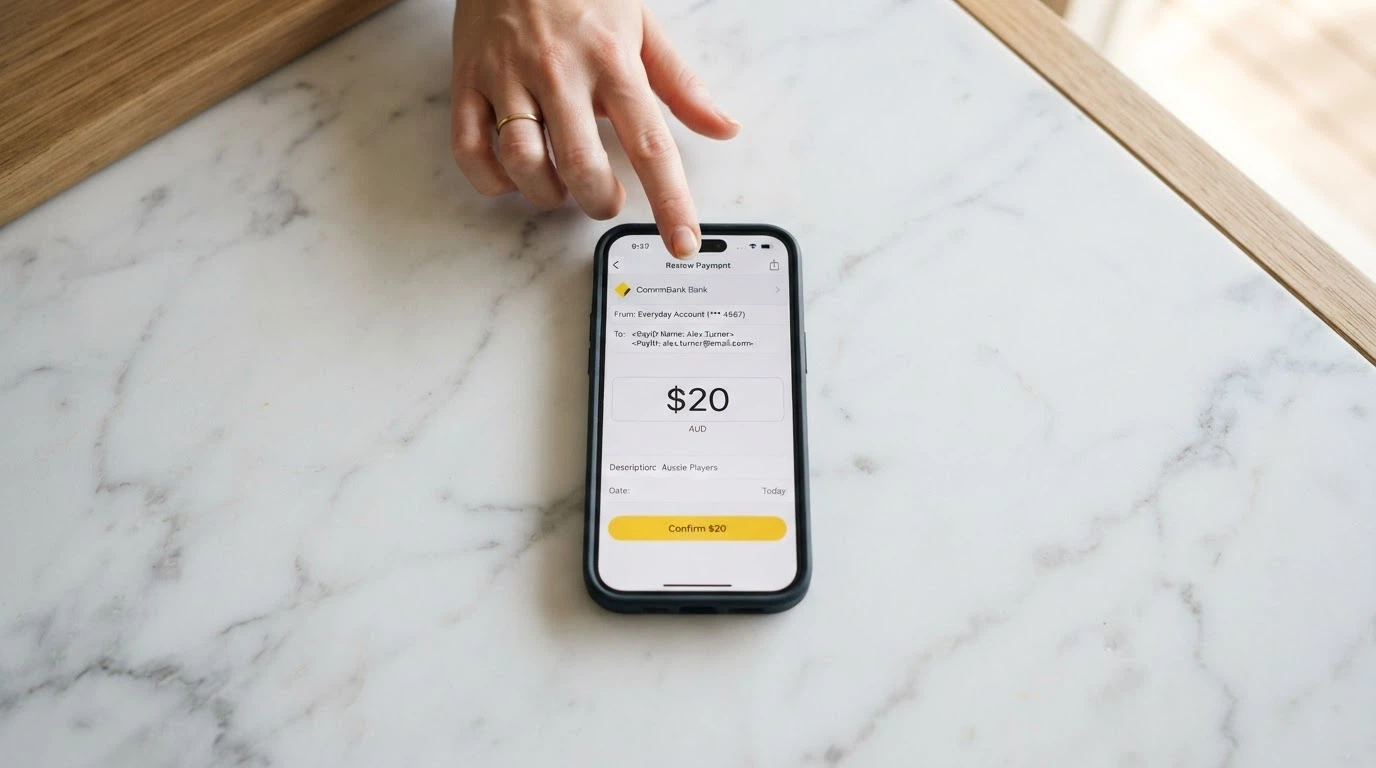
The deposit floor on an offshore casino is not one number; it is a ladder that depends entirely on which payment method a player reaches for. PayID, Neosurf and crypto can in principle process a dollar. E-wallets like Skrill and Neteller typically require A$30. Card payments sit somewhere in between. The casino’s headline minimum is usually the lowest rail available; the rail a player actually uses is what determines whether they hit the floor.
| Method | Typical minimum deposit | Transfer speed | Accepted at AU-facing casinos |
|---|---|---|---|
| PayID / Osko | A$10–A$20 | Near-instant (under 1 hour for under A$1,000) | Yes |
| Neosurf | A$10 | Instant (prepaid voucher) | Yes |
| Crypto (Bitcoin, Ethereum) | — | Minutes after network confirmation | Yes (Stake, Rainbet and other crypto-native brands) |
| Skrill | A$30 | Instant once verified | Yes |
| Neteller | A$30 | Instant once verified | Yes |
| CASHlib | A$10 | Instant (prepaid voucher) | Yes (e.g. Need For Spin) |
PayID is the dominant rail for Australian low-deposit players because it sits at the bottom of the ladder and clears through the New Payments Platform. E-wallets add an extra step at the cashier and a higher minimum. Prepaid vouchers are useful for players who want to keep casino spending off their bank statement. Crypto is its own category — fast, low-minimum, but legally a tell that the operator runs outside Australian rules.
PayID: the Australian rail that keeps deposits small
PayID runs on the New Payments Platform, which means transfers work 24 hours a day, seven days a week, and clear near-instantly for amounts under A$1,000. For a player at the cashier, that means the deposit is sitting in their casino account before they have closed the banking app. The minimum at most AU-facing offshore casinos is A$10 on PayID, and some go lower. PayID also avoids the surcharge that some e-wallets charge for funding and the slower settlement of bank transfers. For an Australian player making a small first deposit, PayID is the method that combines the lowest practical minimum with the fastest settlement. It is also the method most likely to work cleanly the first time, because it requires no e-wallet account, no voucher purchase and no crypto wallet setup. A bank account with PayID enabled is all a player needs.
E-wallets and prepaid: Skrill, Neteller, Neosurf and CASHlib compared
E-wallets and prepaid vouchers fill a different role. Skrill and Neteller are widely accepted at offshore casinos, but their minimums typically sit at A$30, well above the PayID floor. The extra A$20 is the price of using a separate account that sits between the bank and the casino, and for a player whose entire budget is A$10 it is a hard barrier. CASHlib and Neosurf are the prepaid options that match PayID’s minimum: A$10 at most operators, paid in via a voucher purchased from a retail outlet or online. They are useful for players who want to keep gambling spend separate from their everyday bank account, and they work without sharing bank details with the casino. The trade-off is the extra step of buying a voucher, and the lack of a refund path if a deposit goes wrong. For a low-deposit player who can fund via PayID, the prepaid route adds friction without adding much; for a player who cannot or will not use PayID, it is the closest practical substitute.
Why Your 2026 Welcome Bonus Is Smaller Than It Looks
The welcome bonus at a low-deposit casino carries two separate minimums and a wagering multiple that can turn a small deposit into hundreds of dollars in required turnover. A player who reads the headline offer and stops reading has misunderstood the offer.

The two minimums are the casino’s minimum deposit — the smallest amount the cashier will accept — and the bonus-qualifying deposit, which is the smallest amount that actually unlocks the welcome package. The two numbers refer to different things. A casino may accept deposits from A$10 but require A$30 to unlock the welcome bonus, in which case an A$10 deposit lands in the account but bypasses the offer entirely. Some operators align the two numbers, which is the friendlier arrangement: Wild Tokyo at A$20 minimum deposit and A$20 bonus minimum, Lucky 7 at A$10 minimum and A$10 bonus minimum, Lucky Vibe at A$10 and A$10. Others do not, and the gap is where a player loses the welcome offer without realising it.
Wagering requirements sit on top of the minimums. The welcome bonus typically carries a multiple applied to the deposit and bonus combined, and that multiple determines how much real-money play the bonus requires before any of it can be withdrawn. The industry standard sits in the 30x–40x range. Legit99 publishes a 40x welcome bonus wagering requirement. Wild Tokyo runs 35x. DeeSpin runs 5x on deposit and bonus combined, far below the cluster norm, and that gap is the difference between a bonus a player can realistically clear and one that is mathematically heavy enough to make the offer uneconomic.
The deposit-vs-bonus-minimum gap: two different numbers
A player who deposits between the casino’s minimum and the bonus minimum has technically made a valid deposit at a licensed, offshore casino but has not activated the welcome offer. Most operators will not retroactively apply the bonus once a player has deposited below the qualifying threshold, and some will not let the player deposit a second time to top up to the bonus minimum without forfeiting the first deposit. The two numbers are completely different and the gap between them is one of the most common ways a low-deposit player loses the welcome offer they thought they were getting. At operators where the two numbers align — Wild Tokyo at A$20 for both, Lucky 7 and Lucky Vibe at A$10 for both — the player has a single threshold to clear and the offer activates cleanly. At operators where they diverge, the bonus minimum is the number to read before depositing.
What a low-deposit bonus actually costs you in wagering
A 5x wagering multiple on deposit and bonus combined is a fundamentally different offer from a 40x multiple, and the difference runs into the thousands of dollars at the same bonus size. Take a deposit of A$20 with a 100% match bonus at A$20: the wagering requirement is applied to the A$40 combined balance. At 5x, the player must turn over A$200 before the bonus clears. At 40x, the player must turn over A$1,600. Same deposit, same bonus headline, eight times the required turnover. The market is generally described as drowning in 40x-plus offers, and the few operators sitting well below that range — DeeSpin at 5x, MadCasino positioning its terms below the typical 30x–40x band — are the ones whose welcome offers a small-bankroll player can realistically clear. A bonus at 40x on a A$20 deposit is not a gift; it is a treadmill, and the small-bankroll player runs out of stake before they run out of requirement.
A $10 Deposit Won’t Get You Every Game — Here’s What It Actually Buys
A small deposit restricts the game selection in two ways: by stake level and by the catalogue the casino exposes at the minimum deposit tier. At minimum stake on most pokies — typically 20 cents per spin — a A$10 deposit buys roughly fifty spins, enough to test a game and find out whether the player likes it, not enough to play a session in any serious sense. A A$20 deposit doubles that to around a hundred spins, which starts to look like a real session. The number is approximate because stake and RTP vary by title, but the order of magnitude holds across the cluster.

What a small deposit reaches is the standard offshore pokie catalogue, which is the bulk of what most AU-facing casinos offer. The very lowest deposit tiers sometimes route the player to lower-tier providers with thinner catalogues and less variety, which is one of the practical reasons to start at A$10 rather than A$1 or A$5 even if the cashier accepts the lower amount. The higher deposit floor buys access to the same game library any other player sees, with the difference being how many spins a player can afford rather than which games they can open.
Pokies you can spin at low stakes
The pokie catalogue is the centre of gravity at an AU-facing offshore casino, and at minimum stake — typically 20 cents — a A$10–A$20 deposit buys between fifty and a hundred spins. That is a genuine session: enough to see bonus features trigger, enough to get a feel for a game’s volatility, enough to decide whether the title is worth returning to. The stake-level ceiling a player hits is not the casino’s catalogue ceiling; it is the deposit ceiling. The same pokie library is open to a A$10 deposit and a A$1,000 deposit; the only thing that changes is how long the player can stay in any given game.
What does change between deposit tiers is which providers the casino exposes. The very lowest tiers sometimes route the player to a thinner set of providers with smaller catalogues, which is part of the practical case for the A$10–A$20 sweet spot. A player at A$10 sees the standard catalogue; a player at A$1 sees whatever the casino has chosen to put in front of the smallest deposit. The latter is not a worse experience by design, but it is a thinner one.
Beyond the pokies: table games and live dealer at low deposits
Table games and live dealer tables sit at higher minimum stakes than the average pokie, which is why a low deposit rarely reaches them in any meaningful way. A A$10 deposit at a 20-cent pokie stake is a session; a A$10 deposit at a A$1 blackjack table is ten hands. Live dealer tables typically start at A$2–A$5 per hand, which is reachable but burns the deposit quickly, and roulette sits in a similar band. The games are open to a low-deposit player; the sessions are short. A player who wants a meaningful live dealer experience from a small bankroll should treat a low deposit as a way to test the platform rather than as a way to play live games for any length of time. The pokie catalogue is where a small deposit travels furthest, and that is also where the bulk of an AU-facing offshore casino’s game library sits.
Crypto Deposits — The Trade-Off Nobody Mentions
Crypto is the lowest-friction deposit rail at an offshore casino. Minimums sit lower than PayID, settlement is faster than any bank transfer, and identity verification is lighter than at a fiat-only operator. For a player who wants to deposit a small amount and start playing quickly, crypto is the technically smoothest path. The trade is not in the technology; it is in the legal signal that crypto acceptance sends.
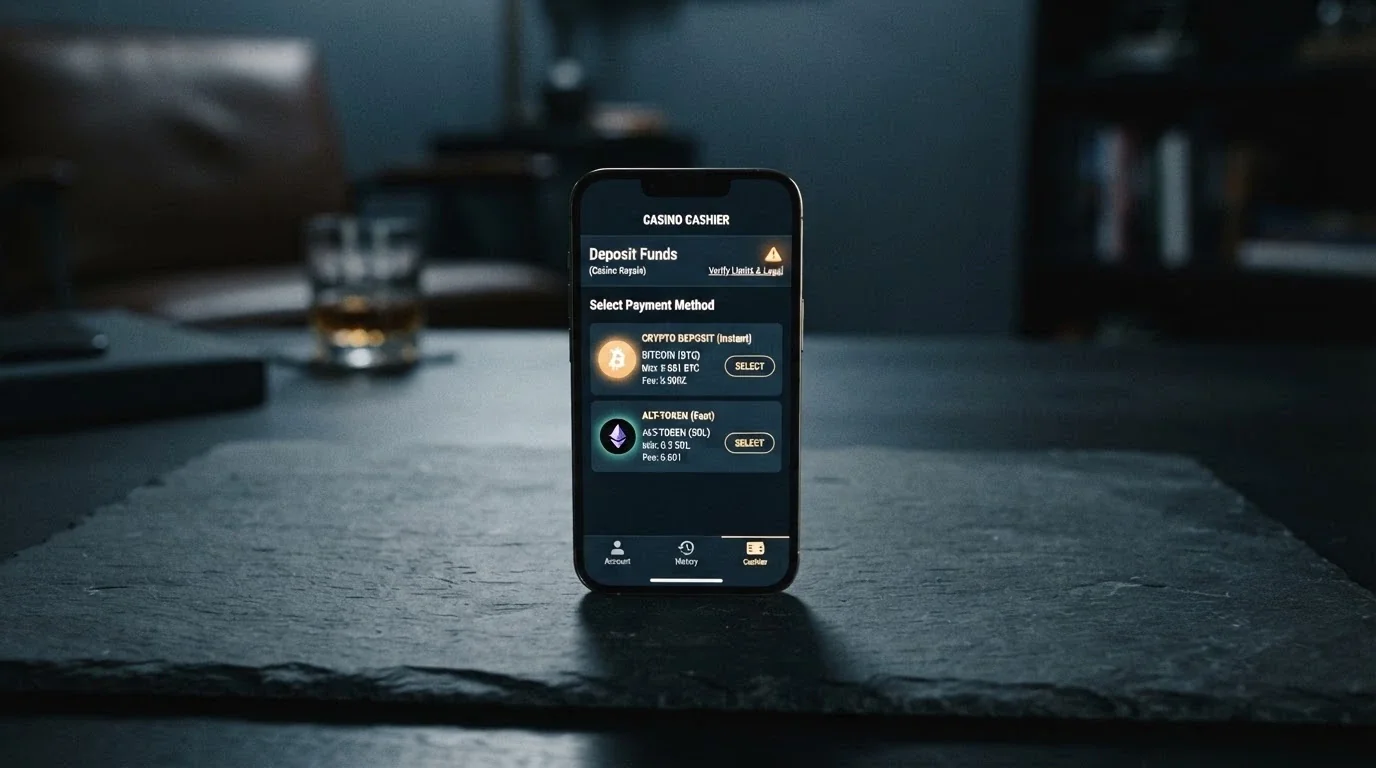
Credit cards, credit-related products and digital currency are banned as payment for online wagering since 11 June 2024 under the Interactive Gambling Amendment (Credit and Other Measures) Act 2023, with penalties of up to A$247,500 for non-compliance. A casino that asks a player for crypto is, by definition, operating outside Australian rules — because no Australian-licensed operator can accept it. The payment method is itself a tell. Stake and Rainbet, the two crypto-focused brands in the ranking, are offshore by every measure an Australian player cares about, and their crypto focus is the clearest signal of that status.
The trade deepens from 1 January 2027. The Interactive Gambling Amendment (Gambling Reform) Bill 2026, passed on 19 August 2026, gives banks and payment providers the legal power to block such transactions. A crypto deposit today happens outside the banking system, but a player who needs to convert winnings back to fiat will eventually route through a bank, and that is the choke point the 2027 reform opens. Crypto does not make an offshore casino legal; it makes it faster, and it makes the eventual exit harder.
Bitcoin and crypto as a deposit rail: how it works
The deposit process with crypto at an offshore casino follows a familiar pattern. The player opens the cashier, selects a coin — typically Bitcoin or Ethereum — and the casino generates a one-time deposit address. The player sends the funds from their wallet, and the funds appear after network confirmation, usually within minutes for Ethereum and within an hour for Bitcoin. Minimums sit lower than PayID or e-wallet rails, and there is no intermediary that can decline the transaction.
The trade-off shows up in two places. First, the player is their own bank: a wrong address loses the funds, and there is no chargeback path. Second, the conversion back to Australian dollars happens at an exchange with its own fees and its own identity requirements, which is where the 2027 reform’s transaction-blocking power will eventually apply. Crypto is fast at the deposit and slow at the exit, and the slowness at the exit is the cost that does not show up in the marketing.
What crypto acceptance tells you about a casino’s legal status
The legal status of crypto at Australian-facing gambling sites is settled: it is banned for licensed operators since 11 June 2024. A casino that accepts it is therefore offshore, unlicensed in Australia, and not regulated by the ACMA. That is not a nuance; it is the structural fact of the offshore crypto casino market, and it is the reason a player choosing crypto is also choosing to step outside the small set of protections Australian wagering law offers. The 2026 reform sharpens the point. From 1 January 2027, banks and payment providers gain express authority to block transactions to illegal gambling operators, which means the entry and exit points a crypto player eventually uses will face new friction. Crypto is the technically smoothest rail and the legally clearest signal of offshore status, and the two facts are not separable.
The Legal Reality: What You Give Up Playing Offshore
The Interactive Gambling Act 2001 makes it an offence to provide online casino games, online pokies and in-play sports betting to a person in Australia. There is no licence for online casino anywhere in the country. The product is prohibited, the provider is the target of enforcement, and the player is the one who loses the protections that would otherwise apply. The ACMA has had 1,564 illegal gambling and affiliate websites blocked by Australian ISPs since November 2019, and more than 225 illegal services have withdrawn from the Australian market since enforcement was strengthened in 2017.

What a player gives up by playing offshore is not abstract. The list is specific and the protections are real for anyone who would otherwise rely on them:
- No BetStop coverage. BetStop excludes a player from every Australian-licensed wagering service with one registration. An offshore casino is not connected to the register and will keep accepting deposits from a self-excluded person.
- No deposit limits, no activity statements, no take-a-break tools. The National Consumer Protection Framework applies to licensed operators only.
- No complaints body. The ACMA can block the site; it cannot recover funds. There is no Australian ombudsman for offshore casinos.
- No recourse on a refused withdrawal. A dispute with an offshore operator is a dispute under the licence of whichever jurisdiction issued the operator’s licence, not an Australian one.
- Site can be blocked at any time. ACMA direction to ISPs is administrative, and the block can happen while the player has a balance on the site.
The 2026 reform adds a further layer. From 1 January 2027, banks and payment providers gain express authority to block transactions to illegal gambling operators. A player who is comfortable with an offshore casino today may find their deposit or withdrawal declined by their bank within months.
The Interactive Gambling Act and why no online casino holds an Australian licence
The Interactive Gambling Act 2001, strengthened by the Interactive Gambling Amendment Act 2017, makes it an offence to provide online casino games, online pokies or in-play sports betting to a person in Australia. The offence targets the provider, not the player — the individual player is not prosecuted under the IGA — but the absence of a licence means there is no Australian regulator for the product. Online wagering licensing in Australia concentrates in the Northern Territory through the NTRWC, administered through Licensing NT, but that licence covers pre-event wagering only. There is no licence class for online casino.
The ACMA enforces the prohibition by directing Australian ISPs to block illegal sites, issuing formal warnings, and bringing civil penalty proceedings. The penalty regime is significant: civil penalties for providing prohibited interactive gambling services can be up to A$2,475,000 per day for an individual and A$12,375,000 per day for a corporation. The enforcement record backs the penalty regime: 1,564 sites blocked since November 2019, 225+ services withdrawn since 2017. Recent enforcement includes eight infringement notices issued to Tabcorp Holdings Limited on 16 January 2026, each for A$19,800, totalling A$158,400, for providing a prohibited interactive gambling service in the form of in-play betting; and a finding that Entain Group Pty Ltd had opened 4 accounts for BetStop-registered individuals, provided services on 59 occasions to registered individuals, and failed to close 3 accounts as required.
The enforcement picture for a player is straightforward. The provider faces the penalty, the player faces the absence of protection, and the ACMA’s blocking power can move against the site at any time. The scale of enforcement is the reason offshore casinos rotate domains and rebrand; it is also the reason a player cannot treat an offshore casino as a stable institution the way a player can treat an Australian-licensed bookmaker.
The 2026 gambling reform: what changes from 1 January 2027
The Interactive Gambling Amendment (Gambling Reform) Bill 2026 passed Parliament on 19 August 2026 and its measures commence on 1 January 2027. The reform is the largest tightening of Australian online gambling law in a decade, and it changes several things that matter at the low-deposit end of the market.
Payment blocking. Banks and payment providers gain express authority to block transactions to illegal gambling operators. For an Australian player at an offshore casino, this is the most direct change: the bank can decline the deposit, the bank can decline the withdrawal, and the player has no Australian recourse if the operator refuses to return funds through an alternative channel.
Advertising restrictions. From 1 January 2027, wagering advertising on TV is restricted to no more than three ads per hour between 5am and 8:30pm. Wagering advertising is banned during live sporting events from 15 minutes before until 5 minutes after a live event between 5am and 8:30pm. Wagering advertising in sports venues and on uniforms of players and officials is banned. Athletes, celebrities and influencers are barred from promoting wagering products. Broadcasting of sporting odds is banned outright.
Inducement marketing. Direct marketing of inducements is prohibited for 14 days after a customer signs up, for 3 months after a person deregisters from BetStop, and indefinitely for customers identified as at risk of gambling-related harm.
AdStop. A national wagering advertising opt-out register called AdStop will be administered by the ACMA, funded by a cost-recovery levy on licensed wagering companies.
Product bans. The reform also bans online keno “pocket pokies” and foreign-matched lotteries.
For the offshore low-deposit market, the most consequential change is the payment-blocking authority. The advertising and inducement changes affect licensed operators more directly; the offshore market is already largely outside the advertising rules. But the banking choke point is new, and it applies to every player funding an offshore casino account from an Australian bank.
BetStop, dispute resolution and the protections you forfeit
BetStop is the National Self-Exclusion Register. One registration excludes a person from every Australian-licensed online and phone wagering service in a single step. As at 31 July 2026, BetStop had 67,480 registrations in three years, of which 41,290 exclusions were still active; 78% of registrants were under 40 and 38% chose lifetime exclusion. The register covers every Australian-licensed bookmaker and is the single most effective tool available to an Australian player who wants to stop.
BetStop’s limitation is exactly the one that matters for this page. BetStop binds Australian-licensed wagering services only; an offshore casino is not connected to the register and will keep accepting a self-excluded person’s money. A player who has registered with BetStop and then deposits at an offshore casino has not stopped gambling; they have shifted the gambling to the operator that is not bound by the exclusion. The dispute-resolution gap is the mirror image. There is no Australian complaints body for offshore casinos; the ACMA can investigate the operator and block the site, but it cannot order a refund or a payout. A player whose withdrawal is refused at an offshore casino has recourse under whatever jurisdiction issued the operator’s licence, which is typically not an Australian one.
Staying in Control When the Minimum Is Low
A low deposit reduces the financial risk at the cashier but does not remove the underlying risk of the product. The same protections that apply to a licensed Australian wagering operator apply regardless of how much the player deposits, and they do not apply at an offshore casino. The help infrastructure, on the other hand, is open to every Australian regardless of where they play.

About 2.1% of Australian adults — roughly 430,000 people — experience problem gambling. The Australian Institute of Health and Welfare put high-risk gambling at 1.8% in 2022. The numbers are a small share of the population but a large absolute count, and the help infrastructure exists because the underlying product carries real risk for a non-trivial minority.
Deposit limits, activity statements and the tools licensed operators provide
The National Consumer Protection Framework for Online Wagering includes ten measures: prohibition of lines of credit, strong identity verification, restricted inducements, easy account closure, voluntary deposit limits, monthly activity statements, consistent risk messaging, staff training, and the National Self-Exclusion Register. Every Australian-licensed online wagering operator must offer voluntary deposit limits and monthly activity statements; both tools are absent from offshore casinos, which fall outside the Framework.
The protection gap matters at low deposits as much as at high ones. A player who sets a deposit limit of A$50 a week at an Australian-licensed bookmaker has a hard ceiling; a player who deposits A$50 a week at ten different offshore casinos has ten soft ceilings, none of them enforced. The cumulative exposure at low deposit amounts can match the exposure at a single high deposit, and the absence of activity statements means the player has no monthly summary to review. The tools licensed operators are required to provide are the tools an offshore player must build for themselves.
Where to get help: helpline, BetStop and support services
The help infrastructure is free, confidential, and available regardless of where a player is gambling. The National Gambling Helpline is 1800 858 858, free, confidential, staffed 24 hours a day, 7 days a week. Online chat is available through Gambling Help Online at gamblinghelponline.org.au. BetStop — the National Self-Exclusion Register — is at betstop.gov.au; one registration excludes from every Australian-licensed online and phone wagering service. State-based services — Gambling Help NSW, Gambling Help QLD and the equivalents in other states — provide free face-to-face and phone counselling.
The BetStop limitation is the one a player at an offshore casino needs to internalise. The register binds licensed services only; an offshore casino will continue to accept deposits from a registered person. A player who wants to stop gambling across every operator they use, offshore or domestic, needs both BetStop and the discipline to avoid offshore sites altogether. The helpline and Gambling Help Online are open to anyone, regardless of where they play or how much they deposit.
How We Reviewed These Low-Deposit Casinos
This ranking is built from tracked Australian traffic share and the ACMA’s register of licensed wagering providers. Per-operator specifications — including bonus terms and wagering requirements — are drawn from published terms. For specific details on any welcome offer, readers are encouraged to consult the operator’s own terms page.
Frequently Asked Questions
What is the lowest minimum deposit at an online casino that accepts Australian players?
The lowest deposit that effectively works for Australian players is typically in the A$10–A$20 range. While some offshore casinos advertise lower figures like A$1 or A$5, these amounts often exclude players from welcome bonuses, restrict deposit methods, or limit access to the full game library available to higher depositors.
Can I get a welcome bonus if I only deposit $10 at an Australian online casino?
It depends on the casino’s terms. While some operators allow deposits as low as A$10, they may require a higher amount, such as A$20 or A$30, to trigger the welcome bonus. Always check if the casino’s minimum deposit and the bonus-qualifying minimum are aligned before you fund your account.
Is it legal to play at an online casino in Australia with a low deposit?
No. Under the Interactive Gambling Act 2001, providing online casino games to people in Australia is prohibited. There is no Australian licence for online casino operations. Playing at an offshore casino means using an unlicensed service that falls outside Australian regulatory protections, consumer safeguards, and BetStop coverage.
Do low deposit casinos in Australia offer fast withdrawals?
Withdrawal speeds at offshore casinos vary significantly. While some methods like e-wallets or crypto can be fast once verification is complete, players often face long pending periods of 24–48 hours or more. Because these casinos are offshore, there is no Australian ombudsman or complaints body to assist with refused or delayed withdrawals.
Is online gambling legal in Australia in 2026 and what is the Interactive Gambling Amendment (Gambling Reform) Bill?
Online casino gaming remains prohibited under the Interactive Gambling Act 2001. The 2026 reform, commencing 1 January 2027, introduces major changes, including express authority for banks and payment providers to block transactions to illegal gambling operators, tighter advertising restrictions, and the establishment of a national advertising opt-out register called AdStop.
The trade the page describes is the same trade at every step. The A$10–A$20 sweet spot exists because lower minimums cost the player the welcome bonus and the game-library depth that makes a deposit worth making. PayID keeps the rail low. The bonus terms multiply the deposit by 30x–40x in most cases, and the few outliers that sit at 5x or below are the ones a small bankroll can realistically clear. Crypto is the fastest rail and the clearest legal signal of offshore status. The offshore status means no BetStop coverage, no Australian dispute resolution, no voluntary deposit limits enforced by an Australian framework, and a site that can be blocked by the ACMA at any time.
The 2026 reform changes the near future. From 1 January 2027, banks and payment providers can block transactions to illegal gambling operators. A player comfortable with an offshore casino today is making a choice that has a finite shelf life. The decision is the reader’s: whether a low entry point is worth the absence of the protections Australian wagering law provides. The evidence on this page points one way — the offshore market exists because the licensed market does not offer online casino, and the protections are not optional extras; they are the reason a regulated market exists at all. A low deposit reduces the financial exposure; it does not change the underlying trade.