
Instant Withdrawal Casinos in Australia: Where the Speed Lives and Where It Doesn’t
The fastest withdrawal at an online casino is not the one the homepage advertises. It is the one that actually arrives, in the currency you want, without a support ticket explaining why your “instant” payout has been pending for three days. That distinction is the spine of this page. Every casino listed here is offshore, not one holds an Australian licence, and the reader who chooses one accepts a trade-off that the marketing never spells out: speed bought at the price of every consumer protection the licensed system offers.

Data current as of 24 November 2026, licence and enforcement claims verified against the Interactive Gambling Act 2001, the Interactive Gambling Amendment Act 2017, the Interactive Gambling Amendment (Credit and Other Measures) Act 2023, the Interactive Gambling Amendment (Gambling Reform) Bill 2026, ACMA enforcement records, and ACMA’s BetStop register.
Table of Contents
- What Instant Withdrawal Actually Means at an Online Casino in 2026
- The 10 Fastest-Paying Casinos Australian Players Actually Use
- No Australian Casino Licence Exists — Here’s What That Means for Your Money
- The Fastest Way to Get Paid: How Each Withdrawal Method Stacks Up
- Crypto Casinos: Faster Payouts, but at What Cost?
- Why Your Instant-Withdrawal Bonus Is Smaller Than It Looks
- The Pokies and Slots That Pay Out Fastest
- Playing Safe When the Safety Net Doesn’t Reach Offshore
- How We Evaluated These Casinos
- What to Do Next: Choosing an Instant-Withdrawal Casino You Can Trust
- Frequently Asked Questions
What Instant Withdrawal Actually Means at an Online Casino in 2026
“Instant” is the most elastic word in casino marketing. In practice, a withdrawal timeline has three legs, and only one of them is on the casino’s side of the fence. The first leg is the casino’s internal processing queue: the period between clicking “withdraw” and the operator releasing the funds. For some operators this is genuinely minutes; for others it is a hidden delay that can stretch to days while a payments team reviews the request. The second leg is the payment rail itself, the network that moves the money from the casino to the player’s account. The third leg is the receiving bank or wallet, where the funds finally land.
“Casino processing time” and “payment delivery time” are not the same thing, and conflating them is where most player frustration starts. A casino that quotes “instant withdrawal” is almost always talking about the first leg — and even there, “instant” can mean “we have a queue and your position in it”. The payment rail that follows has its own physics. Crypto networks settle in minutes because there is no banking intermediary. PayID and Osko settle in seconds because they run through the New Payments Platform and the major Australian banks. Bank transfers and card reversals run on the old rails, and three to five business days is the honest answer for those.
What does this mean at an offshore casino? It means the speed claim sits in a vacuum. Licensed Australian wagering services face regulatory pressure to process withdrawals promptly, and state-level licence conditions set processing-time expectations. An offshore operator runs on its own house rules. Nothing in the Interactive Gambling Act 2001 binds an offshore casino to a withdrawal timeframe, because nothing in the IGA recognises an offshore casino at all. The withdrawal-speed promise is a marketing claim made by an entity that answers to no Australian regulator, and the player has no Australian guarantee it will be honoured.
The Australian Player’s Path to an Instant-Withdrawal Casino
No licensed online casino exists in Australia, so the Australian player who wants one takes a different route. They find offshore brands through search results, affiliate lists, comparison sites, word of mouth, or mirror domains that resurface after a block. The Australian Communications and Media Authority has blocked 1,564 illegal gambling and affiliate websites since its first blocking request in November 2019, and more than 225 illegal services have withdrawn from the Australian market since 2017 — yet the traffic keeps flowing because the demand is real and the offshore supply keeps reappearing under new names.
The ACMA’s blocking powers are DNS-level. A blocked site can usually be reached through a mirror domain or, in some cases, a virtual private network. The page does not explain how this works, because that is an evasion guide, not a comparison. The point is that the existence of these routes is why offshore casinos remain a live conversation in 2026.
The individual player is not prosecuted under the IGA. The Act targets the provider, not the punter. That single fact is the most quoted line in the offshore-casino conversation, and it is also the most misused: not being prosecuted is not the same as being protected. The player who deposits at an offshore casino has no Australian consumer protection, no ACMA recourse if the operator refuses to pay, and no BetStop coverage. The non-prosecution fact is a legal position; the protection gap is the practical reality, and they are not the same sentence.
How “Instant” Compares to Same-Day and Standard Payouts
The honest speed spectrum runs from genuinely instant (under five minutes, on crypto rails where the casino has no internal queue), through same-day (sub-24-hour, typical for PayID and Osko where the casino supports them and the receiving bank is on the New Payments Platform), to standard (three to five business days, the honest answer for bank transfer and card reversal regardless of casino). The casino’s internal processing queue is the wildcard in every tier: a slow casino can hold a crypto withdrawal for hours in “review”, and a fast casino can release a bank transfer in less than a day.
Crypto and e-wallet rails sit at the top of the speed ladder because they cut out the banking intermediary. PayID and Osko sit one step below because they use Australian bank rails but settle in near-real-time. Bank transfer and card reversal sit at the bottom because they ride the legacy payments network. The reader looking for genuine instant withdrawal will end up on one of the top two rails, and the reader choosing those rails will end up at an offshore casino, because the licensed Australian wagering market does not offer casino games at all.
The 10 Fastest-Paying Casinos Australian Players Actually Use
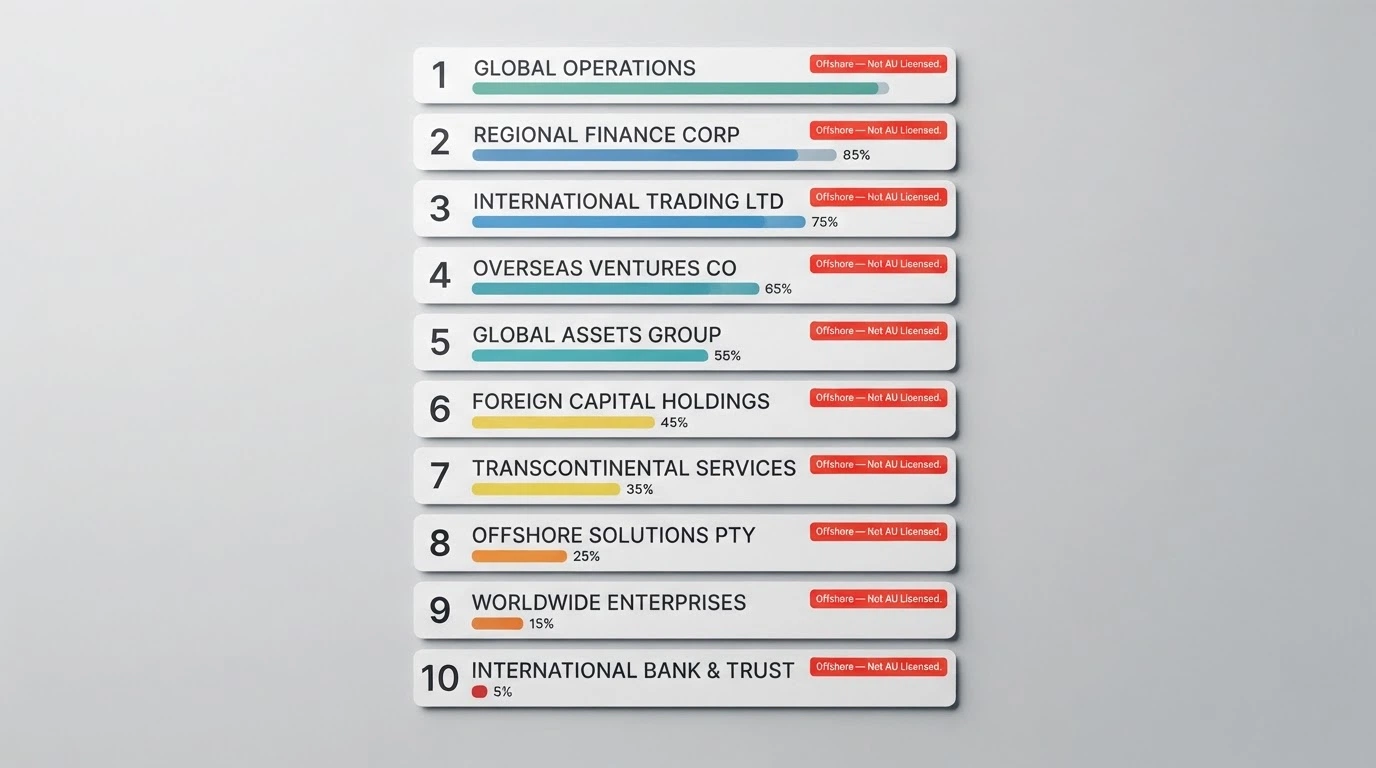
Every casino in the table below is offshore. None holds an Australian licence, because no Australian licence for online casino exists anywhere in the country. The ranking reflects AU-player market presence and withdrawal-speed positioning, drawn from AU-facing operator listings and the AU online-gambling market snapshot. The legal status is the same for every row: offshore, not licensed in Australia. The reader who compares them on any other axis is comparing apples with apples of the same flavour.
| Casino | Australian Legal Status |
|---|---|
| Rocket Play | Offshore, not licensed in Australia |
| Skycrown | Offshore, not licensed in Australia |
| Royal Reels | Offshore, not licensed in Australia |
| WinSpirit | Offshore, not licensed in Australia |
| Stake | Offshore, not licensed in Australia |
| Rainbet | Offshore, not licensed in Australia |
| Scream Casino | Offshore, not licensed in Australia |
| FairGO | Offshore, not licensed in Australia |
| Bizzo Casino | Offshore, not licensed in Australia |
| Rocket Casino | Offshore, not licensed in Australia |
The absence of any row that says “Licensed in Australia” is the table’s most important cell. Every operator that has ever claimed to be “Australian-licensed” in casino terms is using the name loosely, leaning on a state wagering licence (which covers sports and racing only) or simply dressing up an offshore licence in local language. The reader should treat any such claim with the suspicion it has earned.
Rocket Play
Rocket Play sits at the top of the AU-facing offshore market by tracked revenue, and the brand’s reputation in Australian player circles is built on multi-currency support and the fast-payout rails it accepts. Crypto and e-wallet withdrawals are the rails most often named in player reports, and the brand’s positioning in AU-facing listings leans on that combination. The relevant fact for the reader is not the bonus headline but the rail: a casino that accepts the rail a player wants to use is half the battle; the other half is whether the casino releases the funds without delay.
The verdict for an AU player is straightforward. Rocket Play is the largest operator reaching this market, the multi-currency support reduces the AUD conversion friction, and the fast-payout reputation is consistent across the AU-facing listings that mention the brand. The trade-off is the standard offshore trade-off: no Australian licence, no ACMA recourse, no BetStop coverage. Rocket Play is the dominant offshore choice for AU players, particularly those prioritising multi-currency support and established withdrawal rails.
Skycrown
Skycrown is the second-largest operator in the AU-facing offshore set by tracked revenue, and its withdrawal-speed positioning mirrors its market position: a fast-payout reputation rather than a specific rail emphasis. The brand surfaces in AU-facing listings as a generalist offshore casino with broad game-library coverage and a payment-rail mix that includes the usual crypto and e-wallet options. The detail that matters is less about the brand and more about the consistency of the rail mix: a casino that supports both crypto and e-wallets gives the player a fallback if one rail stalls.
The verdict: Skycrown is the sensible second choice in the AU-facing offshore set, and the sensible second choice matters because the top brand does not always suit every player. Where Rocket Play’s edge is volume, Skycrown’s edge is breadth. Skycrown presents a robust alternative to market leaders, offering a broader game library for those who prioritise game variety over singular brand dominance.
Royal Reels
Royal Reels is an AU-branded offshore casino, and the name signals the target market even though the licence does not. AU-facing brand names are a common pattern in the offshore market: the brand dresses itself in Australian colours, Australian idioms, AUD as the default currency, and a thematic package that reads local. The licence jurisdiction is something else entirely, and the marketing language is the only Australian thing about it.
The verdict for a player is about brand-name comfort, not legal status. Royal Reels is the casino an AU player is most likely to encounter through an AU-facing affiliate list, and the AUD-native presentation removes one layer of friction at the deposit stage. The offshore trade-off is unchanged: no Australian licence, no ACMA recourse, no BetStop coverage. Royal Reels caters specifically to the local preference for AUD-denominated play, stripping away currency-conversion steps at the cost of the standard offshore regulatory risk.
WinSpirit
WinSpirit is a mid-tier offshore operator with a presence in AU-facing listings, and its withdrawal-speed positioning is generic: fast payouts through crypto and e-wallet rails, standard timelines on bank transfer. The brand sits in the middle of the offshore market by AU player traffic, which means the reader will encounter it in comparison lists without it standing out for any particular feature. The honest summary is that WinSpirit is a representative example of the mid-tier offshore casino, neither the best nor the worst of its class.
The verdict: WinSpirit is the kind of brand a player ends up at because it was on a list rather than because of a specific feature. For a reader who wants the middle of the offshore market without the marketing intensity of the biggest brands, WinSpirit is a reasonable pick. For a reader who has already decided on crypto or e-wallet rails and wants the biggest brand in the market, the bigger names do more with the same rails.
Stake
Stake is the best-known crypto-native casino in the AU-facing offshore set, and its core pitch is exactly the topic of this page: instant crypto payouts. The platform was built around crypto from the start, which is why the withdrawal speed is genuinely instant rather than a marketing claim. The player who deposits in Bitcoin, Ethereum or USDT and withdraws in the same asset receives the funds in minutes, because the rail does not depend on the casino’s internal queue any longer than the network confirmation takes.
The trade-off is the standard offshore trade-off and a crypto-specific one: no Australian licence, no ACMA recourse, no BetStop coverage, and the additional fact that crypto is banned as a payment method for licensed Australian wagering from 11 June 2024. Stake’s acceptance of crypto is not a bug from its perspective; it is a feature, and the AU player who chooses it is accepting that the rail is the fastest available precisely because the licensed system has ruled it out. Stake is the definitive choice for players committed to crypto, leveraging its native-crypto infrastructure to bypass internal review queues entirely. It remains the speed leader for those who have fully migrated to digital assets.
Rainbet
Rainbet is a crypto-focused offshore casino in the same category as Stake, and its positioning is built around the same idea: instant crypto payouts, no banking intermediary, no payment-processor hold. The platform is designed around crypto rails rather than adding them as an afterthought, and the player experience reflects that. Crypto-native design tends to mean faster releases and fewer manual review steps, because the casino’s payment team is not in the loop the way it is for a bank transfer.
The verdict is similar to Stake’s but with a different emphasis: Rainbet is the brand for a player who wants the crypto-native experience without the largest brand’s marketing intensity. Where Stake is the volume leader, Rainbet is a focused alternative. For a player who has decided on crypto and wants a brand that lives in that category, Rainbet is a strong fit alongside Stake.
Scream Casino
Scream Casino is a smaller offshore operator in the AU-facing set, and its presence in this ranking reflects its position in AU-facing listings rather than a specific feature advantage. The brand’s withdrawal-speed positioning is generic for the smaller-tier offshore market: crypto and e-wallet payouts, slower timelines on bank transfer, and a smaller game library than the bigger brands. The reader who lands here has usually been directed by a comparison list rather than chosen on a specific feature.
The verdict is the honest verdict for the smaller offshore brand: Scream Casino is a representative example of the lower-volume end of the AU-facing market. For a player who is already comfortable with the offshore trade-off and wants a smaller brand without the marketing intensity of the largest operators, Scream Casino is a reasonable option. The smaller-tier brands do not change the legal calculus, and they do not change the consumer-protection gap.
FairGO
FairGO is an AU-branded offshore casino in the same pattern as Royal Reels: the brand name signals fairness and Australian-ness, but the licence jurisdiction is offshore and the regulatory home is somewhere else. The gap between the name and the legal reality is worth naming because it is exactly the gap the reader is most likely to overlook. A brand called “FairGO” carries an implicit promise about how disputes will be handled, and the promise has no Australian regulator behind it.
The verdict is the Royal Reels verdict in a different wrapper. FairGO is the AU-branded offshore casino for a player who values the Australian-looking presentation over the market-leader’s volume. The offshore trade-off is unchanged, and the brand-name comfort is the only thing the casino adds to the comparison.
Bizzo Casino
Bizzo Casino is a smaller offshore operator with AU player reach, and its position in this ranking is the same as Scream Casino’s: a representative example of the lower-volume end of the AU-facing offshore market, present in comparison lists without standing out for a specific feature. The withdrawal-speed positioning is generic, the payment-rail mix is the standard crypto-plus-e-wallet combination, and the game library is smaller than the bigger brands’.
The verdict: Bizzo Casino is a reasonable option for a player who has decided on the offshore route and is choosing among the smaller brands, and there is no strong reason to pick it over Scream Casino or any other similar-tier brand unless the player has a specific preference based on the brand’s presentation.
Rocket Casino
Rocket Casino is the smallest operator in the featured set, and it shares a name pattern with Rocket Play without being the same operator. The name similarity is worth flagging because a player searching for one can easily land on the other, and the comparison between them is mostly a comparison of scale: Rocket Play is the market leader by tracked revenue, Rocket Casino is the smallest in the featured set. Both are offshore and neither is AU-licensed.
The verdict: Rocket Casino is the bottom of the AU-facing offshore market by player volume, and it is included in this ranking because it appears in AU-facing listings rather than because it has a specific feature advantage. For a player who has exhausted the bigger brands or who is specifically choosing a smaller-tier operator, Rocket Casino is an option, but there is no reason to prefer it over the bigger brands on any axis the table above measures.
No Australian Casino Licence Exists — Here’s What That Means for Your Money
The Interactive Gambling Act 2001 makes it an offence to provide an online casino, online pokies or in-play sports betting to a person in Australia. The Interactive Gambling Amendment Act 2017 closed loopholes and gave the ACMA enforcement and blocking powers. The Interactive Gambling Amendment (Gambling Reform) Bill 2026 passed Parliament on 19 August 2026 and commences 1 January 2027, tightening advertising, inducements and payment blocking. None of this creates an online casino licence, because none of it was designed to.
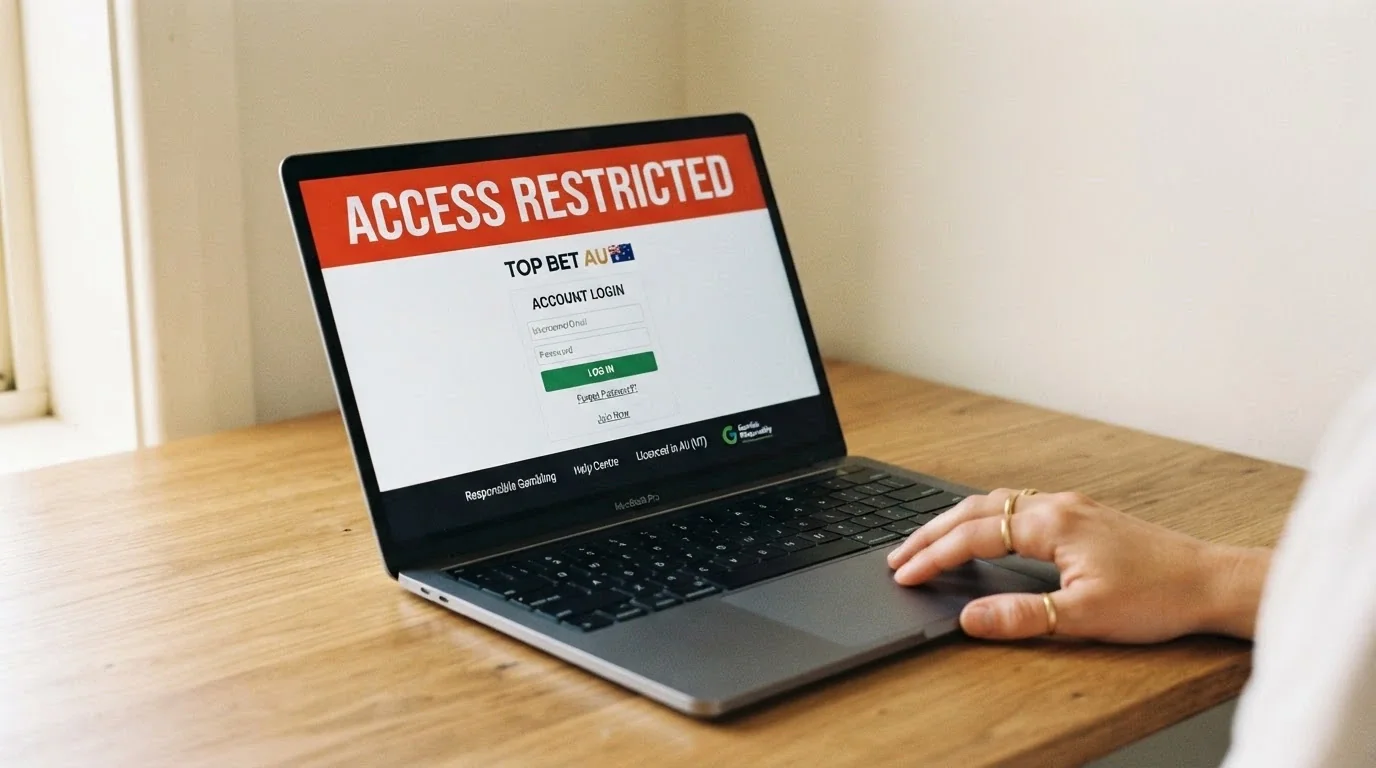
The prohibition is absolute. No Australian licence exists for online casino anywhere in the country — not federally, not in any state or territory. The Northern Territory Racing and Wagering Commission administers wagering licences that cover sports and racing, not casino games. Crown and The Star hold state casino licences for land-based venues, not for online play. Every casino on this page is offshore, and the player who chooses one carries every risk that follows from that choice.
| Player Protection | AU-Licensed Wagering | Offshore Casino |
|---|---|---|
| ACMA regulator recourse | Yes | No |
| BetStop self-exclusion coverage | Yes | No |
| Credit card / crypto ban enforced | Yes | Not enforced |
| State-level deposit limits and dispute resolution | Yes | No |
| Guarantee of withdrawal | Yes (state licence conditions) | No |
| Consumer protection under Australian law | Yes | No |
The table is not a balanced comparison. It is a list of things the AU player gives up by leaving the licensed system. The right column is empty because the offshore casino has no equivalent protections to offer. The reader who scans it for the first time has just seen the actual cost of the offshore route, and it is not measured in fees or wagering requirements.
The ACMA: What the Regulator Actually Does
The ACMA is the federal regulator that enforces the online prohibition. It investigates complaints, issues formal warnings, pursues civil penalty proceedings, and directs Australian internet service providers to block illegal sites. Since its first blocking request in November 2019, the ACMA has had 1,564 illegal gambling and affiliate websites blocked. More than 225 illegal services have withdrawn from the Australian market since 2017. These numbers are the regulator’s enforcement record, and they are real.
What the ACMA cannot do is recover a player’s money from an offshore operator. A player who deposits at an offshore casino, wins, and is refused a payout has no Australian regulator to complain to. The ACMA can pursue the operator for providing an illegal service, but it cannot compel a withdrawal on the player’s behalf. That gap is structural: the regulator’s job is to enforce the prohibition, not to police individual disputes. The player who wants individual dispute recourse has to take the offshore casino at its word, which is the trade-off this page keeps returning to.
The 2026 Gambling Reform: What Changes on 1 January 2027
The Interactive Gambling Amendment (Gambling Reform) Bill 2026 passed Parliament on 19 August 2026 and its measures commence 1 January 2027. The reform is significant for the licensed wagering market and largely irrelevant for offshore casinos, because the offshore casinos are already outside the regulatory perimeter. From 1 January 2027, wagering advertising is capped at no more than three ads per hour between 6:00 am and 8:30 pm, and a live-sport blackout prohibits wagering advertising from 15 minutes before a live sporting event until 5 minutes after it ends. Athletes, celebrities and influencers are barred from promoting wagering products. Direct marketing of inducements is prohibited for 14 days after a customer signs up and for three months after a person deregisters from BetStop.
The change that matters most for the AU player reading this page is the new authority for banks and payment providers to block transactions to illegal gambling operators, also commencing 1 January 2027. This is the first time the reform package has reached the player’s side of the fence. Banks can refuse to process deposits to offshore casinos, and the AU player’s deposit route narrows from “anything the casino accepts” to “anything the casino accepts and the bank will process”. The reform does not legalise online casino, does not create an AU licence, and does not protect a player who is already in at an offshore brand. What it does is tighten the perimeter around the licensed system, and tighten the payment rails an AU player can use to reach the offshore one.
The Credit Card and Crypto Ban: What It Covers and What It Misses
Credit cards, credit-related products and digital currency are banned as payment for online wagering in Australia, commencing 11 June 2024 under the Interactive Gambling Amendment (Credit and Other Measures) Act 2023. An operator that fails to enforce the ban faces penalties of up to $247,500. The legal deposit routes for licensed Australian wagering are debit card, bank transfer, PayID/Osko and BPAY. The credit card and crypto ban applies to licensed wagering operators — SportsBet, Ladbrokes, TABtouch and the rest of the state-licensed bookmaker set. It does not apply to offshore casinos.
This is the tension that defines the AU player’s choice. The licensed Australian wagering system has banned the two payment methods most attractive to offshore casinos. The offshore casinos accept both, and the AU player who wants credit-card deposits or crypto withdrawals is funnelled by that ban into the offshore market. The licensed market has done what it can to shut the routes; the offshore market is what is left. The bank-blocking authority commencing 1 January 2027 narrows the route further, and the crypto-friendly offshore casino sits at the end of a tightening funnel.
The Fastest Way to Get Paid: How Each Withdrawal Method Stacks Up
The payment rail, not the casino, determines most of the withdrawal speed. A fast casino on a slow rail is still slow, and a slow casino on a fast rail can still be reasonably quick. The reader who cares about speed has to care about rails first.
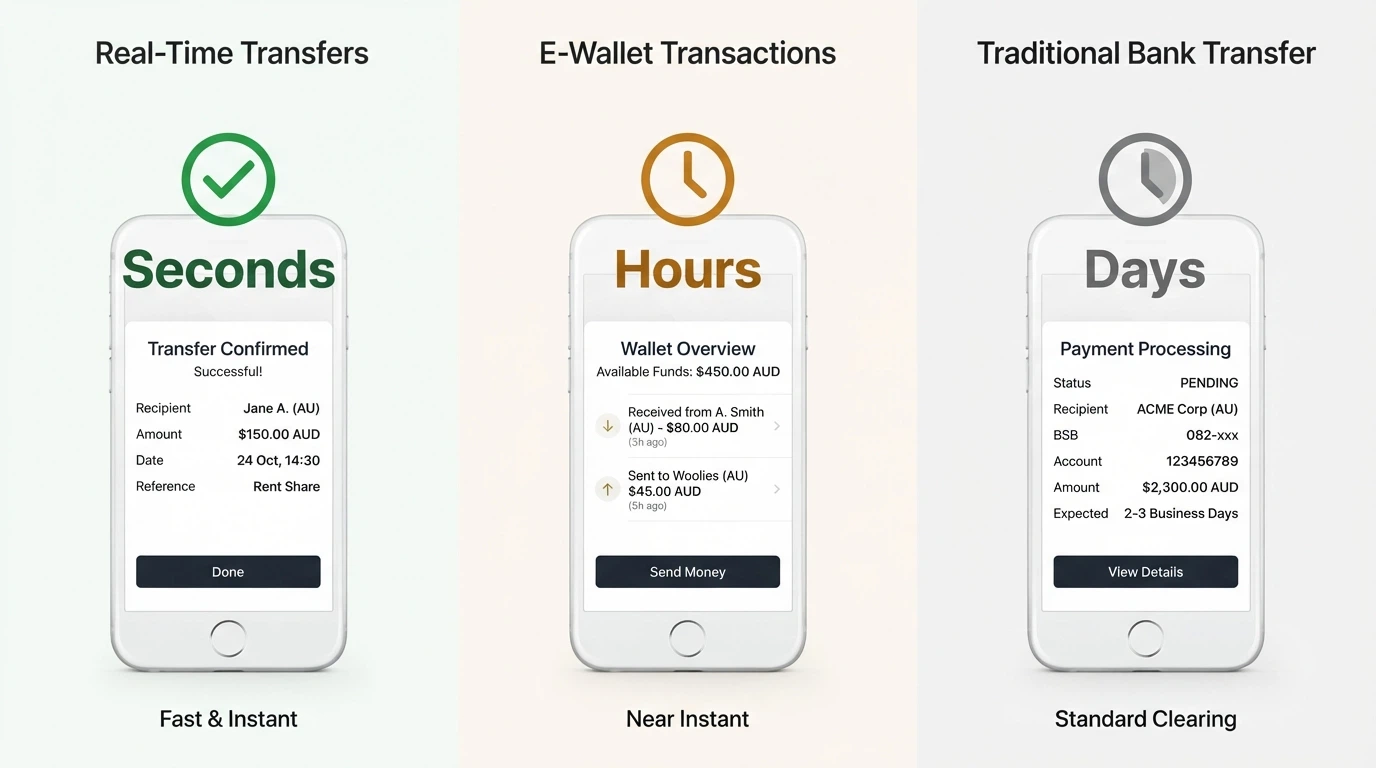
Crypto sits at the top of the speed ladder because it cuts out the banking intermediary and the payment processor. The casino releases the funds, the network confirms the transaction, and the funds arrive in the player’s wallet in minutes. The downside is that crypto is banned for licensed AU wagering, and the AU player using it is necessarily at an offshore casino.
PayID and Osko sit one step below because they run through Australian bank rails but settle in near-real-time via the New Payments Platform. An AU bank receiving a PayID payment processes it in seconds. The catch is that the casino must support PayID, and the AU player’s bank must be on the NPP. Most major Australian banks are, but not every offshore casino offers PayID as a withdrawal rail.
E-wallets sit in the middle: faster than bank transfer, slower than crypto, and dependent on the e-wallet’s own banking relationship. Skrill and Neteller withdrawals typically clear within hours, and the funds are available in the e-wallet account immediately, with a separate step to move them to a bank. Bank transfer and card reversal sit at the bottom: three to five business days is the honest baseline, regardless of which offshore casino the player is using.
The fastest rail is not always the safest. Crypto offers speed and no AU consumer protection. PayID offers speed and routes through an Australian bank, but the offshore casino using it is still outside the Australian regulatory perimeter. The reader who wants both speed and protection has to accept that the licensed Australian market does not offer online casino, which means no rail delivers both at once.
PayID and Osko: The AU Rail That Offshore Casinos Are Racing to Support
PayID is the fastest AU-native payment rail. It uses the New Payments Platform to settle payments between Australian bank accounts in near-real-time, and Osko is the branded service that delivers the same speed through the major banks. The advantage over a standard bank transfer is straightforward: a PayID transfer between supported banks arrives in seconds rather than days. The advantage over crypto is that the funds are still in AUD, in an Australian bank, and the player has the protections of the Australian banking system on the receiving end.
The tension is on the sending end. An offshore casino using PayID is routing the payment through an Australian bank, and the bank is processing a payment to or from an entity the IGA identifies as providing an illegal service. Some Australian banks will process these transactions; others will not, and the list of willing banks changes over time. From 1 January 2027, the new bank-blocking authority gives every AU bank an express basis to refuse. PayID is the fastest rail an AU player can use at an offshore casino, and it is also the rail most exposed to the next wave of regulatory pressure.
E-Wallets: Skrill, Neteller and the Middle Ground
E-wallets sit between crypto and bank transfer on the speed ladder. Skrill and Neteller are the most common e-wallets at offshore casinos reaching AU players, and the withdrawal process runs casino → e-wallet → bank. The casino-to-e-wallet leg is typically hours; the e-wallet-to-bank leg depends on the player’s choice of withdrawal method from the e-wallet itself. E-wallets are not on the legal AU deposit route list for licensed wagering, which means the AU player using them at an offshore casino is again outside the licensed system, but the speed is real and the e-wallet account can hold funds in AUD.
The downside is the lack of AU regulatory coverage for the e-wallet leg. Skrill and Neteller are regulated in their home jurisdictions, not in Australia, and a dispute that escalates beyond the e-wallet’s own complaints process is harder to resolve than a dispute that stays within the Australian banking system. The e-wallet is a fast middle layer, and the player using it has accepted that the middle layer is the most regulated part of the transaction.
Bank Transfer and Debit Card: Why They Are the Slowest Option
Bank transfer and debit card reversal are the slowest rails at any online casino, and the offshore casino has no particular incentive to expedite them. A standard bank transfer withdrawal runs three to five business days at a licensed Australian wagering operator, and there is no reason to expect faster at an offshore casino. Card reversal is even slower in some cases, because the card network adds its own processing layer on top of the bank’s. The “instant withdrawal” claim a casino makes on its homepage almost never applies to bank transfer or card reversal — those claims refer to crypto or e-wallet rails.
The upside of the slow rails is that they are the most familiar and the most regulated. The funds land in an Australian bank account, the transaction is visible in the player’s banking app, and the Australian banking system’s dispute-resolution framework applies to the receiving end. For a player who prioritises the receiving-end protection over speed, bank transfer is the safer rail. The speed cost is the price of that safety.
Crypto Casinos: Faster Payouts, but at What Cost?
Crypto casinos deliver genuinely instant withdrawals, and that is the entire pitch. There is no banking intermediary, no payment processor, no card network. The casino releases the funds, the network confirms the transaction, and the funds arrive in the player’s wallet in minutes. The reason this is possible is that the rails were designed to operate without the legacy banking system, and the licensed Australian wagering system has ruled them out.

Crypto is banned as a payment method for licensed Australian wagering from 11 June 2024. The ban applies to the licensed bookmaker set, not to offshore casinos. The AU player who wants to deposit and withdraw in Bitcoin, Ethereum or USDT is therefore at an offshore casino, and the offshore casino is therefore the venue for the AU player who has chosen the fastest rail. The trade-off is the absence of every consumer protection the AU licensed system offers. No ACMA recourse if the operator refuses a withdrawal. No BetStop coverage. No Australian dispute-resolution process. The bank-blocking authority commencing 1 January 2027 may further restrict the AU player’s ability to fund a crypto deposit in the first place.
The crypto-rail trade-off is unusually stark because the speed gain and the protection loss sit on opposite sides of the same rail. Crypto is fast because it cuts out the banking system, and crypto at an offshore casino is unprotected because it cuts out the regulatory system. The player who chooses crypto at an offshore casino has chosen both, and the choice is the same single decision.
Bitcoin, Ethereum and USDT: Which Crypto Rails the Featured Casinos Actually Support
Bitcoin is the most widely accepted cryptocurrency at offshore casinos reaching AU players, and the dominance reflects Bitcoin’s first-mover position rather than any technical advantage. Ethereum is the second most common, and USDT (a stablecoin pegged to the US dollar) is increasingly available at the crypto-focused brands. The practical effect for an AU player is that the choice of crypto asset at most offshore casinos is Bitcoin, with Ethereum and USDT available at the crypto-native brands.
Stake and Rainbet are crypto-native casinos, and the difference between crypto-native and crypto-accepting matters. A crypto-native platform was built around the crypto rails, which means the withdrawal flow is designed for it from the start, the manual review steps are minimal, and the speed claim is structural rather than aspirational. Rocket Play is a hybrid: it accepts crypto and e-wallets, and the player choosing Rocket Play has both rails available. For a player who has decided on crypto and wants the brand that does it best, Stake and Rainbet are the natural picks. For a player who wants the biggest AU-facing brand and is happy to use crypto as one of several rails, Rocket Play is the natural pick.
No-KYC Casinos: The Anonymity Pitch and Its Real Risks
No-KYC casinos promise privacy and instant withdrawals with no identity check. The pitch appeals to AU players who value speed and privacy, and the appeal is structural: a casino that does not verify identity can release withdrawals without the document-review delay that licensed operators impose. The speed claim is real in the same way that crypto speed is real — the constraint that slows down licensed operators has been removed, because the casino has decided not to apply it.
The risk is on the same side. A no-KYC casino that refuses a withdrawal has refused it to a player who has no identity on file with which to prove the account is theirs. The licensed operator’s identity check is also the licensed operator’s record that the account belongs to the player, and the record is what a dispute resolution process relies on. The player who chose anonymity chose speed, and the same choice removed the evidence that would support a complaint. The Australian regulatory backstop is absent because the casino is offshore, and the casino’s own identity check is absent because that is the product. No-KYC is the most concentrated version of the offshore trade-off, and the trade-off is the entire reason for the speed.
Why Your Instant-Withdrawal Bonus Is Smaller Than It Looks
The bonus that arrives fast is the bonus whose terms you read, and the headline figure is the bait rather than the meal. Wagering requirements turn a $1,000 welcome bonus into $35,000 of required turnover at a 35x multiplier, and the turnover must be generated before any withdrawal is permitted. Game weighting dilutes the contribution of high-RTP games, so the player who picks the games that return the most money is contributing the least turnover. Max-cashout caps limit what the player can withdraw even after the wagering requirement is cleared, and the cap is set by the casino, not by the regulator.

None of this is regulated by an Australian authority at an offshore casino. Inducements — sign-up offers, referral bonuses — are prohibited or tightly limited by several Australian states for licensed wagering, and the offshore casinos are not bound by those rules. The result is that the bonus terms at an offshore casino are set by the operator alone, and the operator has every incentive to set them in a way that maximises the house edge and minimises the chance the player ever withdraws the bonus.
The right way to read an offshore casino bonus is to treat the headline figure as irrelevant and read the wagering multiple, the game-weighting table, the max-cashout cap and the validity window before depositing. A $1,000 bonus with a 40x wagering multiple and a $200 max cashout is worth less than a $200 bonus with a 20x multiple and no cashout cap, and the difference is entirely in the terms.
No-Deposit Bonuses at Instant-Withdrawal Casinos: The Reality Check
A no-deposit bonus sounds like the perfect match for an instant-withdrawal casino: free credit or free spins, no deposit required, and the winnings can be withdrawn as soon as the wagering requirement is cleared. The reality is that the two offers sit in structural tension. A casino willing to give credit without a deposit has to protect itself with terms that make withdrawal difficult, and the typical protection is a high wagering multiple combined with a low max-cashout cap.
The numbers in the no-deposit bonus space run the same direction every time. A $20 no-deposit bonus with a 50x wagering multiple requires $1,000 of turnover before any withdrawal, and the max cashout cap is typically set at a few times the bonus amount. The player who claims a no-deposit bonus is accepting a heavily restricted product, and the “instant withdrawal” framing is misleading because the wagering requirement has to be cleared first. None of the operators in this ranking is presented as a no-deposit specialist, as these offers are not a standard or verified feature across the featured set. The structural tension is the point: a casino offering both no-deposit credit and instant withdrawal is offering two products that fight each other, and the terms are where the casino decides which one wins.
Wagering Requirements: The Number That Decides Whether You Ever See the Money
The wagering multiplier is the single most important term on any bonus, and the formula is straightforward: required turnover = bonus amount × multiplier. A 40x wagering requirement on a $500 bonus demands $20,000 in play. A 35x requirement on a $1,000 bonus demands $35,000 in play. The turnover has to be generated before the bonus funds become withdrawable, and the casino’s house edge works against the player on every dollar of it.
Game weighting is the second term that decides whether the requirement is met. Most offshore casinos assign 100% weighting to pokies and a lower percentage to table games, and the player who picks the highest-RTP game is contributing the least turnover per dollar wagered. The licensed Australian wagering market does not cap wagering requirements at offshore casinos, because the licensed Australian wagering market does not regulate offshore casinos. The multiplier, the weighting and the validity window are all set by the operator, and the only protection is the player’s willingness to read the terms before depositing.
The Pokies and Slots That Pay Out Fastest
The pokies themselves do not determine withdrawal speed. The casino that hosts them does, and the difference matters: a fast casino running slow pokies pays out fast, and a slow casino running fast pokies pays out slow. The reader who confuses game payout with casino payout is reading the wrong number.

What the pokies do determine is how much money the player has available to withdraw. The return to player (RTP) sets the long-run percentage the game returns, and a 96% RTP pokie returns $96 for every $100 wagered across a statistically large number of spins. The volatility sets the ride: low-volatility games produce frequent small wins, high-volatility games produce rare big wins. The high-RTP, low-volatility combination is the right choice for a player who intends to withdraw — more of the money comes back, and it comes back in a steady stream that is easier to bankroll through the wagering requirement.
No licensed online pokies exist in Australia, because no licensed online casino exists. Every pokie the player spins at any of the brands on this page is hosted by an offshore operator, and the RTP and volatility figures on those games are set by the game provider, not by an Australian regulator. The reader who wants to know a specific game’s RTP should read the game’s information panel, and the reader who wants to know whether the offshore casino will pay out the winnings should read the rest of this page.
Real-Money Pokies at Offshore Casinos: What an AU Player Actually Gets
The pokies library at a typical AU-facing offshore casino runs into the thousands, with the bulk supplied by the major international game providers. The mix leans heavily on pokies because pokies are the highest-volume product and the highest-margin product, and the offshore casino has no incentive to favour any other category. Real-money play is the default; demo-mode play is available at most operators but does not produce withdrawable winnings.
The reader comparing offshore pokies libraries should focus less on the count and more on the providers whose titles recur across the offshore set. Specific provider data varies, and the comparison stays qualitative, but the pattern is consistent: a small number of providers supply most of the pokies at most AU-facing offshore casinos, and the same titles appear across multiple brands. The player who has found a pokie they like at one offshore casino will usually find the same pokie at several others, and the comparison between casinos is more about withdrawal speed and bonus terms than about the pokes library.
RTP and Volatility: What They Mean for Your Withdrawal
RTP is the long-run return, and a 96% RTP pokie returns $96 for every $100 wagered across enough spins for the average to settle. The figure is a statistical estimate, not a guarantee, and the player who plays 100 spins will see a return that varies wildly around the 96% figure. Volatility is the ride: low-volatility games pay small amounts often, high-volatility games pay large amounts rarely. The two figures together describe what the player can expect from the game itself, and neither figure changes the casino’s withdrawal speed.
The combination that suits a player who intends to withdraw is high RTP and low volatility. High RTP returns more of the player’s money over the long run, and low volatility delivers it in a steady stream that the player can bankroll through any wagering requirement without running out before the requirement is cleared. A high-volatility game with a 96% RTP is the same long-run return but a much bumpier ride, and the player who hits a dry stretch early may run out of bankroll before the requirement is met. The point is not that one game is better than another but that the player’s choice of game should match the player’s choice of strategy, and the strategy of “withdraw as soon as I can” rewards high RTP and low volatility.
Playing Safe When the Safety Net Doesn’t Reach Offshore
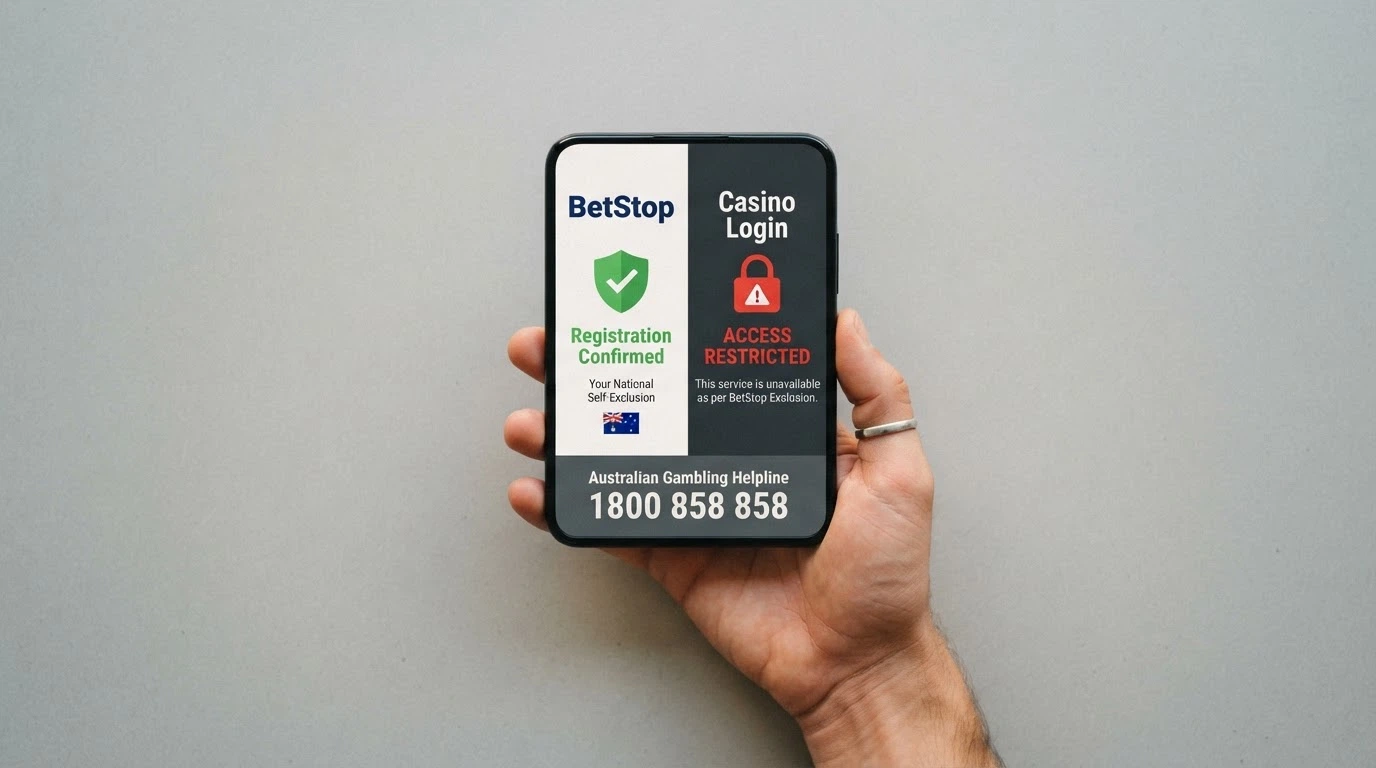
Every Australian harm-minimisation tool is built for the licensed system. BetStop, the National Self-Exclusion Register, binds Australian-licensed wagering services only — an offshore casino is not connected to the register and will continue accepting a self-excluded person’s money. The National Gambling Helpline (1800 858 858) is free, confidential and available 24/7, with online chat and counselling through Gambling Help Online, and it works regardless of where the player is playing because it works regardless of jurisdiction. Self-imposed deposit limits and session timers are features most casinos offer at the account level, and they work at offshore casinos the same way they work at licensed ones.
The prevalence data explains why this matters. About 2.1% of Australian adults — roughly 430,000 people — experience problem gambling, and high-risk gambling sits at 1.8%, both measured by the Australian Institute of Health and Welfare in 2022. The offshore casino sits outside every Australian harm-minimisation framework, and the player who needs those tools most is the player most exposed to the gap.
The practical tools that work regardless of where the casino is licensed are self-imposed deposit and session limits, reality checks, the helpline, and the player’s own discipline. Setting a deposit limit before depositing is the single most effective step, because it sets the boundary at the point where the player’s judgement is least impaired. The helpline is free, confidential and available around the clock. The help is real. The offshore casino is outside the Australian system, and the Australian help lines do not require the player to be inside it.
BetStop: What It Protects and What It Cannot Reach
BetStop — the National Self-Exclusion Register — has been live since August 2023. One registration excludes a person from every Australian-licensed online and phone wagering service. As at 31 July 2026, 67,480 people had registered, of which 41,290 exclusions were still active. Seventy-eight per cent of registrants were under 40. Thirty-eight per cent chose lifetime exclusion. The registration demographics tell a story about who the register is designed for, and the coverage tells a story about what it does and does not do.
The coverage gap is the part that matters for this page. BetStop binds Australian-licensed wagering services only. An offshore casino is not connected to the register and will continue accepting a self-excluded person’s money. A person who has registered on BetStop and then deposits at any of the casinos on this page is doing so without the register’s protection, because the register does not extend offshore. The reform commencing 1 January 2027 strengthens BetStop’s operation and adds a three-month marketing ban after deregistration, but the offshore gap remains.
Practical Tools You Can Use Right Now
The National Gambling Helpline is 1800 858 858. It is free, confidential and staffed 24 hours a day, 7 days a week. Gambling Help Online (gamblinghelponline.org.au) offers online chat and counselling through the same service. The help is real, the help is free, and the help does not require the player to be playing at a licensed Australian venue.
Self-imposed deposit and session limits work at the casino-account level regardless of where the casino is licensed, because they are features the casino offers and the player activates. Setting a deposit limit before the first deposit is the single most effective step, because it sets the boundary at the moment the player’s judgement is least impaired. A session timer caps the time spent at the tables, and a reality check pings the player at intervals to remind them how long they have been playing. None of these tools requires BetStop, and none of them requires the casino to be Australian-licensed. They are the player’s own safeguards, applied by the player, and they work wherever the player chooses to play.
How We Evaluated These Casinos
The ranking reflects AU-player market presence, withdrawal-speed positioning and the payment-rail mix each operator accepts. The figures come from the AU online-gambling market snapshot, the operators skill, and the AU-facing listings the operators appear in. The legal status is identical for every row, and the ranking does not adjust for it: every operator is offshore, not licensed in Australia, and the AU player choosing one accepts the same regulatory gap regardless of brand.
The sources the evaluation draws on are the Interactive Gambling Act 2001, the Interactive Gambling Amendment Act 2017, the Interactive Gambling Amendment (Credit and Other Measures) Act 2023, the Interactive Gambling Amendment (Gambling Reform) Bill 2026, the ACMA’s enforcement records and the ACMA’s BetStop register, the Australian Institute of Health and Welfare’s prevalence figures, and the AU operators skill market-share snapshot. The specific operator bonus terms, wagering multipliers and free-spin offers vary by operator, and the per-operator write-ups focus on qualitative factors rather than individual promotional figures.
The ranking is not an endorsement. Every operator is offshore and unlicensed in Australia, and the AU player who chooses one is choosing the offshore route by definition. The ranking is a description of which operators the AU-facing market is using, and which of them are best positioned for the instant-withdrawal topic. The reader who treats it as a “which casino should I join” recommendation has read past the legal context this page keeps returning to.
What to Do Next: Choosing an Instant-Withdrawal Casino You Can Trust
Five steps, in the order they matter. First, check the legal status. It will be offshore, because no other option exists. The reader who is uncomfortable with the offshore trade-off has only one alternative: not playing at an online casino at all, because the licensed Australian market does not offer one. Second, verify the withdrawal methods the casino actually supports for AUD. A casino that only supports crypto will not pay out in AUD; a casino that supports PayID or bank transfer will. The rail determines the currency, the speed and the consumer protection, and the rail is the choice the player has to make. Third, read the bonus wagering terms before depositing. The wagering multiple, the game-weighting table, the max-cashout cap and the validity window decide whether the bonus is worth claiming, and the headline figure is irrelevant to that decision. Fourth, test with a minimum deposit and a small withdrawal before committing real money. The fastest casino on paper can be the slowest in practice, and a small test withdrawal is the only way to confirm the rail and the processing queue. Fifth, set a deposit limit and know the helpline number before the first deposit.
No featured operator is risk-free. Every one is offshore, every one is unlicensed in Australia, and every one operates outside the ACMA’s enforcement perimeter and outside BetStop’s coverage. The reader’s best protection is information, and this page has tried to give the reader as much of it as the available sources carry. The fastest withdrawal is the one that actually arrives, and the safest withdrawal is the one the player has the information to evaluate before requesting it.
Frequently Asked Questions
What happens if an offshore casino refuses to pay my winnings?
The offshore casino is outside the ACMA’s enforcement perimeter, outside BetStop’s coverage, and outside any Australian dispute-resolution process. The ACMA can pursue the operator for providing an illegal service, but it cannot compel a withdrawal on the player’s behalf. The only recourse is the casino’s own complaints process, and the leverage is whatever reputation and player-volume pressure the operator responds to. This is the core risk of the offshore route, and it is why the rest of this page keeps returning to it.
Is BetStop connected to offshore casinos?
No. BetStop — the National Self-Exclusion Register — binds Australian-licensed wagering services only. An offshore casino is not connected to the register, and a person registered on BetStop can still deposit and play at any of the casinos on this page. The register does its job for the licensed system; the offshore system sits outside it, and the gap is structural rather than accidental.
What is the difference between casino processing time and payment delivery time?
Casino processing time is the period between clicking “withdraw” and the operator releasing the funds, which is the casino’s internal queue and review process. Payment delivery time is the period the rail takes to move the funds from the casino to the player, which is the rail’s physics. A fast casino on a slow rail is still slow; a slow casino on a fast rail can be reasonably quick. “Instant” almost always refers to casino processing time on a fast rail, and the rail is the larger determinant of total time.
Can I use Bitcoin at an online casino in Australia?
Bitcoin is banned as a payment method for licensed Australian wagering from 11 June 2024. Offshore casinos are not bound by the ban, and most accept Bitcoin, Ethereum and USDT. The AU player using Bitcoin at an online casino is therefore at an offshore casino, and the offshore trade-off applies. From 1 January 2027, banks gain express authority to block transactions to illegal gambling operators, which may further restrict the AU player’s ability to fund a crypto deposit.
How long does a casino withdrawal take with PayID?
PayID and Osko settle in near-real-time through the New Payments Platform, and the funds arrive in seconds once the casino releases them. The casino processing time is the larger variable, and the AU player choosing PayID is choosing a rail that is fast on the receiving end but exposed to the casino’s internal queue and to the next wave of regulatory pressure on bank-blocking commencing 1 January 2027.
Do instant withdrawal casinos offer no deposit bonuses?
A no-deposit bonus and an instant-withdrawal offer sit in structural tension, because a casino giving credit without a deposit protects itself with high wagering requirements and low max-cashout caps. The result is a heavily restricted product, and “instant withdrawal” usually applies only after the wagering requirement is cleared. The specific no-deposit offers at the operators on this page were not confirmed this run, and the structural tension is the point: the two offers fight each other, and the terms decide which one wins.