
Quick Withdrawal Casinos in Australia: What the Speed Claims Actually Mean
Every Australian-facing online casino promises fast payouts. The marketing language is uniform: “instant,” “same-day,” “no waiting.” The reality is messier, and the gap between the label and the deposit in your bank account is where most of the frustration lives. The casino that calls itself “instant” might still take a full working day to approve a first withdrawal; the one that promises “same-day” might mean crypto only, with bank transfers taking three business days. Knowing which is which, before you deposit, is the whole point of a quick withdrawal casino review.

The speed of a withdrawal depends on two stages that work in sequence. First, the casino reviews your request internally: it checks your account, runs anti-fraud rules, confirms your identity against its KYC (Know Your Customer) records. Second, the casino releases the funds through whatever payment rail you chose. Every guide that promises “instant” is measuring the second stage and skipping the first, which is the stage most delays actually happen in.
Data current as of 24 November 2026, cross-checked against ACMA registers, published payout tests, and operator terms pages.
Table of Contents
- What “Instant Withdrawal” Actually Means in Practice
- How Your Payment Method Decides Whether You Wait Minutes or Days
- The Pokies That Pay Out Fastest — and Why RTP Matters Less Than You Think
- The 11 Fastest-Paying Offshore Casinos for Australian Players in 2026
- Why Every Online Casino You Play at in Australia Is Offshore
- Staying in Control: Responsible Gambling Tools That Actually Work
- How We Found and Ranked the Fastest-Paying Casinos
- What You Should Actually Do About Fast Withdrawals
- Frequently Asked Questions
What “Instant Withdrawal” Actually Means in Practice
In the Australian-facing casino market, “instant” is a marketing term that has narrowed to a specific operational meaning. Crypto withdrawals after approval are the only category that genuinely clears in under fifteen minutes — typically USDT on the TRC20 network, which settles in under five minutes, or Solana, which also settles in under five minutes. Everything else sits in the “same-day” bucket: PayID and most e-wallets clear in under twenty-four hours once the casino releases the funds.
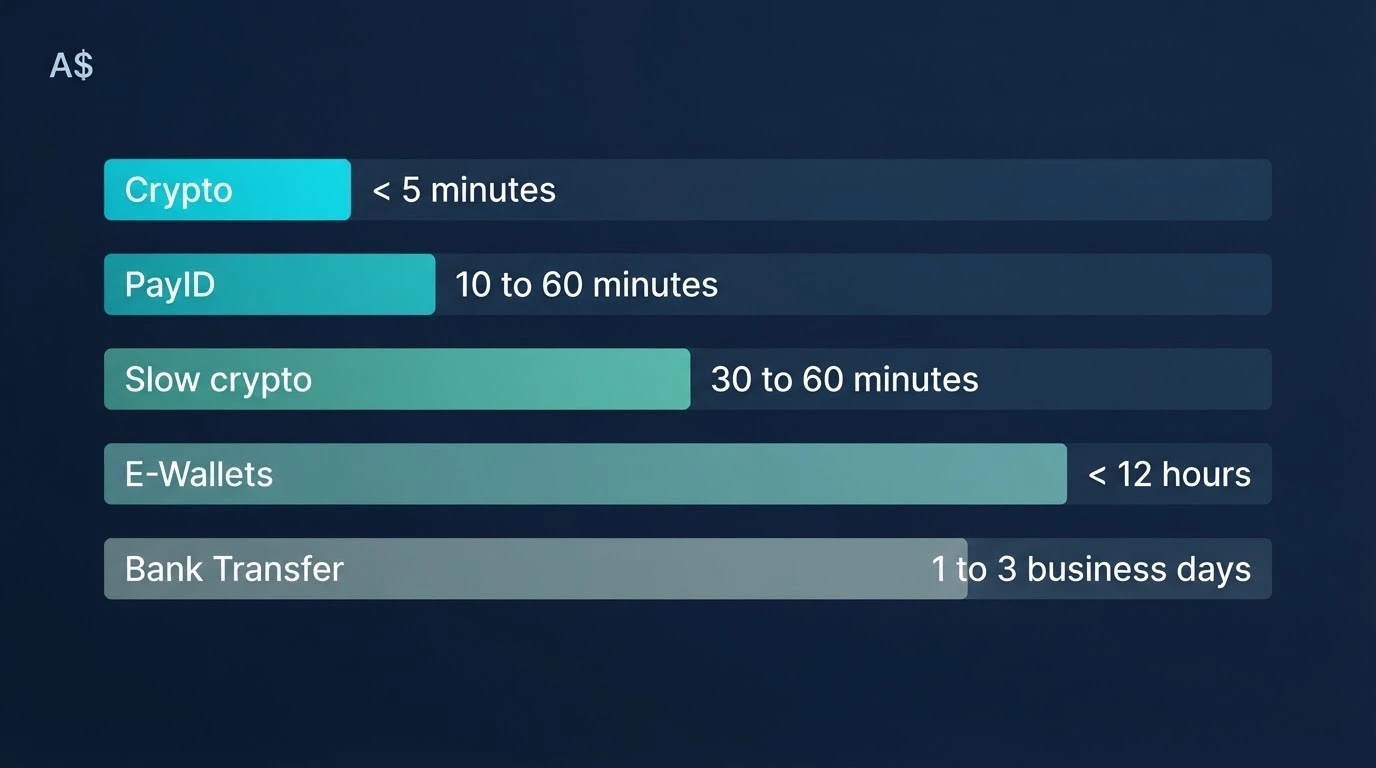
No casino site is truly instant. Every legitimate operator runs account verification before your first withdrawal, and that verification step is where the clock actually starts. A player who signs up, deposits, plays for ten minutes, and requests a withdrawal will not see money in fifteen minutes. The first withdrawal at any reputable offshore casino triggers identity checks, anti-money-laundering screening, and a payment-method confirmation that can stretch from two minutes to forty-eight hours depending on the operator.
The fastest realistic case looks like this: a returning player with completed KYC, withdrawing USDT TRC20 to a wallet they have used before, at a casino with automated approval. That combination produces the under-five-minute result the marketing copy describes. Anything less prepared than that, and the realistic floor is closer to ten to thirty minutes — still fast, but not the “instant” the homepage banner shows.
The Two-Stage Model: Why Approval Takes Longer Than the Transfer
Every withdrawal moves through two distinct stages, and understanding which one is the bottleneck is the difference between a fifteen-minute wait and a three-day wait.

The approval stage is the casino’s internal review. The operator checks the withdrawal request against the player’s account history: is the KYC complete, has the request tripped any anti-fraud flag, is the amount above the threshold that triggers enhanced review, is this the first withdrawal on this account. Internal approval can take anywhere from two minutes to forty-eight hours, and that range is not a casino failing to be fast — it is the actual spread across the offshore market.
The transfer stage is the payment rail doing its work once the casino releases the funds. USDT TRC20 transfers settle in under five minutes. Bitcoin needs three to six network confirmations, adding thirty to sixty minutes or more. PayID via Osko on the New Payments Platform settles in under sixty seconds once released. Bank transfers take one to three business days. Visa and Mastercard withdrawals take two to five business days.
The first stage is nearly always the bottleneck. The fastest rail in the world does not help if the casino takes twenty-four hours to release the funds to it. The biggest cause of delayed withdrawals at online casinos is incomplete KYC, not the casino’s processing speed. A player who has completed verification before requesting their first withdrawal cuts the approval window dramatically. A player who has not can wait days.
The Australian Online Casino Market: Offshore by Default
No online casino is licensed in Australia, so every Australian online casino here runs on an offshore licence. The Interactive Gambling Act 2001 prohibits online casino games, online pokies, and in-play sports betting — there is no federal or state licence available for any of those products. Every site an Australian player can reach operates outside Australian law.
The scale of that market is hard to overstate. The ACMA has had 1,564 illegal gambling and affiliate websites blocked by Australian internet service providers since its first blocking request in November 2019. More than 225 illegal services have withdrawn from the Australian market since enforcement was strengthened in 2017. The blocklist is updated continuously, and offshore operators rotate domains to stay ahead of it.
The individual player is not prosecuted under the IGA. The Act targets the provider. But the absence of prosecution is not the same as the presence of protection. A player at an offshore casino has no Australian consumer protection, no complaints body to escalate to, no BetStop coverage, and no recourse if the operator refuses a withdrawal or closes the account. The site can be DNS-blocked at any time by ACMA direction, potentially with a balance still sitting on it.
This is the structural reality behind every review, ranking, and payout test on this page. The operators listed here are not licensed in Australia because no such licence exists. They are offshore brands serving a market they are legally prohibited from serving.
How Your Payment Method Decides Whether You Wait Minutes or Days
The payment rail is the single variable the player actually controls, and the gap between the fastest and slowest options is measured in days, not hours. A player who picks USDT TRC20 is operating in a different universe from a player who picks a Visa credit-card refund, and the choice is made at deposit time, not at withdrawal time.
Payment Method Speed Rankings
| Payment method | Transfer speed | What to know |
|---|---|---|
| USDT (TRC20) | Under 5 minutes after approval | Fastest available; banned for licensed AU wagering since June 2024 |
| Solana | Under 5 minutes after approval | Network fees near zero; less widely supported than USDT |
| PayID / Osko | 10–60 minutes after approval; transfer itself under 60 seconds | Domestic Australian rail; requires AU bank account |
| Bitcoin | 30–60 minutes or more | Three to six network confirmations required; slowest major crypto |
| Skrill / Neteller / MiFinity | Under 12 hours typical | E-wallet withdrawals broadly consistent across tested sites |
| Bank transfer (AUD) | 1–3 business days | Slowest reliable option; no weekend processing |
| Visa / Mastercard | 2–5 business days | The slowest standard withdrawal method available |
The spread between USDT at five minutes and a card at five business days is roughly 1,440 to one. Choosing the wrong rail at deposit time is a decision the player cannot easily reverse — moving money from a card back to crypto at an offshore site usually costs a fee and adds a day.
PayID vs Crypto: The Two Fastest Routes to Your Money
For the Australian player, the speed contest comes down to two options. PayID is the domestic rail that links directly to an Australian bank account via the New Payments Platform, with Osko settling the transfer itself in under sixty seconds. Crypto bypasses the banking system entirely and moves on a public ledger, with USDT TRC20 and Solana both clearing in under five minutes once the casino releases the funds.
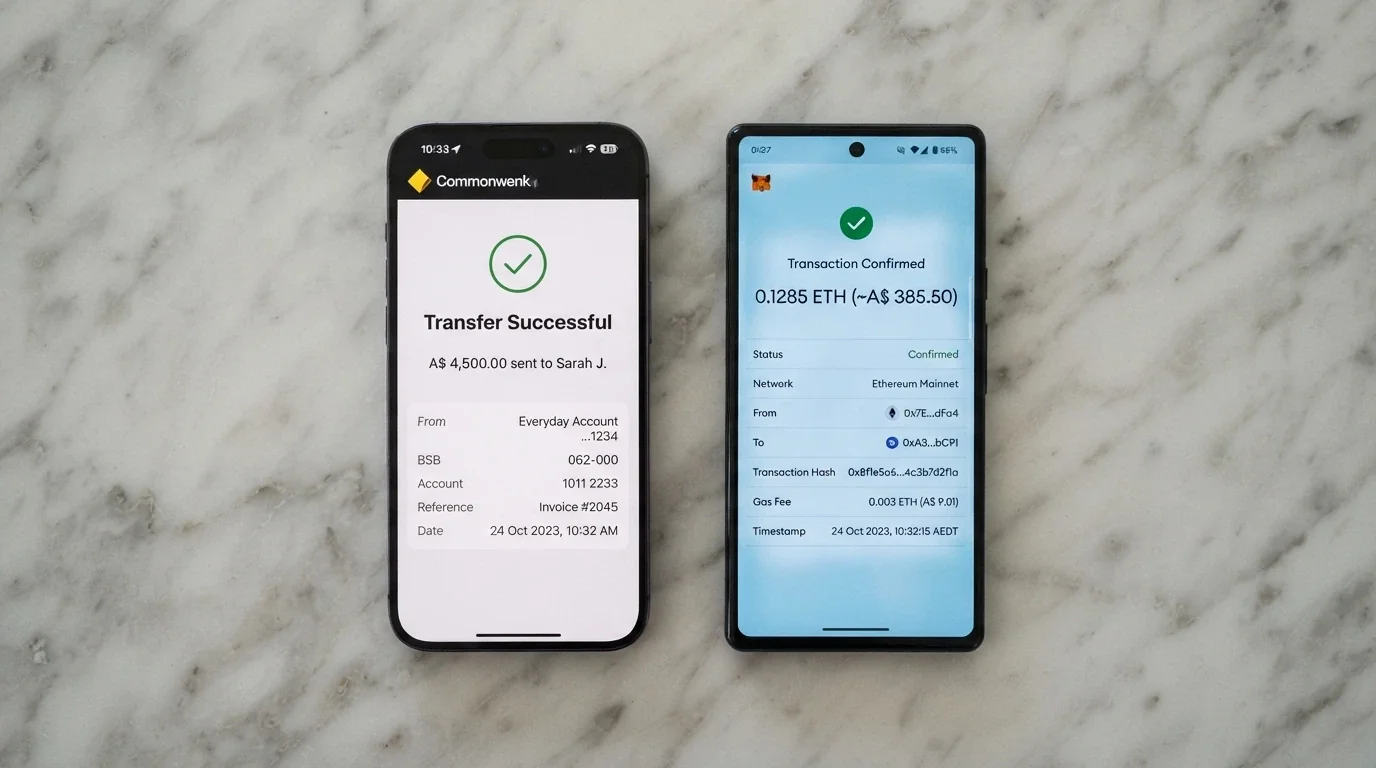
PayID has one structural advantage: it is a legal deposit route for licensed Australian wagering. Crypto does not. Credit cards, credit-related products, and digital currency (crypto) are banned as payment for online wagering in Australia, commencing 11 June 2024. An operator that accepts crypto from an Australian player is, by definition, operating outside Australian rules — a concrete, observable signal rather than an abstract legal point.
The practical choice comes down to what the player values. PayID keeps the money inside the Australian banking system and works with a regular bank account; crypto moves faster and avoids bank-imposed limits but trades those advantages for the legal and consumer-protection gaps that come with operating outside the licensed framework. Legal deposit routes for licensed wagering are debit card, bank transfer, PayID/Osko and BPAY — crypto is not on that list.
POLi, once a common Australian payment method, shut down on 30 September 2023 after BPay withdrew support. Sites that listed POLi as a deposit option have had to replace it, and several now route domestic payments through PayID instead.
The Hidden Delays: KYC, Internal Reviews, and Weekend Timing
The payment method is only half of the withdrawal story. The real clock starts with the casino’s own checks, and most delays are preventable.
KYC verification is the most common cause of a slow payout. Incomplete KYC, not the casino’s processing speed, is the biggest reason a withdrawal stalls. The fix is mechanical: complete identity verification at sign-up, not at withdrawal time. The casino’s system reads a fully verified account as low-risk and routes it through automated approval, which can clear in minutes. An unverified account triggers manual review, which can take a day or more.
Some offshore sites apply a soft KYC system where they only request verification if a player crosses a certain threshold, usually around A$2,000 in withdrawals, or if a fraud flag is triggered. Below that threshold, the site processes withdrawals without an ID check. The appeal is obvious: no paperwork, no delay. The cost is that the KYC layer is also the last consumer-protection layer — if the operator decides to withhold funds and the player never completed verification, there is no record tying the account to a real identity, and no regulator to escalate to.
Minimum withdrawal at most offshore sites serving Australians starts from A$20. Minimum daily limits range from A$10 to A$30 across major tested sites, while maximum daily withdrawal limits range from A$2,000 to A$10,000, with weekly caps varying significantly between operators. A player withdrawing a large win will hit the daily or weekly cap and wait for the next window to clear, regardless of which rail they chose.
Weekend and public-holiday timing matters. Bank transfers do not process on Saturdays, Sundays, or public holidays, and an approval granted at 6 pm Friday may not settle until Tuesday. Crypto and PayID continue to settle around the clock, which is part of why the fastest rails stay fast even when the rest of the market slows.
The Pokies That Pay Out Fastest — and Why RTP Matters Less Than You Think
The pokie a player picks shapes the payout experience, but its RTP (Return to Player — the percentage of wagered money the game returns to players over millions of spins) governs the house edge, not the withdrawal speed. The two are often confused, and the confusion matters: a player who picks a “high-RTP” pokie expecting faster withdrawals has misread the data.
RTP is calculated over millions of spins and describes the theoretical return to players, not the speed at which any individual win arrives. Volatility (how much and how often a game pays out — high volatility means less frequent but larger wins, low volatility means more frequent but smaller wins) describes how bumpy a single session feels: a high-volatility pokie can run cold for an hour and then pay out a large win in a single spin; a low-volatility pokie pays smaller amounts more consistently.
The Pokies That Appear Most Often at Fast-Payout Casinos
| Slot title | RTP | Provider | Volatility | Max win |
|---|---|---|---|---|
| Big Bass Bonanza | 96.71% | Pragmatic Play | High | 2,100x |
| Sweet Bonanza | 96.48% | Pragmatic Play | Medium-high | 21,100x |
| Gates of Olympus | 96.50% | Pragmatic Play | High | 5,000x |
| Wolf Gold | 96.01% | Pragmatic Play | Medium | 2,500x |
| Book of Dead | 96.21% | Play’n GO | High | 5,000x |
These five titles appear most often in fast-payout casino libraries, and each one carries a researched RTP the player can check before spinning. Pragmatic Play pokies typically sit in a 96% to 96.5% RTP band, which is competitive but not exceptional — what differentiates them in this market is provider availability and consistent integration across offshore platforms.
Sweet Bonanza’s 21,100x maximum win is the highest in this set by a wide margin, and that figure drives much of its popularity at offshore casinos — a single spin can return a balance large enough to trigger enhanced KYC review on the way out. Big Bass Bonanza’s 2,100x ceiling is more modest but arrives often enough to keep bankrolls moving during a session.
RTP and Volatility: What They Actually Mean for Your Withdrawal
RTP is a theoretical return calculated across millions of spins, not a per-session guarantee. A 96.5% pokie returns A$96.50 for every A$100 wagered across its lifetime — across thousands of players and millions of individual bets. In any given session of a few hundred spins, the actual return can swing dramatically above or below that figure. Volatility is what determines that swing: high volatility means larger and less frequent wins, so a session at Gates of Olympus can return A$30 on a A$100 bankroll and then pay A$800 on the next spin.
A high-RTP pokie does not pay out faster than a low-RTP pokie at the same casino, on the same rail, with the same KYC status. The casino’s withdrawal speed is independent of which game produced the balance. What RTP does determine is how much of every wager the house keeps on average, and over a long enough stretch of play, that number matters more than any single session result.
Pragmatic Play’s 96–96.5% RTP range gives a house edge of roughly 3.5–4%. On A$1,000 of total wagers at a 96.5% pokie, the expected loss is A$35. That is the cost of playing, and it sits underneath every withdrawal speed story on this page: the faster the rail, the more often a player can move money out of the casino — which is useful, but does not change the underlying edge the house runs on every spin.
Online Pokies vs Venue Pokies: Why the Payout Experience Differs
Playing pokies online is a different transaction from feeding a machine in a venue, and the payout mechanics reflect that. A venue machine pays out physically — coins, tickets, or a hand-paid jackpot processed by staff. An online pokie pays out as a balance on a screen, and moving that balance to a bank account requires a withdrawal request, an approval queue, and a transfer through a payment rail.
The offshore operator processes withdrawals on its own schedule, with its own KYC rules, through its own payment partners. A Crown or Star casino pays out on the floor, in cash, in seconds, because the transaction is between the player and the machine’s payout mechanism — no approval queue, no transfer rail, no weekend delay. The two experiences are not comparable, and an Australian player choosing between them is choosing between two different products with two different cost structures.
The 11 Fastest-Paying Offshore Casinos for Australian Players in 2026
The ranking below orders eleven offshore casinos Australian players actually reach by tested withdrawal speed. Every operator on this page is offshore; no online casino licence exists in Australia, federally or in any state or territory. The list reflects what the market offers, not what Australian law permits.
| Casino | Tested payout speed | Fastest withdrawal method |
|---|---|---|
| Skycrown | ~10 min crypto; 11 min PayID (A$920 tested) | USDT TRC20 / PayID |
| BitStarz | 12–30 min crypto | USDT TRC20 / BTC / AUD |
| Bizzo Casino | Crypto in minutes; e-wallets under 12 hours | USDT / e-wallets |
| Stake | 1–2 hours crypto | BTC / ETH / LTC |
| 7Bit Casino | 15+ min crypto | BTC / LTC / ETH |
| Neospin | Instant crypto & e-wallets | BTC / ETH / LTC |
| Moonbet | ~4 min (benchmark only) | Crypto, no ID check under A$2,000 |
| Rocket Play | Not confirmed this run | — |
| Royal Reels | Not confirmed this run | — |
| FairGO | Not confirmed this run | — |
| WinSpirit | Not confirmed this run | — |
The split is structural. Five operators carry tested speed data drawn from published withdrawal tests; four carry market-share data but no confirmed speed, and one (Moonbet) is a benchmark reference, not a featured operator. The four with unconfirmed speeds are real Australian-facing brands — Rocket Play holds a 9.4% Australian market share, Royal Reels 2.51%, WinSpirit 1.55%, and FairGO 0.8% — but no published payout-speed test surfaced for any of them in this round of research. A player evaluating those four has less to go on than a player evaluating the five above.
Neospin: Near-Instant Crypto Withdrawals and a Cashback Edge
Neospin sits at the fast end of the tested range, with instant crypto and e-wallet payouts reported in independent testing. The operator supports Bitcoin, Ethereum, Litecoin and several e-wallets, and positions itself around a cashback-focused promotion structure rather than a traditional welcome package.
The licence behind the operation is Curaçao, inferred from the operator’s market pattern rather than confirmed against a regulator register. The distinction matters: a confirmed licence can be cross-checked at the Curaçao Gaming Control Board; an inferred one cannot. A player who wants certainty before depositing needs to verify the licence number against the regulator’s own register, not the operator’s footer.
Neospin suits the player who has already decided on crypto as their rail and wants the fastest-tested crypto window on the Australian-facing market. The cashback structure means recurring play is rewarded rather than front-loaded, which fits a player who intends to deposit and withdraw across multiple sessions rather than chase a single large balance.
Skycrown: The Fastest Tested PayID Withdrawal at 11 Minutes
Skycrown is the only operator in the featured set with a publicly tested PayID time: a withdrawal of A$920 landed in eleven minutes on a Tuesday at 2:14 PM. Crypto payouts settle in roughly ten minutes, putting Skycrown at the front of the queue for both the fastest domestic rail and the fastest crypto rail.
The licence is Curaçao, confirmed via the operator’s own documentation and cross-referenced against third-party review sites. The game library supports ten or more cryptocurrencies and a wide pokie catalogue. The PayID test result is the headline figure — eleven minutes for a domestic AUD transfer at an offshore casino is faster than several licensed Australian wagering operators manage, and that gap reflects how aggressively Skycrown has built out its PayID integration.
The practical reading: Skycrown suits a player who wants the Australian banking system as their rail but does not want to wait the one to three business days a bank transfer typically takes. The eleven-minute test is one data point; running it again at a different time, on a different amount, would either confirm the speed or expose variance. But as a headline figure for the PayID category, it is the strongest the research surfaced.
Bizzo Casino: A$50,000 Monthly Withdrawal Cap and Same-Day E-Wallets
Bizzo Casino carries the highest monthly withdrawal ceiling in the featured set: A$50,000. That cap puts it ahead of every other operator tested, and for a player withdrawing a large balance over a month, it removes the cap-related delay that operators with lower limits impose.
Crypto payouts process within minutes; e-wallet withdrawals clear in under twelve hours. The licence is Curaçao, confirmed. The game library covers an extensive pokie and table game catalogue. The combination of fast crypto and a generous monthly cap means a player who wins a large amount at Bizzo can move it out in a single request or in a short series of requests, rather than pacing withdrawals across weeks to stay under a daily or weekly cap.
The trade-off is the twelve-hour e-wallet window, which is slower than PayID’s ten-to-sixty-minute range and slower than crypto’s sub-five-minute settlement. Bizzo suits a player who values a high withdrawal ceiling over the absolute fastest per-transaction speed, particularly a player with a large balance to move.
BitStarz: 12–30 Minute Crypto Payouts with AUD Support
BitStarz sits in the middle of the tested crypto range, with payouts clearing in twelve to thirty minutes on average and the fastest test around eight to ten minutes. The operator supports AUD payouts under a confirmed Curaçao licence, which gives Australian players a fiat on-ramp and off-ramp without going through a crypto conversion.
The game library is extensive, with BTC, LTC and AUD all supported as withdrawal currencies. The licence is confirmed via the Curaçao register. BitStarz suits a player who wants AUD as their settlement currency but does not want to wait the two to five business days a card refund takes — the crypto-to-AUD conversion at the wallet end is the player’s responsibility, but the casino-side payout clears in minutes.
The twelve-to-thirty-minute window is honest: it is not “instant” by the marketing definition, and BitStarz does not market itself as instant. The test data shows consistent performance in that range, which is more useful to a player than a single best-case figure that the operator cannot reproduce on a busy weekend.
7Bit Casino: A Crypto Veteran with Sub-30-Minute Withdrawals
7Bit Casino is a long-running crypto-focused operator that appears consistently in Australian-facing review lists, with tested payouts in the fifteen-plus-minute range. The licence is Curaçao, inferred rather than confirmed — the operator is crypto-focused and well-known in the market, but the specific licence number was not verified against the regulator’s register in this round.
The slot library is wide, with a crypto-first design that suits a player who wants to deposit and withdraw without a fiat conversion. The fifteen-plus-minute window is competitive but not the fastest in the set — Skycrown, BitStarz, and Bizzo all clear faster on their best tests.
7Bit suits a player who values a long-established crypto operator over the absolute fastest speed. A player who wants the fastest PayID or the fastest USDT TRC20 has better-tested options above; a player who wants a crypto-native catalogue from a brand that has been operating through multiple regulatory cycles may find 7Bit’s track record worth the extra minutes.
Stake: A Crypto Powerhouse with 1–2 Hour Payout Windows
Stake is the largest crypto-native operator in the featured set, with a tested payout window of one to two hours for crypto withdrawals. The licence is Curaçao, confirmed. The game library is extensive, with sports betting and casino verticals both covered, and the brand carries significant recognition in the crypto gambling market globally.
The one-to-two-hour window is materially slower than Skycrown, BitStarz, or Bizzo on their best tests. That gap reflects Stake’s scale: the operator processes a high volume of withdrawals, and the approval queue is longer than at smaller crypto-first casinos. The trade-off is reach and library depth — a player at Stake has access to a wider game catalogue and a more established brand than a player at most of the faster-tested operators above.
Stake suits a player who values brand recognition and library scale over the fastest per-transaction speed. A player who needs a withdrawal to land in ten minutes has better options; a player who wants a well-known crypto operator with an established track record may accept the extra hour.
Rocket Play: The Second-Largest AU-Facing Offshore Brand — Speed Unconfirmed
Rocket Play holds a 9.4% share of the Australian-facing offshore market, the second-largest in the set behind only Stake. That market position means a meaningful number of Australian players deposit there, and a meaningful number of those players eventually want to withdraw.
What the research does not carry is a confirmed tested payout speed. No published withdrawal test surfaced for Rocket Play in this round, and the licence jurisdiction was not confirmed against a regulator register. A player evaluating Rocket Play against the faster-tested operators above has less to compare on: the market share signals demand, not speed.
The practical reading: a player drawn to Rocket Play by its market presence should treat the absence of tested speed data as a flag, not a disqualifier. Verify the licence number against the operator’s stated regulator before depositing, read the withdrawal terms page directly rather than relying on review aggregators, and check recent player reports on independent forums for patterns in payout timing.
Royal Reels: A Growing AU Player Base with Payout Data Still to Confirm
Royal Reels holds a 2.51% Australian market share and is growing, but the research carries no confirmed licence jurisdiction and no tested payout speed. The operator is on the Australian-facing market and reaching Australian players, but the data points a comparison needs are not in this round.
The gap is significant for a player comparing withdrawal speed specifically. Royal Reels might pay out as fast as Skycrown or as slowly as the slowest operator in the set — the research cannot say which, and a player should treat the absence of data as unknown rather than assume either direction.
What a player can check: the licence number on the operator’s footer, the withdrawal terms page for minimum and maximum amounts and processing windows, and recent player reports on forums that track AU-facing offshore brands. A growing player base is not a substitute for a tested payout speed.
FairGO: An Australian-Branded Offshore Casino — What We Know and What We Don’t
FairGO is explicitly branded for Australian players, with Australian-themed site design, AUD as a default currency, and messaging aimed at the local market. The brand carries a 0.8% Australian market share. The research does not confirm a licence jurisdiction and does not carry a tested payout speed.
The Australian branding is worth noting in context. Every online casino accessible to Australian players is offshore — no Australian licence exists. FairGO’s branding positions it for the Australian market, but the legal reality behind that branding is the same as every other operator on this page. An Australian player depositing at FairGO is depositing at an offshore casino, with the same consumer-protection gap and the same DNS-blocking risk that applies to the rest of the set.
The practical reading: FairGO suits a player who prefers an Australian-branded interface and AUD as the default currency. The data gaps on licence and tested speed mean the same verification steps apply as for Royal Reels and WinSpirit — check the licence number, read the terms, and look at recent player reports before depositing.
WinSpirit: A Modest AU Share with No Confirmed Payout Speed Data
WinSpirit holds a 1.55% Australian market share and reaches Australian players, but the research carries no confirmed licence jurisdiction and no tested payout speed. The operator sits in the same data-gap category as Royal Reels and FairGO: present on the market, not verifiable against a payout-speed benchmark in this round.
The market share is modest but not negligible. A player at WinSpirit is not unusual — a meaningful slice of the Australian-facing offshore market plays there. The absence of tested speed data is not the same as a slow operator; it is an absence, and a player should treat it that way.
The same verification steps apply: check the licence, read the withdrawal terms, look at player reports. WinSpirit may pay out quickly; the research does not show it either way.
Why Every Online Casino You Play at in Australia Is Offshore
The Interactive Gambling Act 2001 makes online casino games, online pokies, and in-play sports betting illegal to offer to people in Australia. There is no federal or state licence available for any of those products — not in New South Wales, not in Victoria, not in the Northern Territory, not anywhere. Every site an Australian player can reach operates outside Australian law.
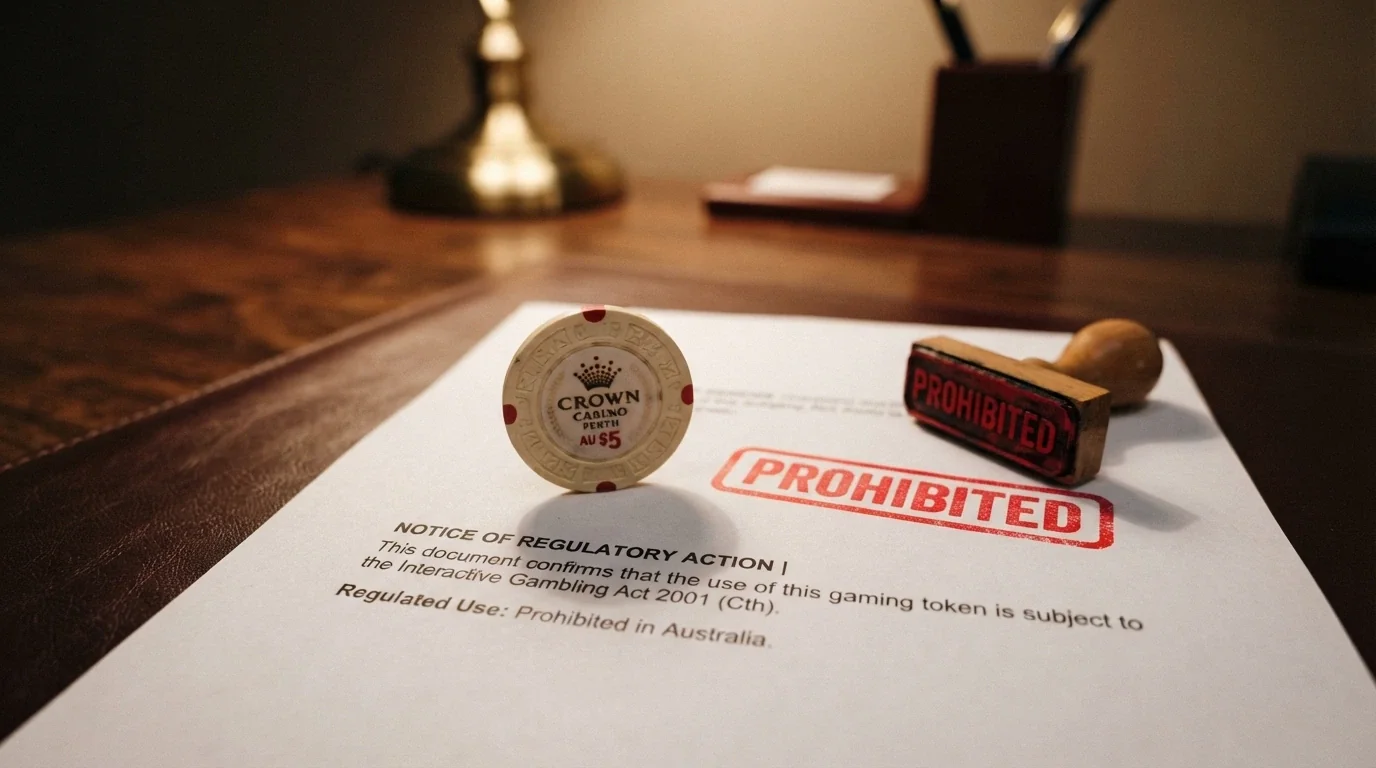
The Interactive Gambling Amendment Act 2017 closed the loopholes offshore operators had used and gave the ACMA its enforcement and blocking powers. Since its first blocking request in November 2019, the ACMA has had 1,564 illegal gambling and affiliate websites blocked by Australian internet service providers. More than 225 illegal services have withdrawn from the Australian market since 2017. The civil penalties are real: up to A$2,475,000 per day for an individual, and up to A$12,375,000 per day for a corporation. On 16 January 2026 the ACMA issued eight infringement notices to Tabcorp, each for A$19,800, totalling A$158,400.
The player is not prosecuted. That is the structural feature of the IGA: it targets the provider, not the customer. But the absence of prosecution is not the presence of protection. An Australian playing at an offshore casino has no Australian consumer protection, no complaints body, no BetStop coverage, and no recourse if the operator refuses a withdrawal or closes the account. The site can be DNS-blocked at any time by ACMA direction, potentially with a balance still sitting on it.
The credit card and crypto ban is a concrete signal. Credit cards, credit-related products, and digital currency are banned as payment for online wagering in Australia, commencing 11 June 2024 under the Interactive Gambling Amendment (Credit and Other Measures) Act 2023. An operator that asks an Australian player for a credit card or a crypto deposit is, by definition, operating outside the Australian rules. Legal deposit routes for licensed wagering are debit card, bank transfer, PayID/Osko, and BPAY. If a site accepts anything else, it is offshore.
The Interactive Gambling Act: Why No Online Casino Holds an Australian Licence
The IGA prohibits online casino games, online pokies, and in-play betting. What is permitted and licensable is wagering on races and sport placed before the event begins, lotteries, and keno — through operators licensed by a state or territory. The Northern Territory Racing and Wagering Commission, administered through Licensing NT, is the de facto national licensor for online wagering, and licences run for terms of up to twenty years. But that licence covers sports and racing, not casino games.
The 2017 amendment gave the ACMA its blocking powers. The blocking is DNS-level, and the ACMA updates the blocklist continuously as offshore operators rotate domains to stay ahead of it. The 1,564 blocked sites and 225 withdrawn services are the cumulative result of enforcement since 2017, and the pace has not slowed. The ACMA investigates complaints, issues formal warnings, refers operators for civil penalty proceedings, and directs ISPs to block illegal sites.
The structural fact the player needs to hold: there is no licensed online casino to anchor to in Australia. Where a comparison needs an Australian reference point, it is a wagering operator holding a state or territory licence — not a casino. Crown and The Star are state-licensed land-based casinos, and they are a valid contrast, but they are not the licence under which any online casino operates.
BetStop’s Reach — and Its Limit at Offshore Casinos
BetStop is the National Self-Exclusion Register, live since August 2023. One registration excludes a person from every Australian-licensed online and phone wagering provider in a single step, and licensed operators must not accept them or send them marketing. Approximately 150 licensed wagering providers are covered.
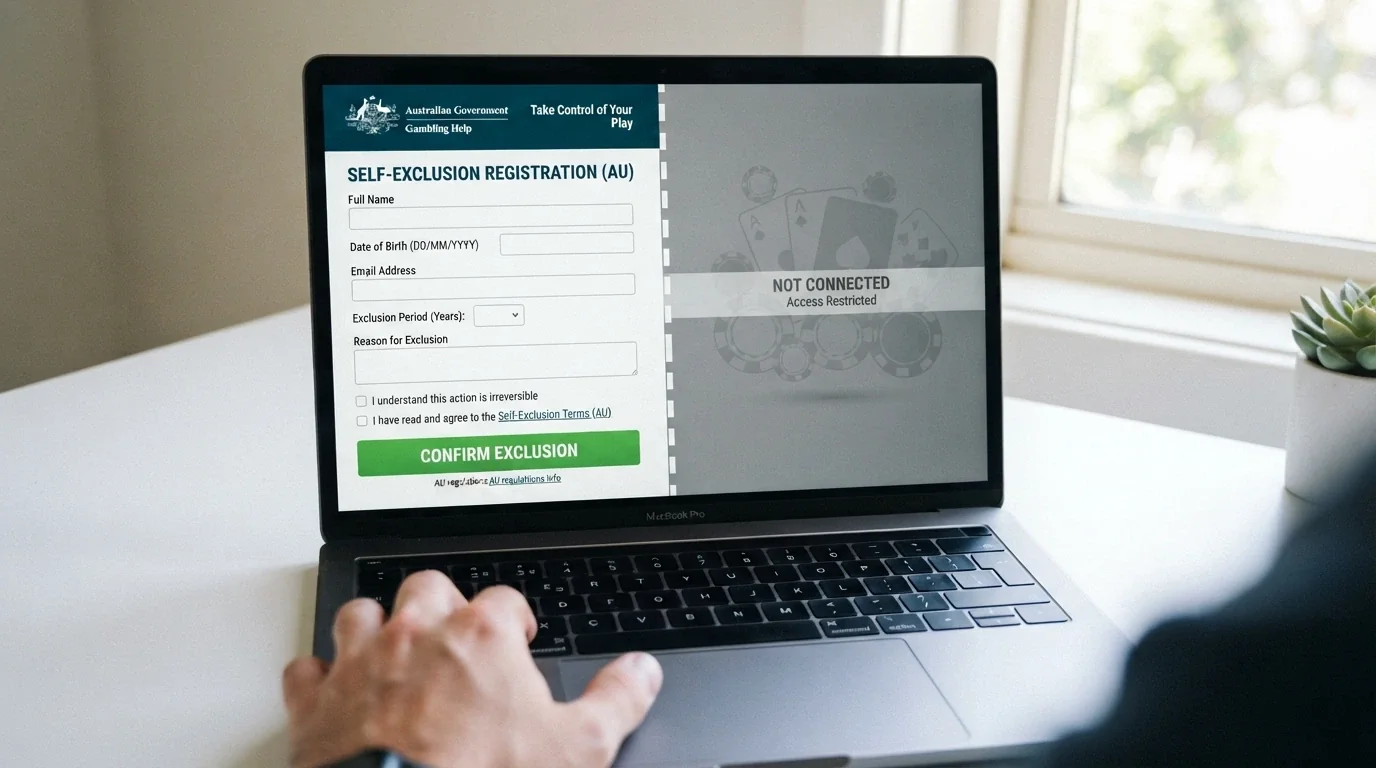
The scale is substantial: 54,859 people registered to self-exclude to the end of Q2 FY 2025-2026, and as of 31 December 2025, 35,135 people had active exclusions. 78% of registrants were under 40, and 38% chose lifetime exclusion. Self-exclusion runs from a minimum of three months up to a lifetime, and a person cannot apply to be removed in the first three months.
BetStop’s limit is structural. BetStop binds Australian-licensed wagering services only — an offshore casino is not licensed here, is not connected to the register, and will continue accepting a self-excluded person’s money. Every casino on this page sits outside BetStop’s reach. A person who self-excludes through BetStop can still deposit and play at any of the ten offshore operators listed above, because none of them are connected to the register.
This is the limitation that belongs in every Australian casino guide, and it is the one most often omitted. BetStop is one of the strongest self-exclusion systems in the world, but its coverage is exactly the licensed wagering market — and that market does not include any online casino.
KYC-Free Play: The Trade-Off Between Speed and Protection
The appeal of no-verification casinos is obvious: skip the paperwork and get paid faster. Some offshore sites apply a soft KYC system where they only request verification if a player crosses a certain threshold, usually around A$2,000 in withdrawals, or if a fraud flag is triggered. Below that threshold, the site processes withdrawals without an ID check. Moonbet, a benchmark operator rather than a featured brand, settled a crypto withdrawal in approximately four minutes with no ID check under A$2,000 — the fastest tested time in the research.
The speed advantage is real. The cost is that the KYC layer is also the last consumer-protection layer. If the operator decides to withhold funds and the player never completed verification, there is no record tying the account to a real identity, and no regulator to escalate to. The completion of KYC before a first withdrawal is consistently cited as the number-one tip for fast payouts — but it is also the step that ties a player to the casino’s accountability framework, however thin that framework is at an offshore site.
The practical reading: KYC-free play suits a player who keeps balances small, below the verification threshold, and who values speed over the (already thin) protection that verified play provides. A player with a large balance to withdraw will trigger verification anyway and is better off completing it at sign-up rather than at the moment a large payout is held.
The 2026 Gambling Reform: What Changes for Australian Players from January 2027
The Interactive Gambling Amendment (Gambling Reform) Bill 2026 passed Parliament on 19 August 2026. Its measures commence on 1 January 2027, and they reshape the market in three concrete ways.
Advertising is capped. From 1 January 2027, broadcast wagering advertising is restricted to no more than three ads per hour between 6 am and 8:30 pm, with a live-sport blackout from fifteen minutes before to five minutes after a live event. Radio ads are barred during school times. Broadcasting sporting odds is banned outright. Online ads only to logged-in, age-confirmed users with an opt-out. No ads inside sports venues or on uniforms. Athletes, celebrities and influencers are barred from promoting wagering products.
Bank transaction blocking becomes available. From 1 January 2027, banks and payment providers gain express authority to block transactions to illegal gambling operators. A player trying to deposit at an offshore casino via an Australian bank may find the transaction declined at the bank level, before it ever reaches the casino. This is a new enforcement lever that did not exist under the pre-2027 framework.
BetStop is strengthened. From 1 January 2027, direct marketing of inducements is prohibited for fourteen days after a customer signs up, for three months after a person deregisters from BetStop, and indefinitely for customers identified as at risk of gambling-related harm. The marketing restrictions do not extend BetStop’s coverage to offshore casinos — BetStop still binds only licensed wagering — but they do close some of the channels through which offshore operators currently reach Australian players.
What the reform does not do is legalise online casino. The product remains prohibited. The reform changes how the prohibition is enforced, not what is prohibited.
Staying in Control: Responsible Gambling Tools That Actually Work
Fast payouts are only part of the picture. The tools that keep play safe are just as important, and some of them work differently at offshore casinos than at licensed wagering operators.
Where to Get Help: The National Gambling Helpline and Gambling Help Online
Free, confidential, 24-hour help exists for any Australian whose gambling has become a problem. The National Gambling Helpline is 1800 858 858, free, confidential, staffed around the clock. Gambling Help Online, at gamblinghelponline.org.au, provides 24/7 chat and email counselling. Both services are free and available to anyone in Australia, regardless of whether they play at licensed or offshore operators.
The services work with players at any stage of a gambling problem — from early concerns about time or money spent, through to crisis-level debt and harm. They are not affiliated with any casino, licensed or offshore, and contacting them carries no consequence for a player’s account status at any operator.
Self-Exclusion and Deposit Limits: Tools That Work (and One That Doesn’t Offshore)
BetStop is the strongest self-exclusion tool available in Australia. One registration excludes a person from approximately 150 licensed wagering providers in a single step. Self-exclusion runs from a minimum of three months to a lifetime, and the person cannot apply to be removed in the first three months.
BetStop does not cover offshore casinos. Every operator on this page is outside BetStop’s reach. A self-excluded person can still deposit and play at any of them. This is not a gap BetStop can close — the register binds licensed operators, and offshore operators are not licensed in Australia. The limitation belongs in every Australian casino guide.
Licensed wagering operators offer customer-set deposit limits and activity statements under state and territory conditions, which differ between jurisdictions. These tools are not available at offshore casinos in the same form, and a player relying on deposit limits to control spend needs to set them at the operator level rather than through BetStop.
Entain Group Pty Ltd contravened subsection 61MA(2) of the IGA by opening four licensed interactive wagering service accounts for registered (self-excluded) individuals, and contravened subsection 61KA(3) on fifty-nine occasions. The contraventions are recorded in the ACMA’s enforcement record and show that even licensed operators have failed the register — the offshore gap is a larger failure of the same structural kind.
Gambling Harm in Australia: The Numbers That Make Responsible Play Essential
About 2.1% of Australian adults — roughly 430,000 people — experience problem gambling, and the Australian Institute of Health and Welfare put high-risk gambling at 1.8% in 2022. In 2022, more than one in ten Australians (11%) had gambled online in the previous six months, up from 8% in 2020. Online participation is growing, and the offshore casino market is the largest single channel for that growth.
These numbers make the responsible-gambling infrastructure load-bearing, not optional. A page about fast withdrawals is a page about a product that carries real harm, and the help infrastructure exists because that harm is measurable and substantial.
How We Found and Ranked the Fastest-Paying Casinos
The ranking on this page is built from published withdrawal tests, the ACMA’s blocking register, and operator terms pages. The sources used include esports.gg, Wildfish.com, Payoutverdict.com, Stageandcinema.com, Pokiesaustralia.com, cardplayer.com, and the ACMA’s own enforcement and blocking data. The operator set is ten offshore brands that Australian players in fact reach, ordered by tested payout speed where that data exists.

The ranking criteria are four: tested withdrawal speed, payment-method range, licence transparency, and withdrawal caps. Operators with faster tested times rank above slower ones. Operators with a wider payment-method range — particularly those supporting both crypto and PayID — score higher on accessibility. Operators with confirmed licence jurisdictions score higher on transparency than operators with inferred or unconfirmed licences. Operators with higher withdrawal caps — Bizzo’s A$50,000 monthly cap is the headline example — score higher on flexibility for large-balance players.
The limitations are honest. Four of the ten operators — Rocket Play, Royal Reels, FairGO, and WinSpirit — carry no tested payout speed in this round of research. They hold confirmed Australian market share but no published withdrawal test surfaced. The four operators with tested speeds are Skycrown, BitStarz, Stake, Bizzo, 7Bit, and Neospin, plus Moonbet as a benchmark reference. Bonus terms and welcome-offer specifications were not queried in this round and are not carried into the ranking. A player comparing on bonus value needs to check operator terms pages directly.
The ACMA blocking register is used as a verification context, not a ranking criterion. Every operator on this page is offshore and therefore subject to ACMA blocking, and the 1,564 blocked sites figure is the scale of that enforcement. No operator on this page appears on the ACMA’s current blocking list at the time of writing, but the list updates continuously and a player should check the ACMA register directly before depositing.
What You Should Actually Do About Fast Withdrawals
The page describes ten offshore casinos and ranks them by tested payout speed. The conclusion the data supports is not a single brand name. It is a four-step decision framework, ordered by leverage.
Pick the rail before you pick the casino. USDT TRC20 and Solana settle in under five minutes. PayID settles in under sixty seconds once the casino releases the funds. Bitcoin takes thirty to sixty minutes or more. Bank transfers take one to three business days. Card withdrawals take two to five business days. The fastest-tested operator in the set cannot make a bank transfer settle faster than a bank transfer settles, and the slowest-tested operator on USDT TRC20 will still beat the fastest-tested operator on a Visa credit-card refund. The rail is the bigger lever than the casino.
Complete KYC at sign-up. Incomplete KYC is the most common cause of a slow payout, not the casino’s processing speed. A verified account routes through automated approval, which can clear in minutes. An unverified account triggers manual review, which can take a day or more. The fastest-tested casino in the set cannot speed up a KYC check the player has not completed.
Set a monthly cap before you deposit. Maximum daily withdrawal limits range from A$2,000 to A$10,000 across the major tested sites, with weekly caps varying significantly. A player who wins more than the daily cap waits for the next window regardless of how fast the rail is. The cap is the ceiling on how much can move in a day, and it is set by the operator, not by the rail.
Accept the offshore reality before you play. No Australian licence exists for online casino. Every site on this page is offshore, and the offshore status means no Australian consumer protection, no complaints body, no BetStop coverage, and no recourse if the operator refuses a withdrawal. The fast payout is real. The protection behind it is not. A player who is comfortable with that trade-off can use the ranking above; a player who is not should not be playing at any of these operators.
The responsible-gambling baseline is not optional. Set deposit limits at the operator level before you play. If play stops being fun, the National Gambling Helpline is 1800 858 858, free and 24 hours a day. Gambling Help Online, at gamblinghelponline.org.au, provides chat and email counselling around the clock. The help exists, it is free, and using it is the single most useful thing a player in trouble can do.
Frequently Asked Questions
What is the fastest withdrawal method at Australian online casinos?
USDT on the TRC20 network and Solana both settle in under five minutes after the casino releases the funds, making them the fastest withdrawal methods available at offshore casinos serving Australian players. PayID is the fastest domestic option, with the transfer itself settling in under sixty seconds via Osko on the New Payments Platform once approved. No method is truly instant — every casino runs internal approval before the transfer, and that step takes two minutes to forty-eight hours depending on the operator and the player’s KYC status.
How long does a PayID withdrawal take at an online casino in Australia?
PayID withdrawals at fast-payout casinos typically settle in ten to sixty minutes after casino approval, with the transfer itself clearing in under sixty seconds via Osko. Skycrown’s tested PayID withdrawal landed in eleven minutes for A$920. PayID is a legal deposit route for licensed Australian wagering, unlike crypto, and works with any Australian bank account linked to the New Payments Platform.
Does BetStop cover offshore casino sites if I self-exclude?
No. BetStop binds approximately 150 Australian-licensed wagering providers in a single registration step, but offshore casinos are not connected to the register. Every casino on this page sits outside BetStop’s reach, and a self-excluded person can still deposit and play at any of them. Self-exclusion through BetStop runs from a minimum of three months to a lifetime, and a person cannot apply to be removed in the first three months.
What is the typical minimum withdrawal amount at fast-payout casinos in Australia?
Minimum withdrawal at most offshore sites serving Australians starts from A$20. Minimum daily limits range from A$10 to A$30 across major tested sites, while maximum daily withdrawal limits range from A$2,000 to A$10,000, with weekly caps varying significantly between operators. Bizzo Casino’s A$50,000 monthly cap is the highest in the featured set.
Why does my casino withdrawal take so long — is it the casino or my bank?
Usually it is neither — it is the casino’s internal approval queue. The biggest cause of delayed withdrawals at online casinos is incomplete KYC verification, not the casino’s processing speed or the payment rail. Completing identity verification at sign-up rather than at withdrawal time routes the request through automated approval, which clears in minutes. An unverified account triggers manual review that can take a day or more.
Can I withdraw casino winnings without completing KYC verification?
Some offshore sites apply a soft KYC system where they only request verification above approximately A$2,000 in withdrawals or if a fraud flag is triggered. Below that threshold, withdrawals process without an ID check. The speed advantage is real, but removing KYC also removes the last consumer-protection layer — if the operator withholds funds and the player never verified their identity, there is no record tying the account to a real person and no regulator to escalate to.
Do I have to pay tax on online casino winnings in Australia?
No, for an ordinary punter. Betting and gambling winnings are not assessable income under section 6-5 of the ITAA 1997, and gambling losses are not deductible under section 8-1 — unless the person is carrying on a business of betting or gambling. No Australian case has held the winnings of an ordinary punter assessable. The operator pays wagering tax where the customer is: the Northern Territory levies a 5% wagering tax on wagers minus payouts plus a 0.05% racing levy, and each state sets its own point-of-consumption tax, typically 10–15% of net wagering revenue.